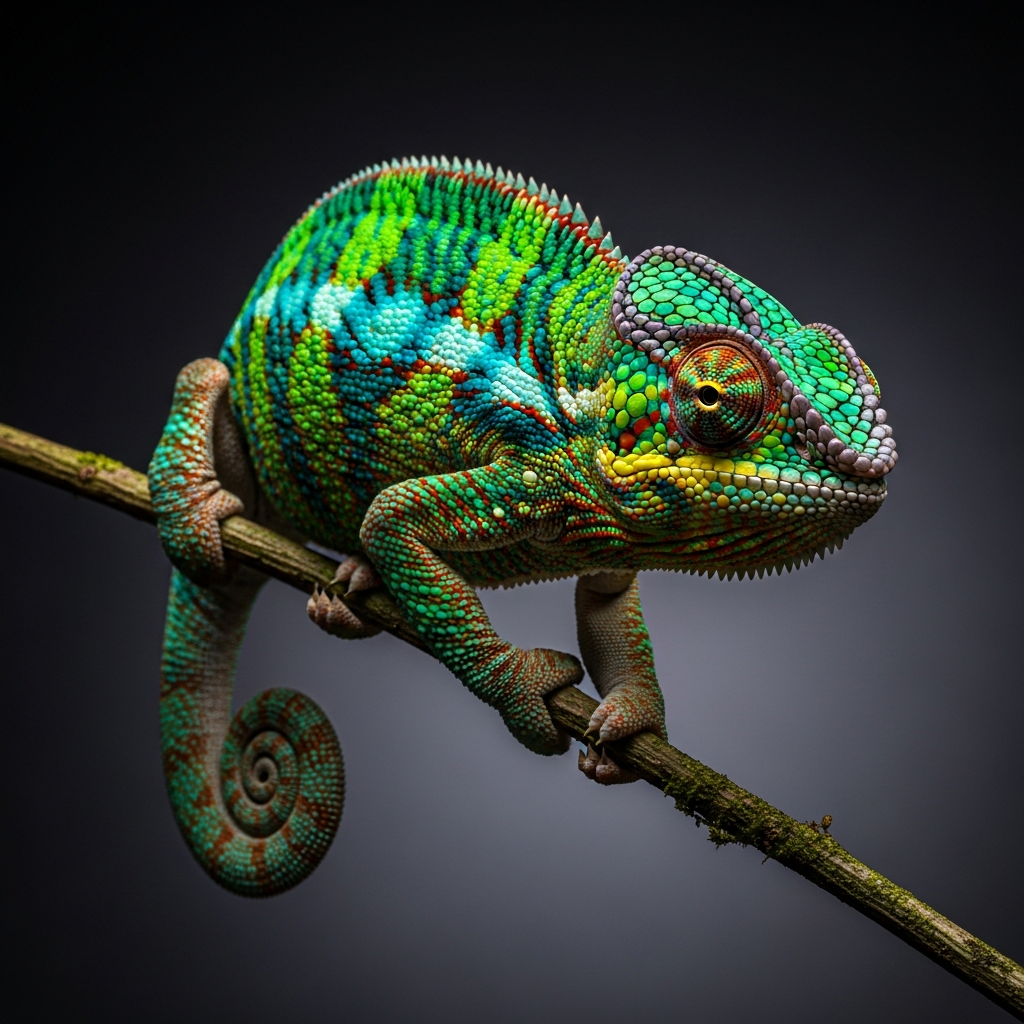
Panther Chameleon
The Panther Chameleon (Furcifer pardalis) is a vibrantly colored, sexually dimorphic lizard species native to Madagascar, celebrated for its striking color variations and arboreal lifestyle.
The Panther Chameleon (Furcifer pardalis) is a vibrantly colored, sexually dimorphic lizard species native to Madagascar, celebrated for its striking color variations and arboreal lifestyle.
First described in 1829 by French naturalist Georges Cuvier, the Panther Chameleon originates exclusively from Madagascar. Its many regional color morphs, known as "locales," reflect the island's diverse habitats and have not resulted from captive breeding or hybridization.
The Panther Chameleon belongs to the family Chamaeleonidae within the genus Furcifer. It is part of the suborder Lacertilia, encompassing true lizards, and is distinct for its specialized morphology among chameleons.
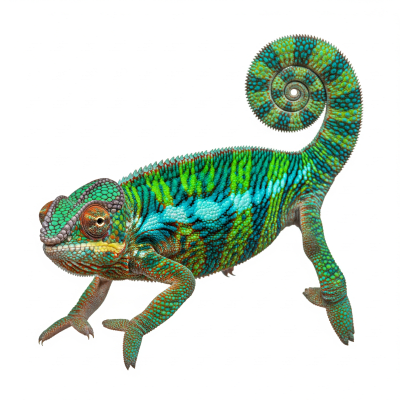
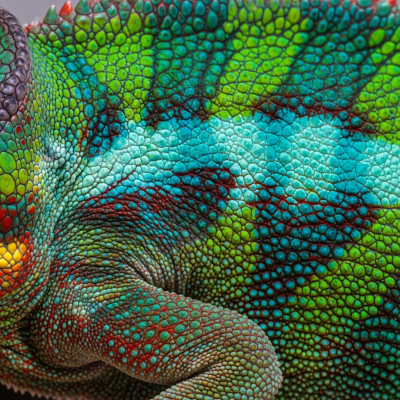
This species exhibits pronounced sexual dimorphism: males reach up to 50 cm in length and display vivid colors including red, blue, green, orange, and yellow with banded or spotted patterns, while females are smaller, up to 35 cm, and typically show subdued brown or tan hues with subtle pink or peach highlights. Notable features include zygodactylous feet for gripping branches, a prehensile tail, independently moving eyes, and a projectile tongue adapted for capturing insects.
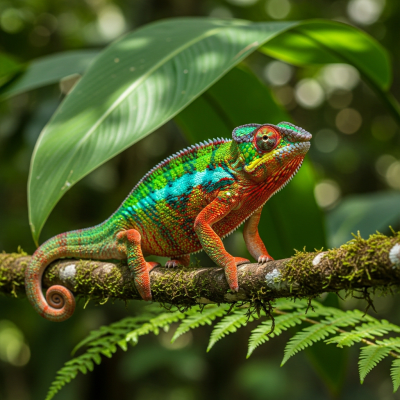
Active during the day, Panther Chameleons are arboreal climbers that rely on their prehensile tails and specialized feet to navigate foliage. They use their projectile tongues to catch insects and display dynamic color changes for communication and camouflage. Their vivid coloration and adaptability have made them popular in the exotic pet trade and subjects of scientific research on color change and sexual selection.
Bring this kind into your world illustrated posters, mugs, and shirts.
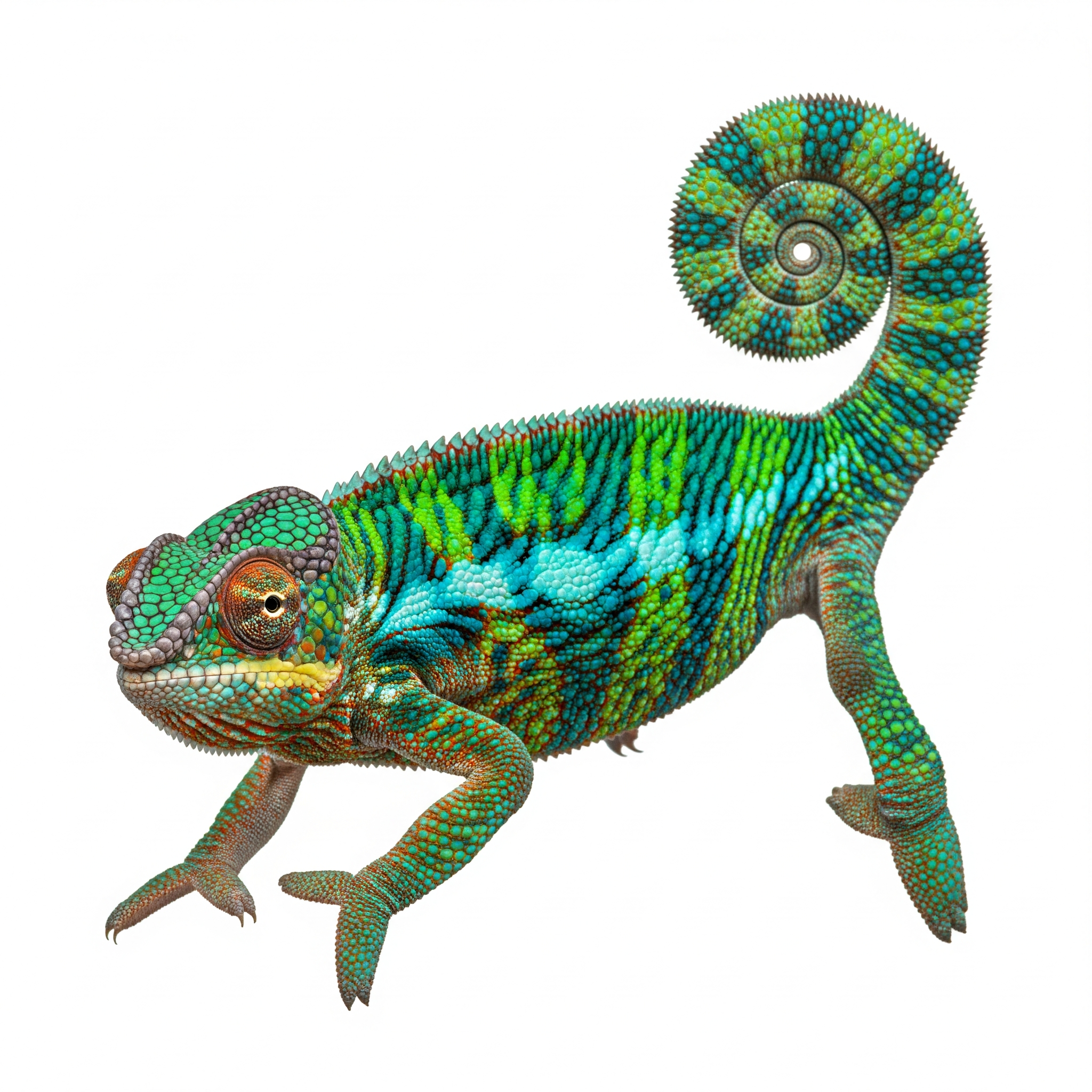
Archival print, museum-grade paper
Buy Poster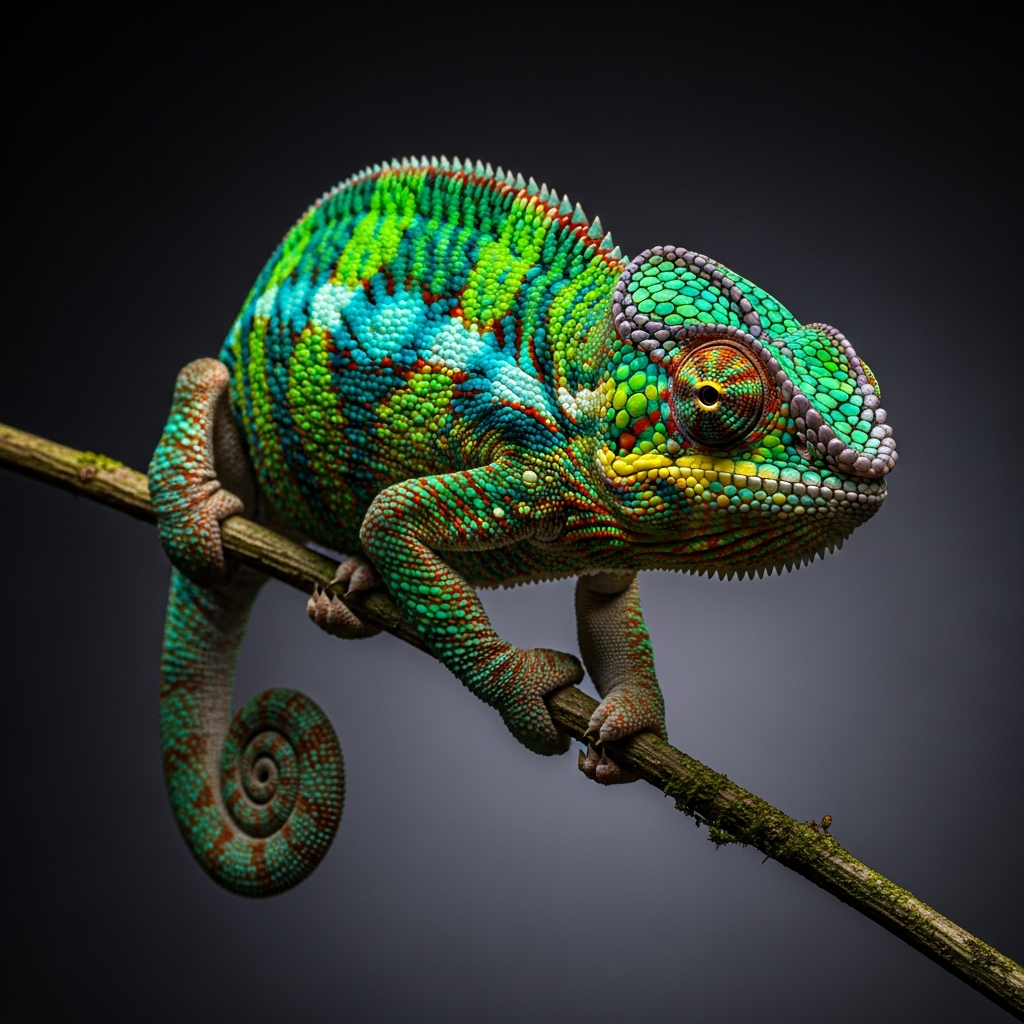
Stoneware mug, dishwasher safe
Buy Mug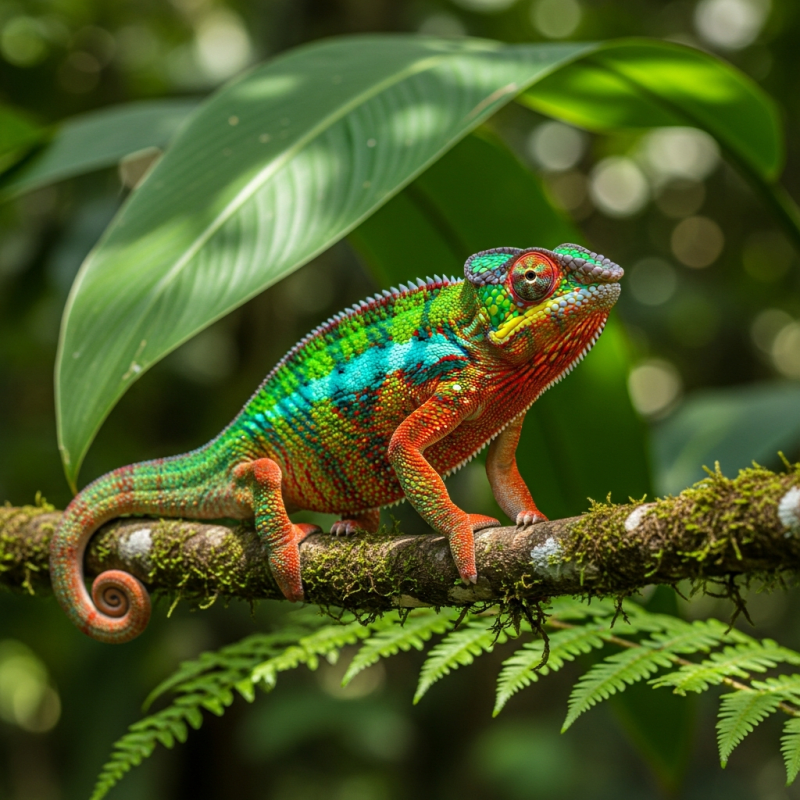
Soft cotton tee, unisex sizes
Buy ShirtWhile not prominent in traditional folklore, the Panther Chameleon holds cultural value as a symbol of Madagascar's unique biodiversity and is admired globally in herpetoculture. Its striking colors and locale-based morphs have inspired ecotourism and artistic representation, highlighting the island’s natural heritage.
The Panther Chameleon is endemic to Madagascar, inhabiting humid, arboreal environments where it thrives among foliage and vertical structures. It requires ample climbing space and is found in various microhabitats across the island, with distinct color morphs corresponding to different geographic regions.

Primarily insectivorous, Panther Chameleons use their highly specialized, rapidly extending tongues to capture a variety of insects. Their diet in the wild consists of crickets, flies, and other arthropods, which they hunt actively during daylight hours.
Panther Chameleons reproduce by laying eggs (oviparous), with females depositing clutches of 10 to 40 eggs per reproductive event. Sexual maturity is reached within 6 to 12 months. Lifespan typically ranges from 3 to 5 years, both in the wild and captivity, with proper care extending longevity.
While not currently classified as endangered, Panther Chameleons face threats from habitat loss and overcollection for the pet trade. Conservation efforts focus on habitat protection and regulated wild collection to ensure sustainable populations in Madagascar.
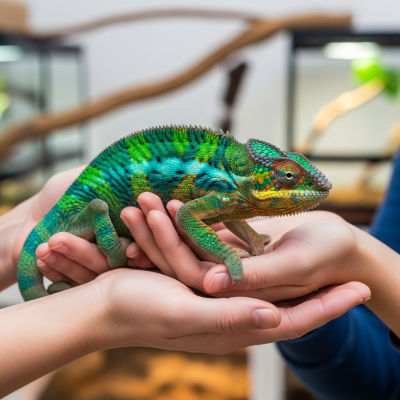
As popular exotic pets, Panther Chameleons require enclosures with ample vertical space and live foliage to mimic their arboreal habitat. Maintaining proper humidity and hydration is critical to prevent dehydration and metabolic bone disease. They thrive on a diet of live insects and need careful temperature and lighting control. Captive breeding remains limited, with most individuals wild-derived, underscoring the importance of responsible care and sourcing.