Marine Iguana
The marine iguana (Amblyrhynchus cristatus) is the only living lizard species adapted to forage in the ocean, uniquely capable of swimming and diving to feed on algae along the Galápagos Islands.
The marine iguana (Amblyrhynchus cristatus) is the only living lizard species adapted to forage in the ocean, uniquely capable of swimming and diving to feed on algae along the Galápagos Islands.
Endemic to the Galápagos archipelago, the marine iguana was first scientifically described by Thomas Bell in 1825. Its ancestors likely colonized these volcanic islands and evolved specialized traits to thrive in a marine environment, a rare adaptation among reptiles.
Belonging to the family Iguanidae and genus Amblyrhynchus, the marine iguana is a distinctive member of the lizard suborder Lacertilia. It is recognized by its unique ecological niche as a marine herbivore among primarily terrestrial iguanids.
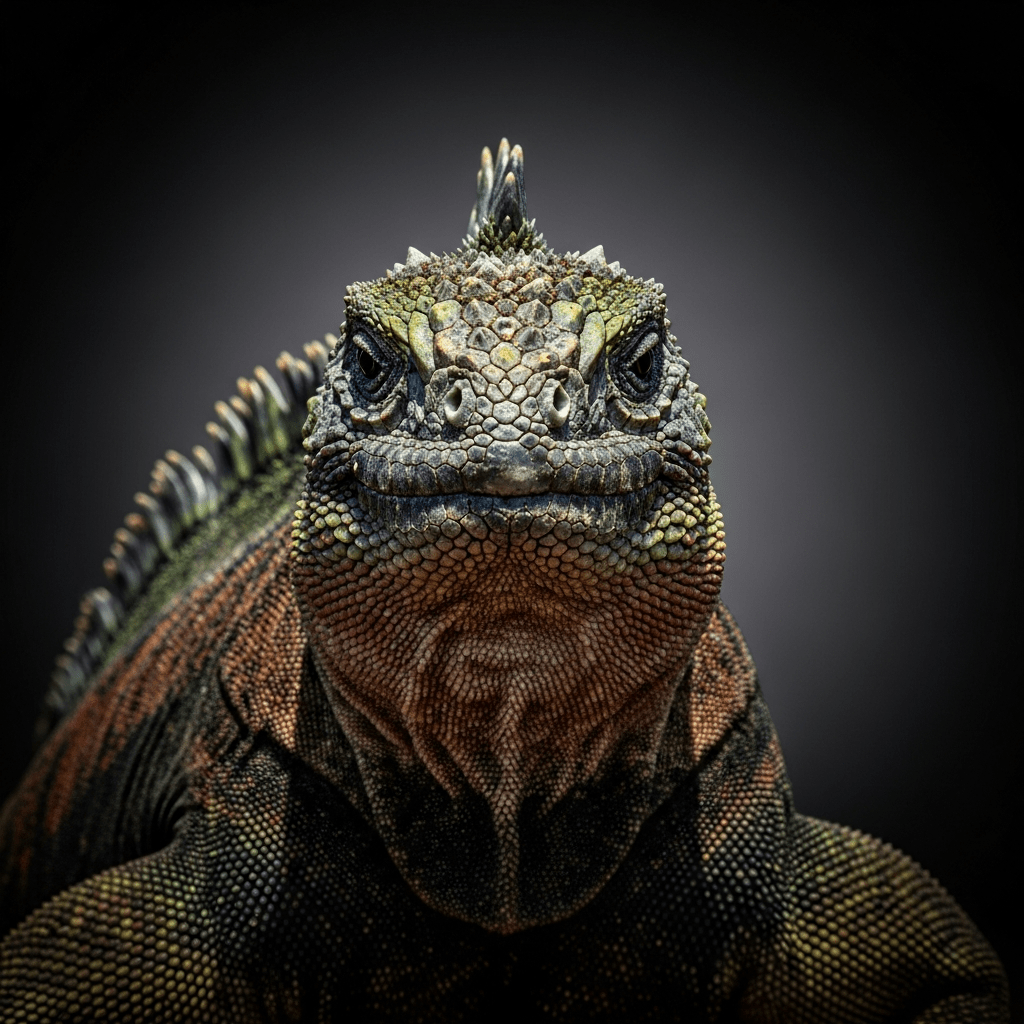
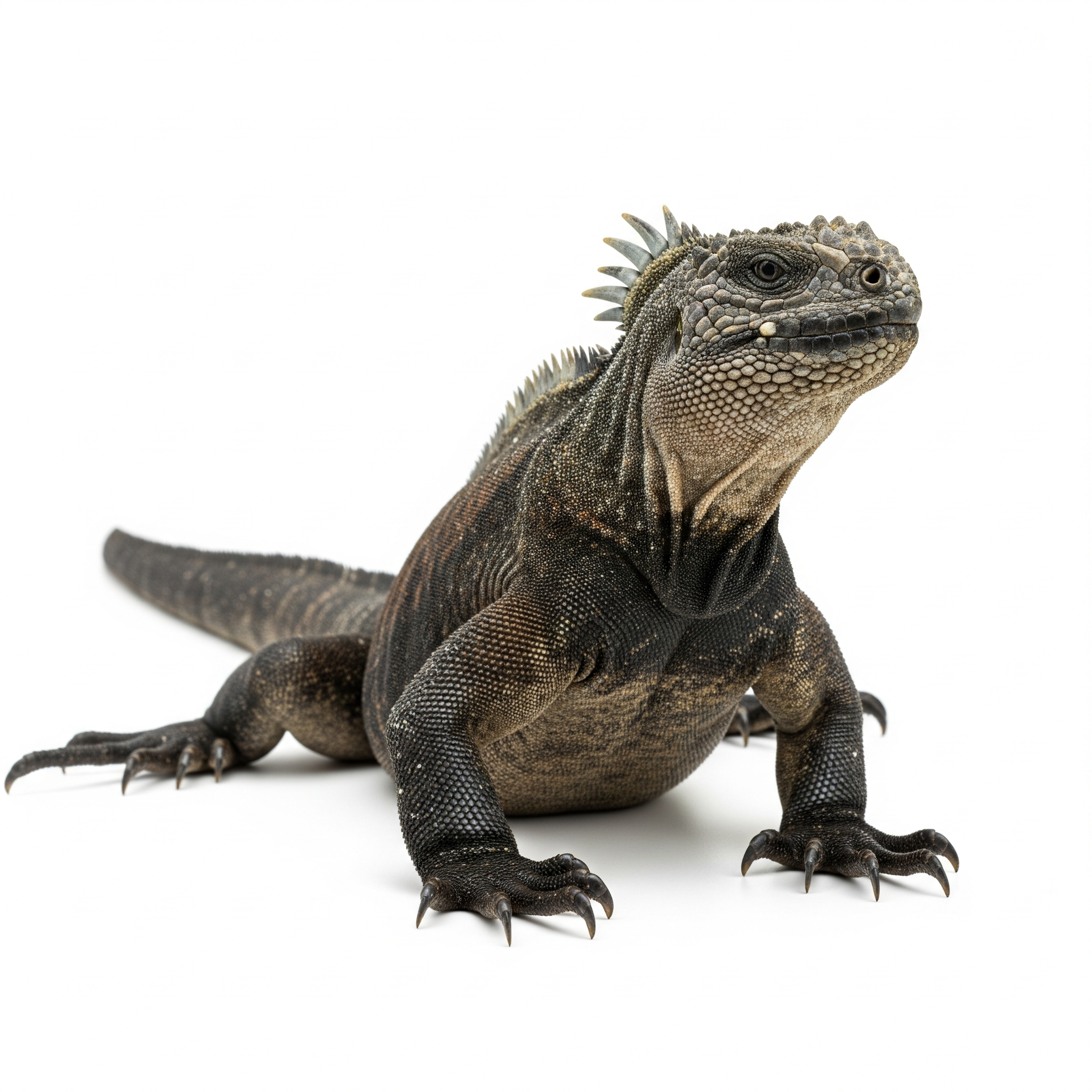
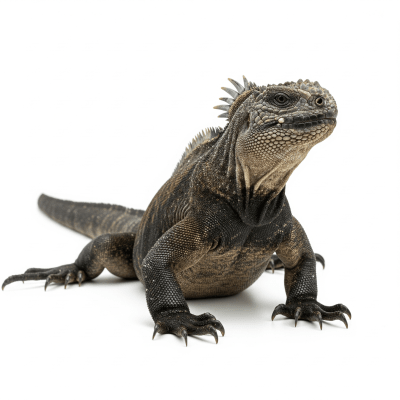
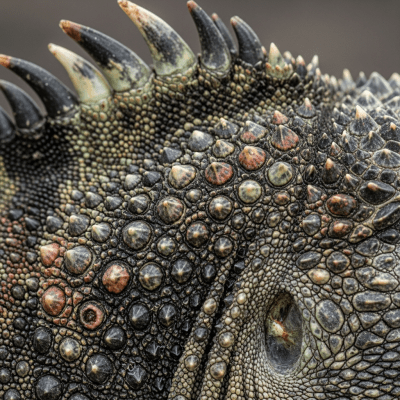
Marine iguanas have robust, laterally flattened bodies with spiny dorsal crests and blunt snouts designed for scraping algae from rocks. Adults range from 60 to 130 centimeters in length, with males notably larger than females. Their coloration varies from black to gray, sometimes showing red or green hues during breeding seasons. Their flattened tails and strong limbs aid in swimming and gripping slippery coastal rocks.
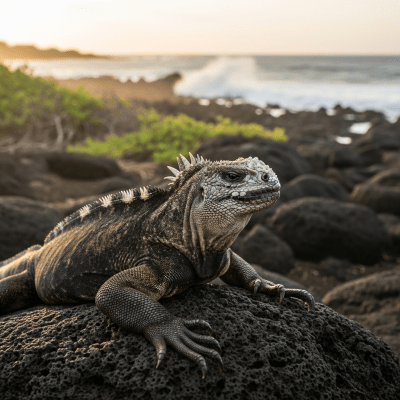
Diurnal by nature, marine iguanas spend much of their time basking on rocky shores to regulate body temperature after foraging in cold ocean waters. They dive and swim skillfully to graze on marine algae, using salt glands to expel excess salt ingested during feeding. Their behavior reflects a remarkable adaptation to a harsh coastal ecosystem.
Bring this kind into your world illustrated posters, mugs, and shirts.
Archival print, museum-grade paper
Buy Poster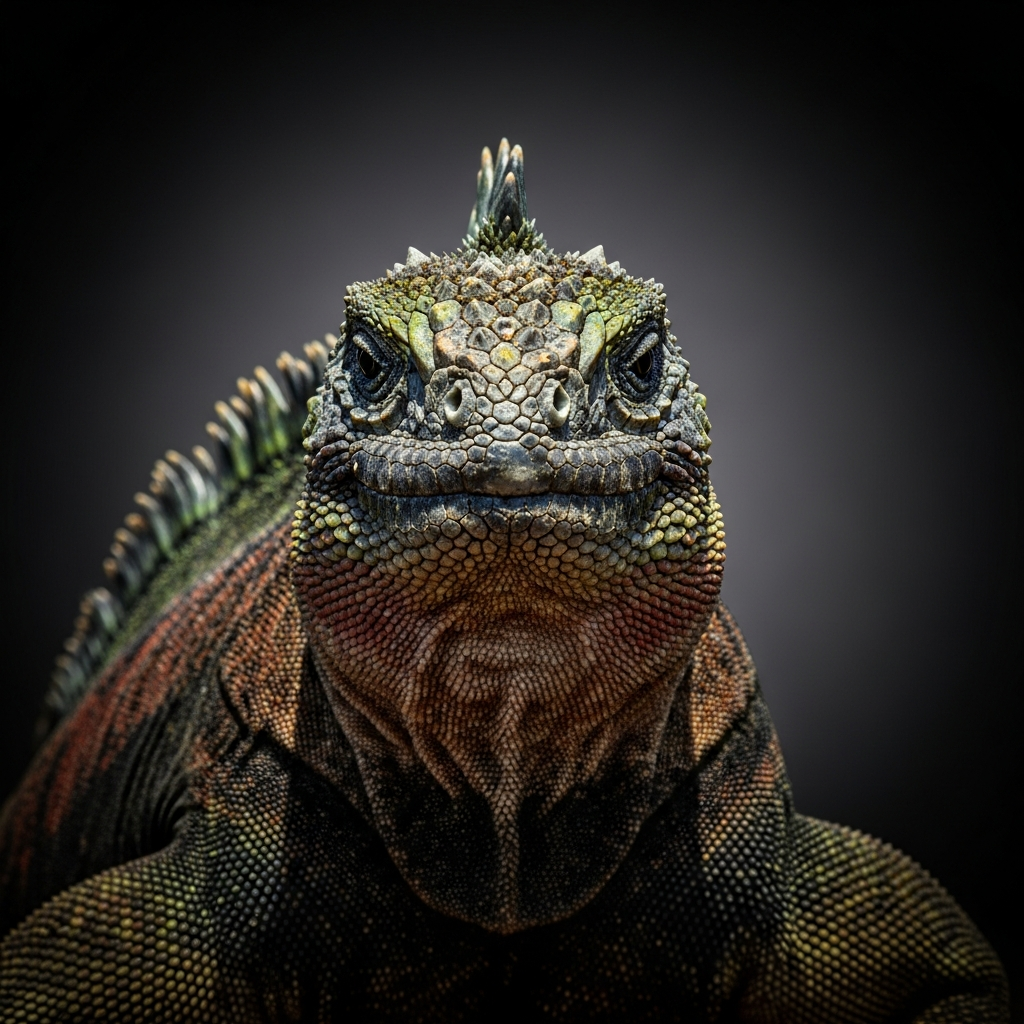
Stoneware mug, dishwasher safe
Buy Mug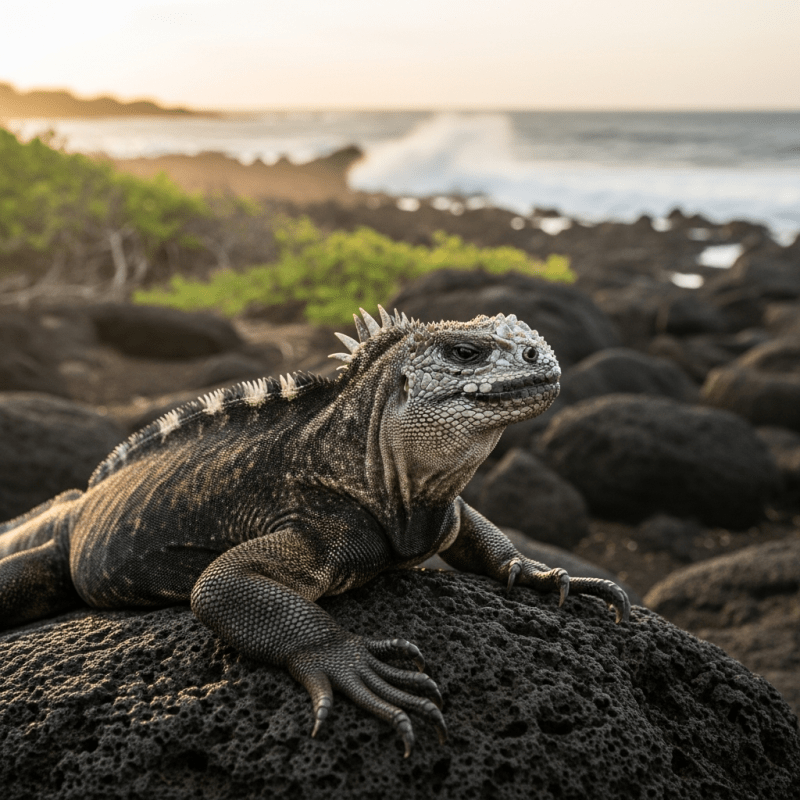
Soft cotton tee, unisex sizes
Buy ShirtWhile not prominent in culinary or commercial contexts, marine iguanas hold great ecological and scientific significance. They are emblematic of the Galápagos Islands' unique biodiversity and serve as flagship species for conservation and evolutionary research, inspiring ecotourism and environmental awareness worldwide.
Marine iguanas inhabit the rocky coastal shores of the Galápagos Islands, where they forage in the adjacent marine environment. Their distribution is limited exclusively to this archipelago, with recognized subspecies localized to specific islands, reflecting subtle morphological differences.
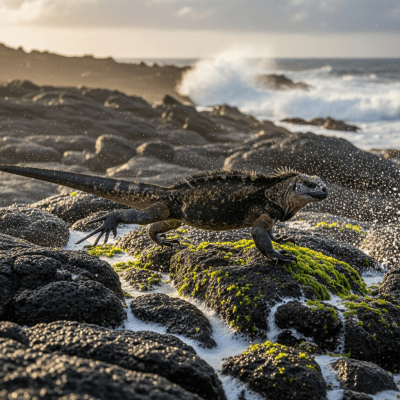
Primarily herbivorous, marine iguanas feed on marine algae scraped from rocks beneath the ocean surface. They swim and dive to access their food, relying on their blunt snouts and strong claws to graze effectively in the intertidal and subtidal zones.
Marine iguanas reproduce by laying eggs on land, following an oviparous reproductive mode. While detailed clutch sizes and breeding seasons vary, males often exhibit brighter coloration during mating periods. Individuals can live up to 12 years in the wild, progressing through juvenile to adult stages adapted to both terrestrial and marine environments.
Marine iguanas face threats from habitat disturbance, introduced predators, and climate change impacts such as El Niño events that reduce algae availability. Conservation efforts focus on habitat protection within the Galápagos National Park and ongoing research to monitor populations, ensuring this unique species remains safeguarded.
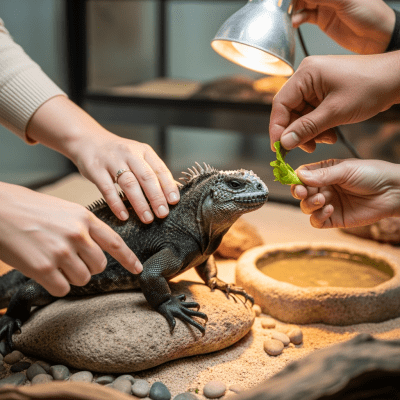
Marine iguanas are not kept as pets due to their specialized marine habitat needs and protected status. Their care requires complex environmental conditions that are difficult to replicate in captivity, and they are primarily valued for their ecological role and scientific importance rather than the pet trade.