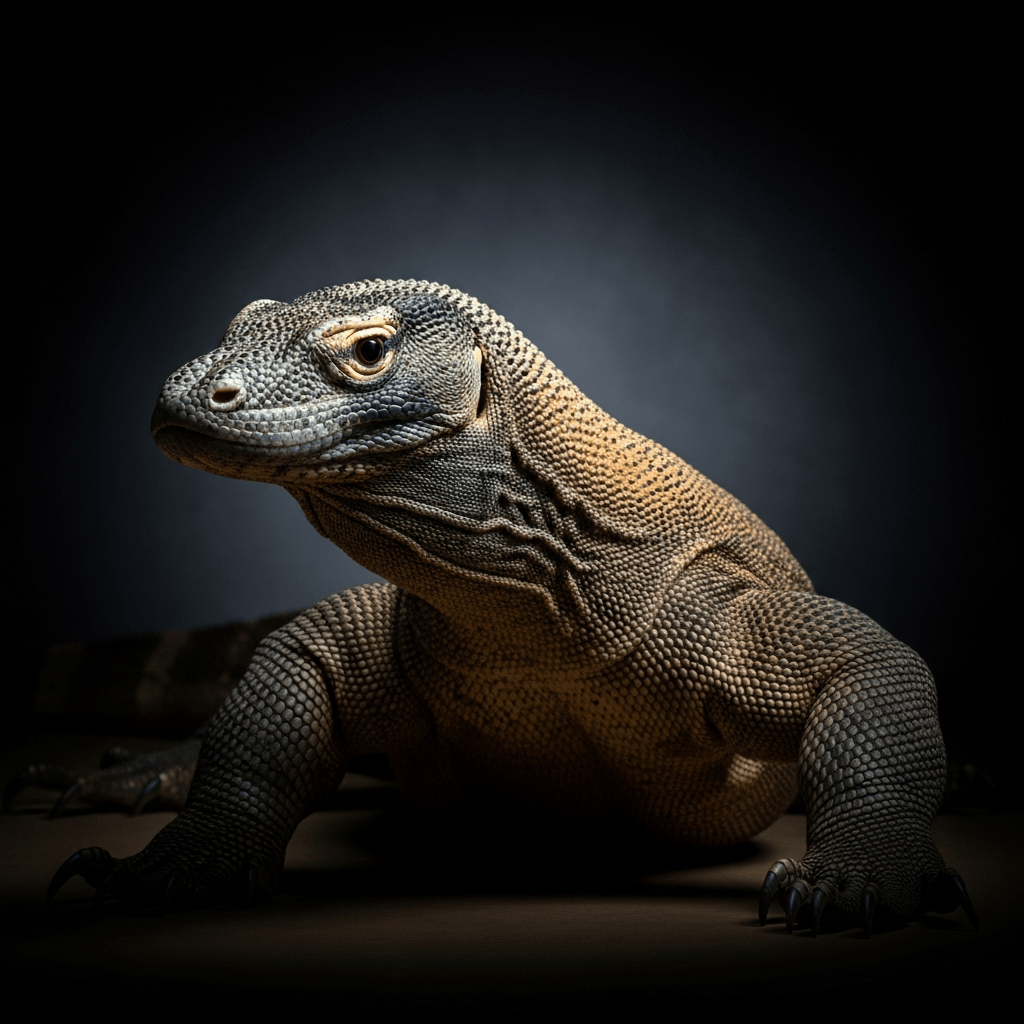
Komodo Dragon
The Komodo dragon (Varanus komodoensis) is the largest living lizard species, famed for its formidable size, powerful build, and role as a top predator on several Indonesian islands.
The Komodo dragon (Varanus komodoensis) is the largest living lizard species, famed for its formidable size, powerful build, and role as a top predator on several Indonesian islands.
First scientifically described in 1912 by Pieter Antonie Ouwens, the Komodo dragon originates from the Lesser Sunda Islands of Indonesia, including Komodo, Rinca, Flores, Gili Motang, and Padar. It descends from ancient monitor lizards native to Southeast Asia and Australasia.
Belonging to the family Varanidae and genus Varanus, the Komodo dragon is a member of the monitor lizards, a group known for their intelligence and predatory skills within the suborder Lacertilia (true lizards) of the order Squamata.
The Komodo dragon boasts a muscular, robust body covered in rough, durable skin embedded with osteoderms. It can reach lengths up to 3 meters (nearly 10 feet) and weigh between 70 to 90 kilograms. Its coloration is generally grayish-brown, with juveniles displaying more vivid patterns. Distinctive features include a long, powerful tail, strong limbs ending in sharp claws, a forked tongue, and serrated teeth designed for tearing flesh.
As an apex predator, the Komodo dragon dominates its ecosystem by hunting a variety of prey using a combination of stealth, strength, and a venomous bite. It interacts with its environment as a scavenger and hunter, playing a crucial role in maintaining ecological balance on its native islands.
Bring this kind into your world illustrated posters, mugs, and shirts.
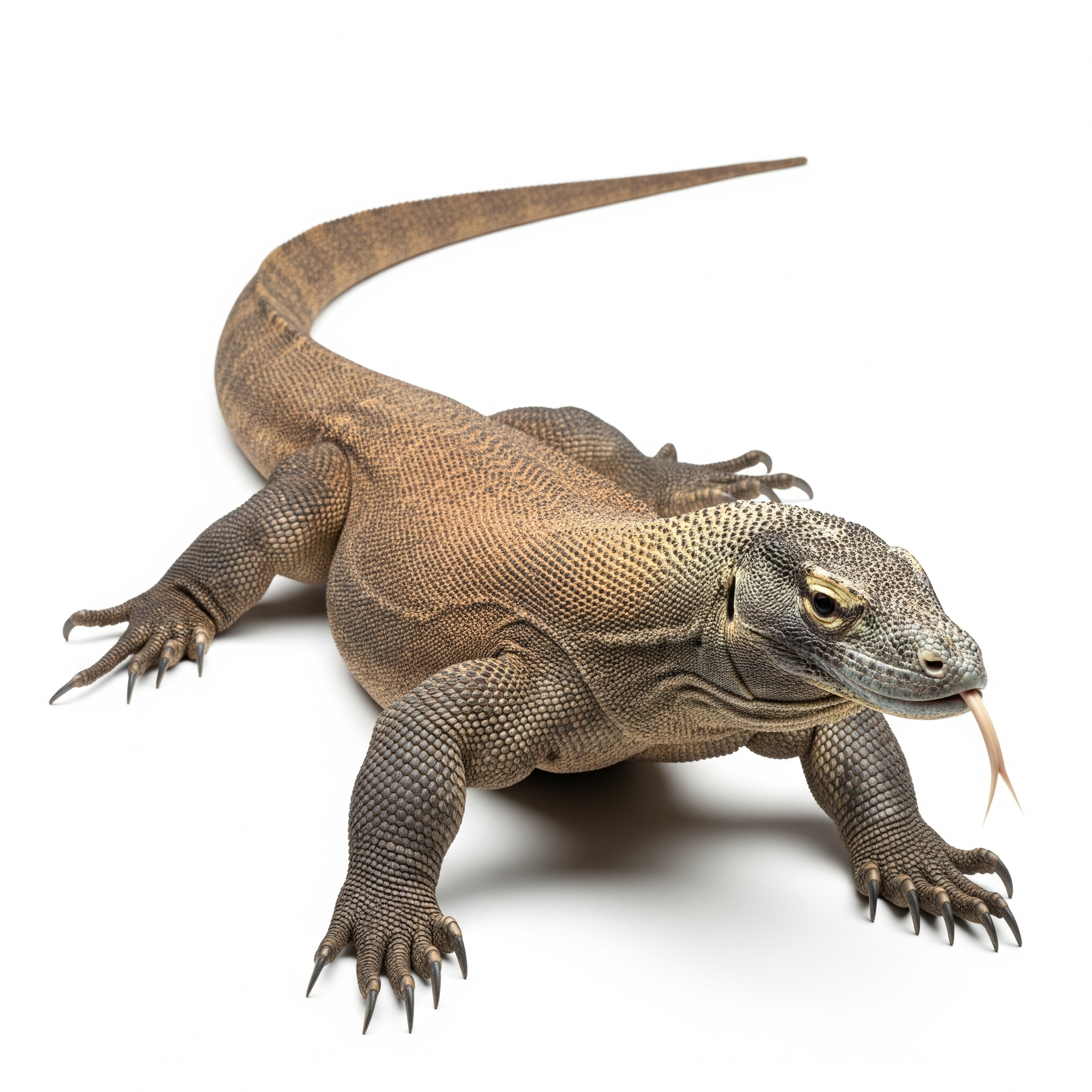
Archival print, museum-grade paper
Buy Poster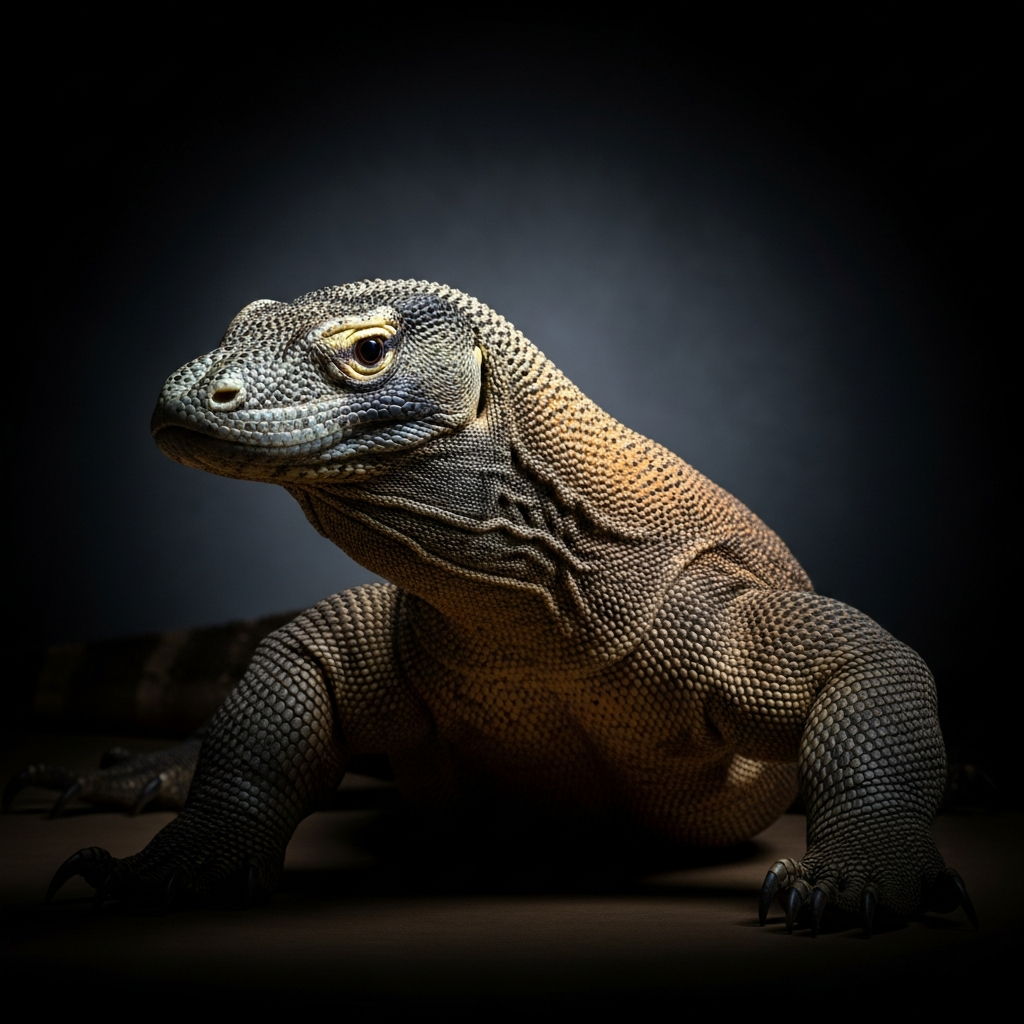
Stoneware mug, dishwasher safe
Buy Mug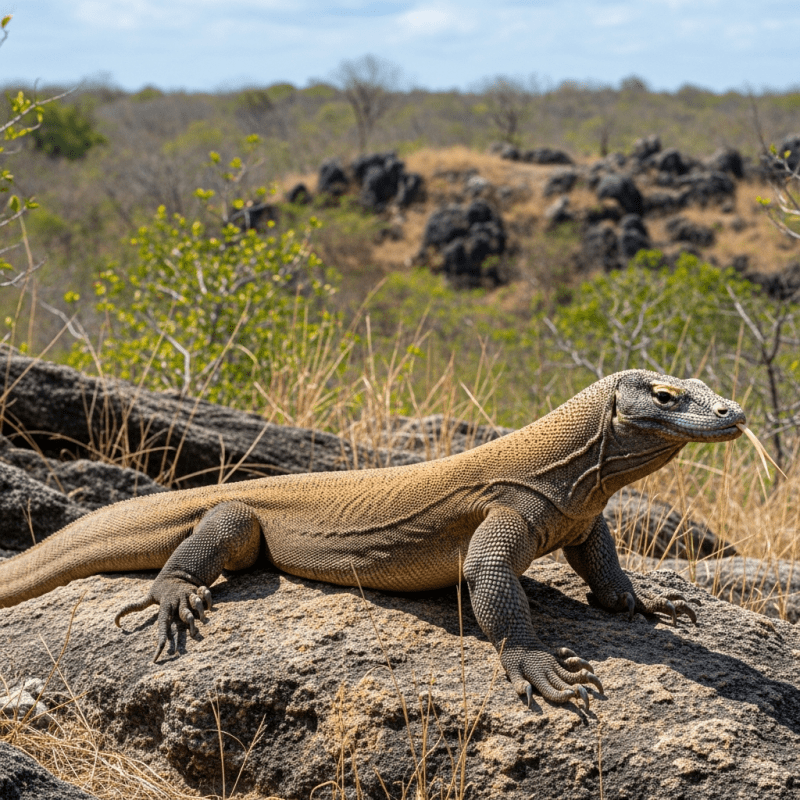
Soft cotton tee, unisex sizes
Buy ShirtThe Komodo dragon holds a prominent place in Indonesian culture and folklore, often symbolizing strength and resilience. Globally, it serves as an emblem of wildlife conservation and ecotourism, drawing visitors eager to witness this extraordinary reptile in its natural habitat.
The Komodo dragon is native exclusively to the Lesser Sunda Islands of Indonesia, specifically Komodo, Rinca, Flores, Gili Motang, and Padar. It inhabits dry, open grasslands, savannas, and tropical forests, adapting to a range of microhabitats within these islands.
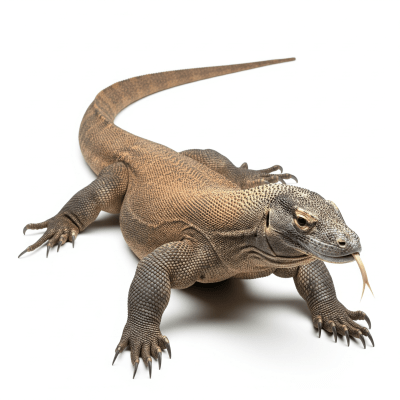
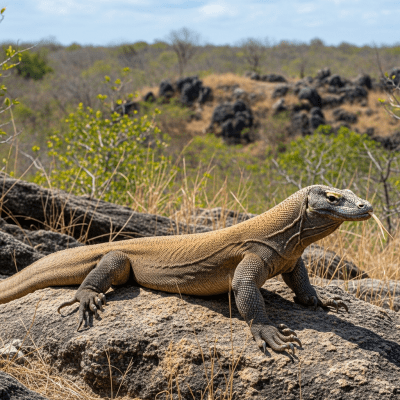

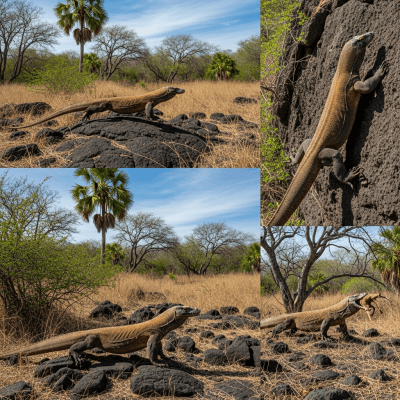
As a carnivorous predator and scavenger, the Komodo dragon feeds on a variety of animals including deer, wild boar, smaller reptiles, and carrion. It uses its keen sense of smell, aided by its forked tongue, to locate prey and relies on powerful jaws and serrated teeth to tear flesh.
Komodo dragons reproduce by laying eggs (oviparous), with females typically depositing clutches in burrows or termite mounds. Juveniles grow rapidly and exhibit more vibrant coloration than adults. The species can live up to 30 years in the wild, with males generally larger than females.
The Komodo dragon is classified as vulnerable due to threats from habitat loss, human encroachment, and poaching. It is legally protected under Indonesian law and international agreements such as CITES Appendix I, which prohibits trade in live specimens or body parts. Conservation efforts focus on habitat preservation and ecotourism management.
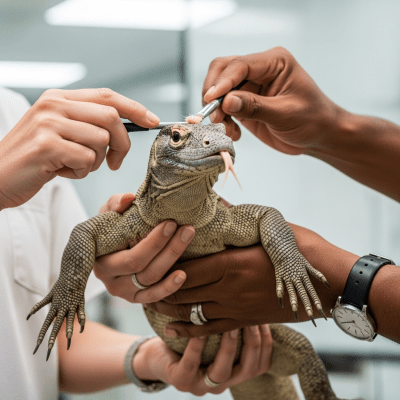
The Komodo dragon is not suitable for captivity outside specialized conservation facilities. Its large size, complex dietary needs, and protected status make it inappropriate as a pet. Captive care requires strict environmental controls, ample space, and expert management, which are typically only available in accredited zoos and research centers.