Green Iguana
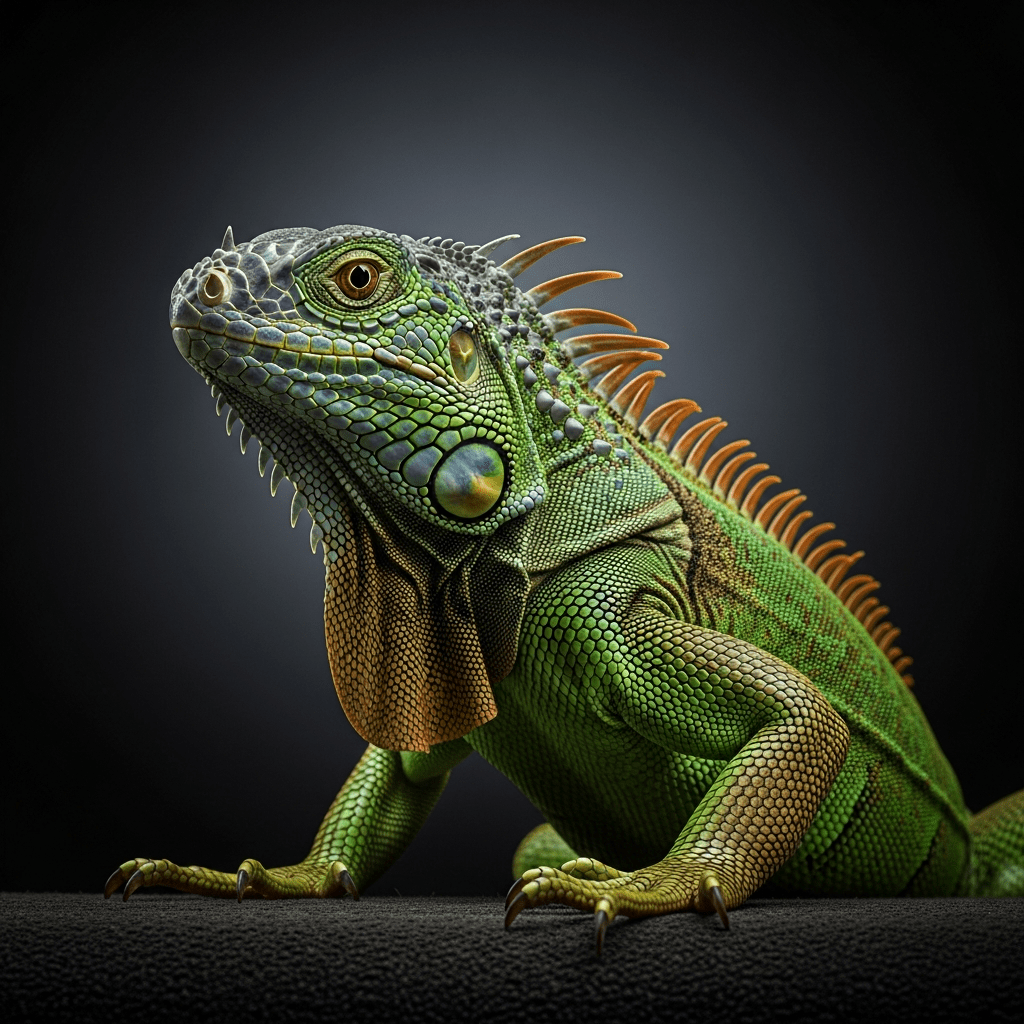
The Green Iguana (Iguana iguana) is a large, arboreal lizard native to Central and South America, celebrated for its vibrant green color and distinctive dorsal spines, making it one of the most recognizable lizards worldwide.
The Green Iguana (Iguana iguana) is a large, arboreal lizard native to Central and South America, celebrated for its vibrant green color and distinctive dorsal spines, making it one of the most recognizable lizards worldwide.
First described scientifically by Carl Linnaeus in 1758, the Green Iguana originates from the tropical forests of Central and South America. It has no known domestication origin, existing naturally across a broad native range.
The Green Iguana belongs to the genus Iguana within the family Iguanidae. It is part of the suborder Lacertilia, encompassing true lizards, and is scientifically known as Iguana iguana. Historically, it was also referred to as Lacerta iguana.
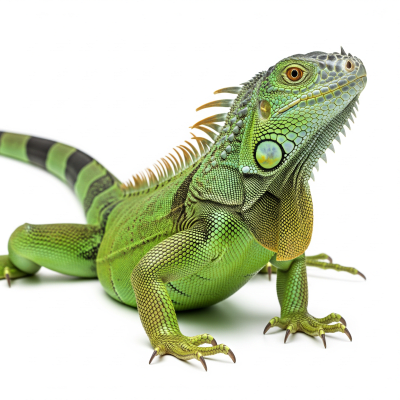
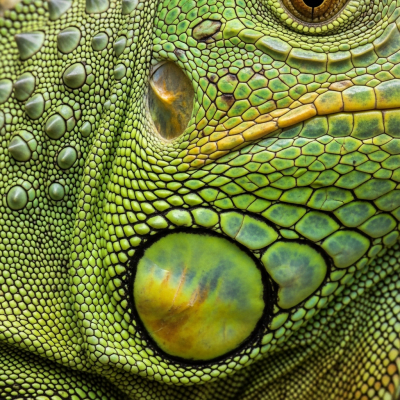
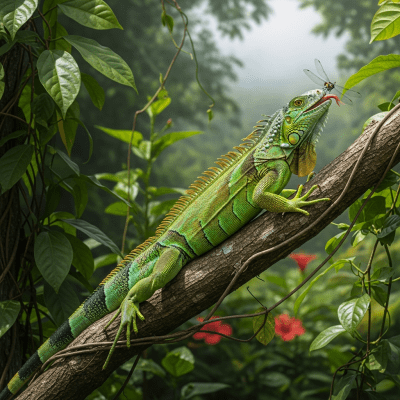
The Green Iguana features a robust body with a long tail often exceeding its body length, a prominent dewlap beneath the chin, and a striking row of spines running from the nape down the back to the tail. Juveniles display bright green coloration, while adults vary from muted greens and browns to orange hues during breeding seasons.
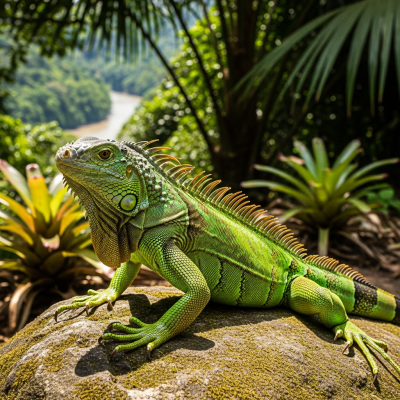
Primarily arboreal and diurnal, Green Iguanas inhabit forest canopies where they feed on leaves, flowers, and fruits. They are skilled swimmers and can drop from trees to evade predators, showcasing remarkable escape behaviors in their natural environment.
Bring this kind into your world illustrated posters, mugs, and shirts.
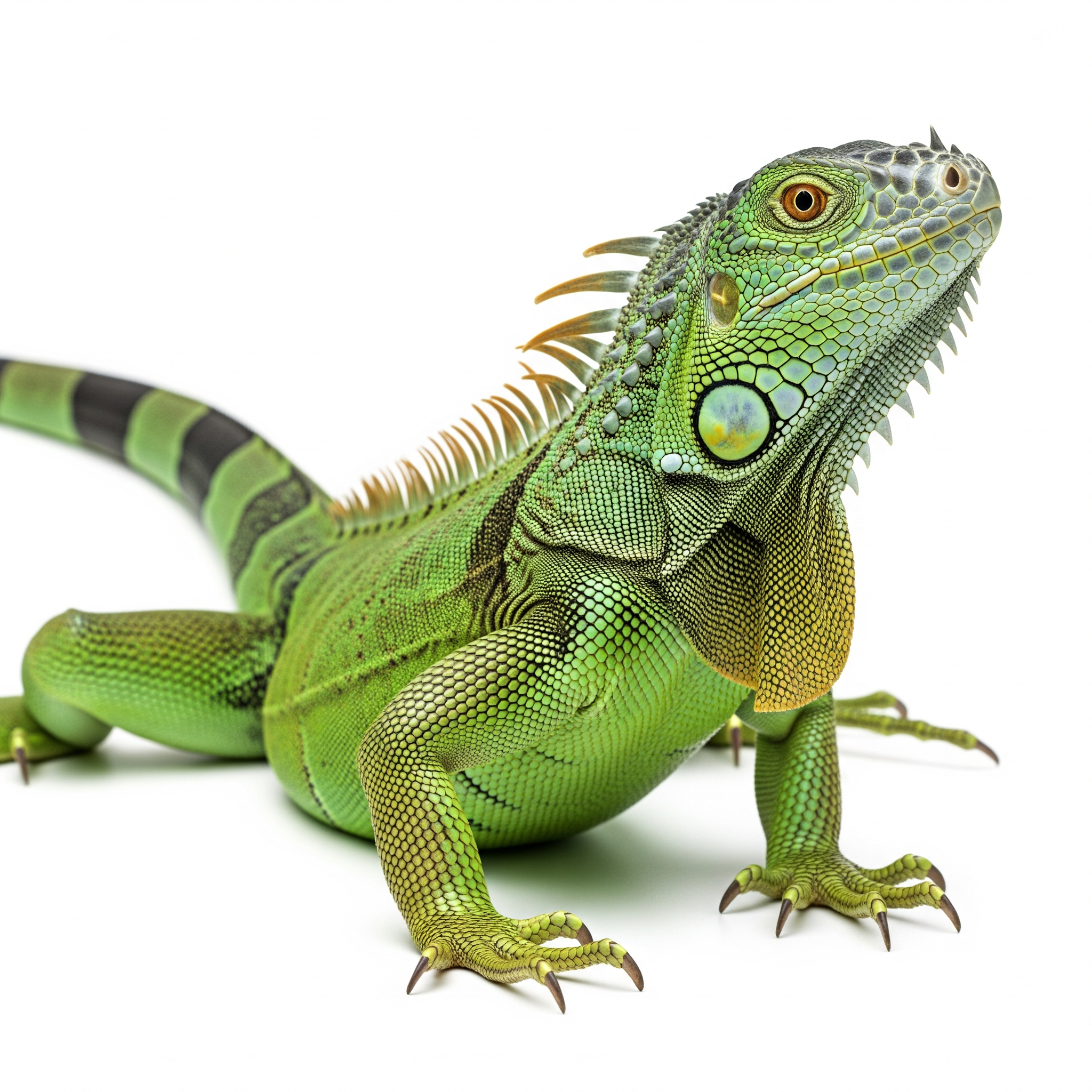
Archival print, museum-grade paper
Buy Poster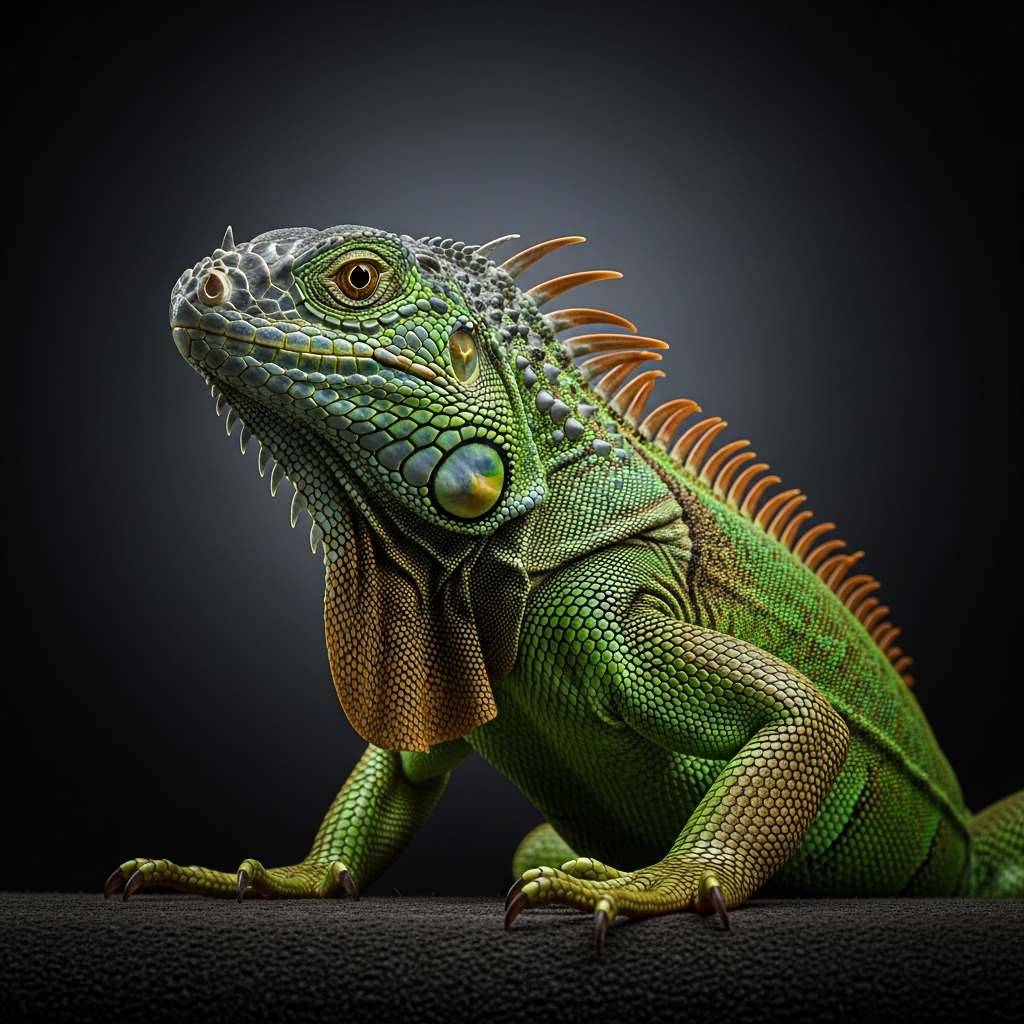
Stoneware mug, dishwasher safe
Buy Mug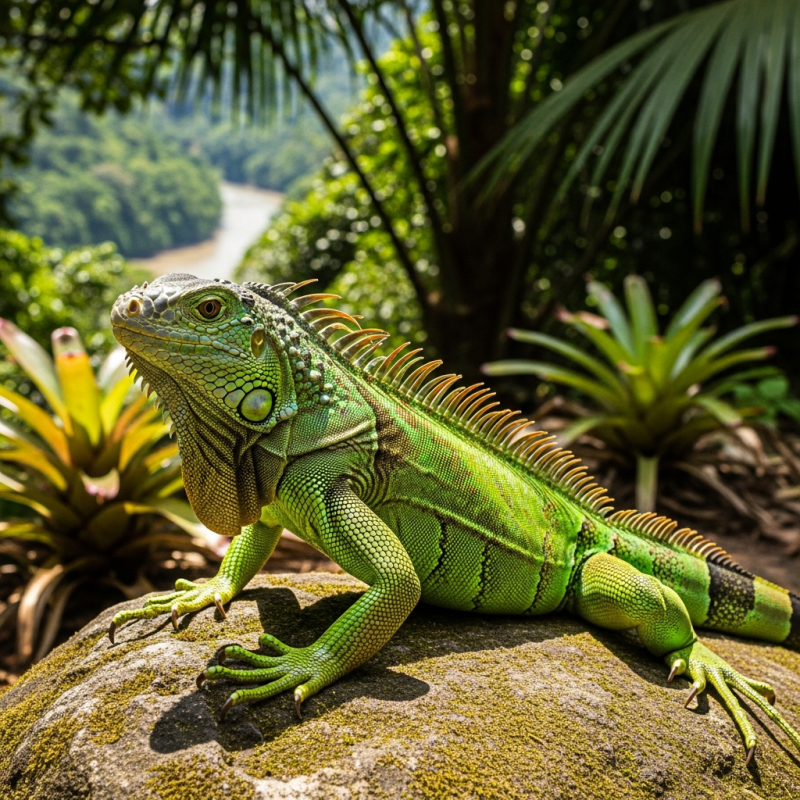
Soft cotton tee, unisex sizes
Buy ShirtKnown colloquially as "Bamboo Chicken" in parts of Central America, the Green Iguana holds cultural value both as a traditional food source and as a popular exotic pet. It also plays a role in ecotourism and educational programs due to its impressive size and vivid appearance.
Green Iguanas are native to the tropical forests of Central and South America, where they dwell primarily in the forest canopy. Their arboreal lifestyle is closely tied to warm, humid environments with abundant vegetation.
Strictly herbivorous, Green Iguanas feed on a variety of leaves, flowers, and fruits found in their arboreal habitats. Their diet supports their nutritional needs and contributes to seed dispersal in their ecosystems.
Green Iguanas reproduce by laying eggs (oviparous), typically depositing clutches in sandy or soft soil during the breeding season. Juveniles hatch fully formed and begin their arboreal life, growing rapidly to adult size over several years.
While Green Iguanas face threats from habitat loss and hunting for meat and eggs, they remain widespread. Conservation efforts include regulated trade and habitat protection to ensure sustainable populations.
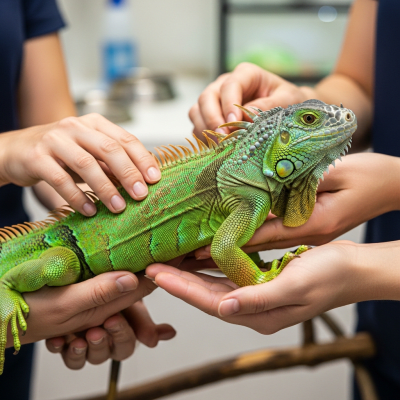
As pets, Green Iguanas require spacious enclosures with ample climbing opportunities, controlled temperatures mimicking tropical climates, and a herbivorous diet rich in leafy greens and fruits. They are prone to metabolic bone disease if calcium and UVB lighting are insufficient, making proper husbandry essential for their health and longevity.