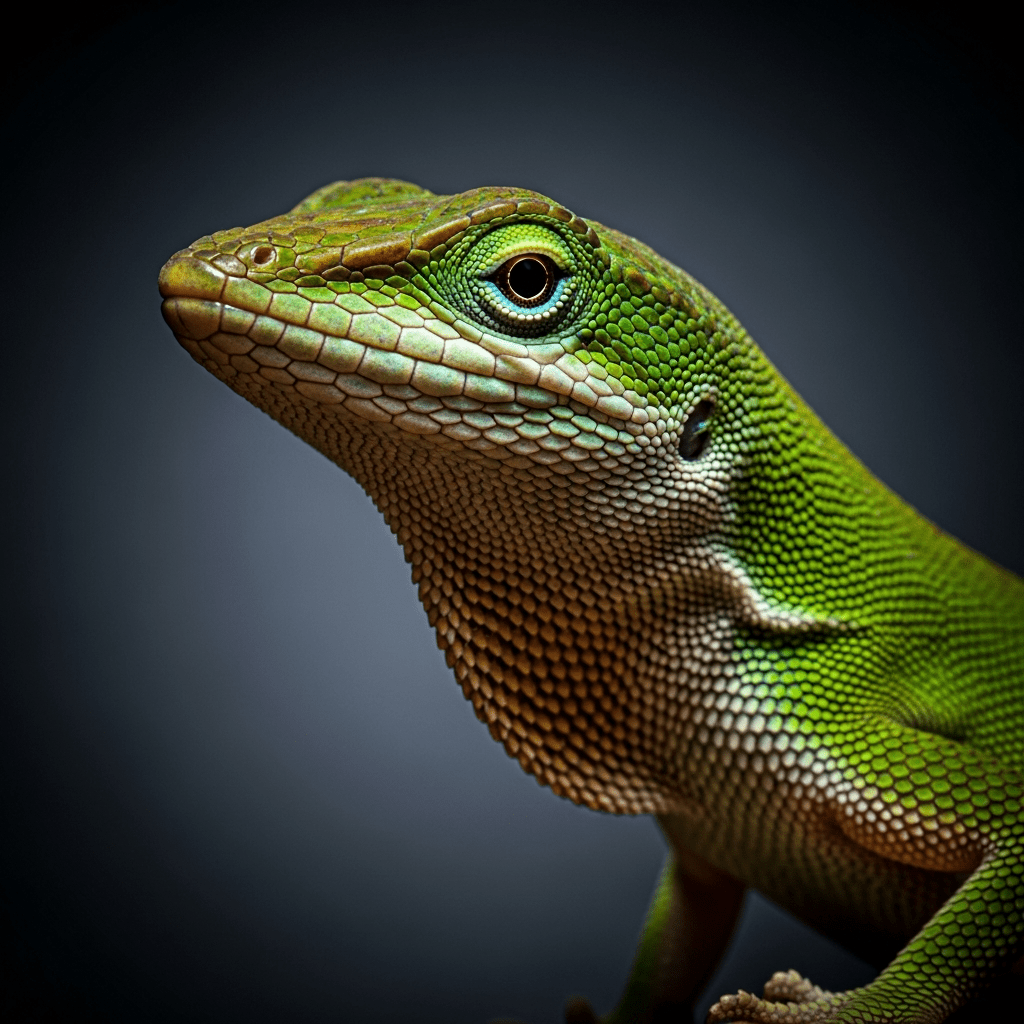
Green Anole
The Green Anole (Anolis carolinensis) is a small, arboreal lizard native to the southeastern United States, renowned for its vibrant green coloration and its ability to shift to brown tones.
The Green Anole (Anolis carolinensis) is a small, arboreal lizard native to the southeastern United States, renowned for its vibrant green coloration and its ability to shift to brown tones.
First scientifically described by Voigt in 1832, the Green Anole has its origins firmly rooted in the southeastern United States. While native to this region, it has also been introduced to places such as Hawaii, expanding its range beyond its original habitat.
The Green Anole belongs to the family Dactyloidae within the genus Anolis. It is part of the broader lizard suborder Lacertilia and is sometimes historically referred to by the synonym Anolis principalis. This classification situates it among a diverse group of arboreal lizards known for their climbing adaptations.
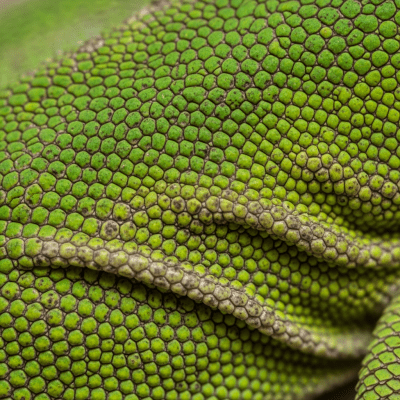
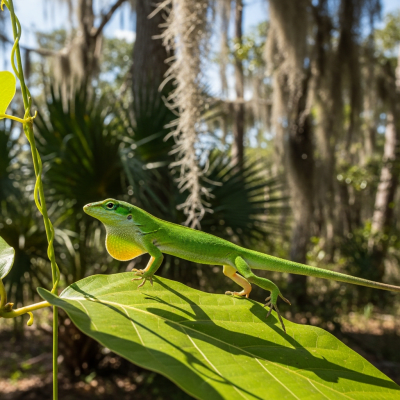
Green Anoles typically measure between 12.5 and 20.3 centimeters in total length, featuring slender bodies and long tails that aid in balance and agility. Their skin coloration ranges from vivid green to brown, influenced by environmental factors and stress. Males are distinguished by a prominent pink throat fan, or dewlap, which plays a key role in communication and territorial displays. Their adhesive toe pads enable adept climbing in their arboreal habitats.
Active during the day, Green Anoles are insectivorous hunters that rely on their agility and keen vision to capture prey. Males use their colorful dewlap in territorial and mating displays, signaling dominance and reproductive readiness. Their adaptability and interactive behaviors have made them popular in captivity and valuable as model organisms in scientific research.
Bring this kind into your world illustrated posters, mugs, and shirts.

Archival print, museum-grade paper
Buy Poster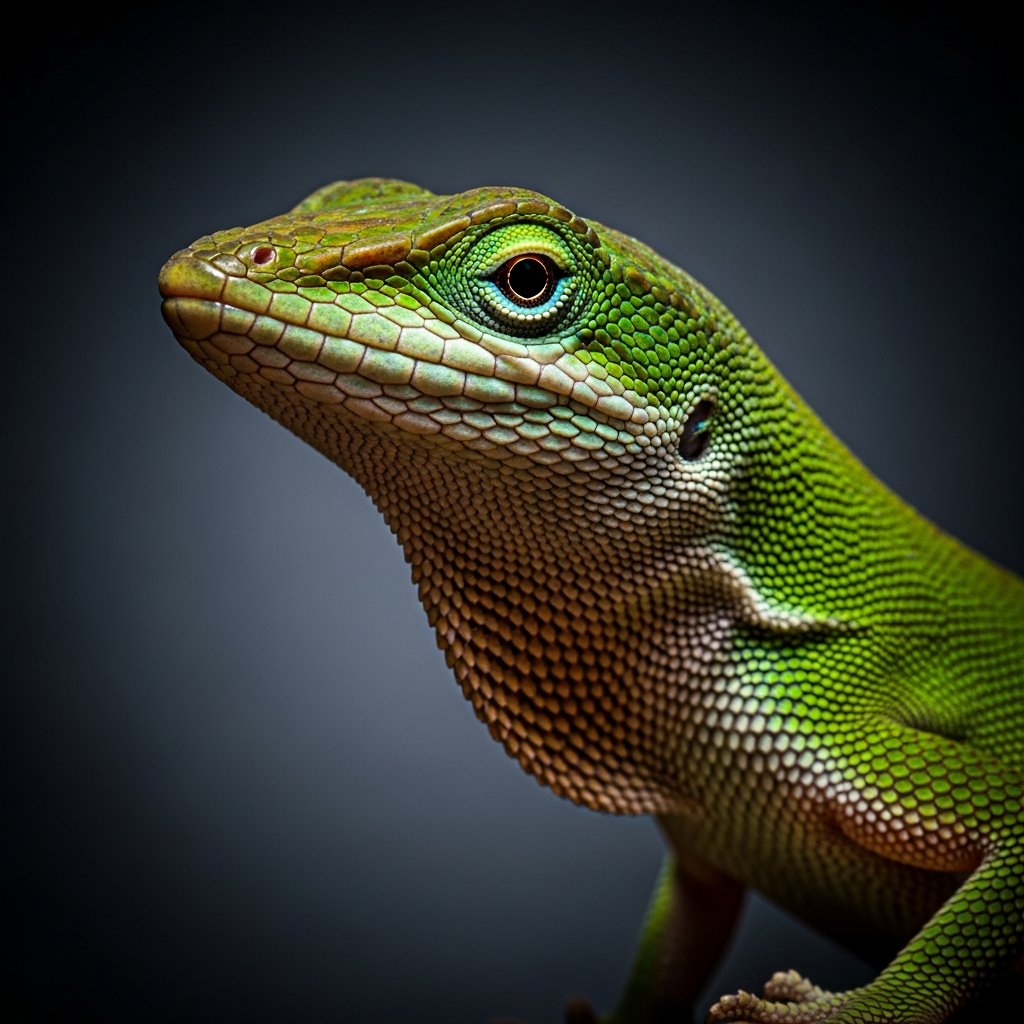
Stoneware mug, dishwasher safe
Buy Mug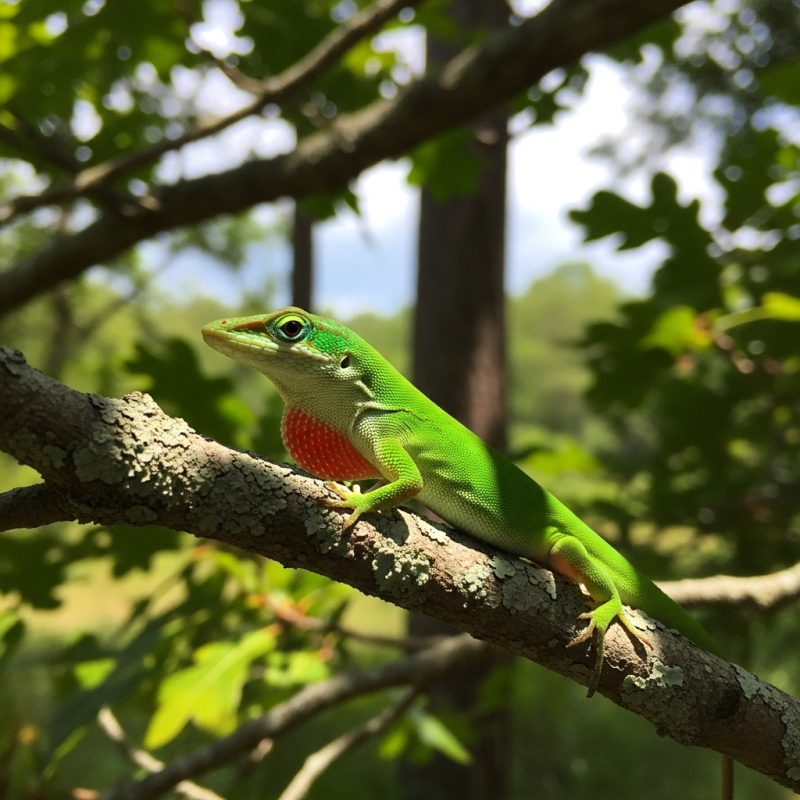
Soft cotton tee, unisex sizes
Buy ShirtWhile not prominent in traditional folklore, the Green Anole holds a place in modern culture primarily as a beloved pet and educational specimen. Often nicknamed the "American Chameleon"—a misnomer due to its color-changing ability but lack of true chameleon lineage—it has become a familiar reptile in homes and classrooms across its native and introduced ranges.
Green Anoles inhabit humid, vegetated environments, favoring arboreal niches where they can climb and bask. Their native range encompasses the southeastern United States, where they thrive in forests, gardens, and shrublands. Introduced populations exist in Hawaii and select other areas, adapting well to similar climates.
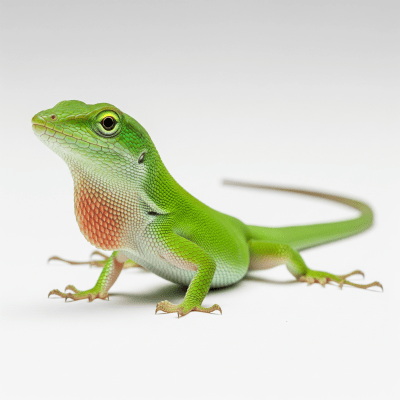
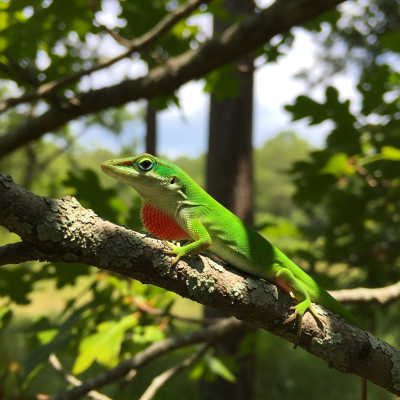
Primarily insectivorous, Green Anoles feed on a variety of small insects and arthropods. Their diurnal activity pattern supports active hunting during daylight hours, relying on agility and keen eyesight to capture prey among foliage.
Green Anoles reproduce by laying eggs (oviparous), with females depositing small clutches in concealed locations. Hatchlings grow rapidly, typically reaching adult size within six to eight months. Males develop their distinctive dewlap as they mature, which is used in courtship and territorial behaviors.
Currently, the Green Anole faces no major threats and is considered stable in the wild. Its adaptability and widespread distribution contribute to a secure conservation status, though sensitivity to low temperatures limits its range and survivability in colder climates.
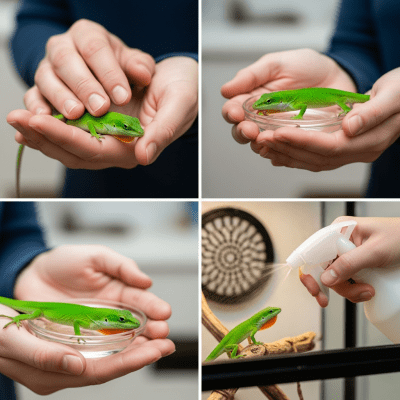
Green Anoles are popular pets requiring humid, well-vegetated enclosures that mimic their natural arboreal habitat. They need appropriate temperature regulation, as they are sensitive to cold. Their diet in captivity should consist of live insects, and they benefit from UV lighting to support health. With proper care, they can thrive and display their characteristic behaviors in home environments.