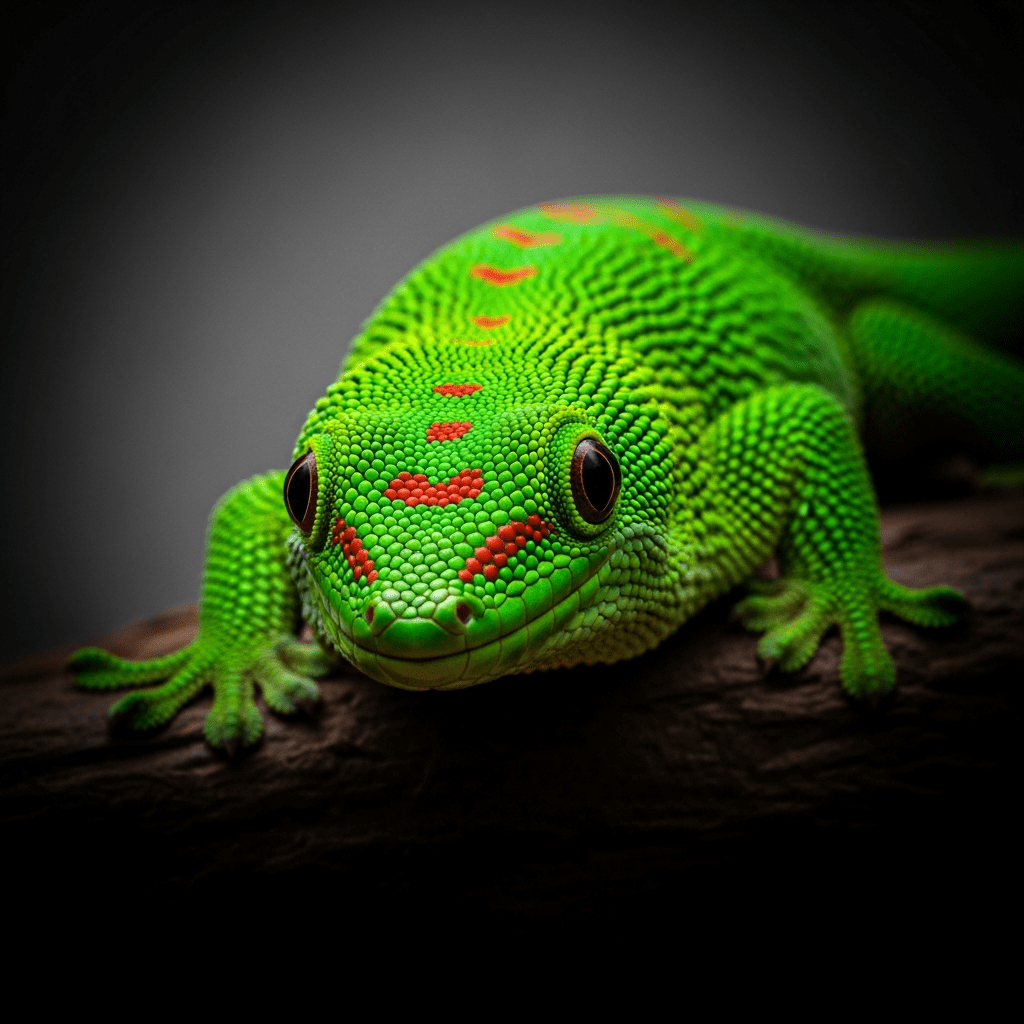
Giant Day Gecko
The Giant Day Gecko (Phelsuma grandis) is a large, vividly colored diurnal gecko native to northern Madagascar, renowned for its bright green body marked with striking red patterns and its arboreal lifestyle.
The Giant Day Gecko (Phelsuma grandis) is a large, vividly colored diurnal gecko native to northern Madagascar, renowned for its bright green body marked with striking red patterns and its arboreal lifestyle.
First described by Gray in 1870, the Giant Day Gecko originates from the humid forests of northern Madagascar. It has remained endemic to this region, with no natural hybridization, and has become widely bred in captivity for the pet trade.
The Giant Day Gecko belongs to the genus Phelsuma within the family Gekkonidae. It is part of the diverse group of day geckos known for their vibrant colors and arboreal habits. Historically, it has also been referred to as Phelsuma madagascariensis grandis as a subspecies designation.
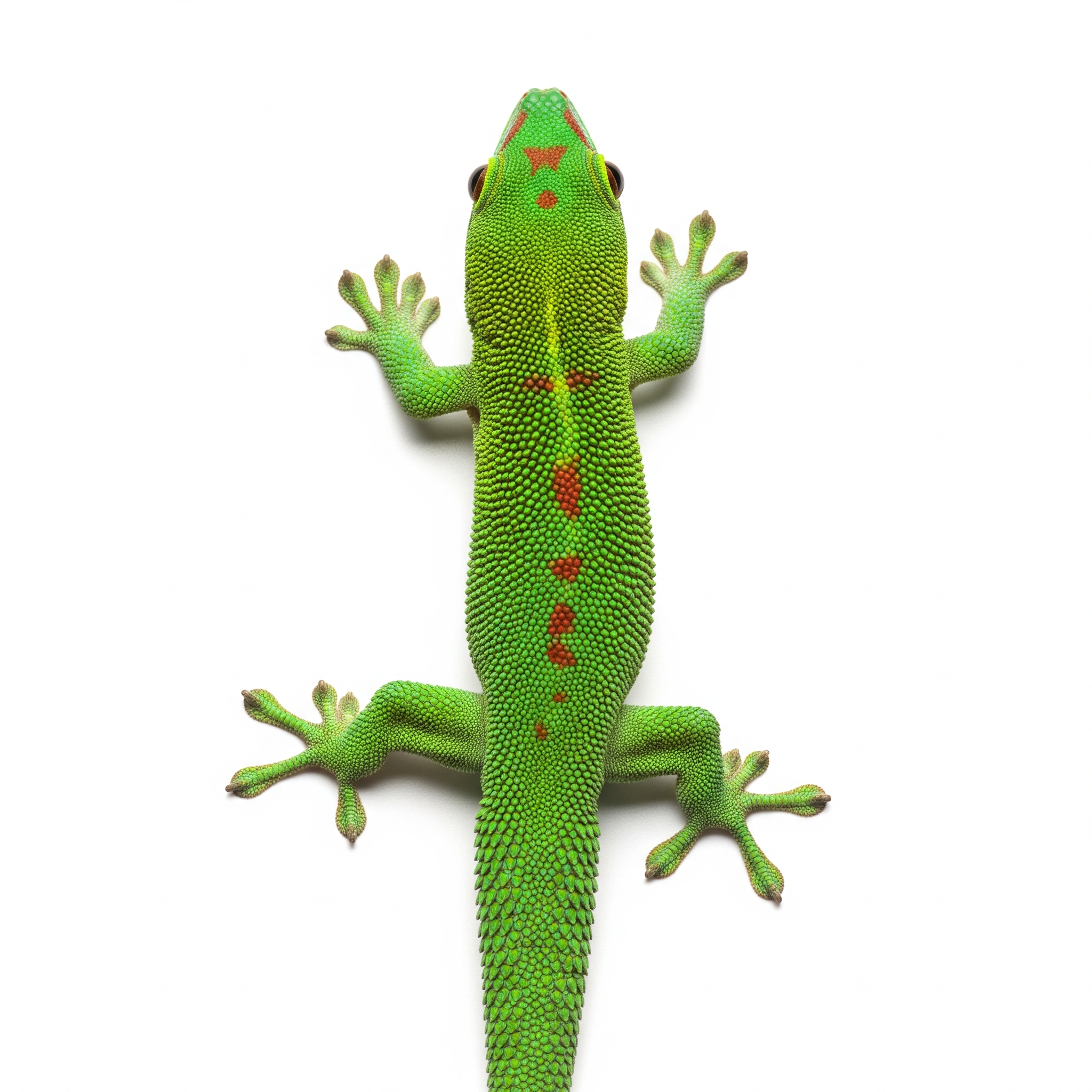
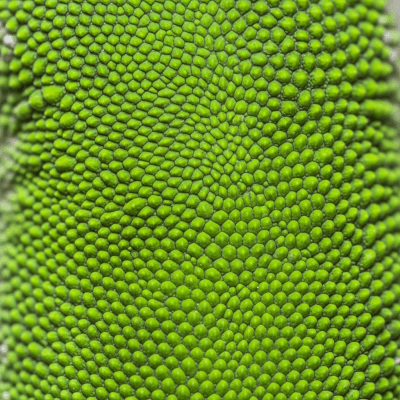
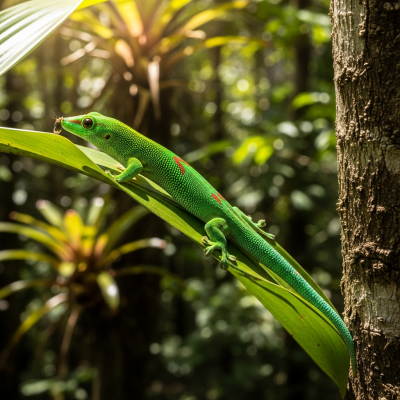
This species reaches lengths of 22 to 30 centimeters, making it the largest in its genus. Its bright green body is adorned with red or orange spots and bars across the head and back, complemented by a pale underside. Equipped with well-developed limbs and adhesive toe pads, it expertly climbs smooth surfaces in its arboreal environment.
The Giant Day Gecko is strictly diurnal and arboreal, spending its days active among trees in humid forests and plantations. Its climbing ability is enhanced by specialized toe pads, allowing it to navigate vertical and smooth surfaces with ease. It interacts with its environment primarily through foraging and territorial behaviors typical of day geckos.
Bring this kind into your world illustrated posters, mugs, and shirts.
Archival print, museum-grade paper
Buy Poster
Stoneware mug, dishwasher safe
Buy Mug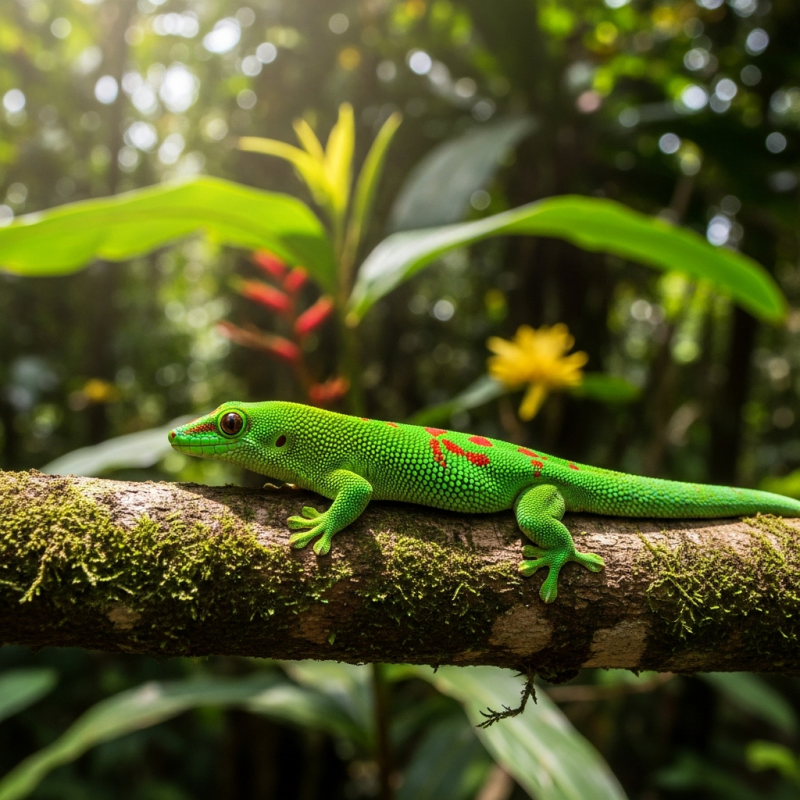
Soft cotton tee, unisex sizes
Buy ShirtWhile not prominent in traditional folklore, the Giant Day Gecko holds significance in modern culture as a popular exotic pet and an educational ambassador for Madagascar’s unique biodiversity. It also contributes to ecotourism by drawing attention to the island’s rich reptilian fauna.
The Giant Day Gecko inhabits humid forests, plantations, and occasionally human dwellings in northern Madagascar. It thrives in arboreal microhabitats where it can exploit vertical surfaces and dense foliage for shelter and foraging.


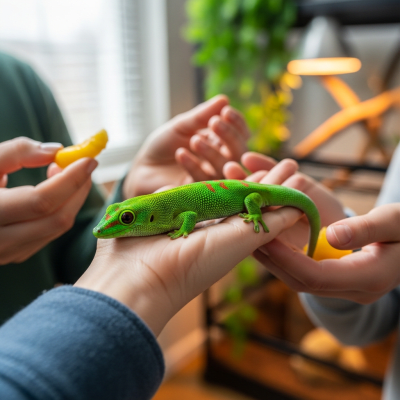
This gecko maintains an omnivorous diet, consuming a variety of insects, nectar, and fruit. Occasionally, it preys on small vertebrates, showcasing dietary flexibility that supports its survival in diverse arboreal environments.
While specific reproductive details are limited, the Giant Day Gecko is oviparous like other day geckos, laying eggs that develop externally. It undergoes typical life stages from egg to juvenile to adult, with captive lifespans reaching up to 15 years.
Though tolerant of moderate habitat disturbance, the Giant Day Gecko is sensitive to low humidity and cold temperatures, factors that can threaten wild populations. Conservation efforts focus on habitat protection in Madagascar, but it currently benefits from captive breeding programs that reduce wild collection pressures.
Commonly bred in captivity, the Giant Day Gecko requires environments that mimic its natural humid, arboreal habitat. Proper husbandry includes maintaining adequate humidity, temperature, and providing climbing structures. Its diet should include insects, nectar substitutes, and fruit. With attentive care, it can live up to 15 years in captivity.