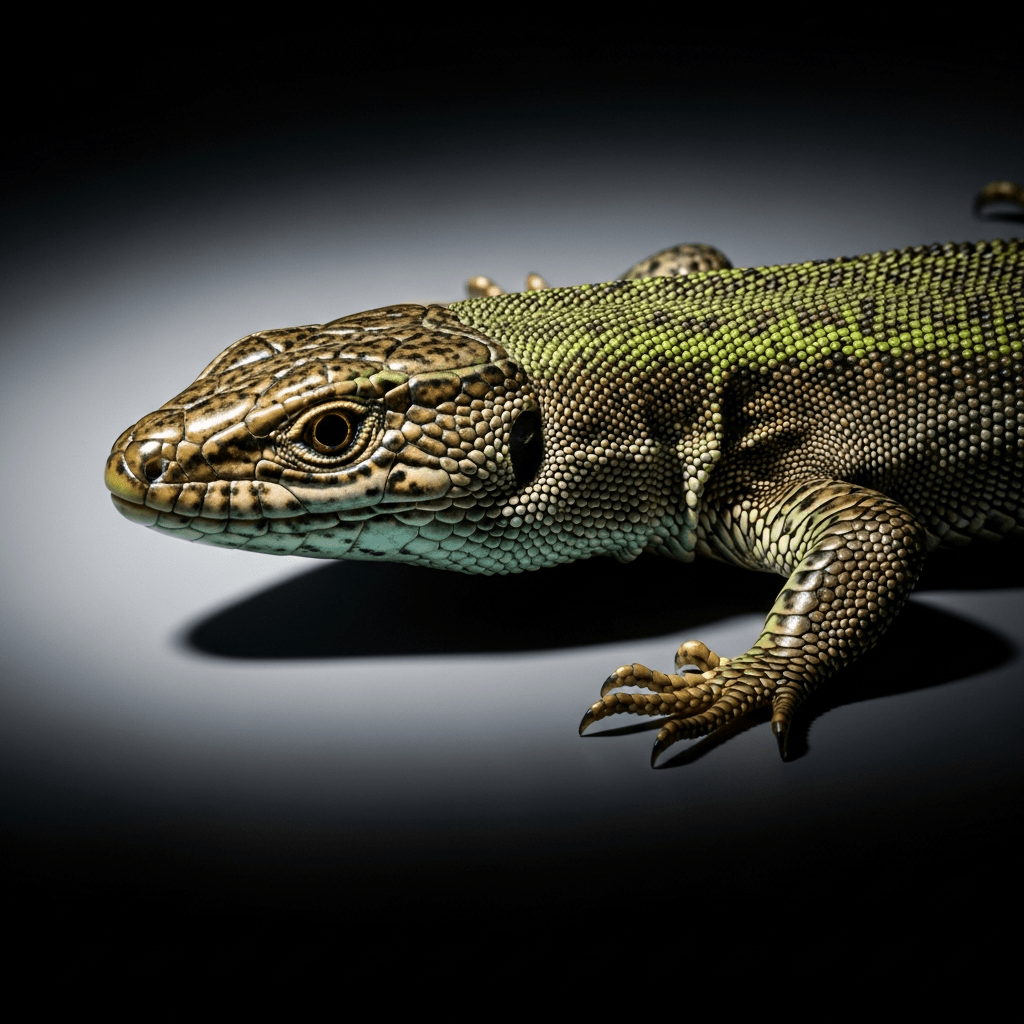
Common Wall Lizard
The Common Wall Lizard (Podarcis muralis) is a small, agile reptile native to Europe, known for its remarkable adaptability to urban and rocky environments, making it one of the most widespread lizards across its range.
The Common Wall Lizard (Podarcis muralis) is a small, agile reptile native to Europe, known for its remarkable adaptability to urban and rocky environments, making it one of the most widespread lizards across its range.
First described by Laurenti in 1768, the Common Wall Lizard originates from Europe where it naturally inhabits a variety of landscapes. Over time, human activity has introduced populations to parts of North America, including the Pacific Northwest, Ohio, and British Columbia, Canada, where it continues to thrive outside its native range.
Belonging to the family Lacertidae within the genus Podarcis, the Common Wall Lizard is part of the suborder Lacertilia, encompassing true lizards. It shares close relations with other wall lizards and lacertid species, distinguished by their slender bodies and active lifestyles.
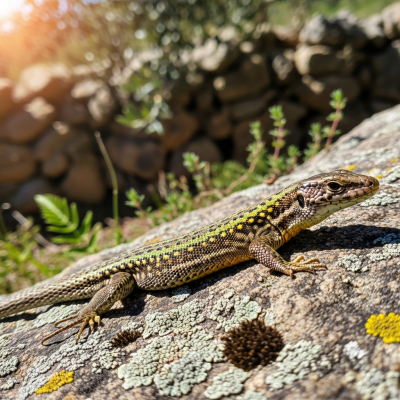
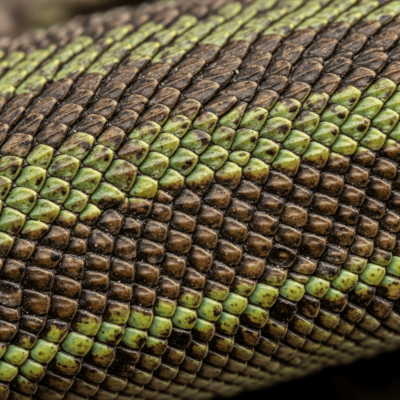
This lizard typically measures between 15 and 23 centimeters in total length, including its tail. It has a slender body with well-developed limbs, enabling swift and agile movement. Its coloration is highly variable, ranging from brown, grey, and green to reddish hues, often adorned with dark markings or stripes along the back and flanks. The ventral surface may display shades of white, yellow, orange, or red, contributing to its distinctive appearance.
Active during the day, the Common Wall Lizard is known for its agility and climbing skills, frequently seen scaling vertical surfaces such as walls and rocks. It thrives in both natural rocky habitats and human-modified urban areas, demonstrating a notable resistance to disturbance and habitat fragmentation. While it plays an ecological role in its environment, it is also valued as a model organism in scientific research and occasionally kept for educational display.
Bring this kind into your world illustrated posters, mugs, and shirts.
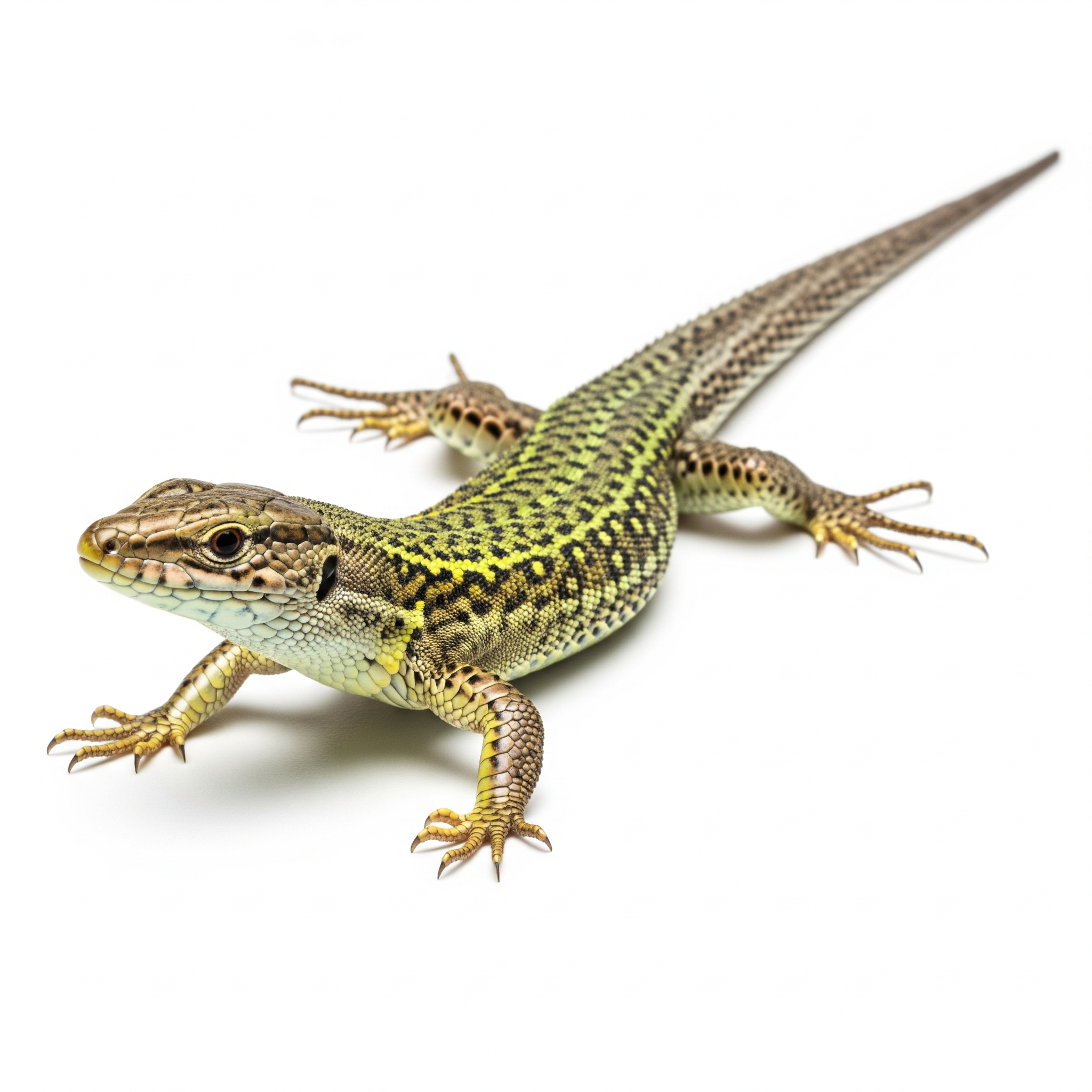
Archival print, museum-grade paper
Buy Poster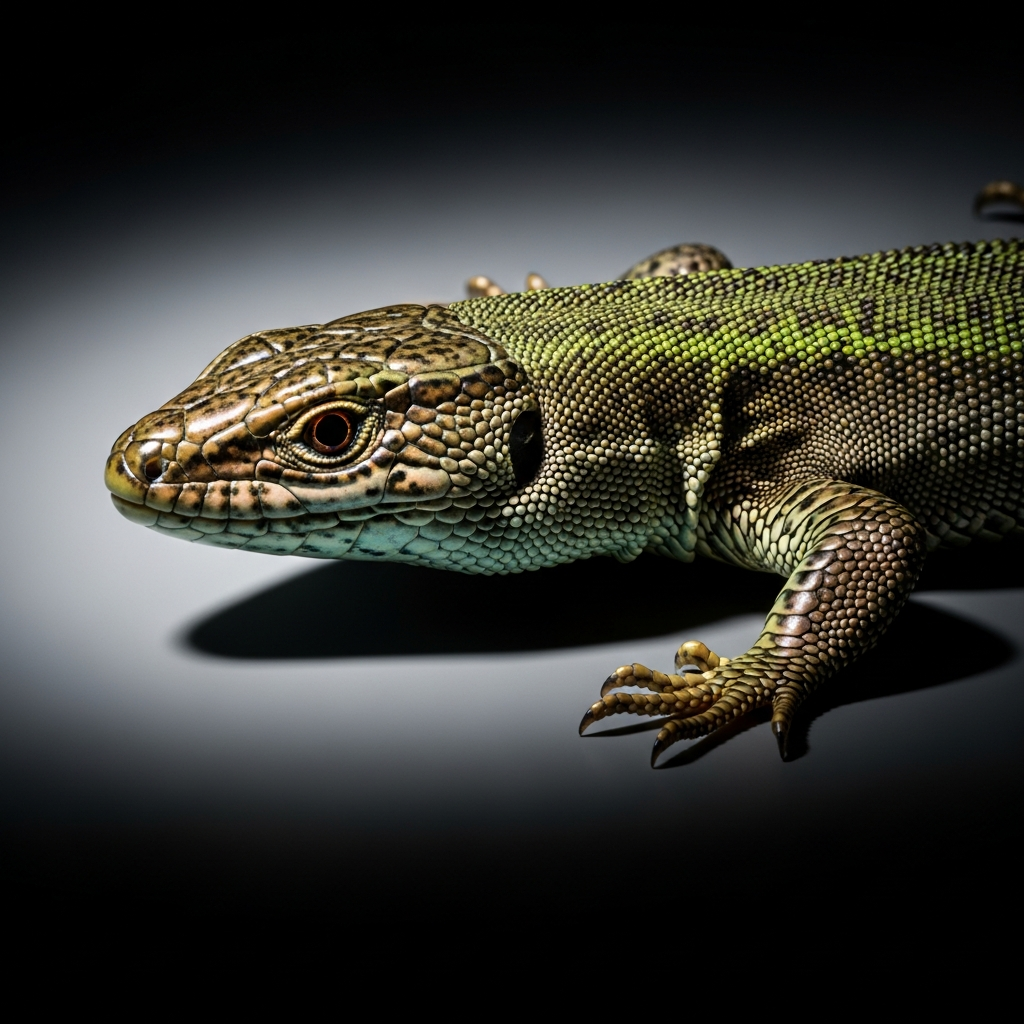
Stoneware mug, dishwasher safe
Buy Mug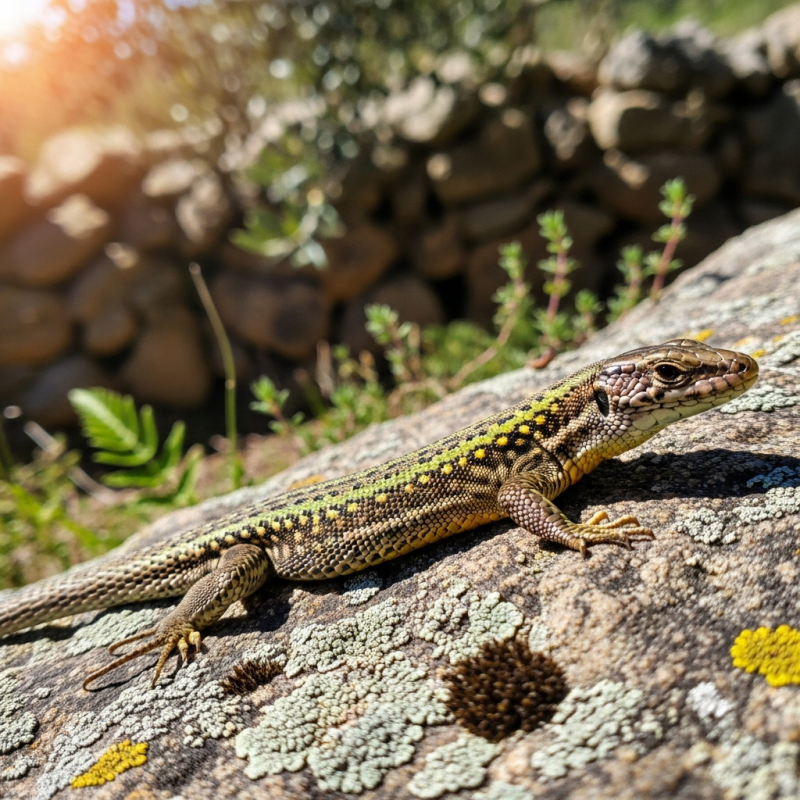
Soft cotton tee, unisex sizes
Buy ShirtThough not prominent in folklore or art, the Common Wall Lizard holds ecological and educational significance. It serves as a living example of adaptability and urban wildlife resilience, often featured in scientific studies and educational programs that highlight biodiversity and species interactions within human environments.
The Common Wall Lizard inhabits a range of environments, favoring rocky outcrops, walls, and urban areas where it can find shelter and basking spots. Its native range spans much of Europe, from Mediterranean regions to central and western parts of the continent. Human introductions have led to established populations in the United States, particularly the Pacific Northwest and Ohio, as well as in British Columbia, Canada, where it occupies similar habitats.

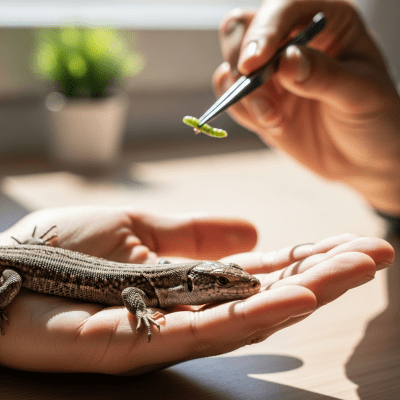

This species is insectivorous, feeding on a variety of small invertebrates such as insects and spiders. Its diurnal activity pattern supports active foraging during daylight hours, often involving quick sprints and agile movements to capture prey on vertical and uneven surfaces.
The Common Wall Lizard is oviparous, laying clutches of 2 to 10 eggs. It exhibits rapid growth and reaches sexual maturity early, which supports its ability to colonize diverse and fragmented habitats efficiently. Breeding seasons typically align with warmer months, ensuring optimal conditions for egg incubation and hatchling survival.
Currently, the Common Wall Lizard is not considered threatened and demonstrates resilience to urban disturbance and habitat fragmentation. Its widespread distribution and adaptability contribute to a stable conservation status, though monitoring continues in introduced regions to assess ecological impacts and population dynamics.
While occasionally maintained for educational purposes, the Common Wall Lizard is not widely kept as a pet. It requires an enclosure that mimics its natural environment, including ample climbing structures and basking areas. A diet of live insects and a diurnal lighting cycle are essential. Captive breeding is uncommon, and potential keepers should prioritize the species' ecological role and legal protections before considering ownership.