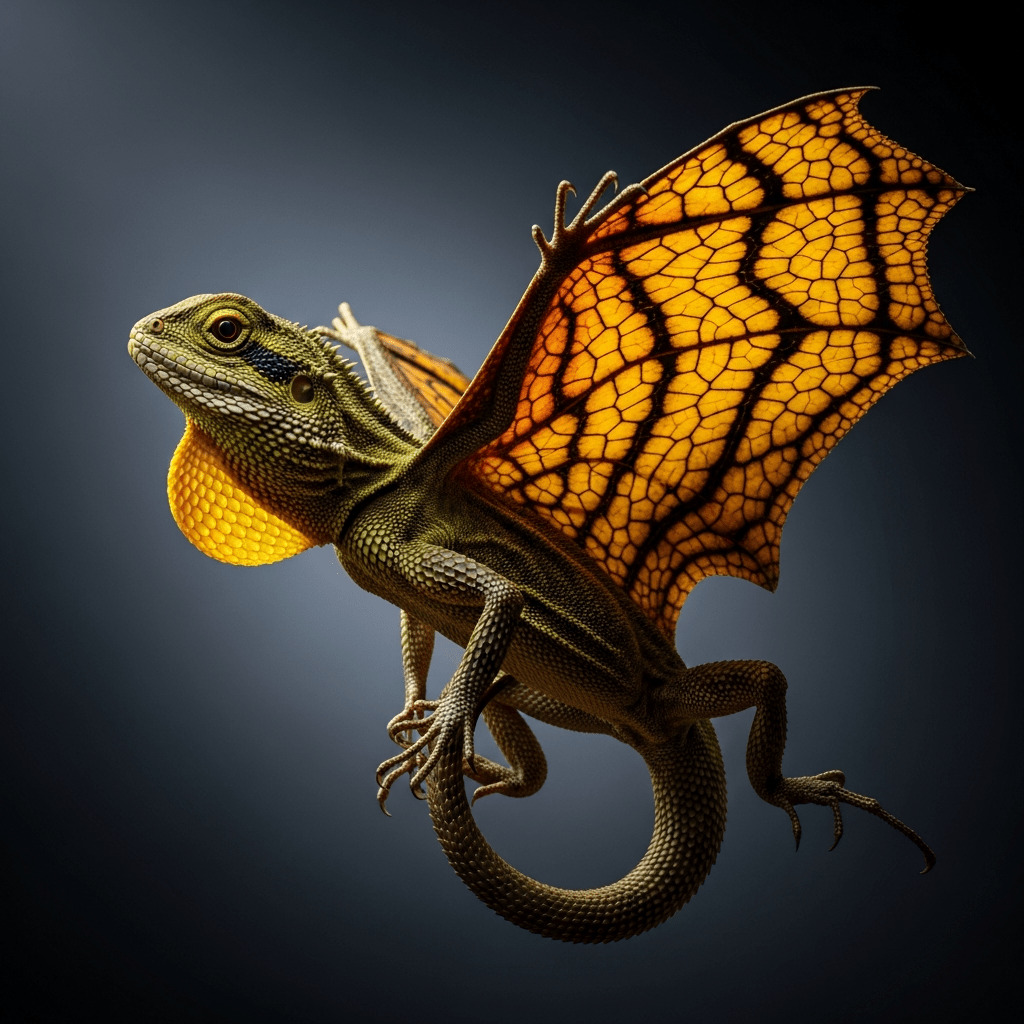
Common Flying Dragon
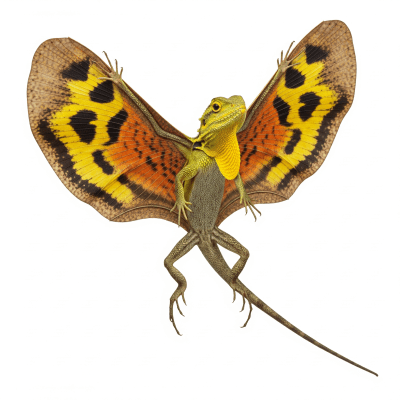
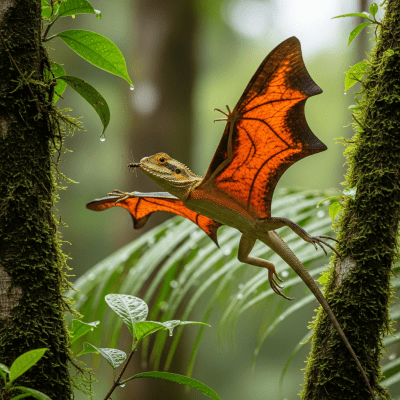
The Common Flying Dragon (Draco volans) is a small, arboreal lizard native to Southeast Asia, celebrated for its unique gliding ability enabled by elongated ribs that support wing-like membranes.
The Common Flying Dragon (Draco volans) is a small, arboreal lizard native to Southeast Asia, celebrated for its unique gliding ability enabled by elongated ribs that support wing-like membranes.
First described by Carl Linnaeus in 1758, the Common Flying Dragon originates from the forests of Southeast Asia, including Indonesia, Malaysia, Thailand, and the Philippines. Its natural lineage within the genus Draco reflects a long evolutionary history of adaptation to arboreal life.
The Common Flying Dragon belongs to the family Agamidae within the suborder Lacertilia (true lizards). Its genus, Draco, comprises specialized gliding lizards distinguished by their elongated ribs and patagial membranes, setting them apart from other agamid lizards.
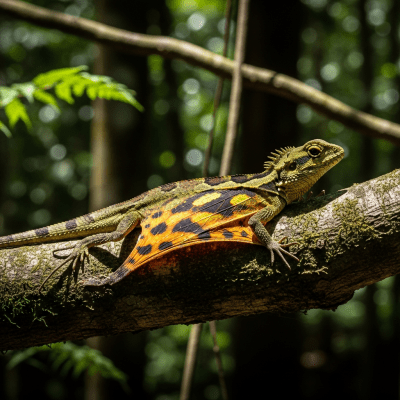
This slender lizard measures between 19 and 23 centimeters in total length, including its tail. Its coloration blends mottled brown, gray, and olive tones, providing effective camouflage against tree bark. A striking feature is the male's prominent gular flag or dewlap, used in territorial displays. The most distinctive trait is its elongated ribs that extend outward to support wing-like patagial membranes, enabling its remarkable gliding ability.
The Common Flying Dragon is strictly arboreal and diurnal, spending most of its life in the forest canopy. It rarely descends to the ground except to lay eggs. Its gliding membranes allow it to move efficiently between trees, escaping predators and searching for food. Males use their colorful dewlap in territorial and mating displays, communicating visually with rivals and potential mates.
Bring this kind into your world illustrated posters, mugs, and shirts.
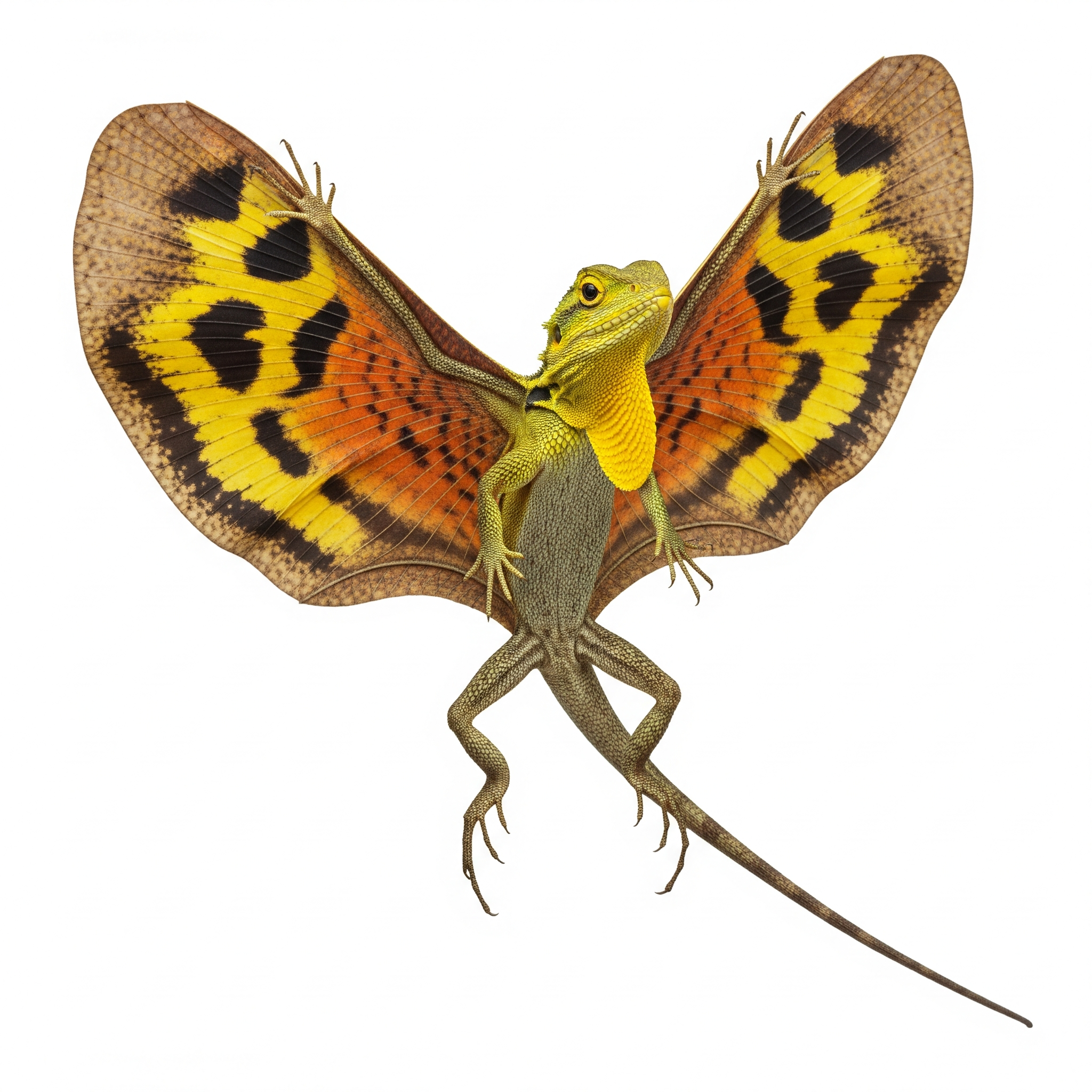
Archival print, museum-grade paper
Buy Poster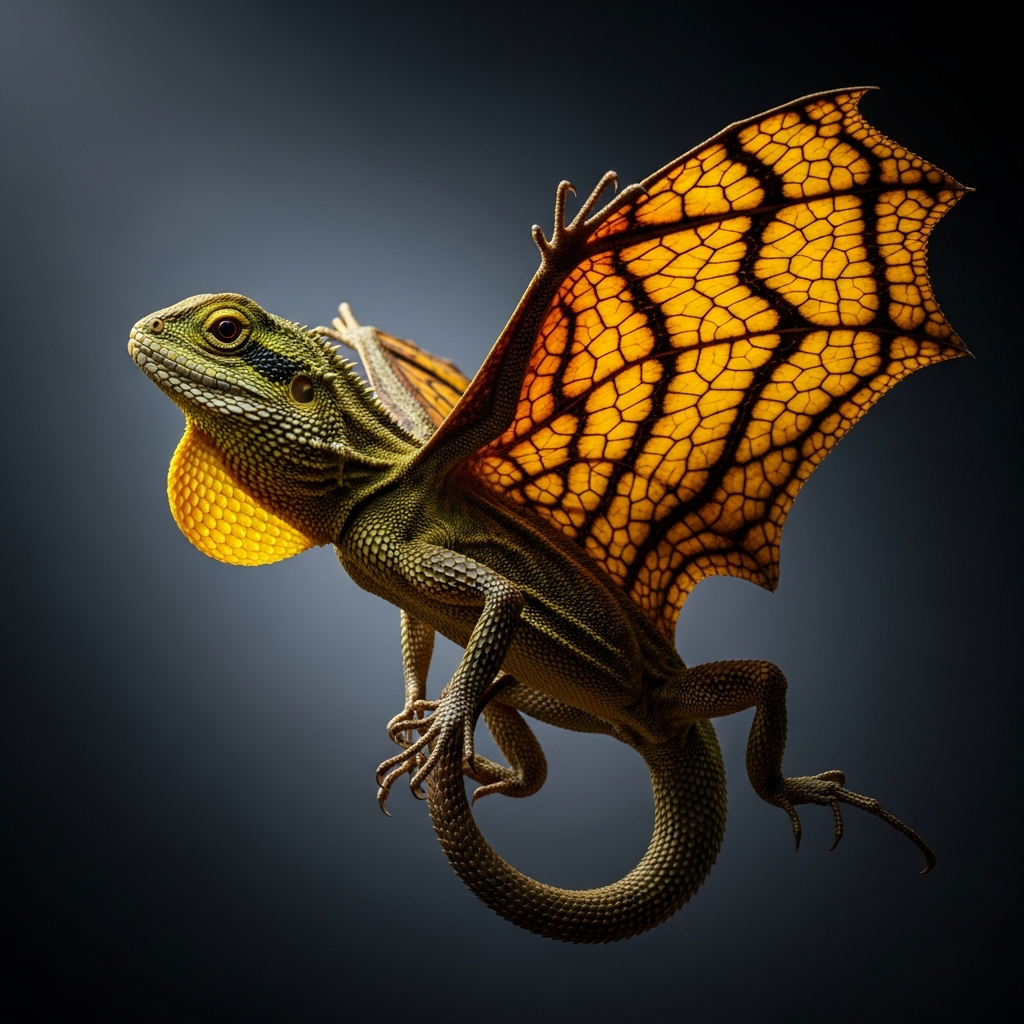
Stoneware mug, dishwasher safe
Buy Mug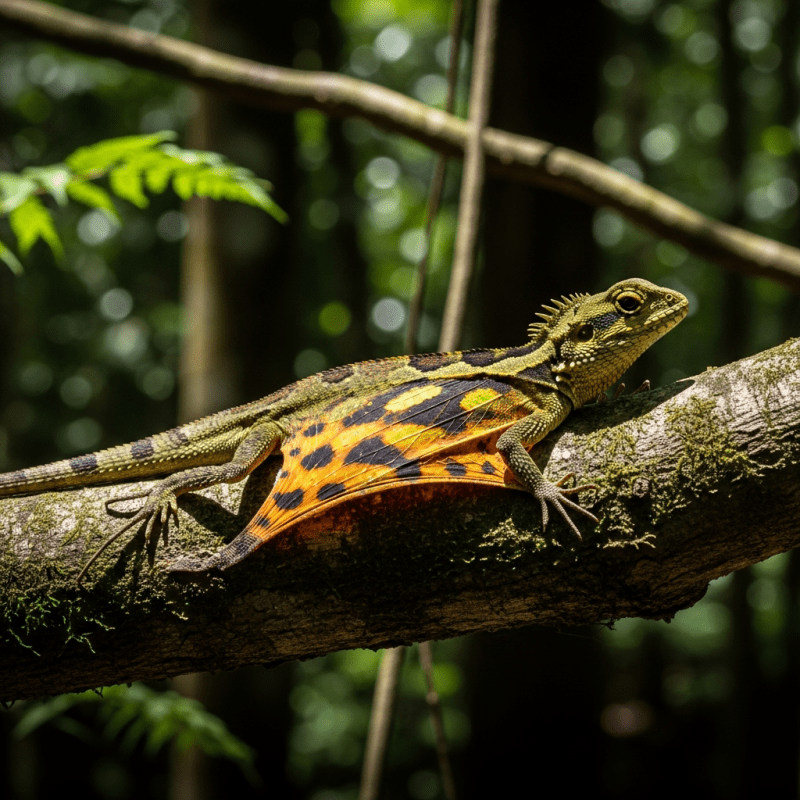
Soft cotton tee, unisex sizes
Buy ShirtIn Southeast Asia, the Common Flying Dragon appears in folklore and educational exhibits, symbolizing agility and the marvels of natural adaptation. Though not widely traded or consumed, it holds a place in local cultural awareness as a fascinating example of nature’s ingenuity.
The Common Flying Dragon inhabits forested areas across Southeast Asia, favoring the canopy of tropical rainforests. It is strictly arboreal, rarely descending to the ground except to lay eggs. Its range includes Indonesia, Malaysia, Thailand, and the Philippines, where it thrives in dense, humid woodlands.

While specific dietary details are limited, the Common Flying Dragon is presumed to feed on small insects and arthropods found in its arboreal environment, using its agility to hunt among the trees during daylight hours.
This species is oviparous, laying eggs on the ground after descending from the trees. Sexual maturity is typically reached at about one year of age. The lizard’s lifecycle involves continuous growth, with juveniles developing the characteristic gliding membranes as they mature.
The Common Flying Dragon faces threats primarily from habitat loss due to deforestation and predation by birds. While not currently listed as endangered, its reliance on forest habitats makes it vulnerable to environmental changes and habitat fragmentation.
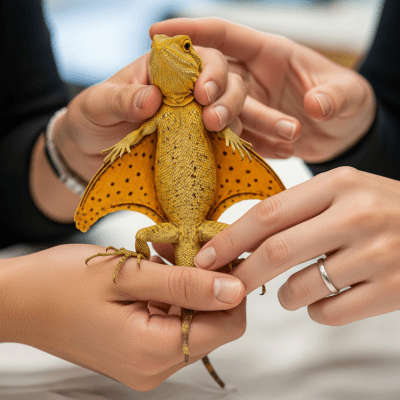
Keeping the Common Flying Dragon as a pet is challenging due to its specialized arboreal habitat and gliding behavior. It requires spacious enclosures with ample vertical space, live plants, and controlled humidity to mimic its natural environment. Its diet should include a variety of insects, and care must be taken to provide proper lighting and temperature. Health issues in captivity are not well documented, but maintaining naturalistic conditions is essential for its well-being.