Origin Story

First described by John Edward Gray in 1825, the Common Blue-tongued Skink is native to Australia, where it naturally inhabits diverse regions without human introduction or captive breeding origins. Its lineage within the family Scincidae reflects a long-standing presence in the continent's ecosystems.

Classification

This species belongs to the genus Tiliqua within the family Scincidae, a diverse group of skinks characterized by smooth scales and sturdy bodies. It is part of the suborder Lacertilia, encompassing true lizards distinguished by features such as external ear openings and movable eyelids.

Appearance or Form

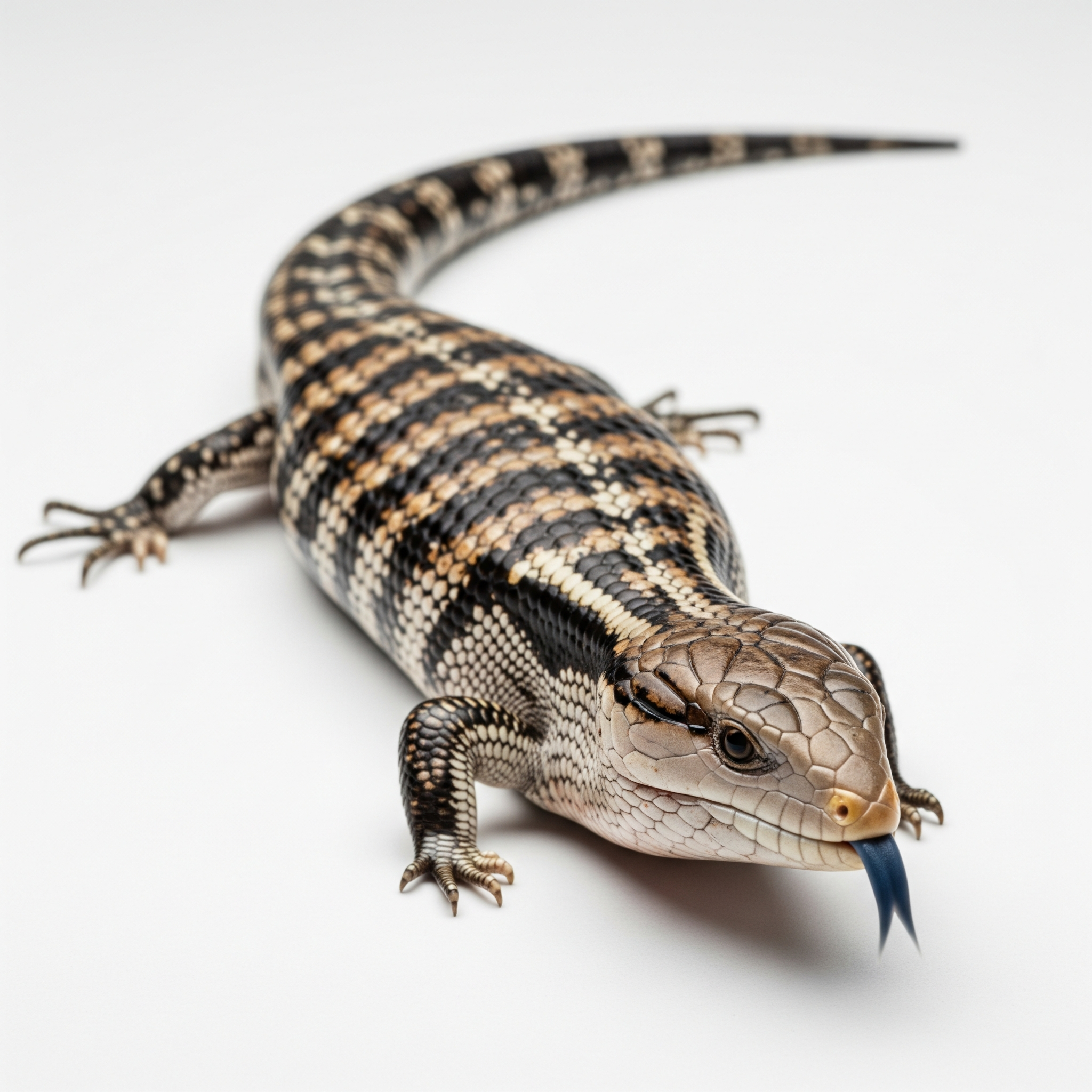
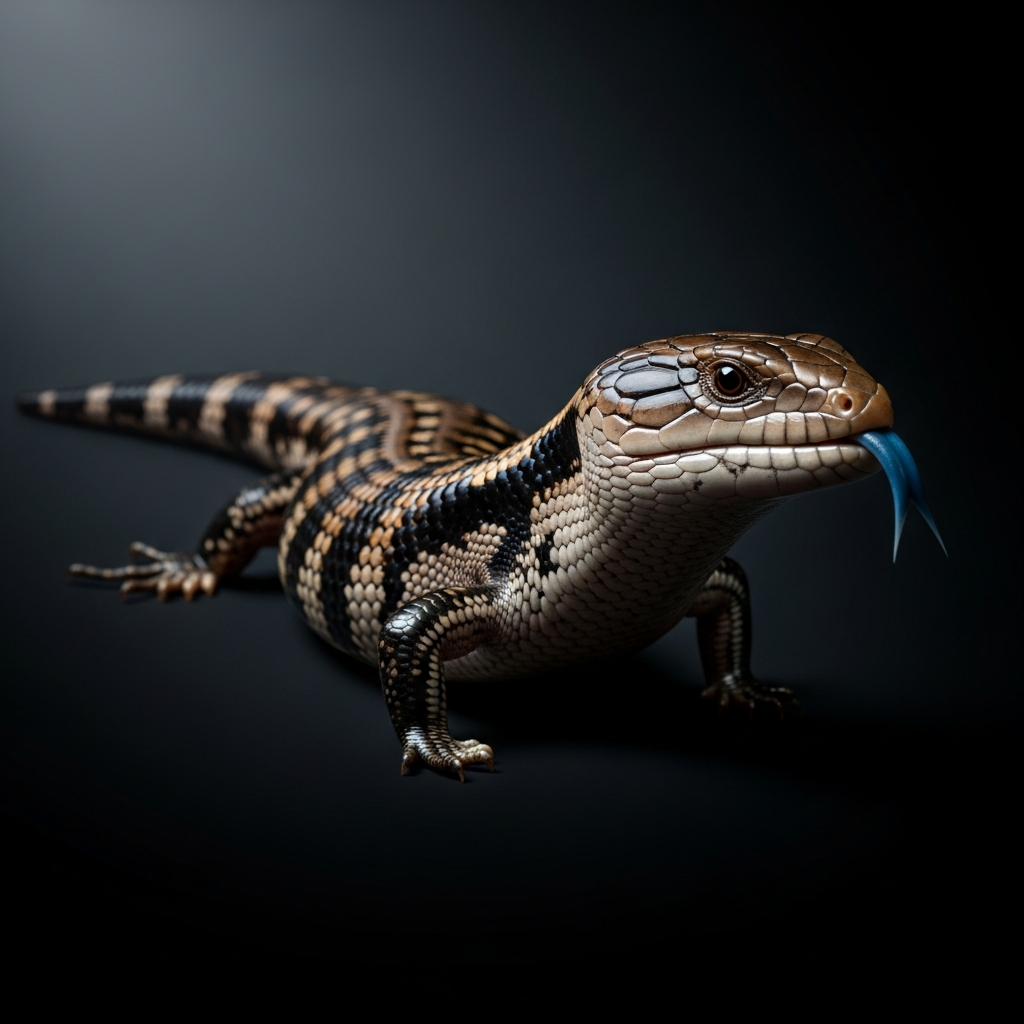
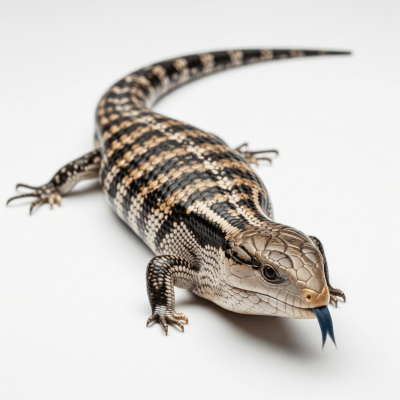
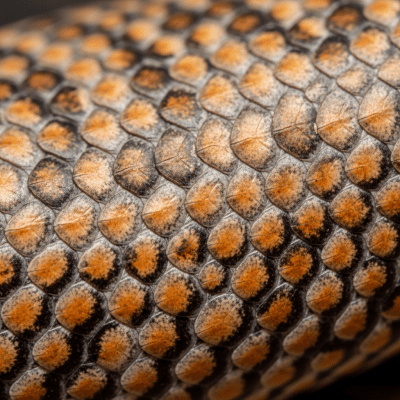
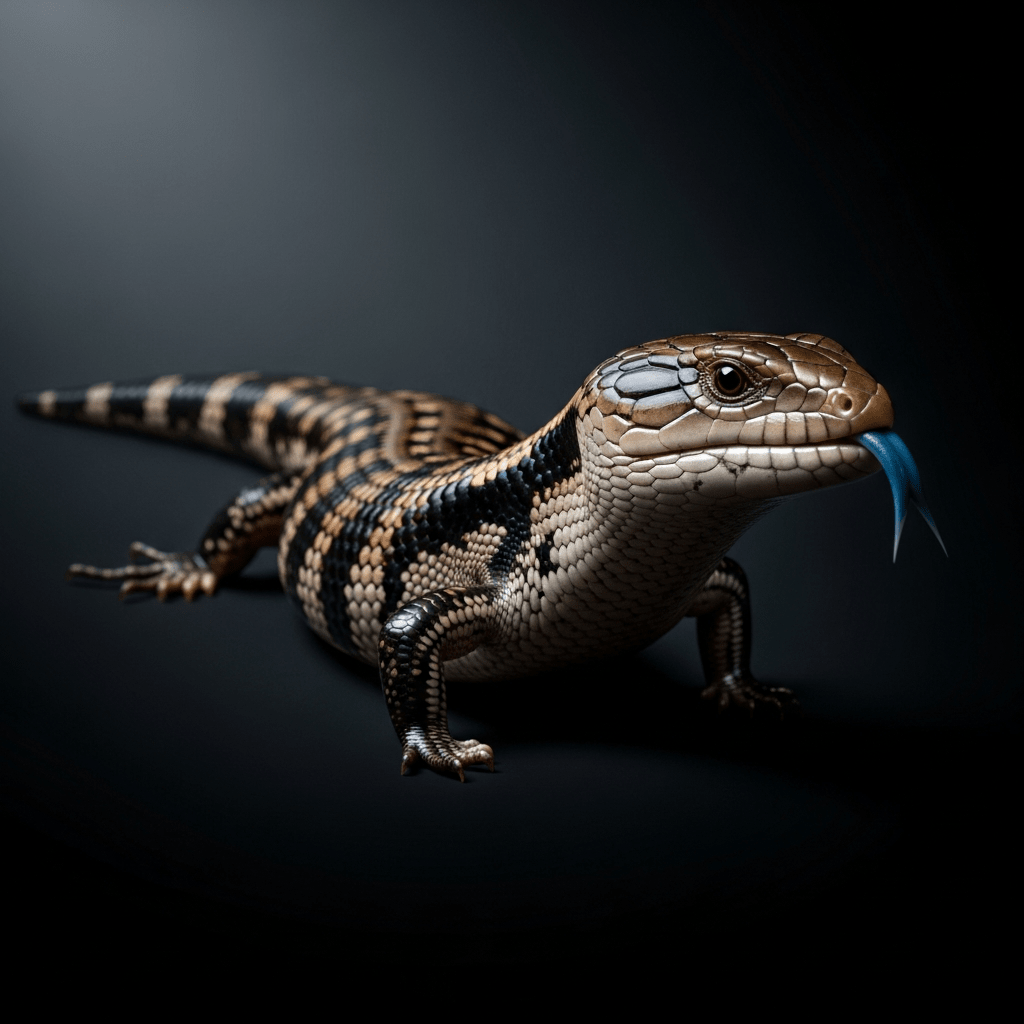
The Common Blue-tongued Skink typically measures between 30 and 60 centimeters in length, featuring a stout body, short limbs, and a broad, triangular head. Its smooth, overlapping scales display bands of brown, gray, and cream, while its most distinctive trait is a vivid blue tongue, which it prominently displays as a defensive warning.

Behavior or Usage

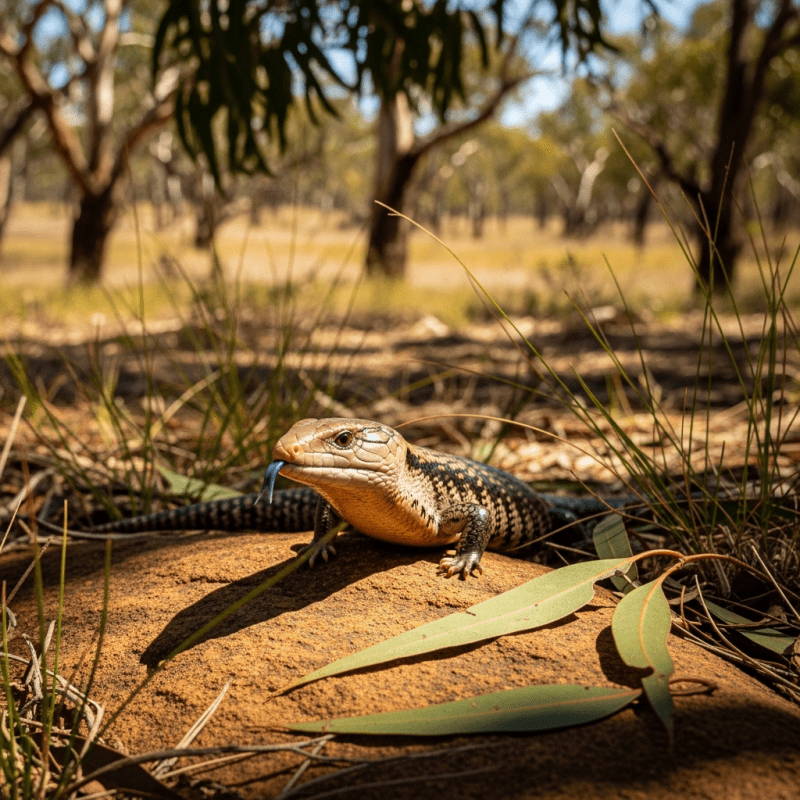
Active during the day, this terrestrial skink favors open woodlands, grasslands, and even suburban gardens. It uses its bright blue tongue to deter predators and exhibits a generally docile temperament, which contributes to its popularity as a pet. Its omnivorous diet and adaptability allow it to thrive in varied environments.

Merchandise & Prints

Bring this kind into your world � illustrated posters, mugs, and shirts.

Common Blue-tongued Skink Common Blue-tongued Skink Poster

Common Blue-tongued Skink Poster

Archival print, museum-grade paper

Common Blue-tongued Skink Common Blue-tongued Skink Mug

Common Blue-tongued Skink Mug

Stoneware mug, dishwasher safe

Common Blue-tongued Skink Common Blue-tongued Skink Shirt

Common Blue-tongued Skink Shirt

Soft cotton tee, unisex sizes

Attributes & Insights

Taxon-Specific Insights

🌍Cultural Significance

In Australia, the Common Blue-tongued Skink holds cultural value as a familiar and cherished native wildlife symbol. It appears in local folklore and is often appreciated as a garden visitor, embodying the unique biodiversity of the region.

📌Notable Facts

  • The skink’s vivid blue tongue is used as a startling defense mechanism against predators.
  • It is omnivorous, feeding on both plant and animal matter, showcasing dietary versatility.
  • Despite its robust nature, it is vulnerable to introduced predators like foxes and domestic cats.
  • Regional variants across Australia show subtle differences in appearance and ecology.
  • It is widely kept as a pet due to its manageable size and gentle disposition.

🌍Habitat And Distribution

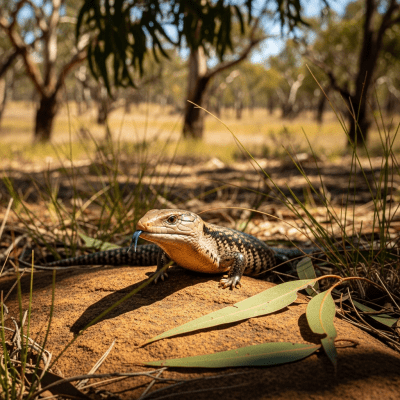
The Common Blue-tongued Skink is native to Australia, inhabiting terrestrial environments such as open woodlands, grasslands, and suburban gardens. It thrives across eastern, northern, and southern regions of the continent, adapting well to a range of climates and microhabitats.

Visual Variations

High quality studio photograph of a Common Blue-tongued Skink, part of the taxonomy lizards
Detailed image of a Common Blue-tongued Skink (lizards) in its natural habitat
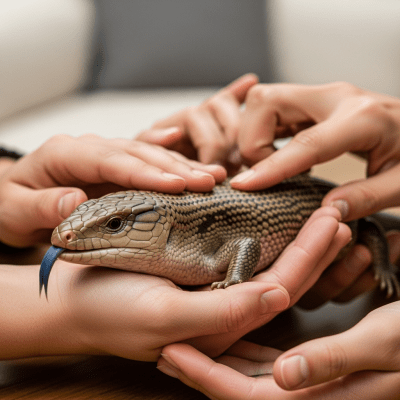
Image of a Common Blue-tongued Skink interacting with humans in a responsible pet-keeping context
Macro close-up image of the skin texture and scale pattern of a Common Blue-tongued Skink, part of the taxonomy lizards
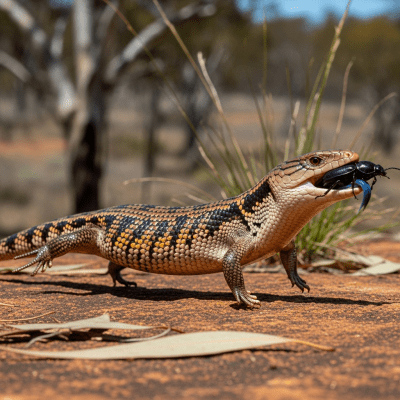
A dynamic action scene featuring a single Common Blue-tongued Skink (lizards) running, climbing, or catching prey in its typical environment

Composition & Context

Taxon-Specific Insights

🍽️Diet And Feeding

This species is omnivorous, feeding on a diverse diet that includes plants, fruits, insects, and small animals. Its flexible feeding habits support survival in varied habitats and contribute to its adaptability in both wild and captive settings.

🦎Reproduction And Lifecycle

The Common Blue-tongued Skink reproduces through ovoviviparity, where eggs develop inside the female and hatch internally, leading to live birth. Juveniles grow steadily, reaching adult size within two to three years, though specific clutch sizes and breeding seasons vary regionally.

🛡️Conservation Status

While generally stable in the wild, the Common Blue-tongued Skink faces threats from introduced predators such as foxes and domestic pets. Its adaptability and tolerance to temperature variations help sustain populations, but ongoing habitat changes require monitoring to ensure long-term conservation.

🏡Pet Care And Husbandry

As a popular pet, the Common Blue-tongued Skink requires a spacious enclosure with appropriate lighting and temperature gradients to mimic its natural environment. Its omnivorous diet should be balanced with fresh vegetables, fruits, and protein sources. Known for a gentle temperament, it benefits from regular handling and a clean habitat to prevent common health issues.

Faq

Q: Why does the Common Blue-tongued Skink have a blue tongue?
A: The bright blue tongue is a defensive display meant to startle and deter predators.

Q: What does this skink eat?
A: It is omnivorous, consuming a variety of plants and small animals.

Q: Is the Common Blue-tongued Skink suitable as a pet?
A: Yes, it is prized for its calm nature and ease of care.