Asian Glass Lizard
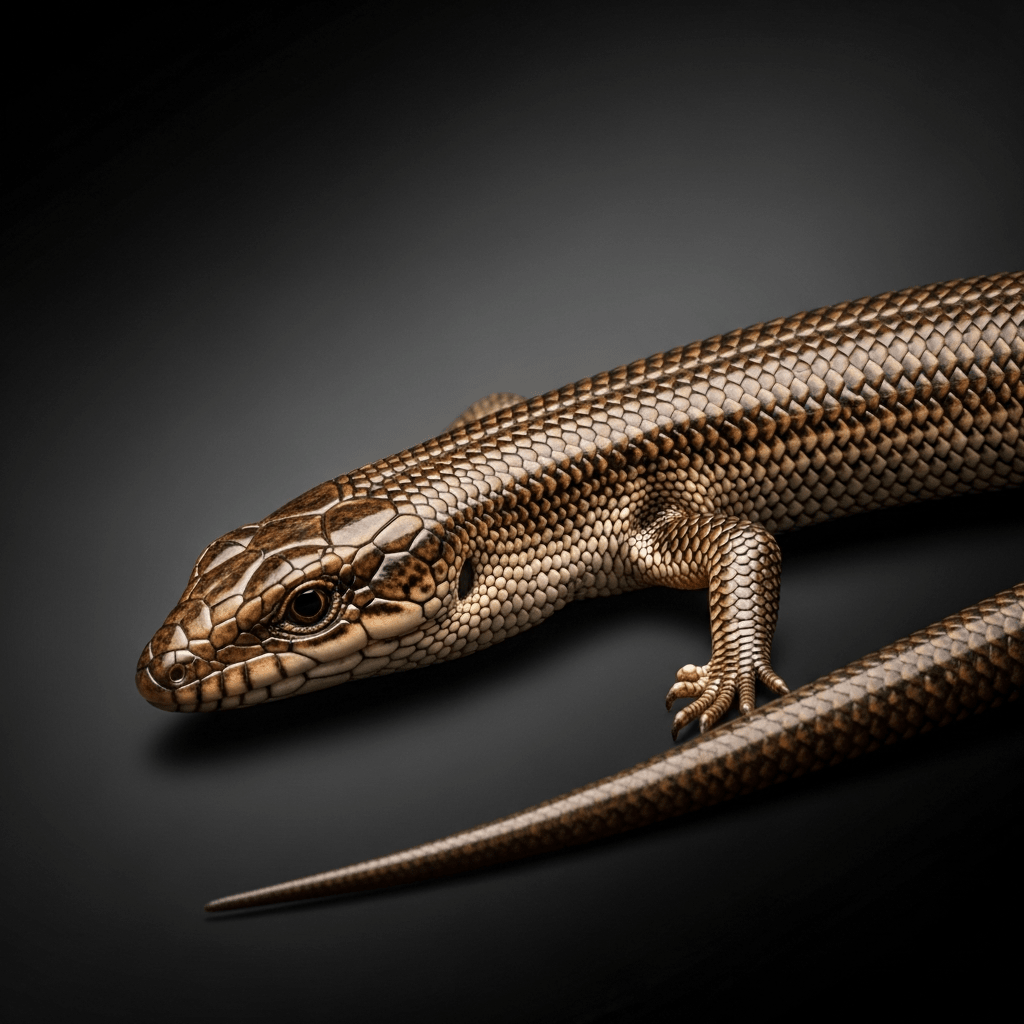
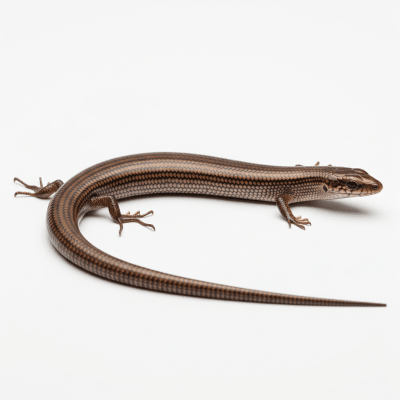
The Asian Glass Lizard (Ophisaurus gracilis) is a legless lizard native to Asia, recognized for its elongated, snake-like body and remarkable ability to shed its tail as a defense mechanism.
The Asian Glass Lizard (Ophisaurus gracilis) is a legless lizard native to Asia, recognized for its elongated, snake-like body and remarkable ability to shed its tail as a defense mechanism.
First described by Gray in 1845, the Asian Glass Lizard has been documented across regions including China, India, Myanmar, Thailand, and Vietnam. Its discovery stems from 19th-century specimen collections, with no known formal breeding programs or institutional releases.
Belonging to the family Anguidae and genus Ophisaurus, the Asian Glass Lizard is part of the suborder Lacertilia within the order Squamata. Though limbless, it is distinctly classified as a lizard rather than a snake, owing to features like movable eyelids and external ear openings.
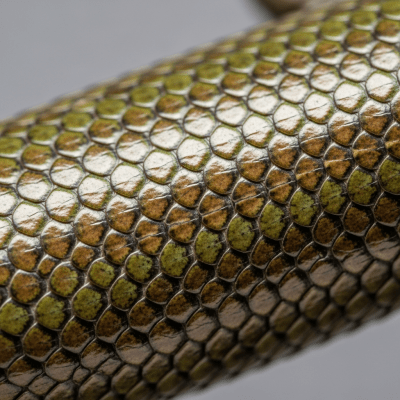
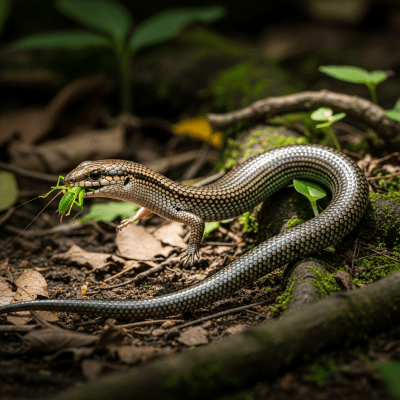
This species exhibits a slender, elongated body measuring between 40 and 50 centimeters in length, covered in smooth, shiny scales with coloration ranging from olive to brownish-gray. Despite lacking visible limbs, vestigial skeletal elements remain internally. Its tail, often exceeding half the total body length, can be autotomized to evade predators.
The Asian Glass Lizard relies on cryptic coloration and the ability to shed its tail to avoid predation. While it superficially resembles snakes, it behaves like a typical lizard with unique defensive strategies. Its ecological role and interactions remain primarily within natural habitats, with no significant direct use by humans.
Bring this kind into your world illustrated posters, mugs, and shirts.
Archival print, museum-grade paper
Buy Poster
Stoneware mug, dishwasher safe
Buy Mug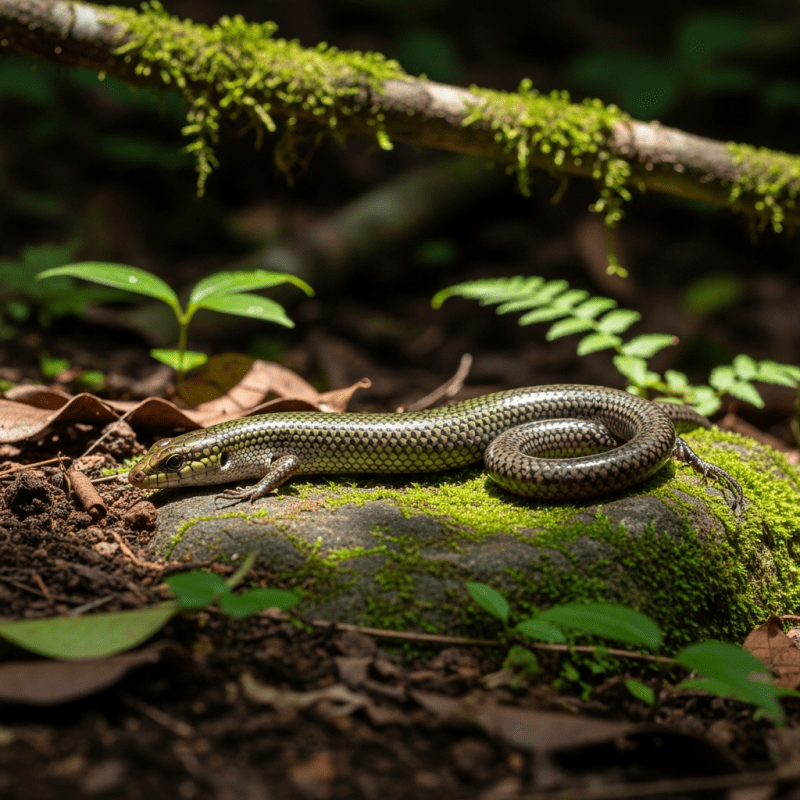
Soft cotton tee, unisex sizes
Buy ShirtThough not widely featured in culinary or commercial contexts, the Asian Glass Lizard holds scientific importance as a subject in evolutionary studies, particularly concerning limb reduction and vertebrate morphology. It occasionally appears in regional vernacular as "glass lizard" or "legless lizard."
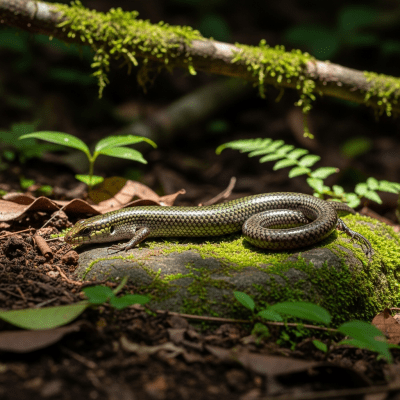
The Asian Glass Lizard inhabits a broad native range across parts of Asia, including China, India, Myanmar, Thailand, and Vietnam. While specific habitat preferences are not well documented, it typically occupies environments where its cryptic coloration and tail autotomy provide survival advantages.
Details on the diet of the Asian Glass Lizard are limited, but like many lizards, it is presumed to feed on small invertebrates and insects, employing stealth and quick movements to capture prey.
Information on the reproductive habits of the Asian Glass Lizard is sparse. Generally, species in this genus reproduce oviparously, laying eggs, with gradual growth to maturity over several years.
The Asian Glass Lizard faces threats from habitat disturbance and predation, though comprehensive conservation assessments are limited. It benefits from its cryptic nature and defensive tail-shedding but requires habitat protection to maintain stable populations.
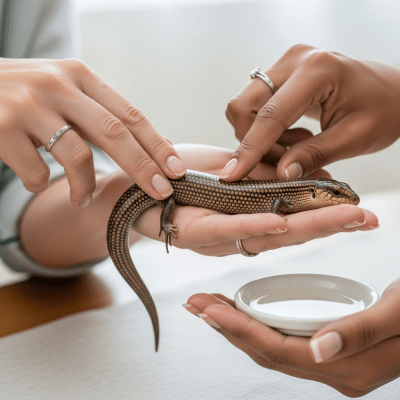
This species is not commonly kept in captivity and lacks established husbandry protocols. Its care requirements remain largely undocumented, reflecting its minimal presence in the pet trade and captive breeding programs.