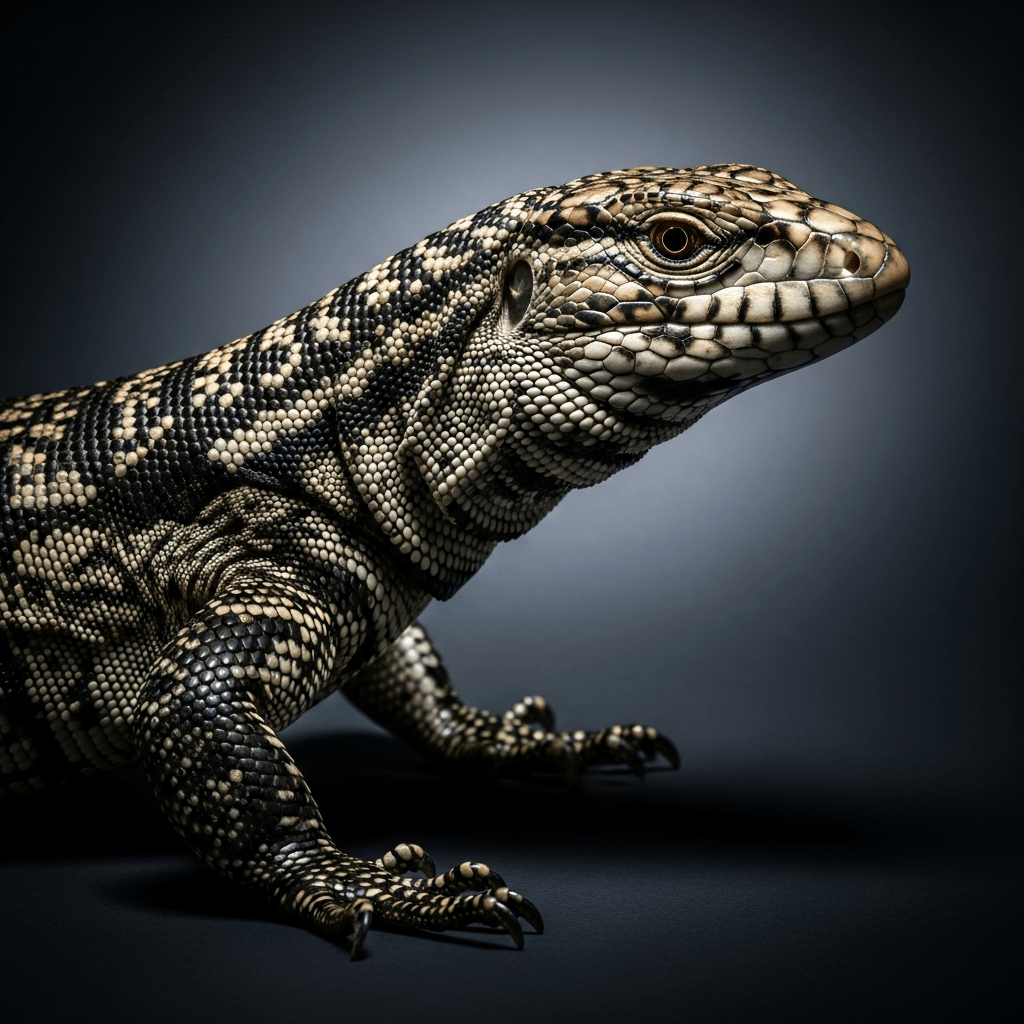
Argentine Black And White Tegu
The Argentine Black and White Tegu (Salvator merianae) is a large, intelligent lizard native to South America, recognized for its striking black-and-white banded pattern and adaptable, docile nature.
The Argentine Black and White Tegu (Salvator merianae) is a large, intelligent lizard native to South America, recognized for its striking black-and-white banded pattern and adaptable, docile nature.
First described in 1839 by Duméril & Bibron, the Argentine Black and White Tegu originates from the diverse landscapes of Argentina, Brazil, Paraguay, and Uruguay. While wild populations thrive in these regions, captive breeding programs have also been established, supporting its presence beyond its native range.
This species belongs to the family Teiidae within the genus Salvator. Historically, it was classified under the synonym Tupinambis merianae. As a member of the Teiidae family, it is part of a group known for robust, fast-moving lizards native to the Americas.
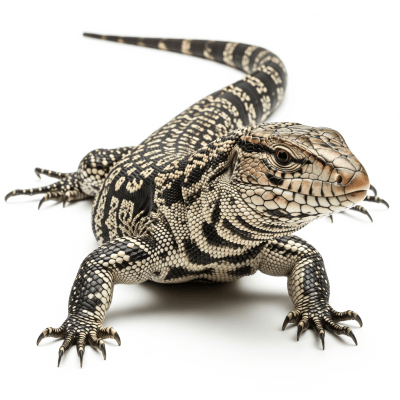
The Argentine Black and White Tegu is notable for its robust, muscular body, typically measuring between 1.0 and 1.4 meters in length. Adults display a distinctive black and white banded coloration, while juveniles often exhibit a greenish hue that fades as they mature. Strong limbs equipped with sharp claws enable effective digging, complementing its sturdy build.
This diurnal lizard is highly intelligent and exhibits complex behaviors such as seasonal dormancy (brumation) and social tolerance. Omnivorous by nature, it feeds on a varied diet including fruits, insects, small vertebrates, and eggs. Its adaptability allows it to thrive in diverse habitats, and its docile temperament has made it a favored species among reptile enthusiasts.
Bring this kind into your world illustrated posters, mugs, and shirts.
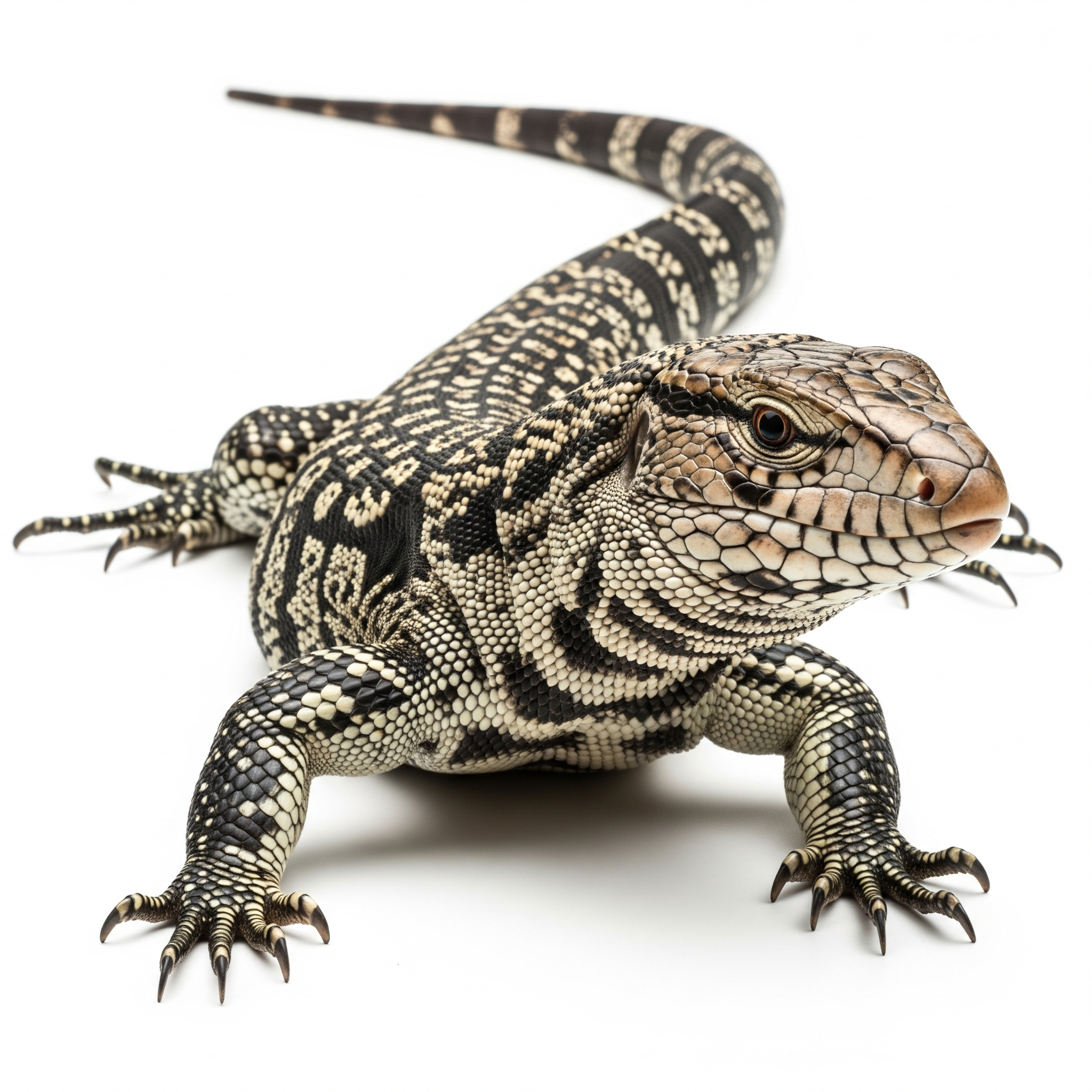
Archival print, museum-grade paper
Buy Poster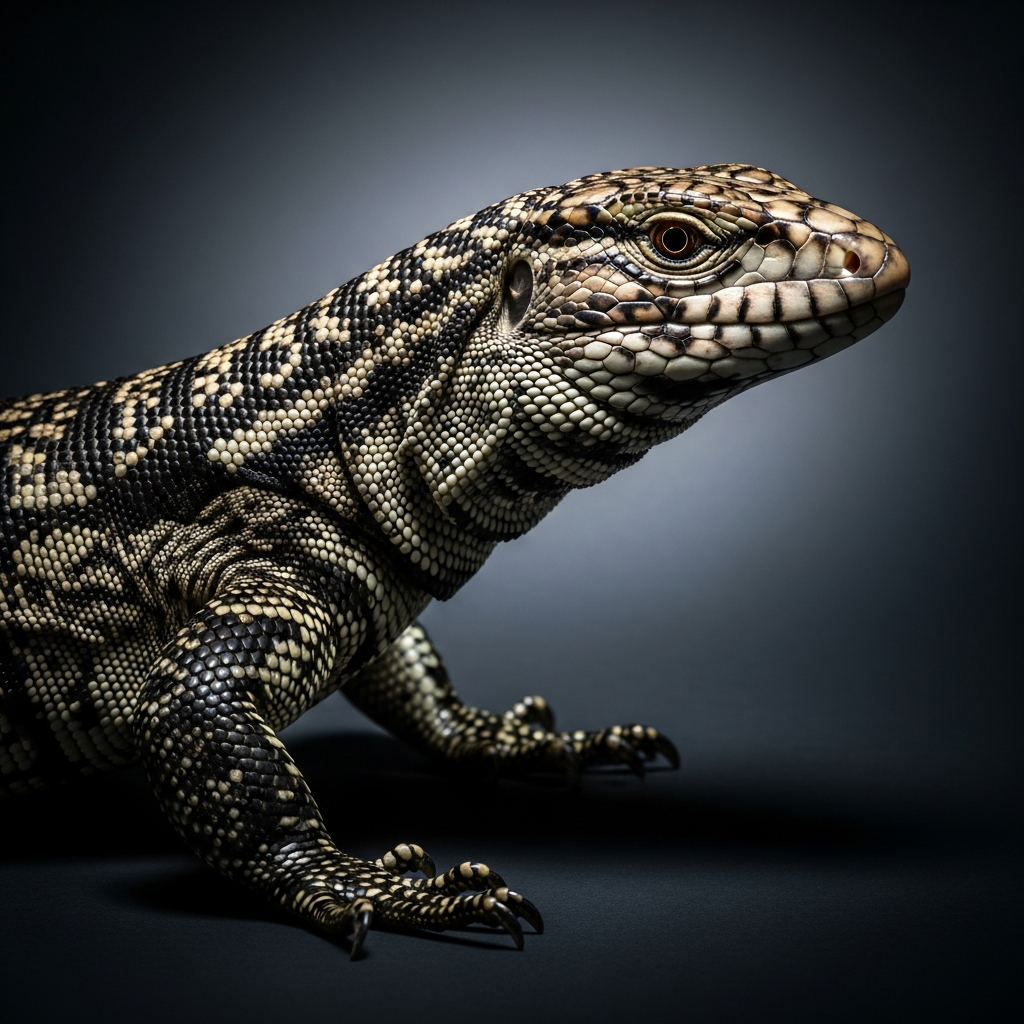
Stoneware mug, dishwasher safe
Buy Mug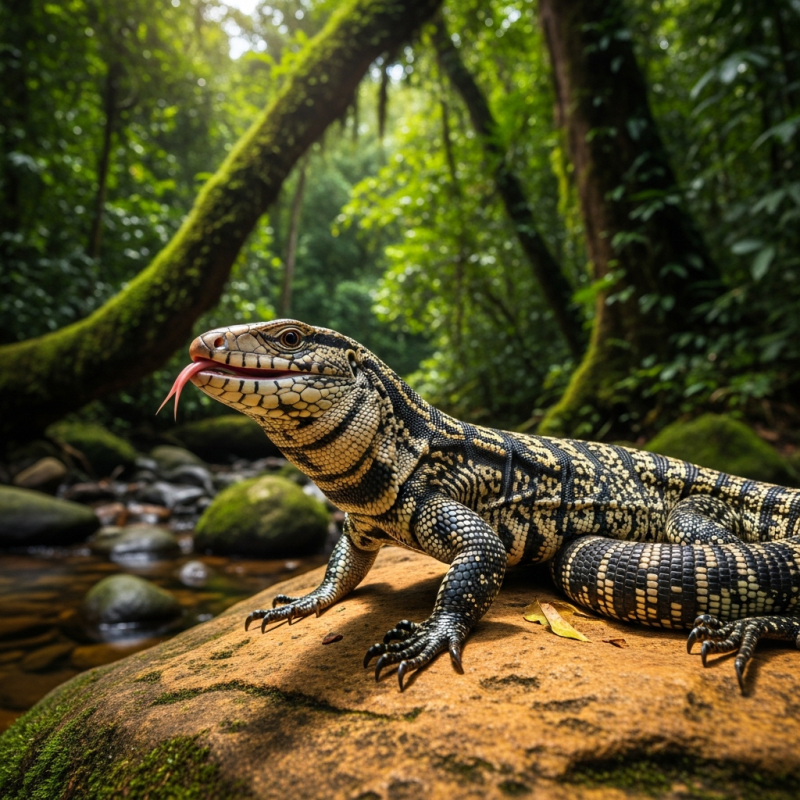
Soft cotton tee, unisex sizes
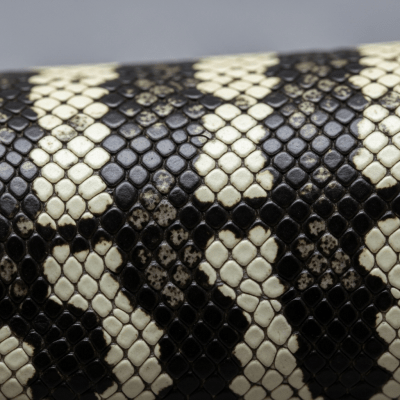
Buy ShirtWhile not traditionally consumed as food, the Argentine Black and White Tegu holds significant value in the pet trade due to its trainability and calm demeanor. Additionally, it is hunted in some areas for its skin, which is utilized in leather goods. Its growing popularity in herpetoculture reflects its cultural presence beyond its native environment.
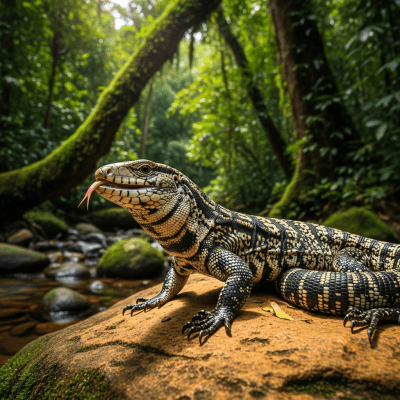
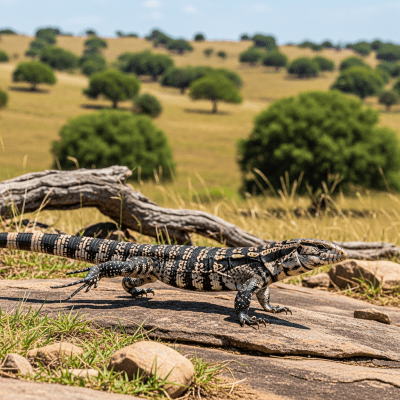
Native to a broad region of South America, the Argentine Black and White Tegu inhabits varied environments including forests and grasslands. Its adaptability has allowed it to establish introduced populations, notably in the southeastern United States, where it thrives in warm climates.

As an omnivore, this tegu consumes a diverse diet comprising fruits, insects, small vertebrates, and eggs. Its feeding behavior reflects opportunistic foraging, allowing it to exploit a wide range of food sources within its habitat.
The Argentine Black and White Tegu is oviparous, laying eggs to reproduce. While specific clutch sizes and breeding seasons vary, captive breeding programs have successfully supported population maintenance. Lifespan typically ranges from 15 to 20 years, both in the wild and captivity.
Currently, the species faces no major immediate threats and benefits from established captive breeding programs. However, its introduction outside native ranges raises ecological concerns. Proper husbandry and habitat management are essential to prevent negative impacts on local ecosystems.
Popular in herpetoculture, the Argentine Black and White Tegu requires spacious enclosures with controlled temperature and UVB lighting to prevent metabolic bone disease. A balanced diet with calcium supplementation is essential, and their intelligent, trainable nature demands regular interaction. Lifespan in captivity can reach 15 to 20 years, supported by established breeding programs.