Winged Bean
The winged bean (Psophocarpus tetragonolobus) is a tropical legume prized for its edible pods, seeds, leaves, flowers, and tubers, offering exceptional nutritional value and adaptability in humid climates.
The winged bean (Psophocarpus tetragonolobus) is a tropical legume prized for its edible pods, seeds, leaves, flowers, and tubers, offering exceptional nutritional value and adaptability in humid climates.
Believed to have originated in Southeast Asia—most notably Papua New Guinea, Indonesia, and nearby regions—the winged bean’s precise beginnings remain shrouded in uncertainty. Cultivated for centuries, its spread is attributed to traditional farming communities rather than formal breeding programs. The crop’s diversity stems from local landraces and farmer selection, with genetic variation reflecting its long-standing integration into regional agriculture.
The winged bean belongs to the family Fabaceae (Leguminosae), subfamily Faboideae, genus Psophocarpus, species tetragonolobus. As a member of the legumes, it shares the group’s hallmark traits: podded fruits and nitrogen-fixing symbiosis. Its close relatives include other food legumes such as beans and peas, all valued for their agronomic and nutritional contributions.
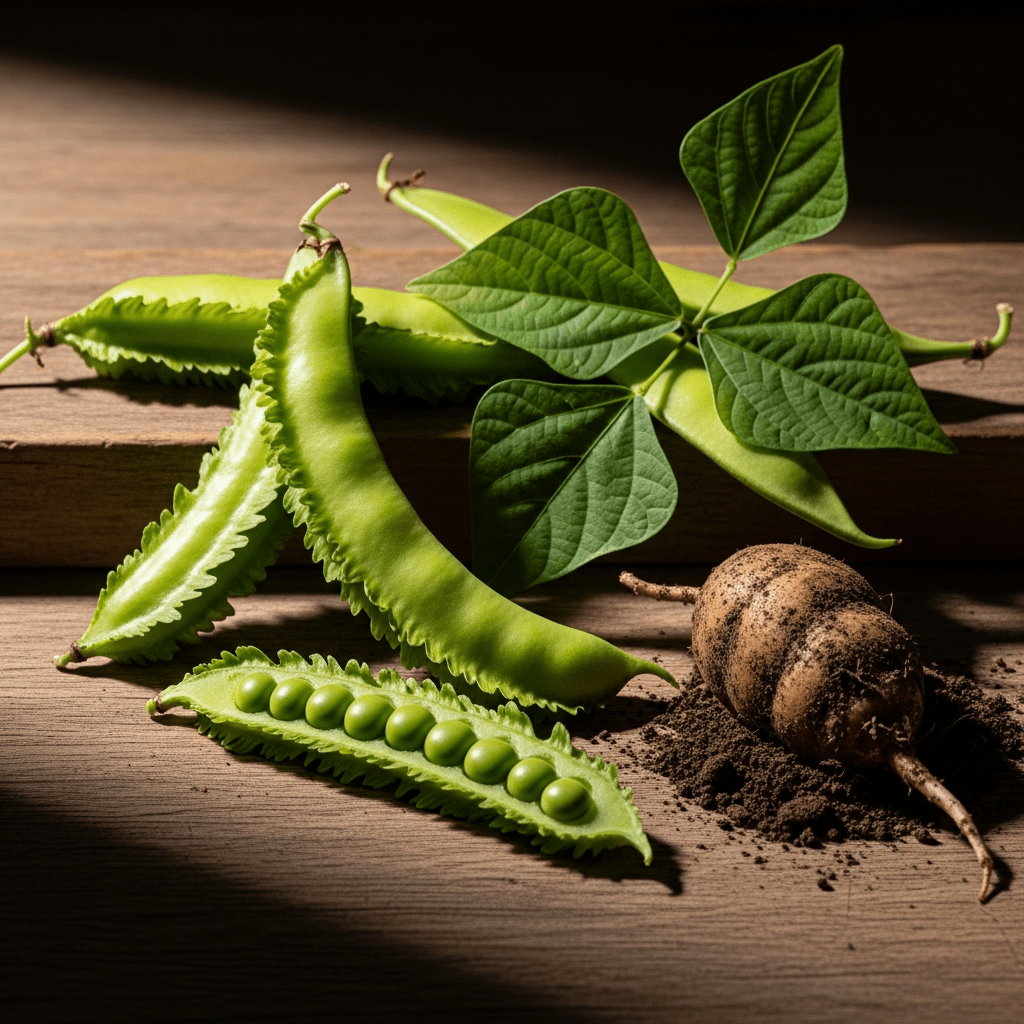
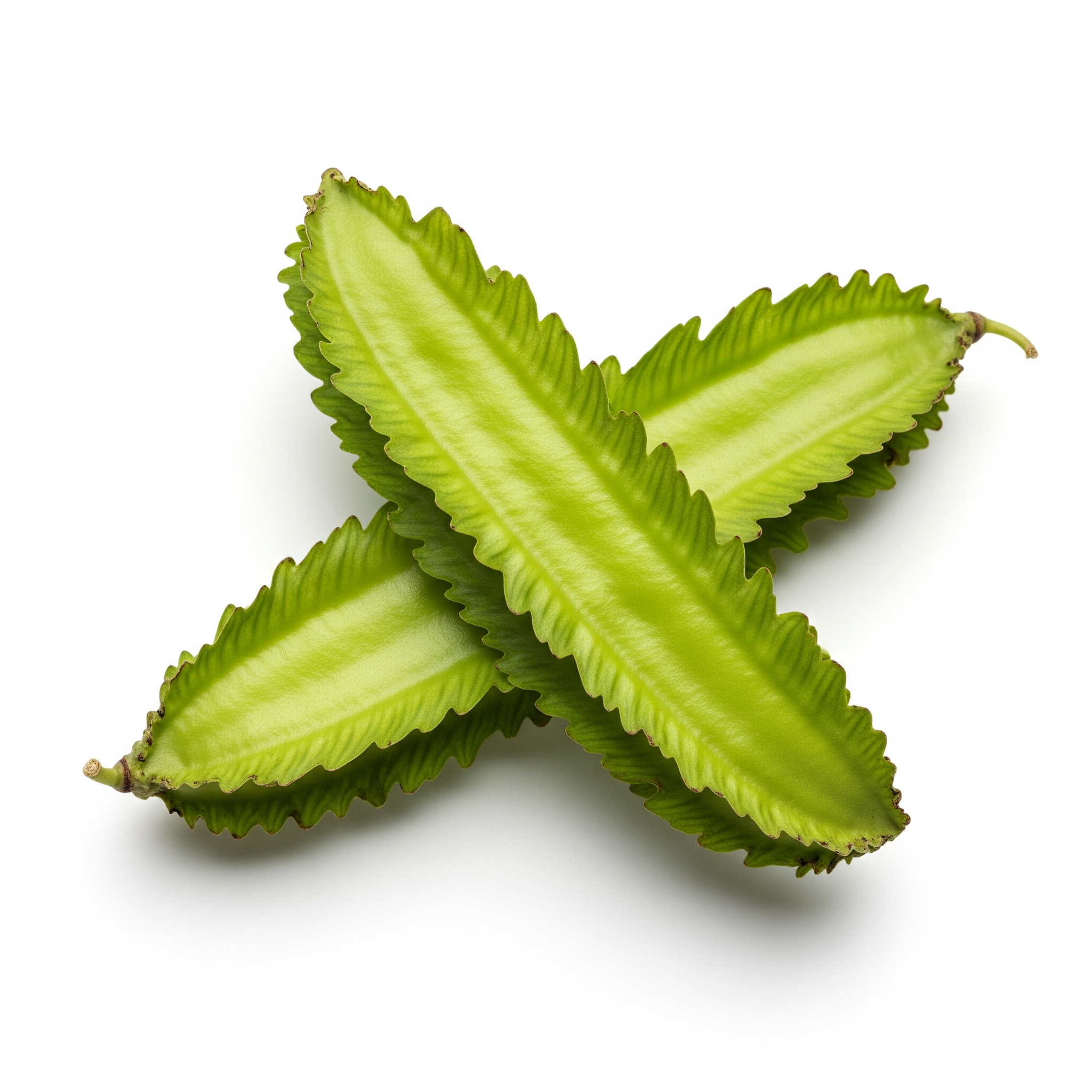
Winged bean plants are vigorous climbing vines, typically reaching 2–4 meters in height. Their trifoliate leaves are lush and green, while the flowers range from blue to purplish hues. The pods, 10–30 cm long, are instantly recognizable by four prominent, frilled wings running lengthwise. Seeds are round to oval, colored brown, tan, or black, and the underground tubers are fleshy and edible, adding further visual and culinary intrigue.
Celebrated for its versatility, the winged bean is cultivated as both a food and forage crop. All parts of the plant are edible, making it a staple in home gardens and local markets. Its robust nitrogen-fixing ability enriches soils, supporting sustainable farming practices. Farmers often intercrop winged bean with maize, cassava, or other legumes to boost yields and diversify production, while its adaptability to acidic and low-fertility soils ensures reliable harvests in tropical environments.
Bring this kind into your world illustrated posters, mugs, and shirts.
Archival print, museum-grade paper
Buy Poster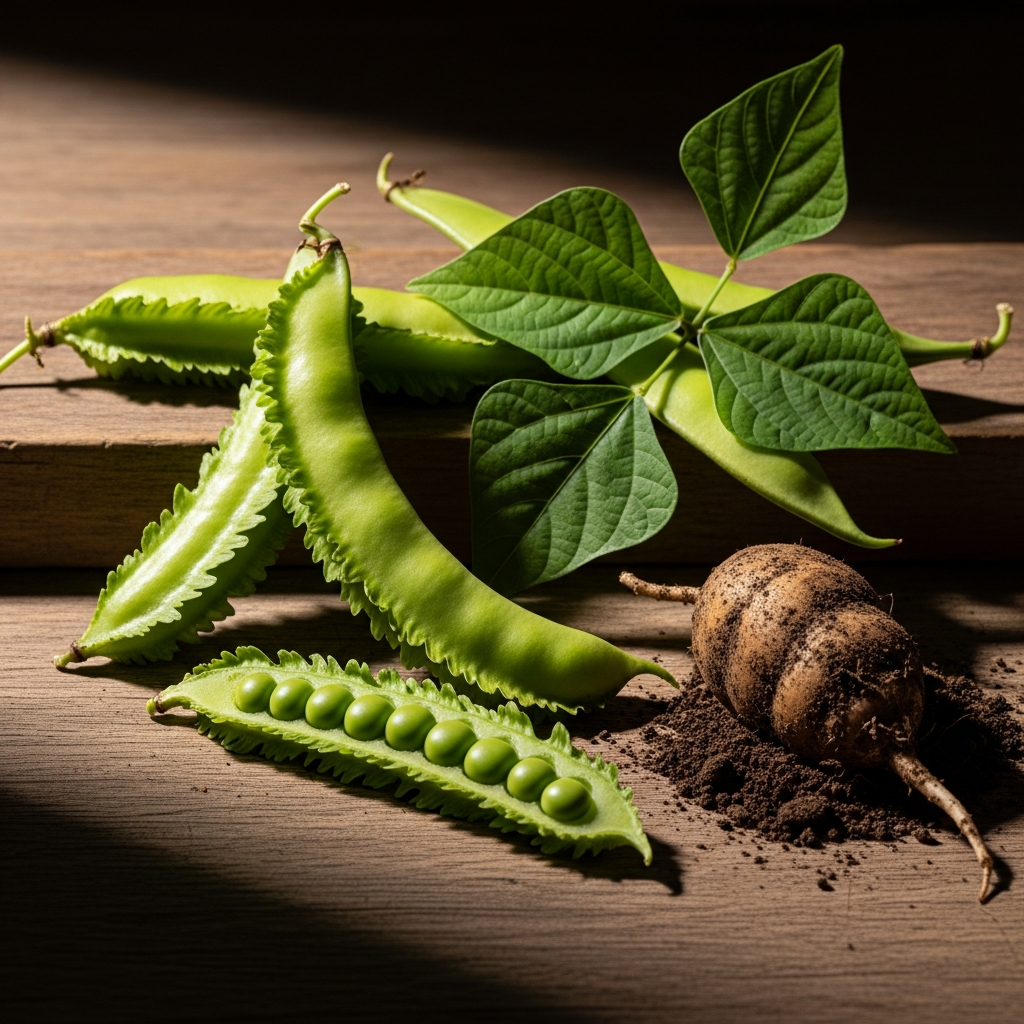
Stoneware mug, dishwasher safe
Buy Mug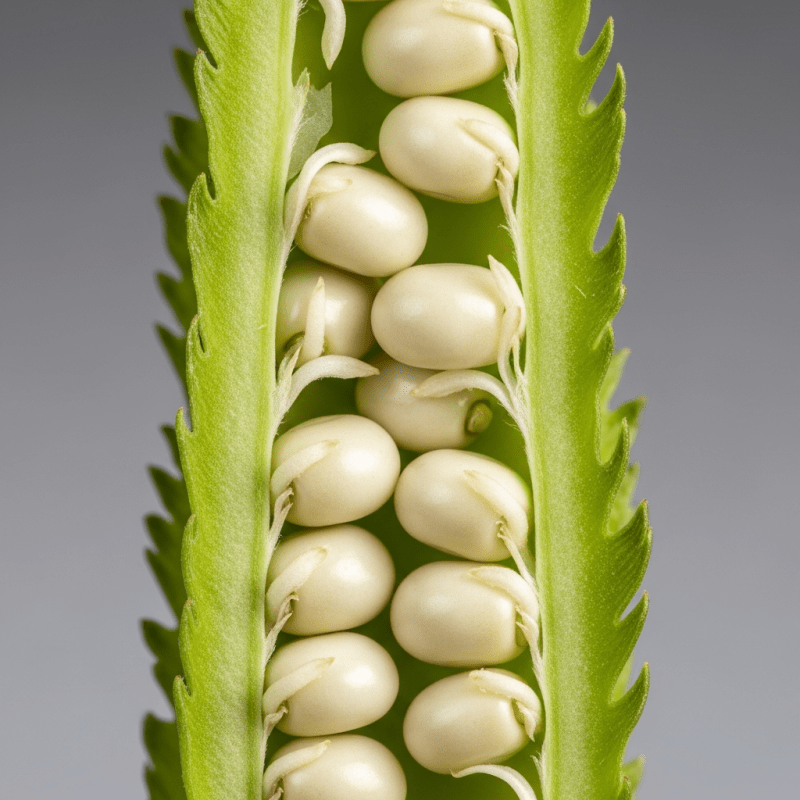
Soft cotton tee, unisex sizes
Buy ShirtIn Southeast Asia, South Asia, and parts of Africa, the winged bean holds a place of quiet importance in daily life and food security. Though less prominent in global cuisine or art, its "all parts edible" reputation is celebrated in local traditions and agricultural extension programs. Agencies like FAO promote the winged bean for its nutritional potential, especially in regions with limited access to animal protein, highlighting its role in sustainable tropical agriculture.
The domestication history of the winged bean is largely undocumented, with no single breeder or institution credited for its origin. Instead, its cultivation is rooted in centuries-old agricultural traditions across Southeast Asia and South Asia. Farmers have relied on local landraces and informal selection, resulting in a crop rich in genetic diversity but lacking formal pedigree records. Its spread has been organic, shaped by community needs and environmental adaptation.
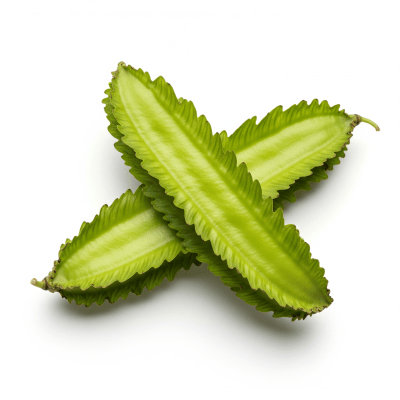
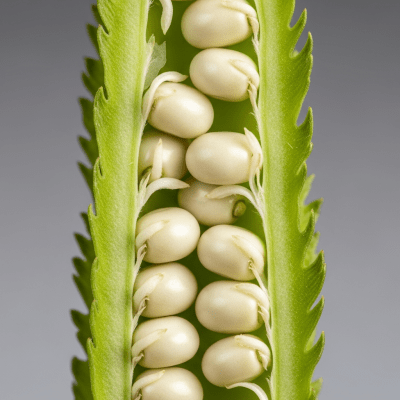
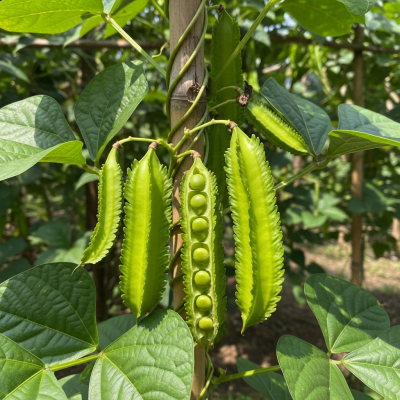
Winged bean is a perennial climbing vine, though it is typically grown as an annual for harvest. Plants reach heights of 2–4 meters, developing trifoliate leaves and vibrant blue to purple flowers. Flowering is triggered by short-day photoperiods, and the distinctive four-winged pods mature over the growing season. Tubers develop underground, adding to the crop’s yield. The lifecycle is well-suited to humid tropical climates, with optimal pod, seed, and tuber yields achieved under careful management.
Like other legumes, winged bean forms a symbiotic relationship with Rhizobium bacteria in its root nodules, enabling it to fix atmospheric nitrogen. This process enriches the soil, reducing the need for synthetic fertilizers and supporting sustainable crop rotations. Its strong nitrogen-fixing capacity allows it to thrive in acidic, low-fertility soils and makes it a valuable companion in intercropping systems, enhancing overall farm productivity and soil health.
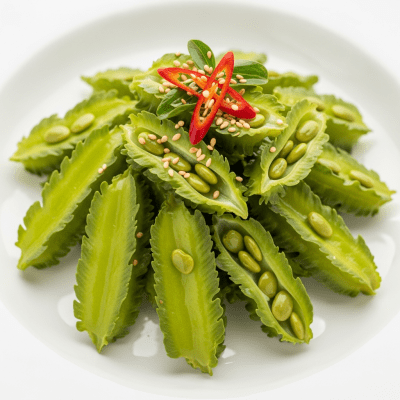
Winged bean is renowned for its culinary versatility and nutritional richness. Young pods are enjoyed raw, steamed, or stir-fried; mature seeds are cooked, roasted, or milled into flour for tofu-like dishes and milk substitutes. Leaves and flowers are eaten as greens or in salads, while tubers are boiled, roasted, or fried. The plant’s protein content is remarkable—seeds contain up to 37% protein and 18% oil, while tubers and leaves also offer substantial nutrition. Rich in minerals, winged bean is a valuable food security crop in tropical regions.
Winged bean is sold fresh or processed in local markets throughout Southeast Asia, South Asia, and parts of Africa. While its industrial uses are limited—mainly oil extraction and animal feed—it is promoted by organizations like FAO for its potential to bolster food security and sustainable agriculture in tropical climates. Most trade is regional, with production centered around traditional farming systems and local consumption.
The winged bean exhibits tolerance to many local pests and diseases, contributing to its reliability as a crop. However, it is susceptible to certain fungal pathogens, such as powdery mildew and root rot, especially in humid conditions. The plant’s moderate drought tolerance and resilience to acidic soils further enhance its agronomic value, though care must be taken to avoid waterlogged environments.
Formal cultivar names are rare for winged bean; most production relies on local landraces and farmer-selected varieties. Its many aliases reflect its wide geographic spread: "Goa bean" (India), "Manila bean" (Philippines), "Kacang botol" (Malaysia/Indonesia), "Sigariga" (Papua New Guinea), and "Princesse bean" (French-speaking Africa). In the UK, "Asparagus pea" may refer to a different species. These diverse names underscore the crop’s cultural integration and regional importance.