Lablab Bean
The lablab bean (Lablab purpureus) is a versatile legume cultivated for food, forage, and ornamental uses, prized for its drought tolerance and adaptability across tropical and subtropical regions.
The lablab bean (Lablab purpureus) is a versatile legume cultivated for food, forage, and ornamental uses, prized for its drought tolerance and adaptability across tropical and subtropical regions.
Originating in Africa, with a center of diversity spanning East Africa and India, the lablab bean has been cultivated in India for over 3,000 years. Its ancient domestication and widespread use reflect its importance in traditional farming and cuisine across these regions.
The lablab bean belongs to the botanical family Fabaceae, subfamily Faboideae, genus Lablab, species Lablab purpureus. It is recognized as a member of the legume family, known for pod-bearing plants capable of nitrogen fixation.
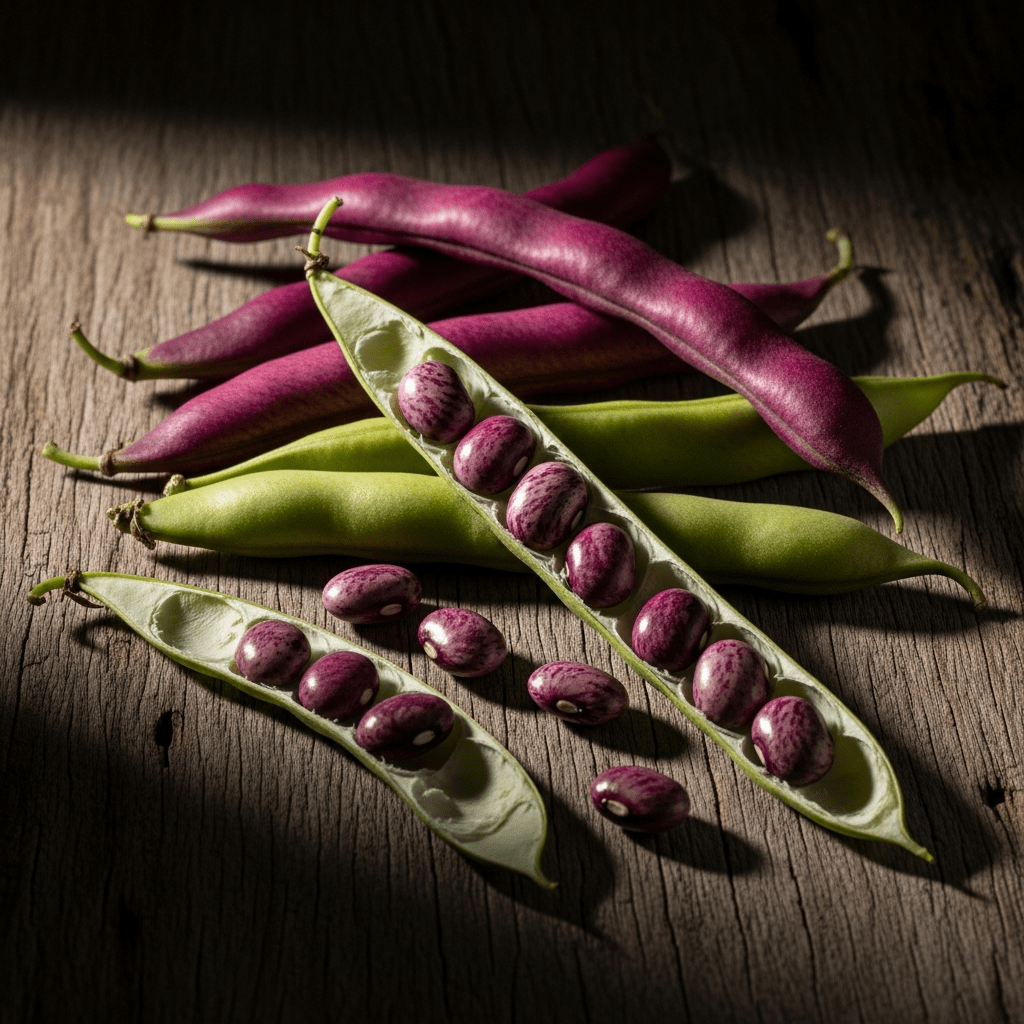
This plant is an annual or short-lived perennial herb, growing as a climbing or bushy vine reaching 1 to 3 meters tall. It features trifoliate leaves, purple or white flowers, and flat, curved pods often tinged with purple. Seeds vary in color from white and cream to brown and black, typically oblong or kidney-shaped.
Lablab bean serves multiple roles: as a pulse crop harvested for dry seeds, a vegetable from immature pods and seeds, forage for livestock, and an ornamental plant. It thrives in diverse agroecological zones, tolerates drought and poor soils, and contributes to sustainable farming through nitrogen fixation.
Bring this kind into your world illustrated posters, mugs, and shirts.
Archival print, museum-grade paper
Buy Poster
Stoneware mug, dishwasher safe
Buy Mug
Soft cotton tee, unisex sizes
Buy ShirtEmbedded in traditional cuisines and smallholder farming systems, the lablab bean holds cultural value across India, Africa, and Southeast Asia. It appears in regional dishes like Indian 'avarekalu' and 'dolichos sambar,' reflecting its culinary heritage and local importance.
Domesticated in India over 3,000 years ago, the lablab bean's history spans ancient cultivation in both India and East Africa, its primary centers of diversity. While the exact origins of domestication remain unclear, its enduring presence in traditional agriculture underscores its value. Modern breeding efforts in India, Africa, and Southeast Asia aim to enhance yield and disease resistance.
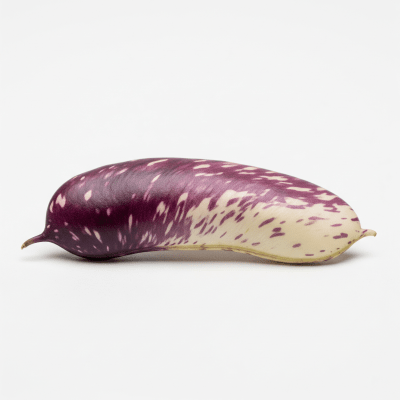
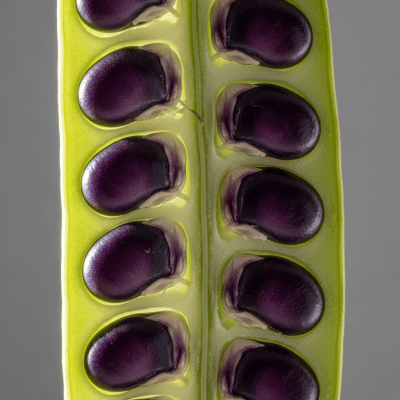
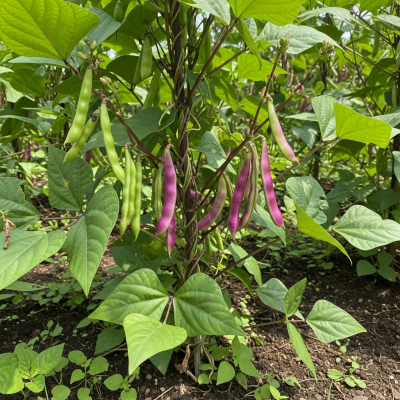

The lablab bean grows as an annual or short-lived perennial climbing or bushy herb, reaching heights of 1 to 3 meters. It flowers between 60 and 90 days after sowing, with pods maturing in 100 to 150 days, completing its lifecycle within this timeframe.
Like many legumes, the lablab bean forms a symbiotic relationship with nitrogen-fixing bacteria, enriching soil fertility by converting atmospheric nitrogen into forms usable by plants. This trait makes it valuable for crop rotation, green manure, and improving soil health in diverse farming systems.
Lablab bean is consumed in various forms: dry seeds as pulses, immature pods and seeds as vegetables, and sometimes as leafy greens. It features prominently in Indian dishes such as 'avarekalu' and 'dolichos sambar,' and in African and Southeast Asian stews and curries. Nutritionally, the seeds contain protein but also antinutritional compounds like cyanogenic glycosides and trypsin inhibitors, which are reduced through thorough cooking.
Primarily traded in local markets within its growing regions, the lablab bean sees limited international commerce. It is often grouped under 'other pulses' in trade classifications. In the United States, it is mainly cultivated as an ornamental or forage crop rather than a food source.
The lablab bean is susceptible to pests such as pod borers (Maruca vitrata) and aphids, as well as fungal diseases including anthracnose and powdery mildew. Resistance varies among cultivars, with some bred specifically for improved tolerance to these stresses.
The lablab bean is known by many regional names reflecting its widespread use: 'Hyacinth bean' in English, 'Dolichos bean' botanically, 'Indian bean' in India, 'Seim bean' in Bangladesh, 'Bataw' in the Philippines, 'Rongai' as a forage cultivar in Kenya, 'Val' or 'Valpapdi' in Western India, 'Avarekalu' in Karnataka, and 'Lubia' in East Africa. These names highlight its cultural and agricultural significance across continents.