Common Bean
The common bean (Phaseolus vulgaris) is a globally important legume species, valued for its diverse varieties, nutritional richness, and central role in cuisines and agriculture worldwide.
The common bean (Phaseolus vulgaris) is a globally important legume species, valued for its diverse varieties, nutritional richness, and central role in cuisines and agriculture worldwide.
Native to the Americas, the common bean was independently domesticated in both Mesoamerica and the Andean highlands over 7,000 years ago. Its wild ancestors thrived in regions spanning modern-day Mexico, Central America, and South America. Following the Columbian Exchange in the 16th century, common beans spread rapidly to Europe, Africa, and Asia, becoming a staple crop in many countries. The domestication process was shaped by indigenous farmers, whose careful selection produced the remarkable diversity seen today.
The common bean belongs to the botanical family Fabaceae (Leguminosae), subfamily Faboideae, genus Phaseolus, and species Phaseolus vulgaris. Within the legume taxonomy, it is classified as a pulse—an edible dry seed—and is distinguished from other beans and peas by its unique genetic lineage and morphological traits. Numerous market classes and cultivars exist, defined by seed color, size, and culinary properties.
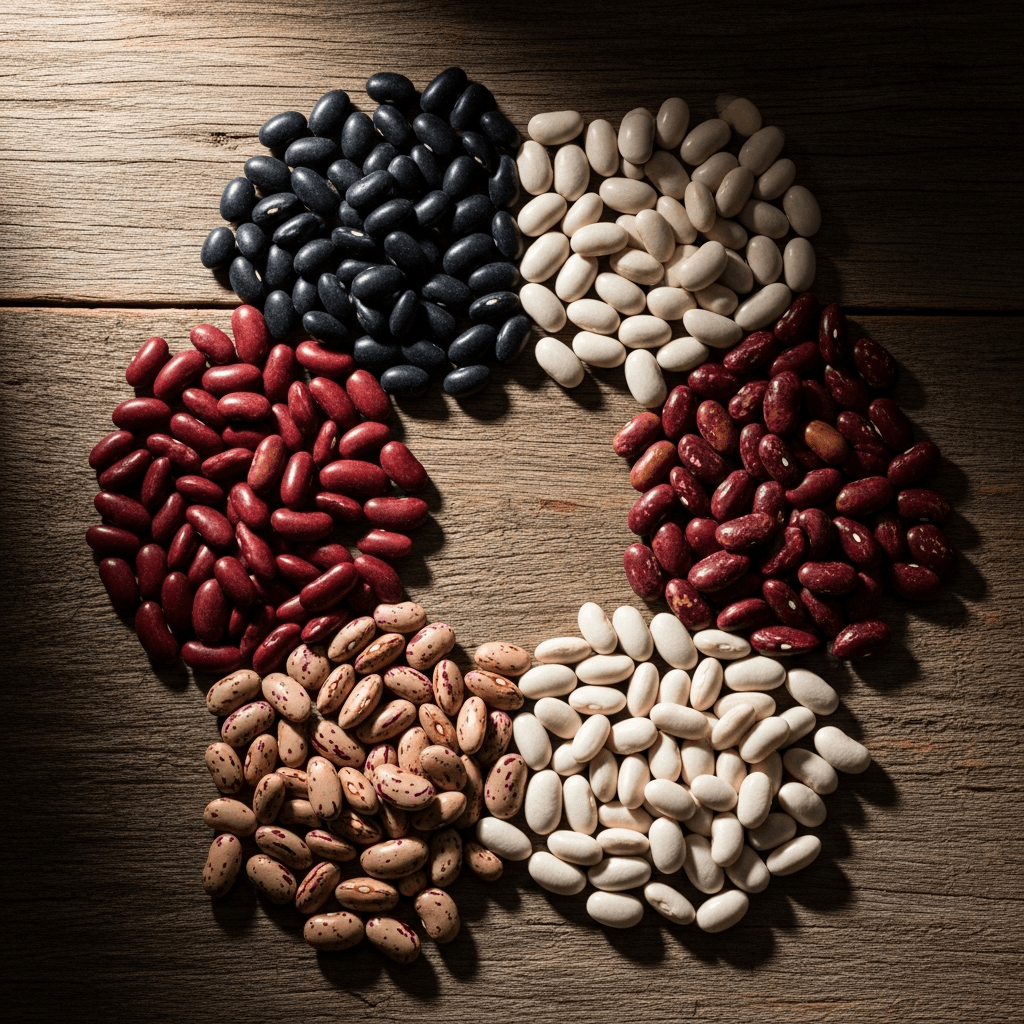
Common bean plants are annual and herbaceous, with bush forms reaching 20–60 cm in height and climbing forms extending up to 2–3 meters. Their leaves are trifoliate, featuring ovate leaflets, and the flowers range from white to pink or purple. Pods are slender and measure 8–20 cm, typically containing 4–8 seeds. Seed appearance varies greatly: kidney beans are large and red, black beans are small and glossy, pinto beans are mottled, navy beans are small and white, and cannellini beans are large and white.
Common beans are cultivated for their edible seeds and pods, serving as a primary protein source in many diets. They are grown in both subsistence and commercial systems, with bush types favored for mechanized agriculture and climbing types for traditional and smallholder farms. The plant enriches soil through nitrogen fixation, supports crop rotations, and is processed into canned goods, flours, and protein isolates. Beans are consumed as dry pulses, fresh pods, or immature seeds, adapting to countless culinary traditions.
Bring this kind into your world illustrated posters, mugs, and shirts.
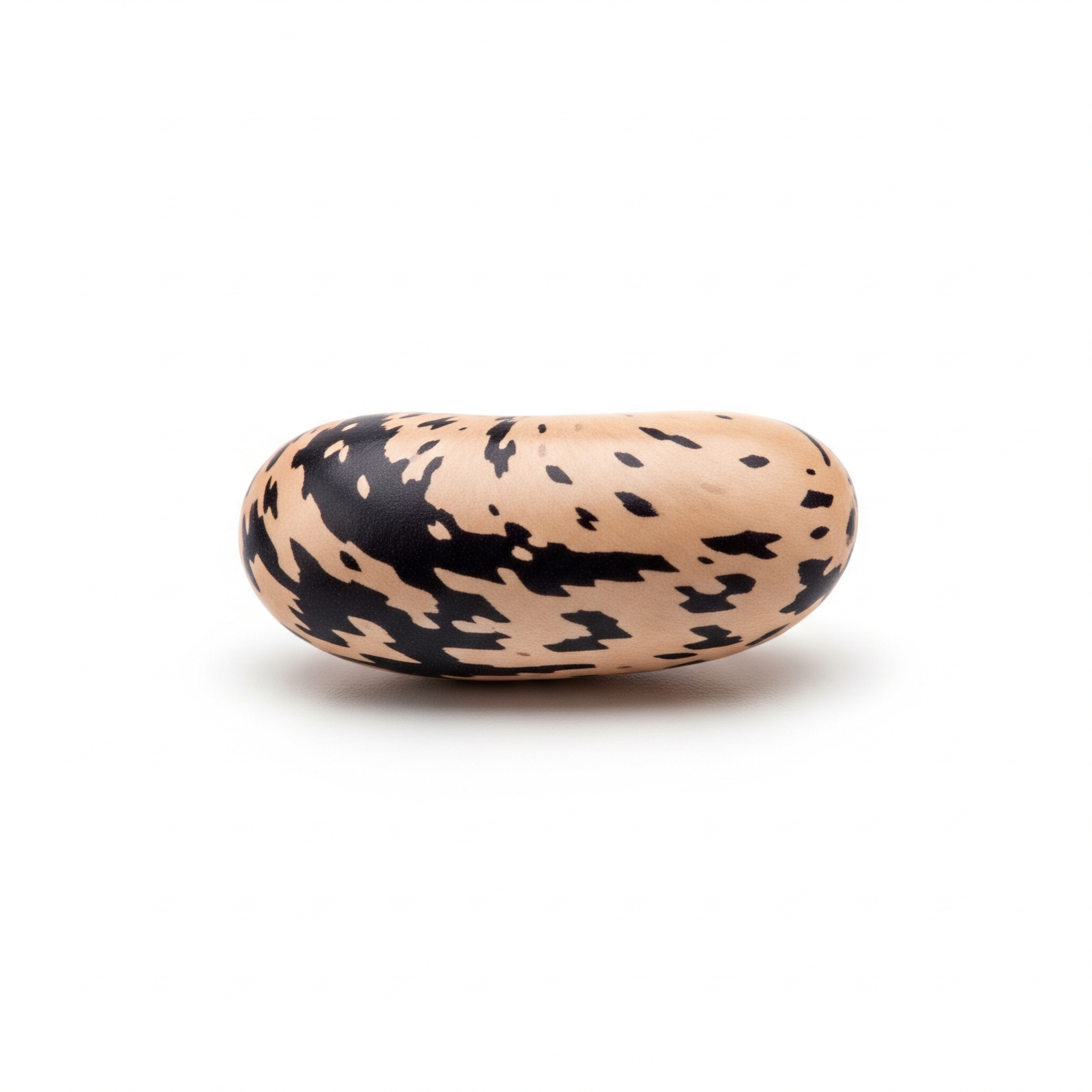
Archival print, museum-grade paper
Buy Poster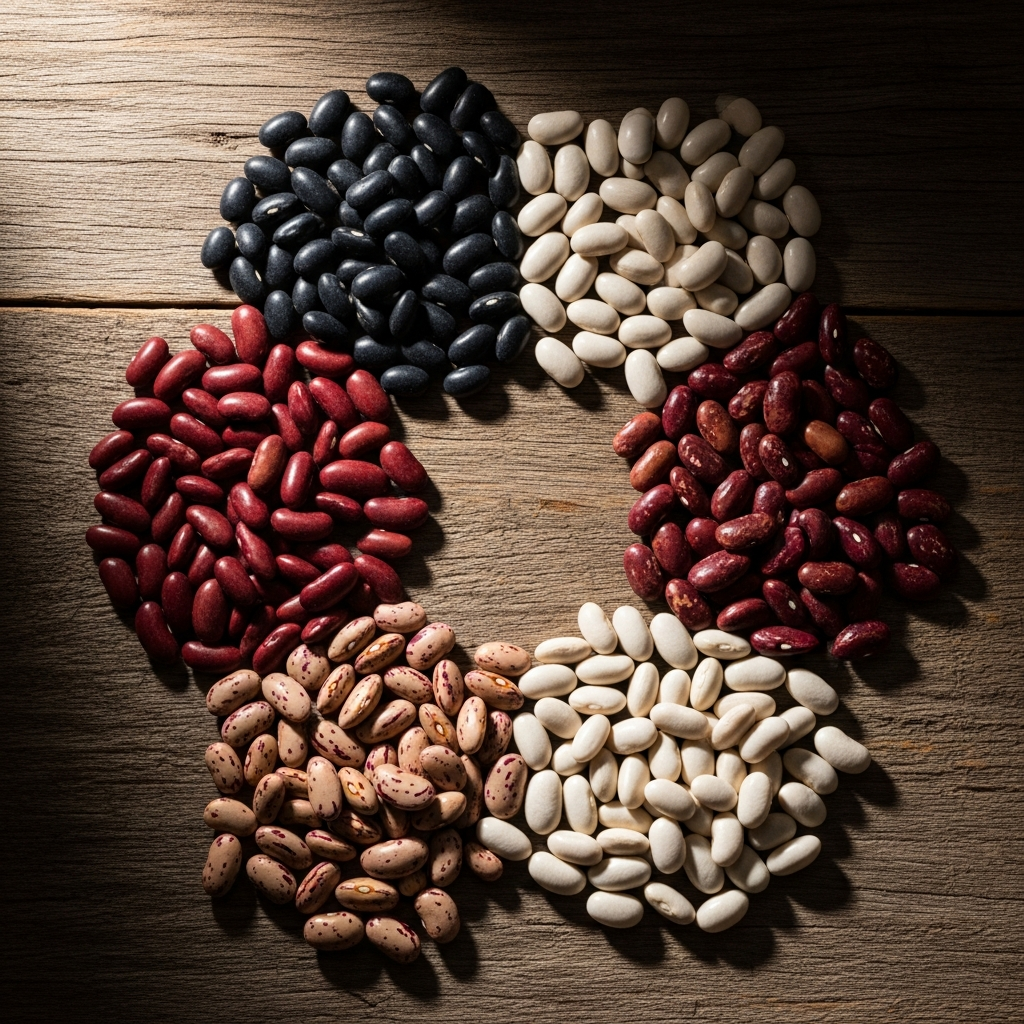
Stoneware mug, dishwasher safe
Buy Mug
Soft cotton tee, unisex sizes
Buy ShirtBeans have woven themselves into the fabric of countless cultures. They feature in iconic dishes such as feijoada in Brazil, chili con carne in North America, rajma in India, and cassoulet in France. Their presence in folklore, proverbs, and art underscores their status as symbols of sustenance, thrift, and community. Across continents, beans represent both everyday nourishment and festive abundance, bridging culinary traditions and agricultural heritage.
The domestication of common beans traces back at least 7,000–8,000 years, with independent centers in Mesoamerica and the Andes. Ancient indigenous farmers selected wild populations for desirable traits, resulting in two major genetic lineages. The species spread globally after the Columbian Exchange, adapting to diverse climates and farming systems. Modern breeding programs—such as those by CIAT and the USDA—continue to refine cultivars for yield, disease resistance, and culinary quality.

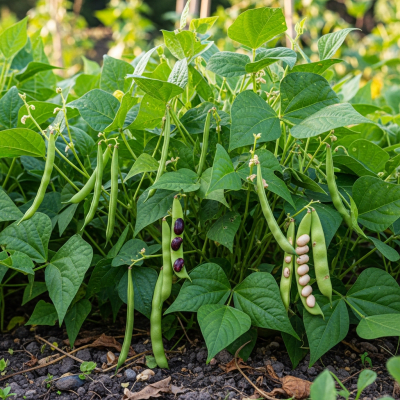

Common beans exhibit both bush (determinate) and climbing (indeterminate) growth habits. Bush types are compact and mature uniformly, ideal for mechanized harvesting, while climbing types produce over a longer period and require support. Plants progress from germination to flowering and pod set, with maturity typically reached within 60–90 days, depending on variety and climate. Pods develop and fill with seeds, which are harvested when dry for storage or consumption.
As members of the legume family, common beans form symbiotic relationships with Rhizobium bacteria in their roots. This partnership enables the plant to convert atmospheric nitrogen into forms usable by itself and subsequent crops, reducing the need for synthetic fertilizers. Incorporating beans into crop rotations enhances soil fertility, supports sustainable agriculture, and lowers input costs for farmers.
Common beans are celebrated for their versatility in the kitchen. They are consumed as dry pulses, fresh pods (snap beans), and shell beans. Signature dishes include feijoada, chili con carne, rajma, and cassoulet. Beans are rich in protein, dietary fiber, complex carbohydrates, folate, thiamine, iron, magnesium, and potassium, making them a cornerstone of vegetarian and plant-based diets. They are processed into canned goods, flours, and protein isolates, and are naturally gluten-free.
Common beans are traded globally, with major producers including Brazil, India, China, the USA, and Mexico. Market classes are defined by seed color, size, and cooking properties, which influence consumer preference and commercial value. Dry beans are classified under FAO commodity code 176, and the USDA PLANTS symbol is PHVU. The crop is vital for both local subsistence and international trade, supporting economies and food security worldwide.
Common beans are susceptible to several diseases, notably common bacterial blight, anthracnose, and bean rust, as well as pests such as the bean weevil. These challenges can impact yield and storage quality. Ongoing breeding efforts focus on developing varieties with improved resistance to these threats, helping farmers maintain productivity and reduce reliance on chemical controls.
The common bean is known by a multitude of regional and vernacular names: "haricot bean" in France and the UK, "frijol" in Spanish-speaking Americas, "feijão" in Brazil, "rajma" in India, and "fasolia" in the Middle East. Market classes include kidney, black, pinto, navy, cannellini, great northern, turtle, and cranberry beans. This diversity reflects its adaptation to local tastes, culinary traditions, and agricultural systems around the world.