Carob
Carob (Ceratonia siliqua) is a Mediterranean legume tree prized for its sweet, edible pods, widely used as a natural cocoa substitute and valued for its drought resilience.
Carob (Ceratonia siliqua) is a Mediterranean legume tree prized for its sweet, edible pods, widely used as a natural cocoa substitute and valued for its drought resilience.
Carob traces its roots to the eastern Mediterranean basin, with wild populations spanning the Middle East, southern Europe, and North Africa. Its cultivation dates back thousands of years, referenced in ancient Greek and Roman texts. The tree’s domestication was gradual and informal, shaped by local selection and propagation rather than modern breeding, resulting in a rich tapestry of regional varieties and traditions.
Botanically, carob belongs to the Fabaceae family (legumes), within the subfamily Caesalpinioideae. Its scientific name is Ceratonia siliqua. Unlike many legumes, carob is a tree rather than a herbaceous plant, and its fruit is a leathery pod typical of the group. While most legumes are valued for their seeds, carob’s sweet pulp sets it apart within its family.
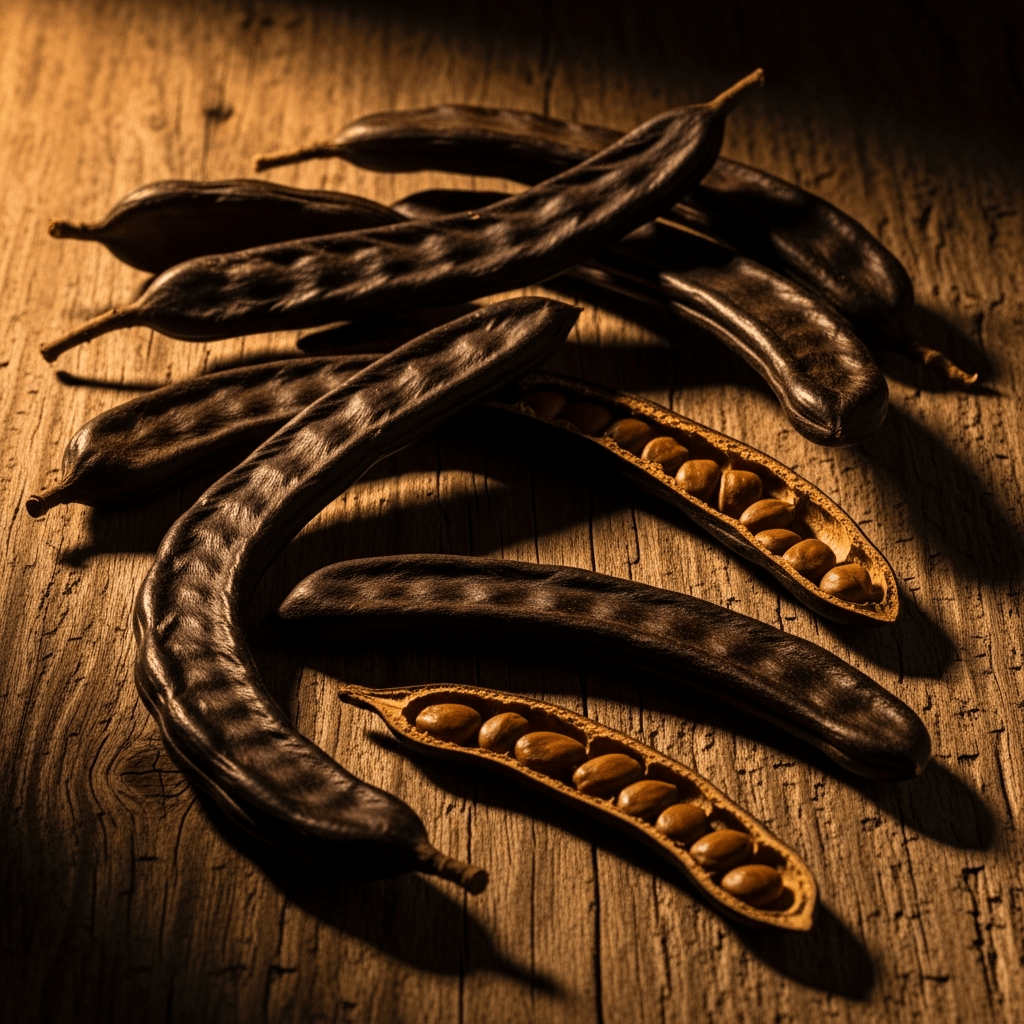
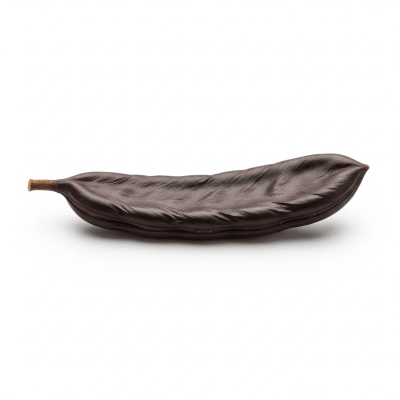
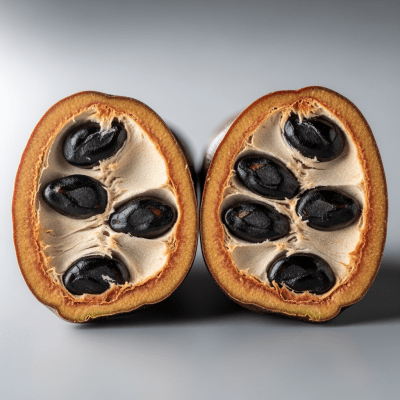
Carob trees are medium-sized and evergreen, typically reaching 10–15 meters in height with a broad, rounded crown. Their glossy, dark green pinnate leaves provide year-round foliage. The small, red flowers are often inconspicuous, and the fruit is a thick, dark brown pod measuring 10–30 cm, filled with hard seeds embedded in a sweet, edible pulp. The pods’ leathery texture and rich color make them visually distinctive among legumes.
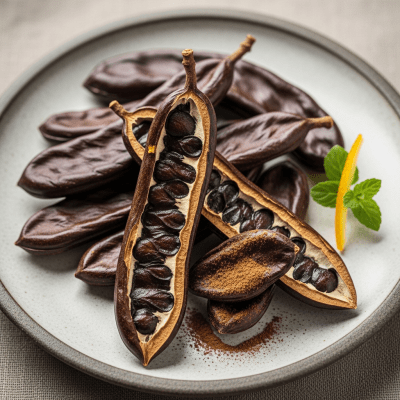
Carob’s primary use is in food, where its pods are processed into powder, chips, syrup, and extracts, serving as a caffeine-free, low-fat alternative to cocoa. The seeds, known as locust beans, are industrially significant for producing locust bean gum (E410), a natural thickener and stabilizer. Beyond culinary applications, carob pods have fed livestock for centuries, and the tree is valued for shade, erosion control, and ornamental planting in arid landscapes.
Bring this kind into your world illustrated posters, mugs, and shirts.
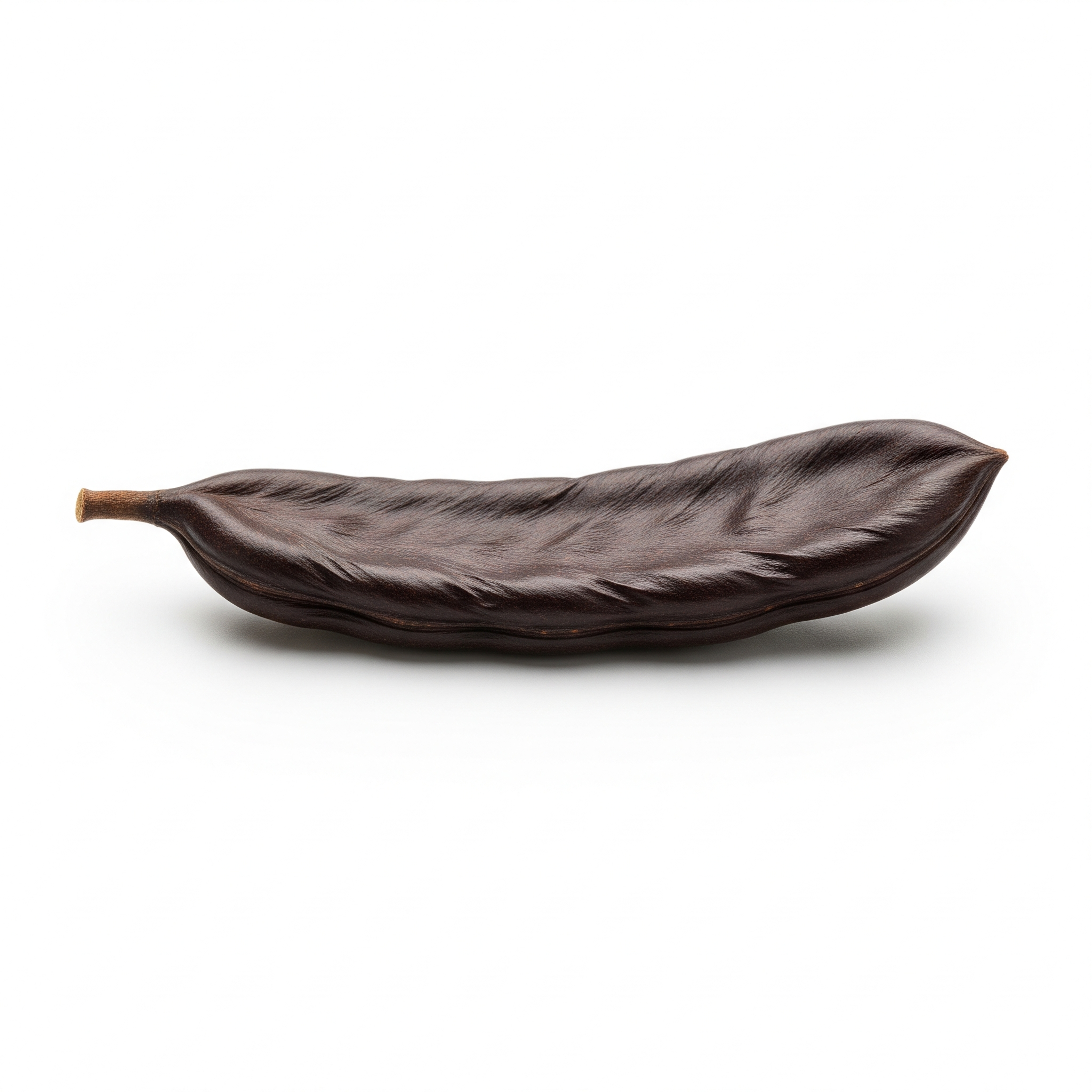
Archival print, museum-grade paper
Buy Poster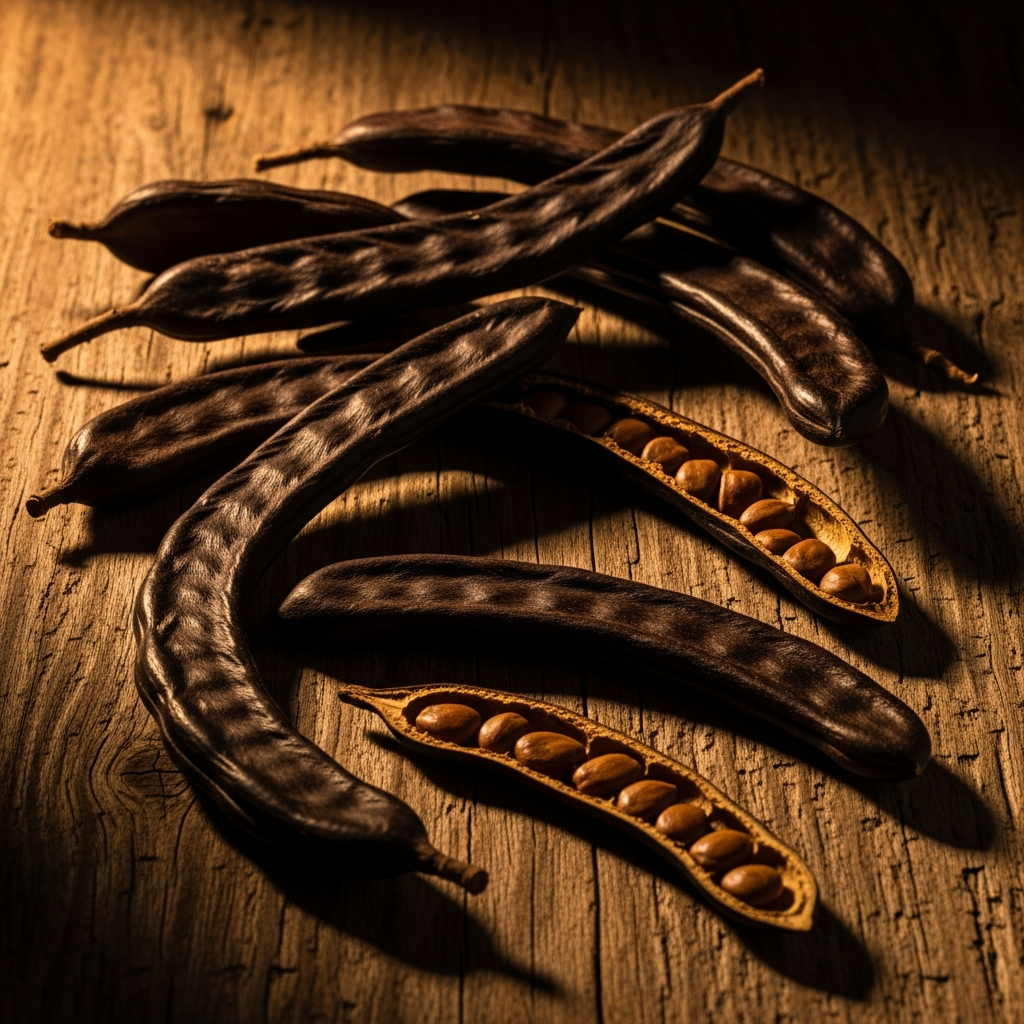
Stoneware mug, dishwasher safe
Buy Mug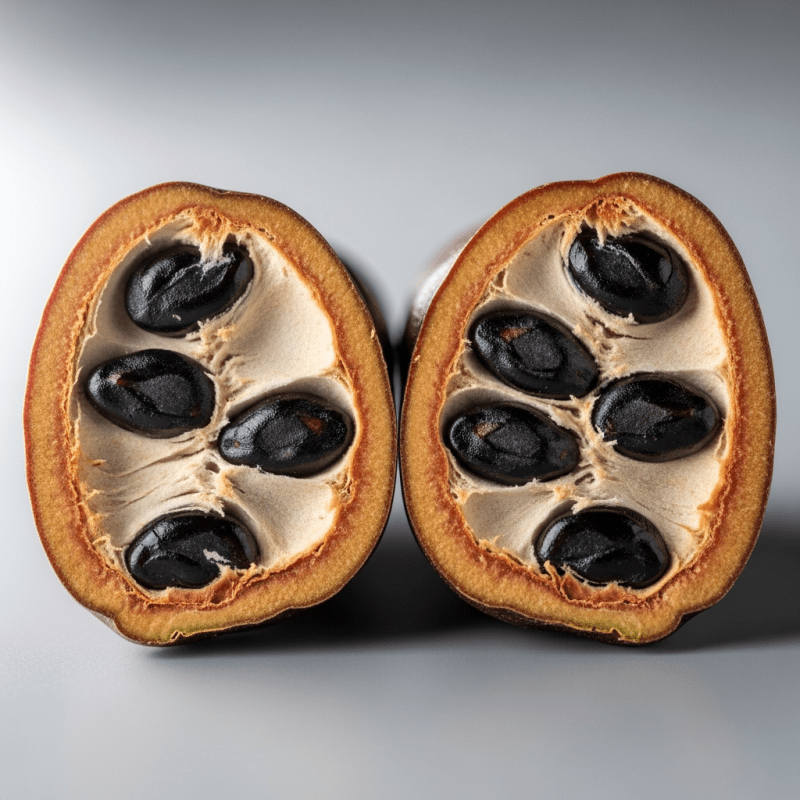
Soft cotton tee, unisex sizes
Buy ShirtCarob’s legacy is woven into Mediterranean culture, appearing in ancient myths and everyday traditions. Known as “St John’s bread,” it is linked to biblical stories and has served as a staple food in times of scarcity. The seeds’ uniform weight gave rise to the “carat,” once the standard for measuring gemstones. Today, carob features in regional cuisines and health-conscious diets, symbolizing resilience and resourcefulness.
Carob’s domestication predates recorded history, with its spread across the Mediterranean facilitated by informal selection of landraces and local varieties. Ancient civilizations, including the Greeks and Romans, cultivated carob for its nutritious pods and hardy nature. Unlike many modern crops, carob’s development was shaped by centuries of traditional propagation rather than targeted breeding, resulting in a diverse array of regional forms and uses.
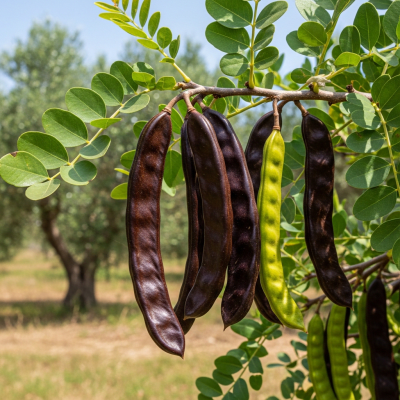
Carob grows as a slow-maturing, evergreen tree, typically reaching full size over several decades and living for more than 100 years. Its lifecycle includes inconspicuous flowering, pod development through the warm months, and pod maturation in late summer to early autumn. Mature trees can yield 50–200 kg of pods annually under favorable conditions. The species’ robust growth habit and longevity make it ideal for sustainable agriculture in marginal lands.
Unlike most legumes, carob does not form nitrogen-fixing symbiosis with root bacteria. However, its ability to thrive in poor, calcareous soils and arid climates contributes to land stabilization and erosion control, indirectly benefiting soil health in Mediterranean ecosystems.
Carob pods are processed into a naturally sweet powder, commonly used as a cocoa substitute in baking, confectionery, and beverages. Carob chips, syrup, and extracts are popular in health foods, while the seeds yield locust bean gum (E410), an essential thickener in the food industry. Carob powder is caffeine-free, contains less fat than cocoa, and is valued for its nutritional content, making it suitable for specialty diets and allergy-friendly recipes. Pods are also used as animal feed in traditional agriculture.
Carob is commercially important in southern Europe, North Africa, and the Middle East, with Spain, Italy, and Cyprus among the leading producers. Locust bean gum (E410) is a globally traded commodity, essential for food manufacturing. Demand for carob products is rising in health-conscious markets worldwide, reflecting its versatility and nutritional appeal.
Carob trees are naturally resistant to many pests and diseases, contributing to their success in marginal environments. However, they can be susceptible to pod borers and fungal infections, particularly in humid climates. Overall, carob’s resilience minimizes the need for intensive crop protection, supporting low-input and sustainable farming systems.
Carob is known by many names: “St John’s bread” (English), “algarrobo” (Spanish), “caroube” (French), “Kharoub” (Arabic), and “Χαρουπιά” (Greek). Regional varieties often reflect local traits or origins, such as ‘Tylliria’ in Cyprus or ‘Rojal’ in Spain. While standardized cultivar names are rare, these local forms highlight carob’s deep cultural roots and adaptation across the Mediterranean.