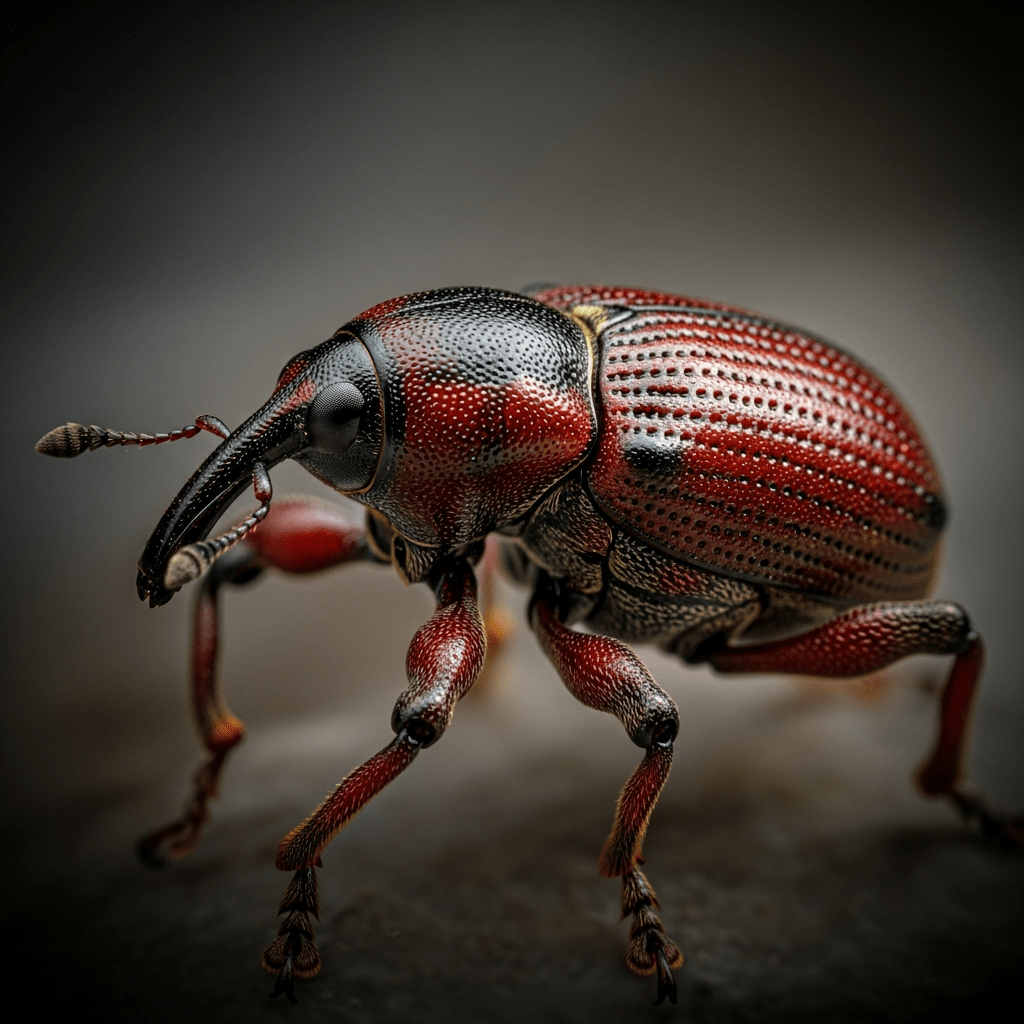
Sitophilus Oryzae
The weevil, specifically Sitophilus oryzae, is a small beetle known worldwide as a major pest of stored grains, easily identified by its elongated snout and compact body.
The weevil, specifically Sitophilus oryzae, is a small beetle known worldwide as a major pest of stored grains, easily identified by its elongated snout and compact body.
Sitophilus oryzae was first formally described by Carl Linnaeus in 1763. This species belongs to the Curculionidae family within the beetle order Coleoptera. Its global presence today is largely due to human activity, as the spread of stored grains facilitated its cosmopolitan distribution. It is a wild species with no domestication history.
The rice weevil is classified within the animal kingdom as follows: Kingdom Animalia, Phylum Arthropoda, Class Insecta, Order Coleoptera, Family Curculionidae, Genus Sitophilus, Species oryzae. It is part of the diverse group of beetles characterized by hardened forewings and chewing mouthparts.
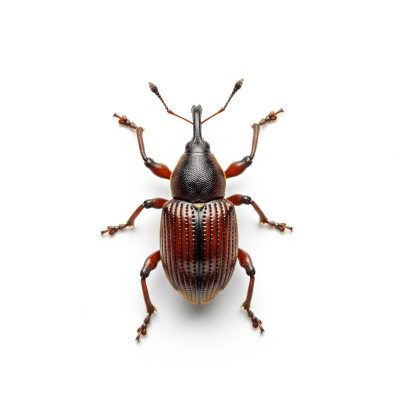
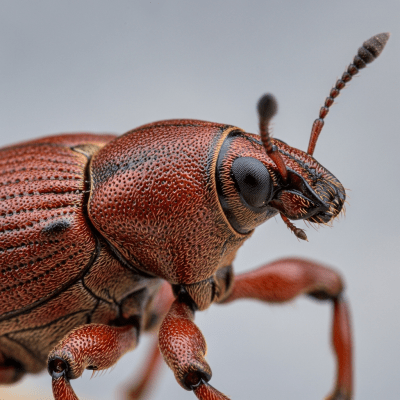
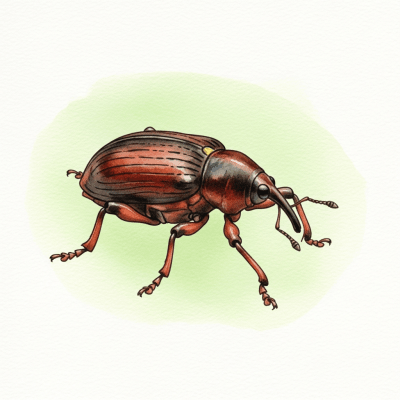
The rice weevil measures between 2 and 3 millimeters in length and displays a dark brown to reddish-brown coloration accented by four lighter spots on its wing covers (elytra). Its most distinctive feature is an elongated, curved snout known as a rostrum. The compact body and the adults’ ability to fly make it a highly mobile pest.
Females lay their eggs inside individual grains, where larvae develop unseen, making infestations difficult to detect until adults emerge. The rice weevil thrives in stored grains such as rice, wheat, maize, and barley, causing significant damage and economic loss. It is sensitive to extreme cold and certain fumigants but shows no widespread resistance to insecticides, though regional variations may occur.
Bring this kind into your world illustrated posters, mugs, and shirts.
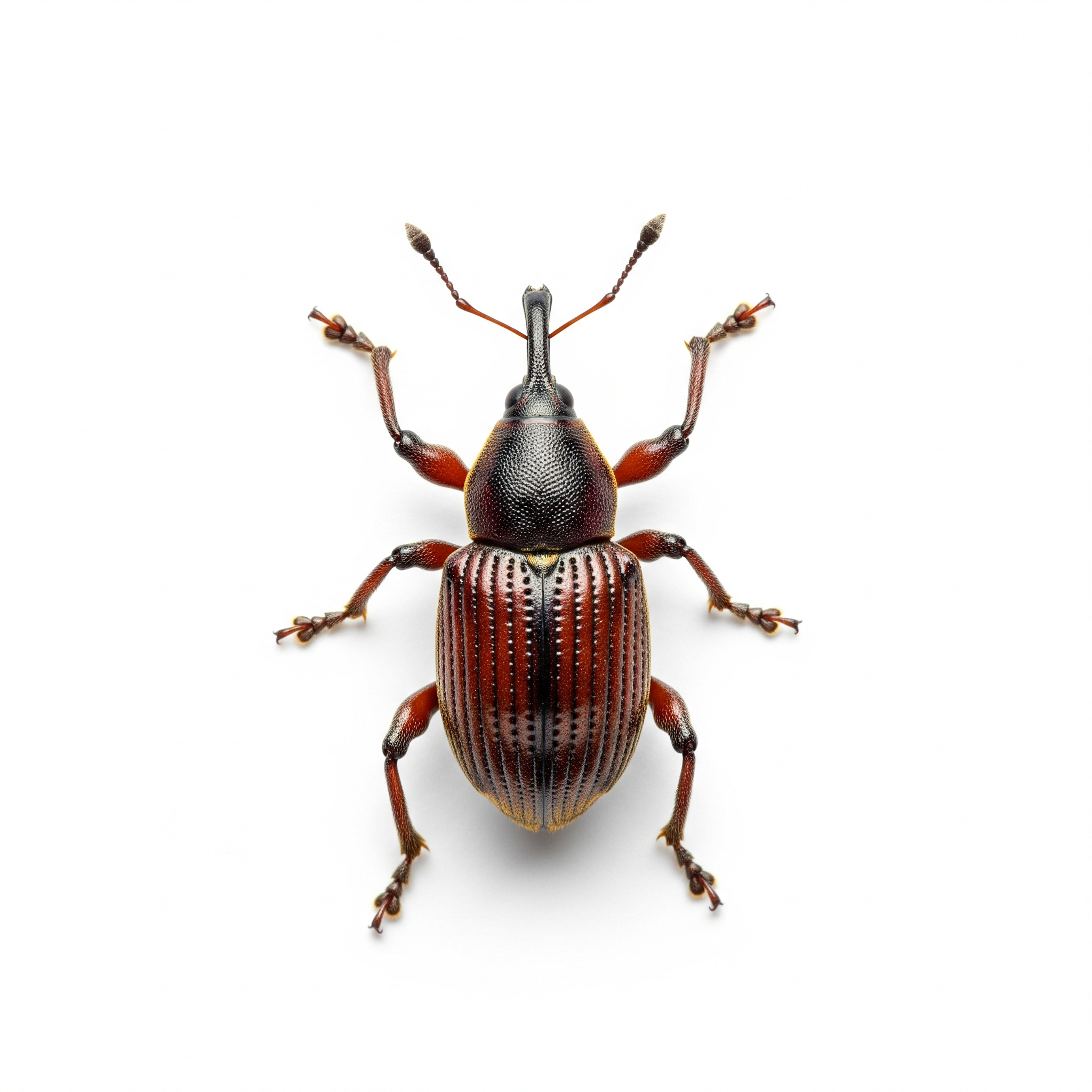
Archival print, museum-grade paper
Buy Poster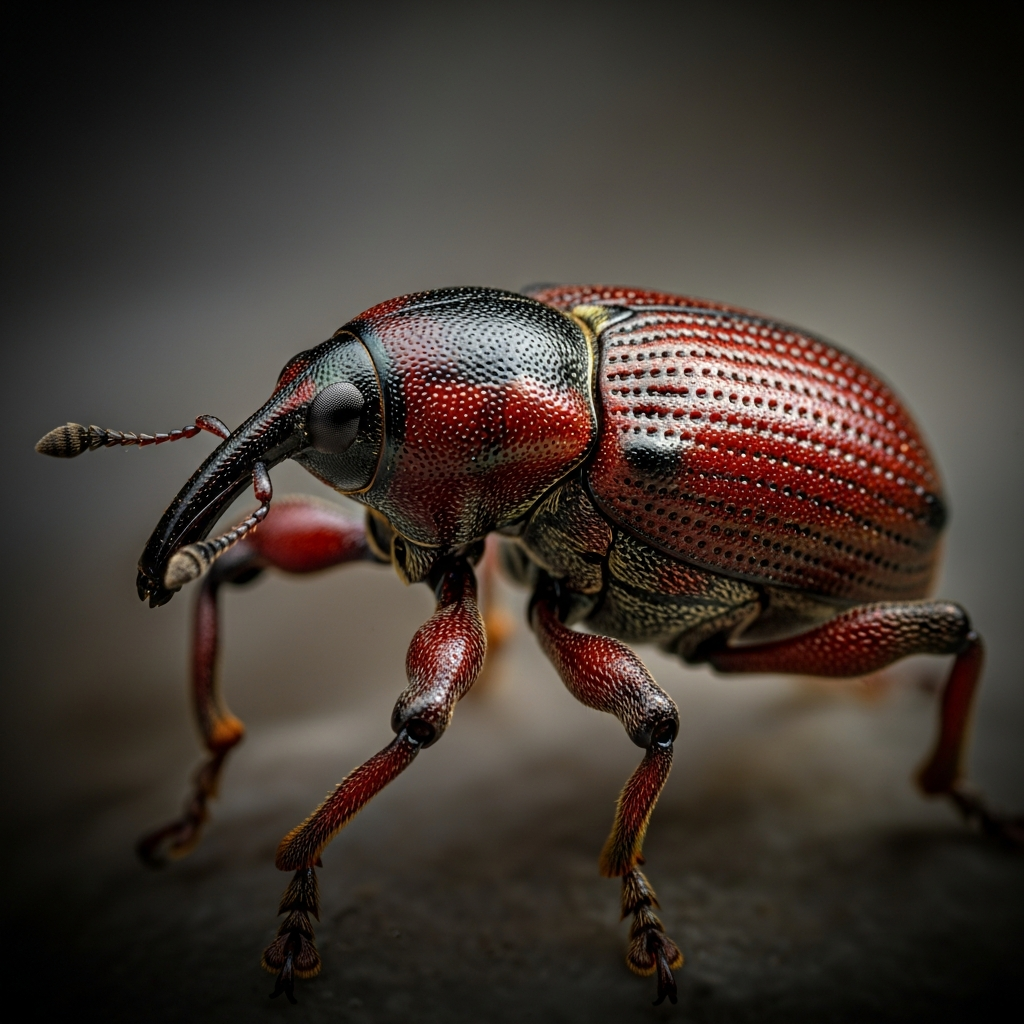
Stoneware mug, dishwasher safe
Buy Mug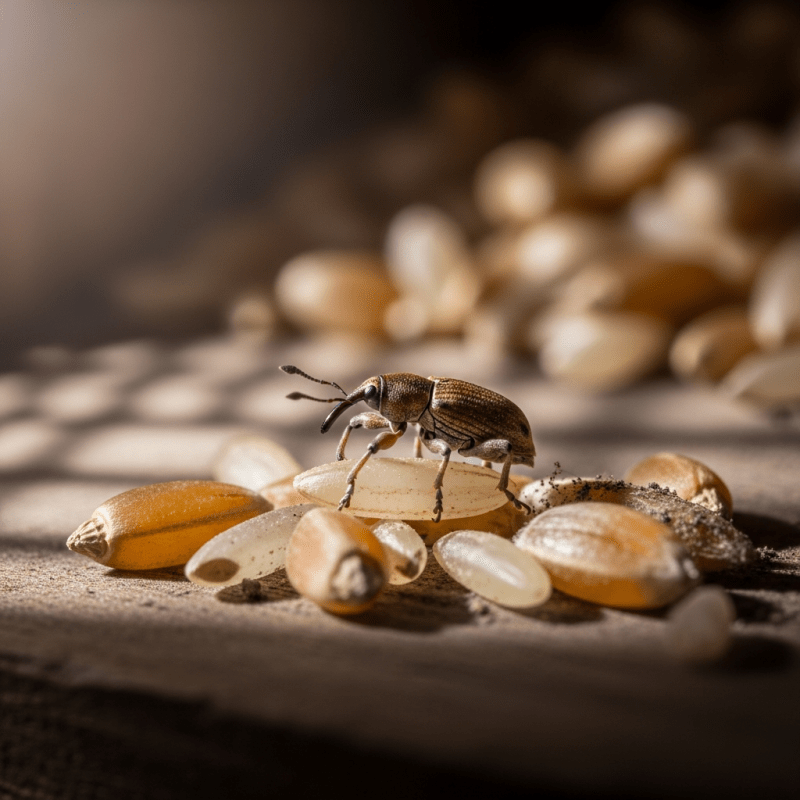
Soft cotton tee, unisex sizes
Buy ShirtWhile the rice weevil holds no culinary or commercial value beyond its pest status, it serves an important role in scientific research. It is widely used as a model organism in entomological studies focused on pest management and grain storage protection.
The rice weevil has a cosmopolitan distribution, found worldwide wherever grains are stored. It thrives in warm environments and is commonly associated with stored rice, wheat, maize, and barley. Its spread has been facilitated by global grain trade and storage practices, making it a pervasive pest in agricultural and commercial settings.
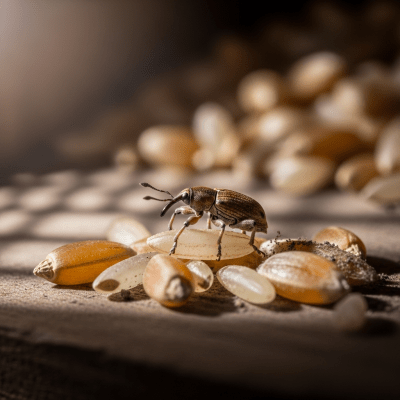
The rice weevil undergoes complete metamorphosis with four distinct stages: egg, larva, pupa, and adult. Females deposit eggs inside individual grains, where larvae hatch and feed internally. After pupation within the grain, adults emerge to continue the cycle. This hidden development contributes to the difficulty of early infestation detection.
Ecologically, the rice weevil functions primarily as a pest species within human-managed environments, feeding on stored grains. While it does not play a significant role in natural ecosystems, its presence impacts food storage systems and prompts pest management efforts. It also serves as a subject for studying insect behavior and pest control strategies.
The rice weevil faces few natural threats due to its close association with human grain storage. It is sensitive to extreme cold and certain fumigants used in pest control. There are no conservation concerns for this species, as it is widespread and abundant. Control efforts focus on limiting its impact as a pest rather than preserving its populations.