Phasmatodea
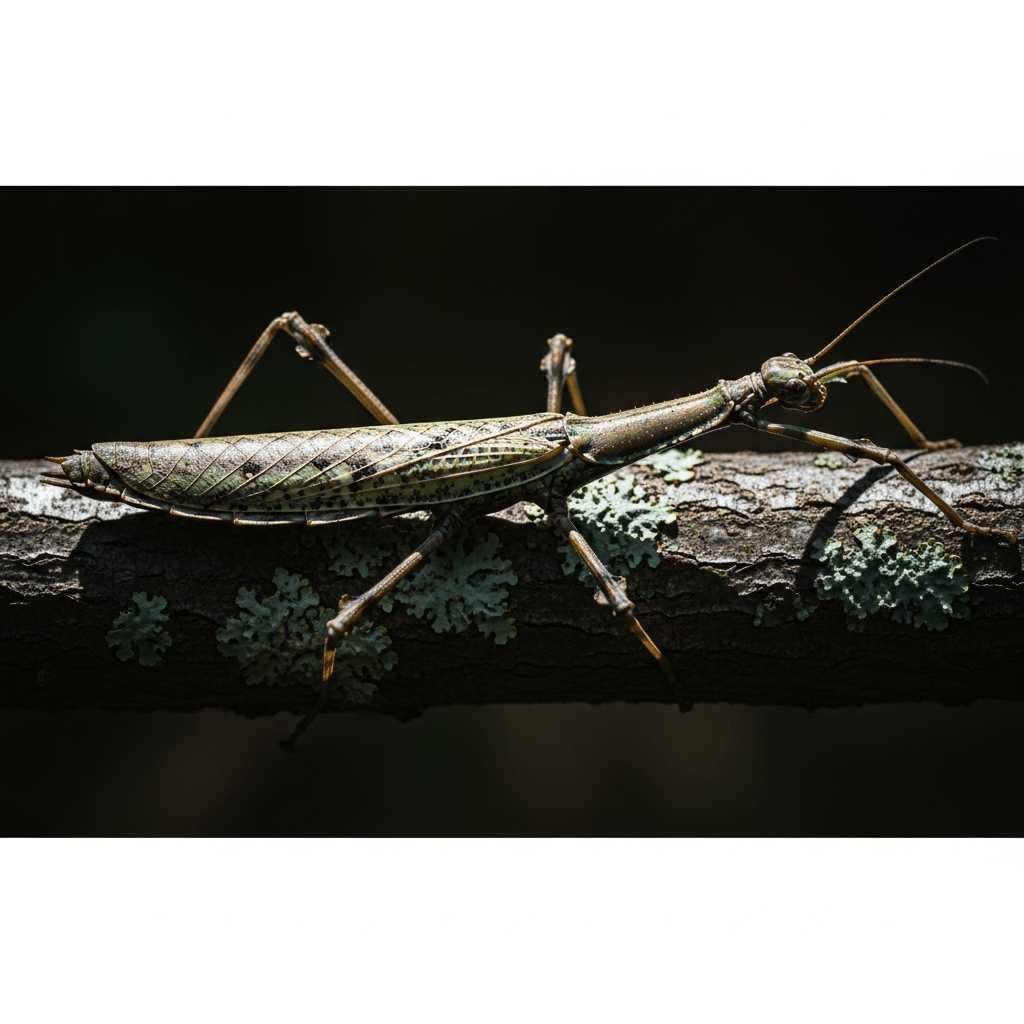
Phasmatodea, commonly known as walking sticks or stick insects, are insects renowned for their elongated bodies that mimic twigs and branches, providing exceptional camouflage against predators.
Phasmatodea, commonly known as walking sticks or stick insects, are insects renowned for their elongated bodies that mimic twigs and branches, providing exceptional camouflage against predators.
The order Phasmatodea was first formally described in 1825 by Jacob Johann Hagenbach. This natural group comprises numerous genera and species, with ongoing scientific study refining its classification through morphological and genetic research.
Walking sticks belong to the class Insecta and are classified within the order Phasmatodea. They form a distinct lineage characterized by their unique body form and camouflage adaptations, with taxonomic revisions continuing as new species are studied.
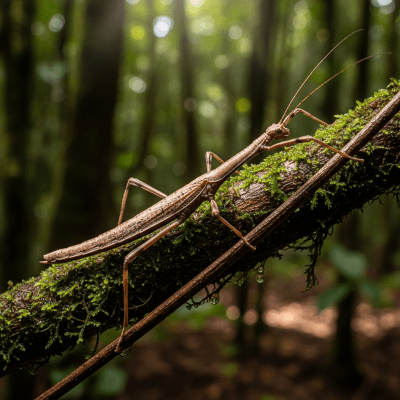
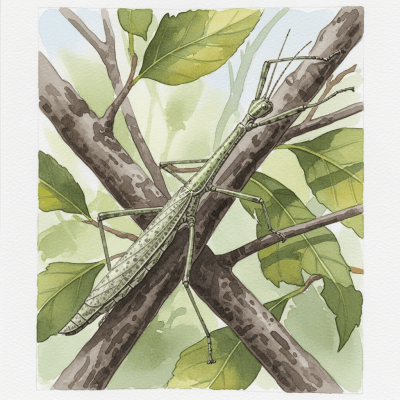
Walking sticks display elongated, cylindrical or flattened bodies that closely resemble sticks or leaves. Their coloration ranges from green to brown, often matching their surroundings. Most have six legs and may be wingless or possess wings, depending on the species. Their size varies widely, from about 20 millimeters to over 300 millimeters in length.
These insects are herbivorous and slow-moving, relying heavily on their remarkable camouflage to avoid predators. While not cultivated or used agriculturally, walking sticks are sometimes kept as pets or educational specimens and serve as subjects in research on mimicry and camouflage.
Bring this kind into your world illustrated posters, mugs, and shirts.
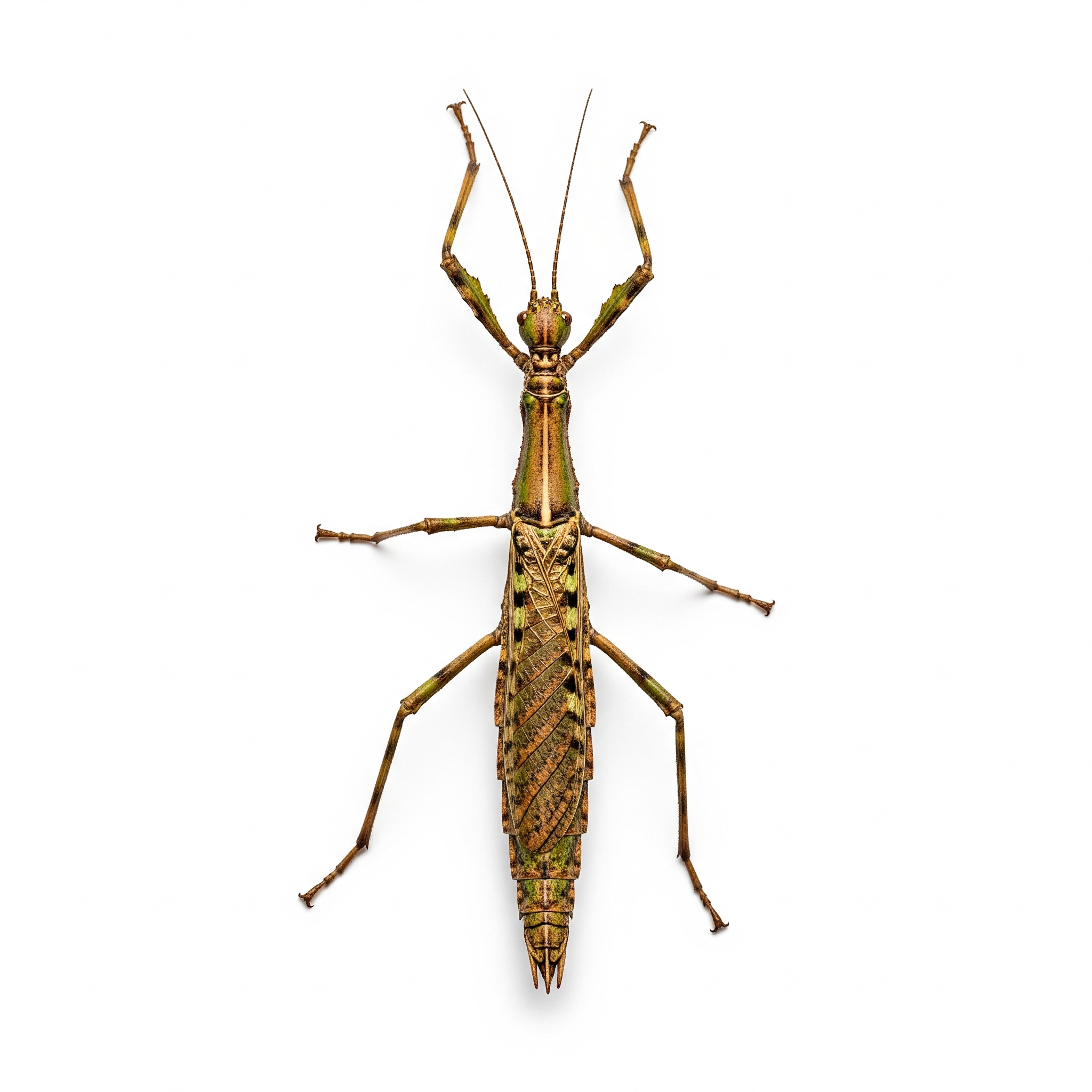
Archival print, museum-grade paper
Buy Poster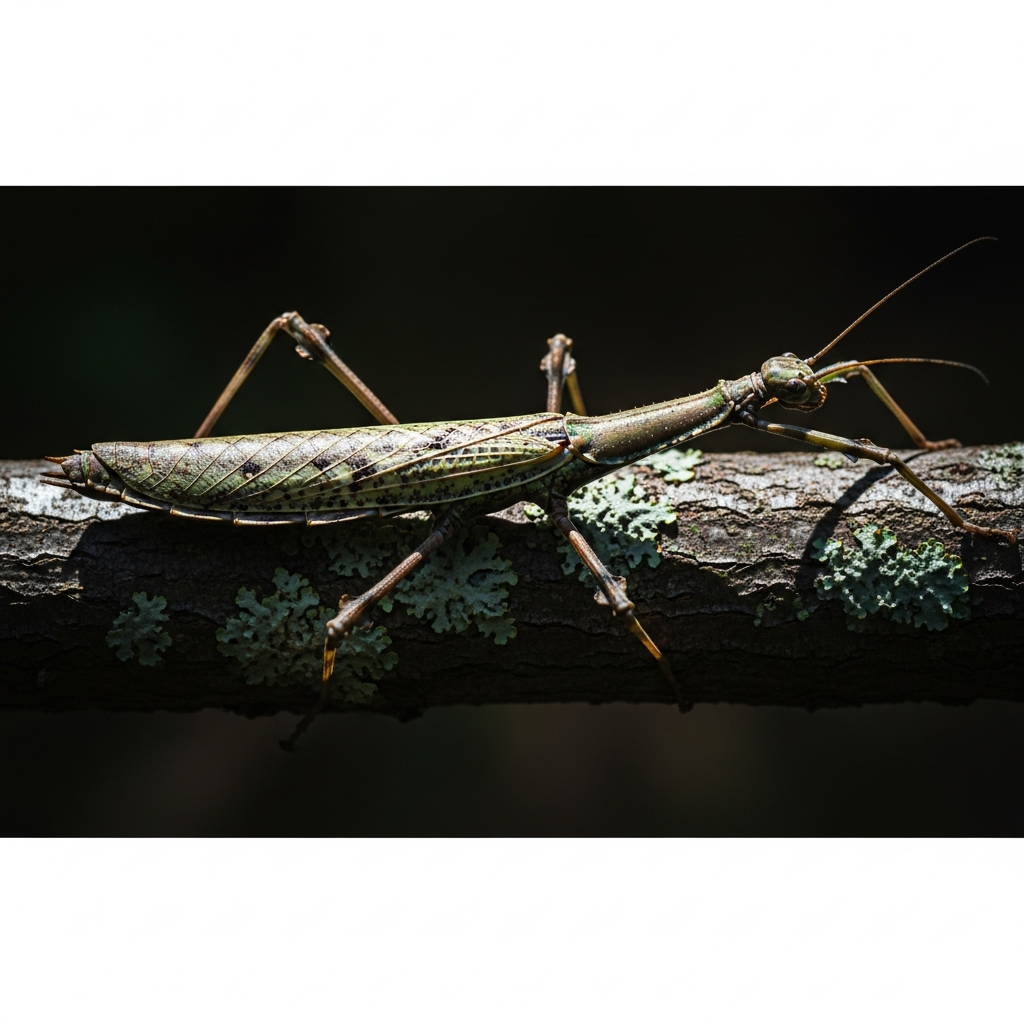
Stoneware mug, dishwasher safe
Buy Mug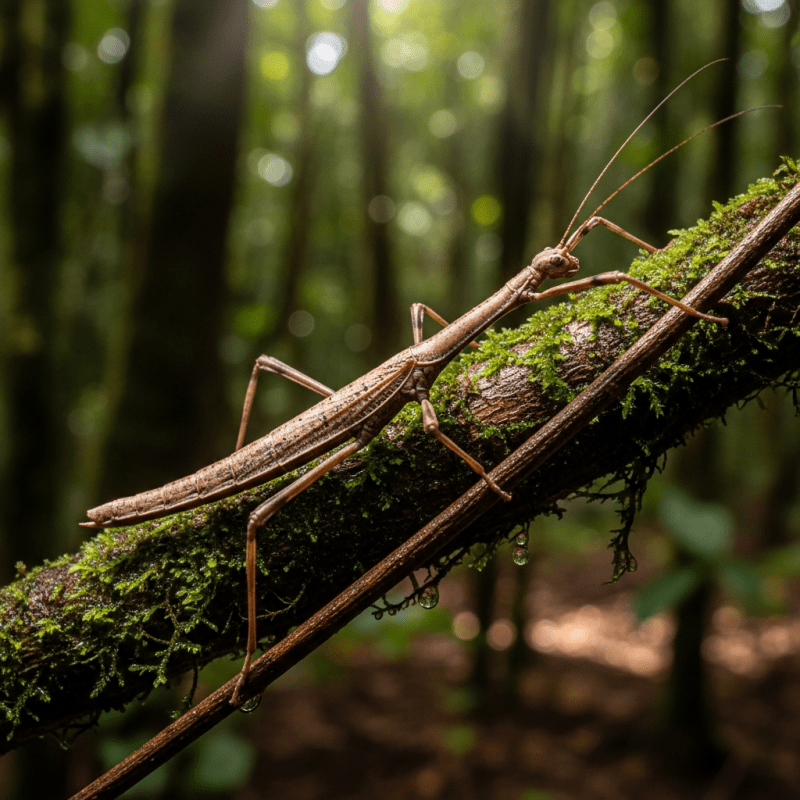
Soft cotton tee, unisex sizes
Buy ShirtWalking sticks hold cultural interest in various regions, appearing in traditional medicine and as curiosities. Their extraordinary mimicry has inspired scientific study and occasionally features in art and folklore, highlighting nature’s ingenuity in survival strategies.
Walking sticks inhabit environments where their twig-like appearance offers effective concealment, such as forests and shrublands. They are found worldwide, especially in tropical and subtropical regions, adapting to diverse habitats that support their herbivorous lifestyle.
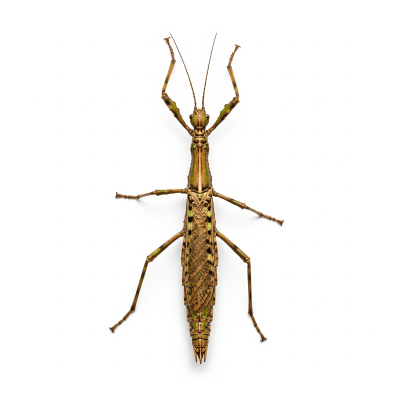
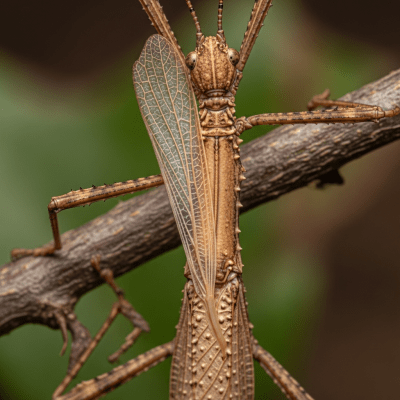
Walking sticks undergo incomplete metamorphosis, progressing through three main stages: egg, nymph, and adult. Nymphs closely resemble adults but are smaller and develop wings if the species possesses them. This gradual development supports their survival through effective camouflage at all stages.
As herbivores, walking sticks contribute to plant population control and serve as prey for various predators, despite their camouflage. Their presence supports ecosystem balance, and their mimicry provides a fascinating example of evolutionary adaptation.
Walking sticks face threats primarily from habitat destruction and collection for the pet trade or scientific study. While not widely assessed for conservation status, protecting their natural habitats is crucial to preserving their populations and the ecological roles they fulfill.