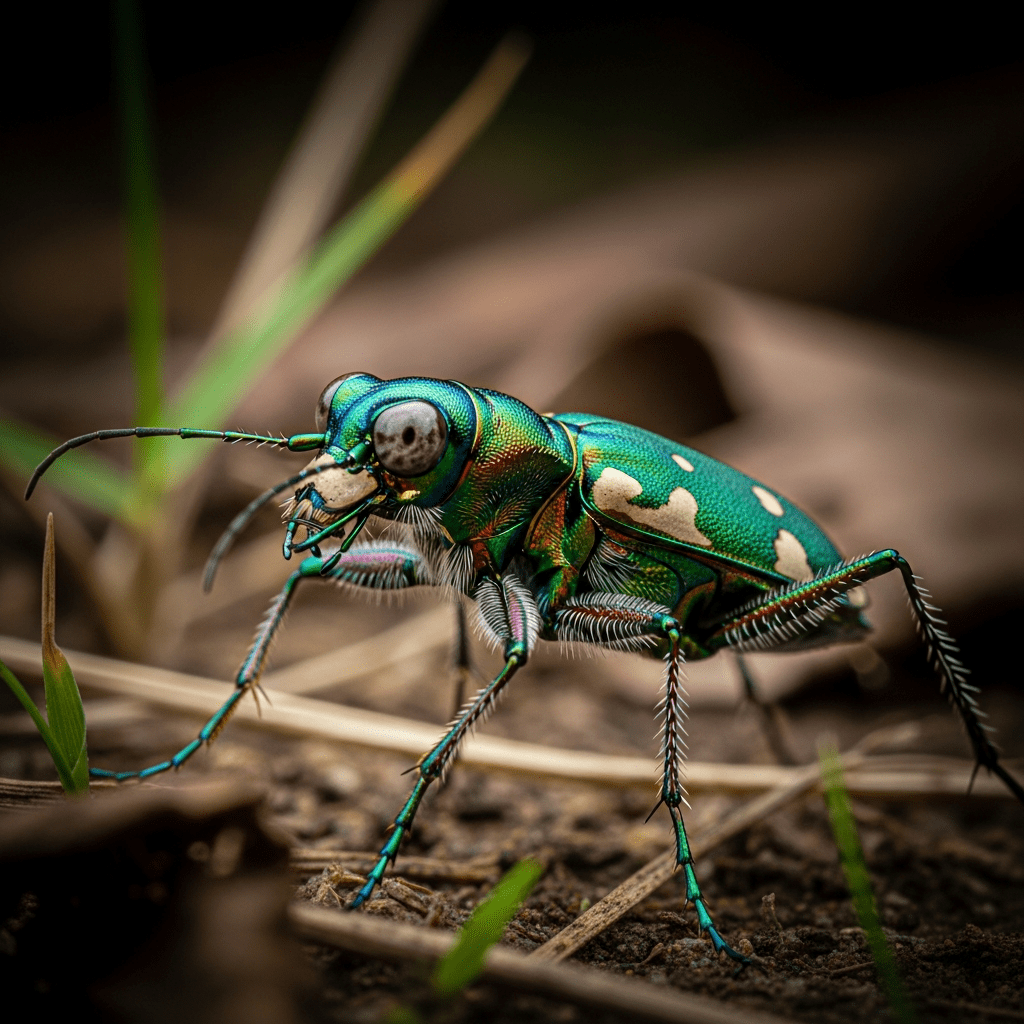
Cicindela Campestris
The tiger beetle (Cicindela campestris) is a fast-moving, metallic green predatory beetle known for its remarkable speed and agility in open habitats.
The tiger beetle (Cicindela campestris) is a fast-moving, metallic green predatory beetle known for its remarkable speed and agility in open habitats.
First described by Carl Linnaeus in 1758, the tiger beetle has a long-established lineage within the family Cicindelidae. It remains a wild species with no records of domestication or artificial breeding.
The tiger beetle belongs to the class Insecta, order Coleoptera, and family Cicindelidae. Its genus is Cicindela, with the species name campestris, placing it among the agile ground beetles known for their predatory habits.
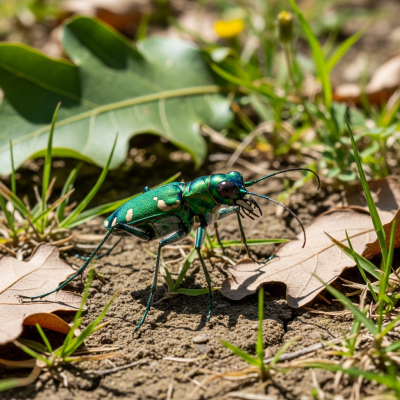
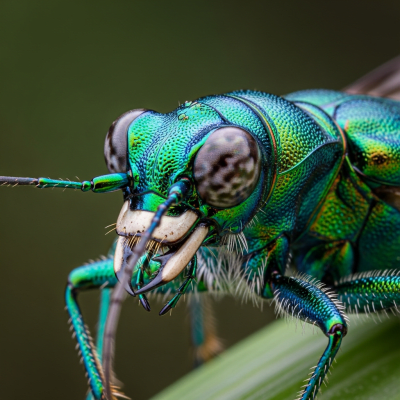
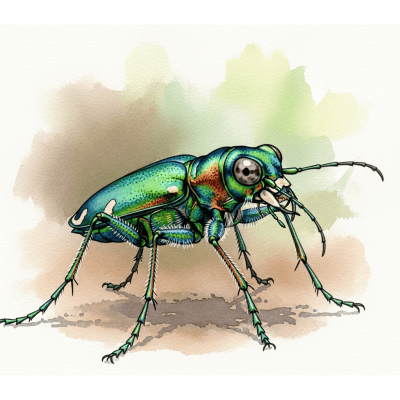
This beetle typically measures 10 to 15 millimeters in length, featuring a vivid metallic green body adorned with distinctive cream-colored spots on its hardened forewings (elytra). Its elongated form includes long legs designed for rapid running and powerful mandibles suited for capturing prey. Adults possess wings enabling short bursts of flight, while their large compound eyes support keen vision during daylight activity.
The tiger beetle is a diurnal and highly active predator, relying on speed and agility to hunt insects in sandy soils, grasslands, and heathlands. Larvae live in vertical burrows from which they ambush passing prey. While not used commercially or culinarily, this species serves important ecological functions and is valued in biodiversity monitoring.
Bring this kind into your world illustrated posters, mugs, and shirts.
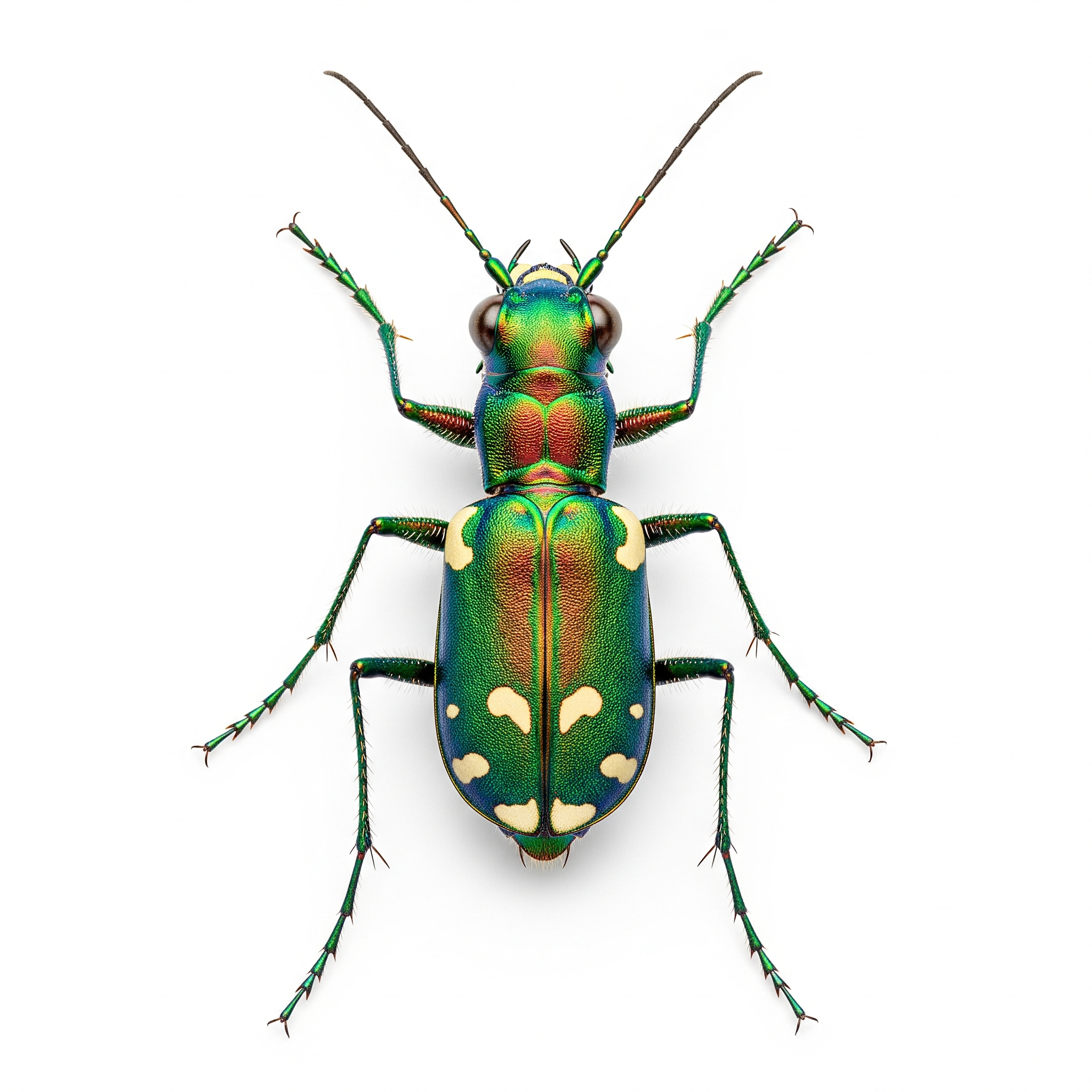
Archival print, museum-grade paper
Buy Poster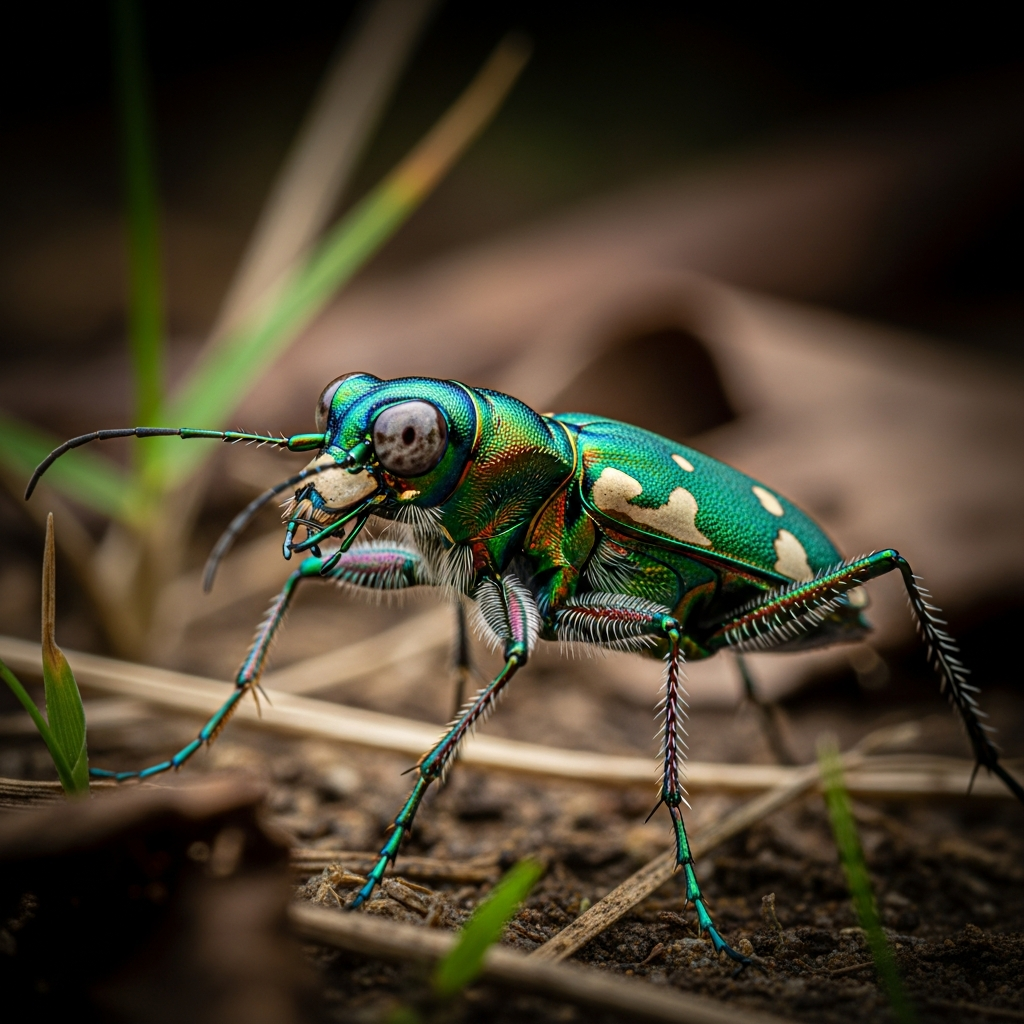
Stoneware mug, dishwasher safe
Buy Mug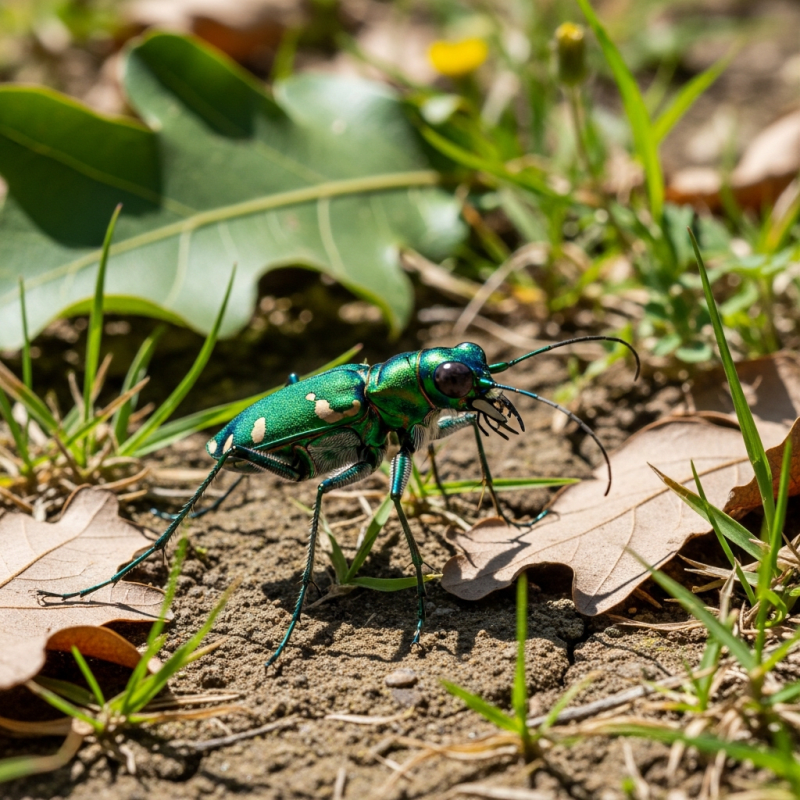
Soft cotton tee, unisex sizes
Buy ShirtThough the tiger beetle lacks prominent cultural symbolism or widespread representation in art and mythology, it holds scientific significance as an indicator species reflecting habitat quality and ecological health.
The tiger beetle is widely distributed across Europe and parts of Asia, thriving in open environments with sandy or loose soils. Typical habitats include grasslands, heathlands, and other sunny, well-drained areas where it can hunt effectively.

The tiger beetle undergoes complete metamorphosis, progressing through four stages: egg, larva, pupa, and adult. Larvae develop underground in vertical burrows, where they lie in wait to ambush prey, while adults emerge as agile hunters active during the day.
As voracious predators, tiger beetles help regulate populations of smaller insects, contributing to ecological balance. Their presence also serves as an indicator of healthy, undisturbed habitats, making them valuable for ecological studies and biodiversity assessments.
Although not globally assessed by the IUCN, tiger beetles face threats from habitat loss and degradation, particularly due to land development and changes in land use. Conservation efforts focus on preserving open sandy habitats and monitoring populations to ensure their continued ecological role.