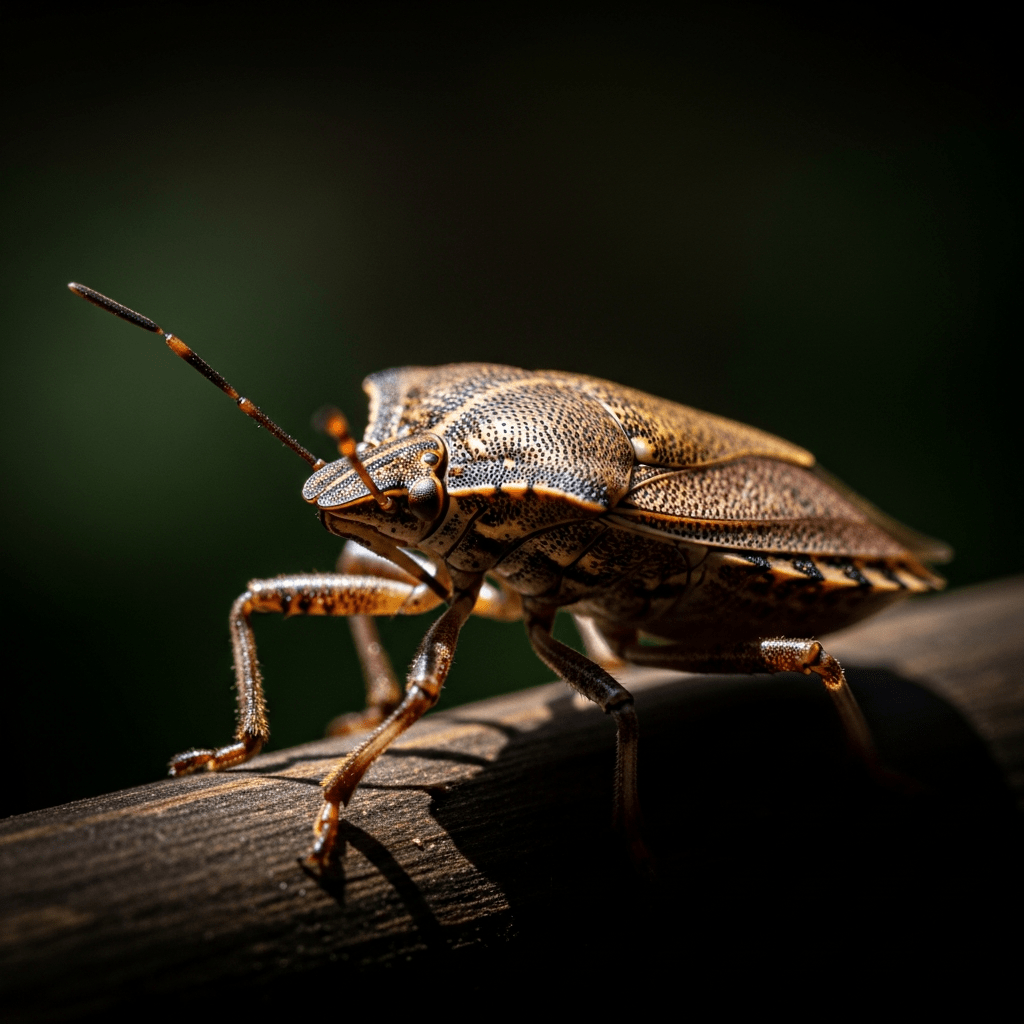
Halyomorpha Halys
The brown marmorated stink bug (Halyomorpha halys) is a shield-shaped insect native to East Asia, recognized for the distinctive odor it emits when disturbed and its status as a widespread agricultural pest.
The brown marmorated stink bug (Halyomorpha halys) is a shield-shaped insect native to East Asia, recognized for the distinctive odor it emits when disturbed and its status as a widespread agricultural pest.
Halyomorpha halys was first scientifically described by Carl Stål in 1855. Originating from China, Japan, and Korea, this species began spreading globally in the late 20th century, with accidental introductions first recorded in North America and later Europe, where it has become invasive.
This insect belongs to the class Insecta, order Hemiptera, and family Pentatomidae, which groups it among the true bugs known for their piercing-sucking mouthparts. Within its genus Halyomorpha, halys is distinguished by its pest status and broad host range.
Adult brown marmorated stink bugs measure 12 to 17 millimeters in length and have a distinctive shield-shaped body. Their dorsal surface is mottled brown, providing effective camouflage. Antennae feature alternating light and dark bands, while legs display characteristic white markings. Nymphs differ by being smaller, rounder, and exhibiting red and black coloration in early developmental stages.
Highly polyphagous, Halyomorpha halys feeds on over 100 plant species by piercing tissues and sucking sap, which damages fruits and crops. It exhibits high reproductive rates and can overwinter in sheltered human structures, contributing to its persistence and spread. While it poses no culinary or commercial benefits, it is a significant agricultural pest requiring active management.
Bring this kind into your world illustrated posters, mugs, and shirts.
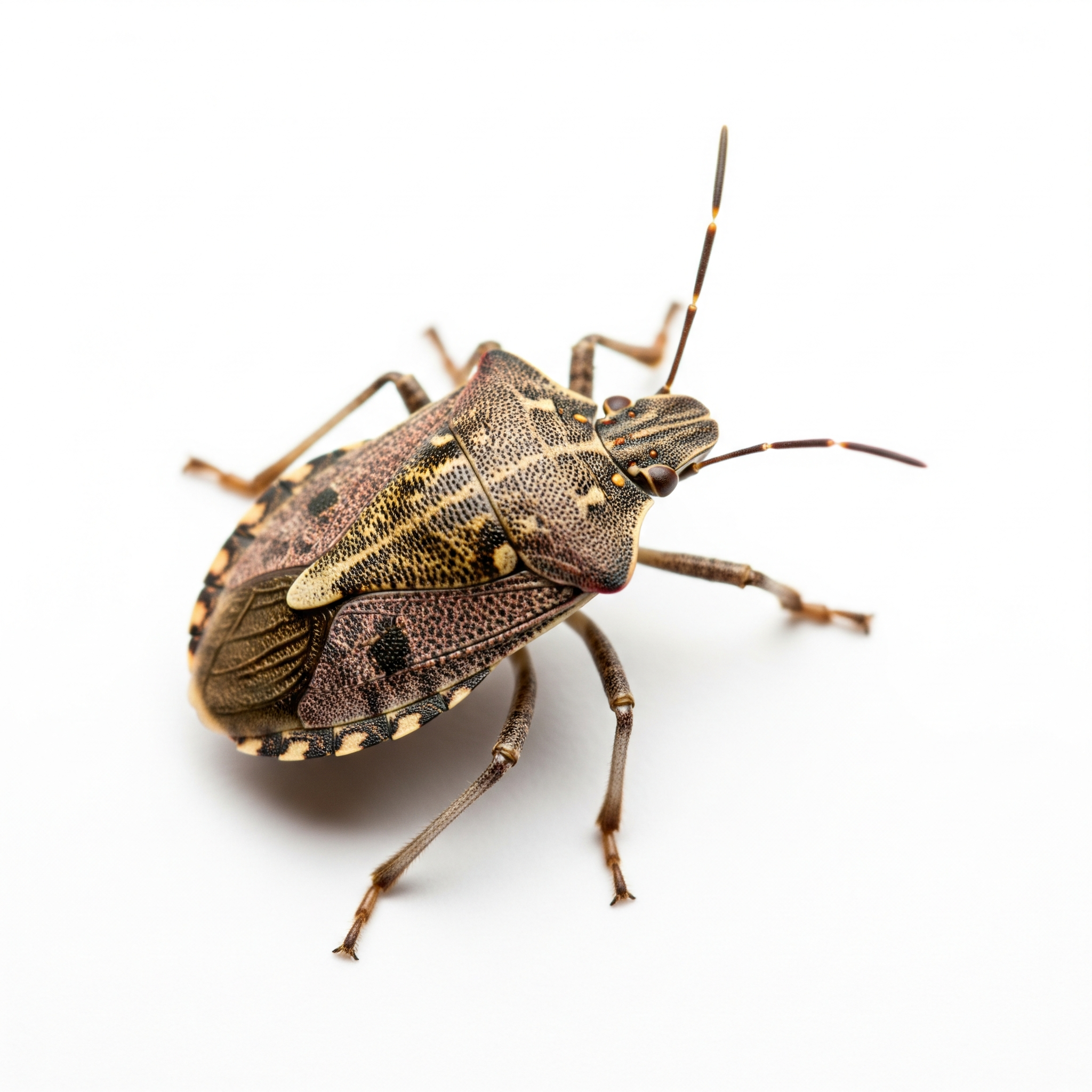
Archival print, museum-grade paper
Buy Poster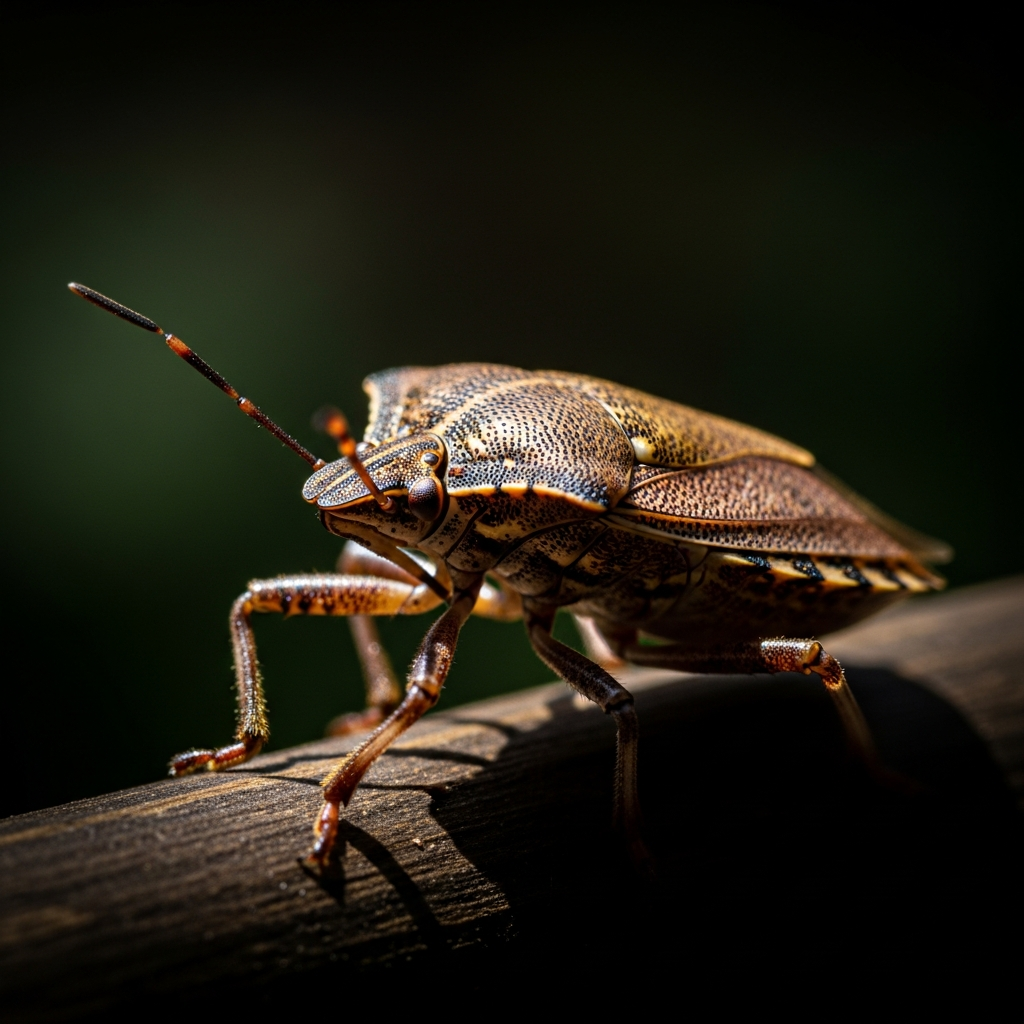
Stoneware mug, dishwasher safe
Buy Mug
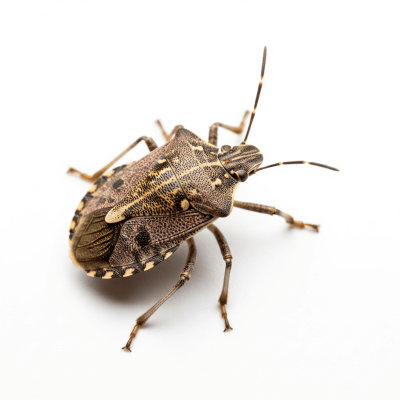
Soft cotton tee, unisex sizes
Buy ShirtIn regions where it is invasive, the brown marmorated stink bug is primarily viewed as a nuisance and a threat to agriculture. Though related stink bug species hold culinary or medicinal roles in some Asian cultures, Halyomorpha halys itself lacks notable cultural or symbolic significance beyond its impact as a pest.
Native to East Asia, including China, Japan, and Korea, the brown marmorated stink bug has established invasive populations across North America and Europe. It thrives in agricultural landscapes and ornamental plantings and often seeks shelter in human-made structures during colder seasons.
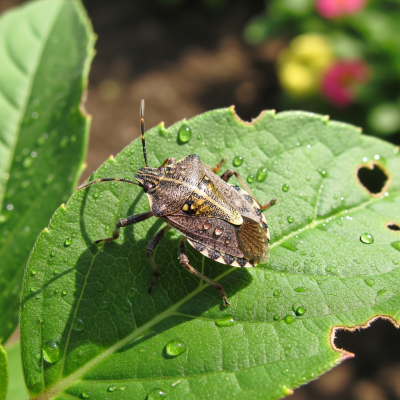
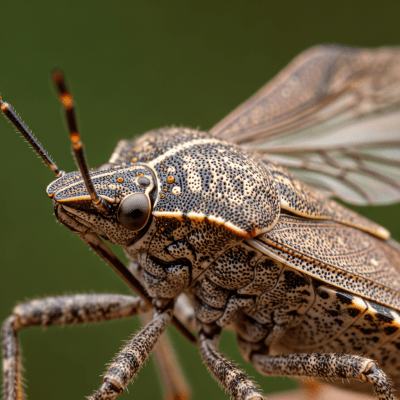
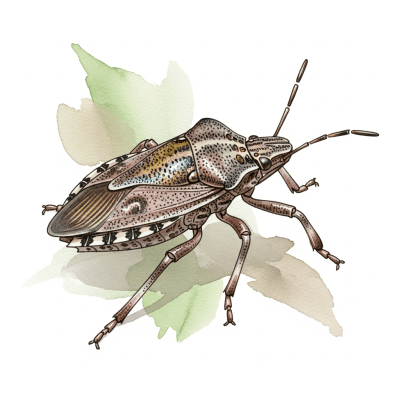
The species undergoes incomplete metamorphosis, progressing through three main stages: egg, nymph, and adult. Eggs hatch into nymphs that develop through several instars, initially displaying red and black coloration before maturing into the mottled brown adults. Reproduction is prolific, supporting rapid population growth.
While primarily known as a pest, Halyomorpha halys also serves as prey for natural enemies such as parasitoid wasps, contributing to local food webs. Its feeding behavior influences plant health and crop yields, indirectly affecting ecosystem dynamics in invaded regions.
The brown marmorated stink bug faces threats from natural parasitoids and some insecticides, though resistance is increasing. It is not a conservation concern due to its invasive status and widespread abundance. Instead, efforts focus on managing and controlling its populations to mitigate agricultural damage.