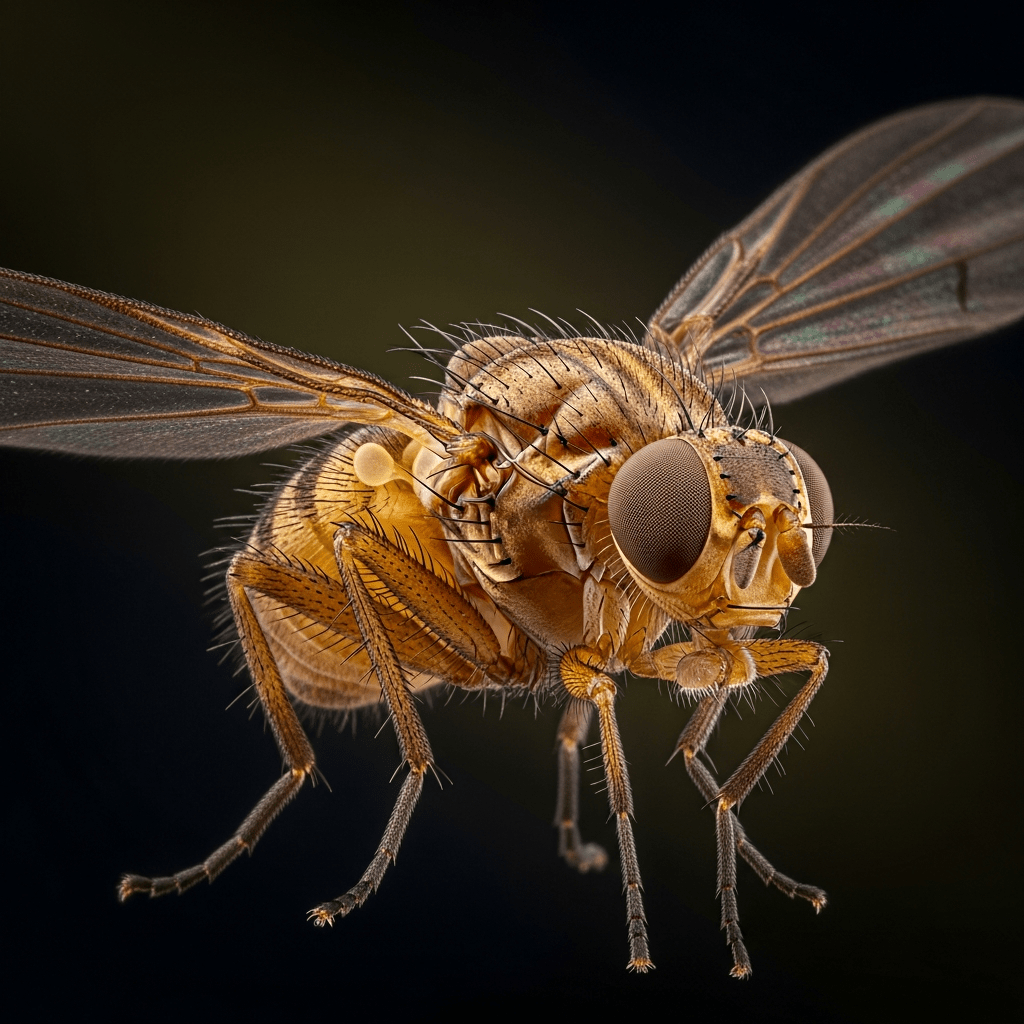
Drosophila Melanogaster
The fruit fly, Drosophila melanogaster, is a small, globally widespread insect renowned as a foundational model organism in genetics and biological research.
The fruit fly, Drosophila melanogaster, is a small, globally widespread insect renowned as a foundational model organism in genetics and biological research.
First described by Meigen in 1830, Drosophila melanogaster originates from wild populations in sub-Saharan Africa. Its global presence today is largely due to human activity, with laboratory use beginning in the early 20th century through pioneering genetic studies by Thomas Hunt Morgan and colleagues.
Drosophila melanogaster belongs to the class Insecta, order Diptera, family Drosophilidae, and genus Drosophila. This classification places it among the true flies, characterized by a single pair of wings and specialized mouthparts.
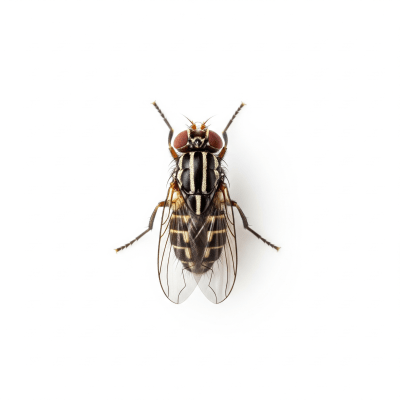
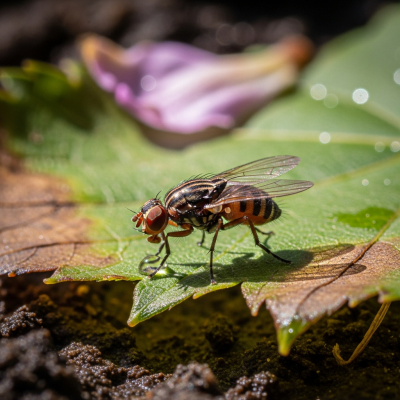
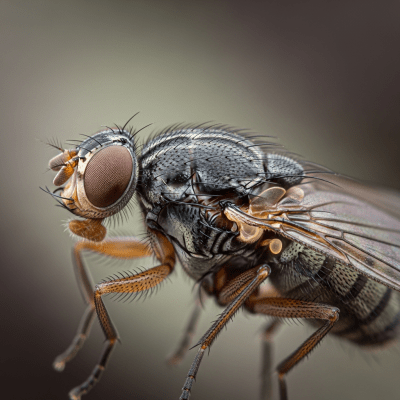
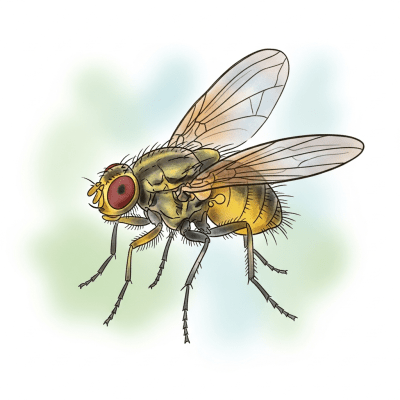
Measuring just 2–3 millimeters in length, the fruit fly features a tan thorax, a black-striped abdomen, and striking red compound eyes. Its body is segmented into head, thorax, and abdomen, with three pairs of legs and two wings typical of flies. This small size and distinctive coloration make it easily recognizable.
The fruit fly exhibits a rapid life cycle averaging 10 to 14 days at 25°C, undergoing complete metamorphosis from egg to larva, pupa, and adult. Females lay hundreds of eggs on fermenting fruit or decaying plant material. While it can be a minor pest in fruit storage and fermentation industries, its primary significance lies in its extensive use as a model organism in genetics, developmental biology, neurobiology, and evolutionary studies.
Bring this kind into your world illustrated posters, mugs, and shirts.
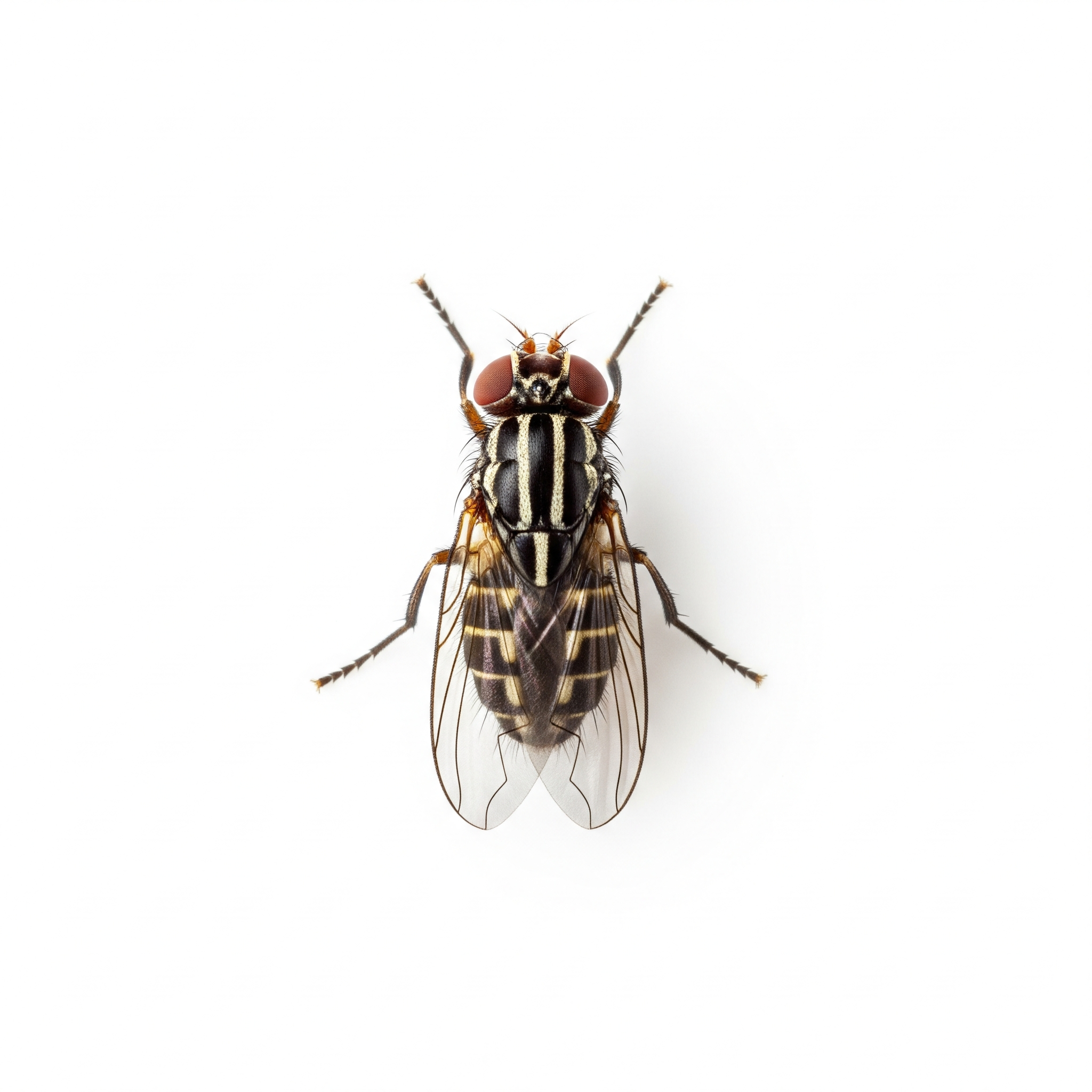
Archival print, museum-grade paper
Buy Poster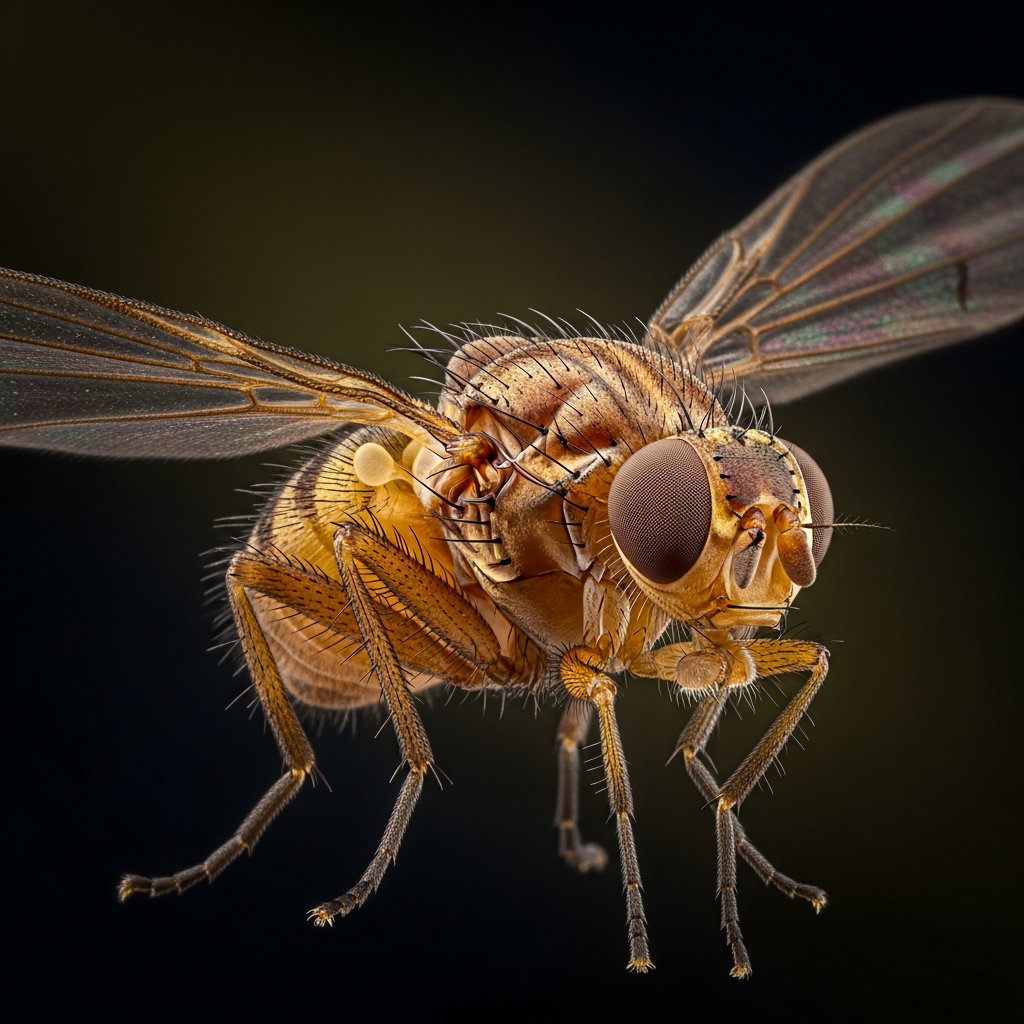
Stoneware mug, dishwasher safe
Buy Mug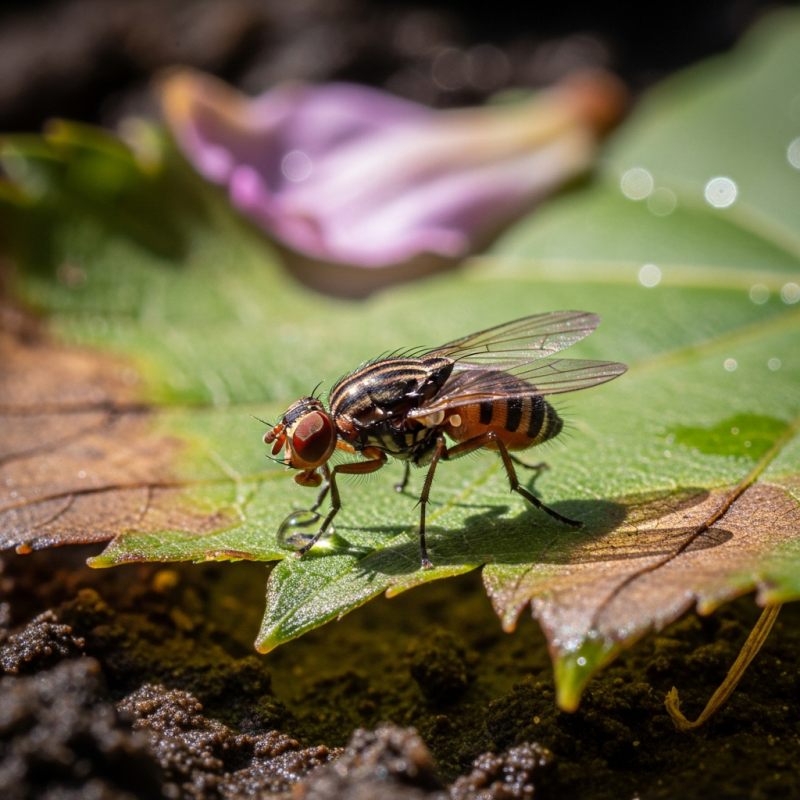
Soft cotton tee, unisex sizes
Buy ShirtThough Drosophila melanogaster holds little direct cultural symbolism or culinary use, its profound impact on science has made it an iconic figure in biological research and education worldwide.
Drosophila melanogaster is globally distributed, thriving wherever fermenting fruit or decaying plant material is available. Originally native to sub-Saharan Africa, it now inhabits diverse environments worldwide, often in close association with human activity.
The fruit fly undergoes complete metamorphosis with four distinct stages: egg, larva, pupa, and adult. Females lay hundreds of eggs on suitable substrates, which hatch into larvae that feed on fermenting material. After several days, larvae pupate and emerge as adults, completing the cycle in about 10 to 14 days under optimal conditions.
Fruit flies contribute to the decomposition of fermenting fruit and plant matter, aiding nutrient cycling in ecosystems. While not major pollinators or predators, they serve as prey for various insectivores and help break down organic material.
As a widespread and adaptable species, the fruit fly faces few conservation threats. Its populations are stable globally, with no significant risks identified. Its resilience to diverse environments and human-associated habitats ensures its continued abundance.