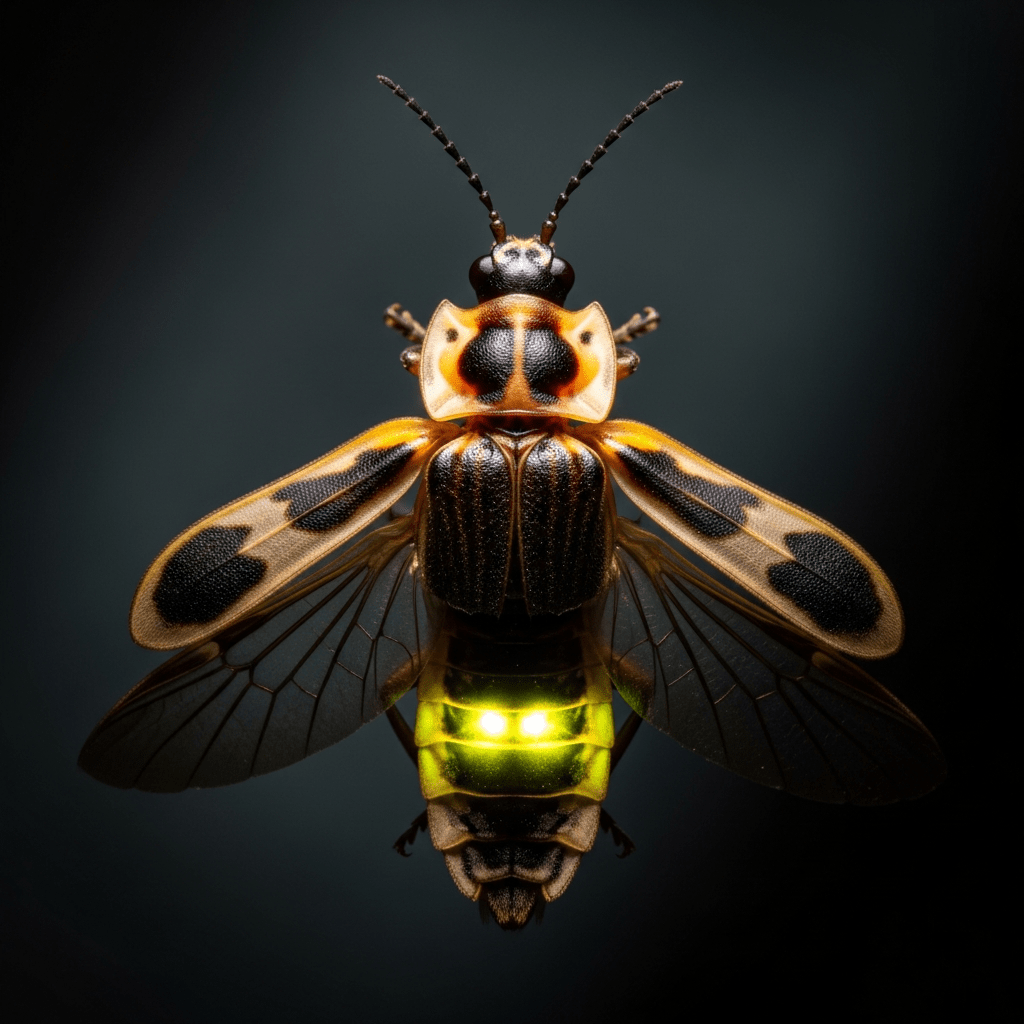
Photinus Pyralis
The firefly, Photinus pyralis, is a bioluminescent beetle renowned for its glowing light displays used in nocturnal mating rituals.
The firefly, Photinus pyralis, is a bioluminescent beetle renowned for its glowing light displays used in nocturnal mating rituals.
Photinus pyralis was first formally described by Carl Linnaeus in 1767 based on specimens from North America. It is a wild species with no history of domestication or breeding, naturally occurring across its native range.
The firefly belongs to the class Insecta, order Coleoptera, and family Lampyridae. Within this family of bioluminescent beetles, Photinus pyralis is a key representative species widely studied for its distinctive light-producing abilities.
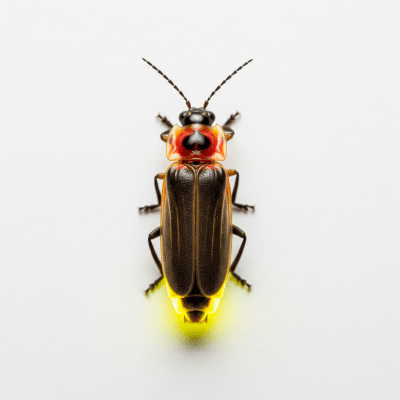
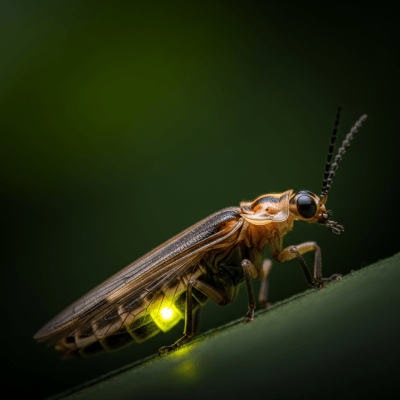
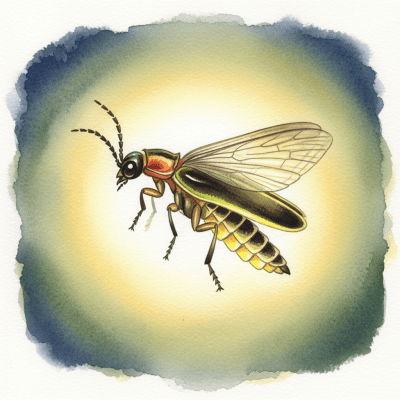
Adult fireflies measure between 5 and 14 millimeters in length, featuring soft, elongated bodies with black hardened forewings (elytra) marked by yellow or orange patterns. Their most striking feature is a bioluminescent organ on the underside of the abdomen that emits a yellow-green glow. They have two pairs of wings and compound eyes typical of beetles, with six legs adapted for crawling and flight.
Fireflies are primarily nocturnal insects known for their slow, fluttering flight. They use rhythmic flashing light signals produced by a chemical reaction in their abdominal organs to attract mates. Larvae are predatory, feeding on soft-bodied invertebrates such as snails and worms. Fireflies serve as natural indicators of healthy environments and are subjects of scientific research into bioluminescence.
Bring this kind into your world illustrated posters, mugs, and shirts.
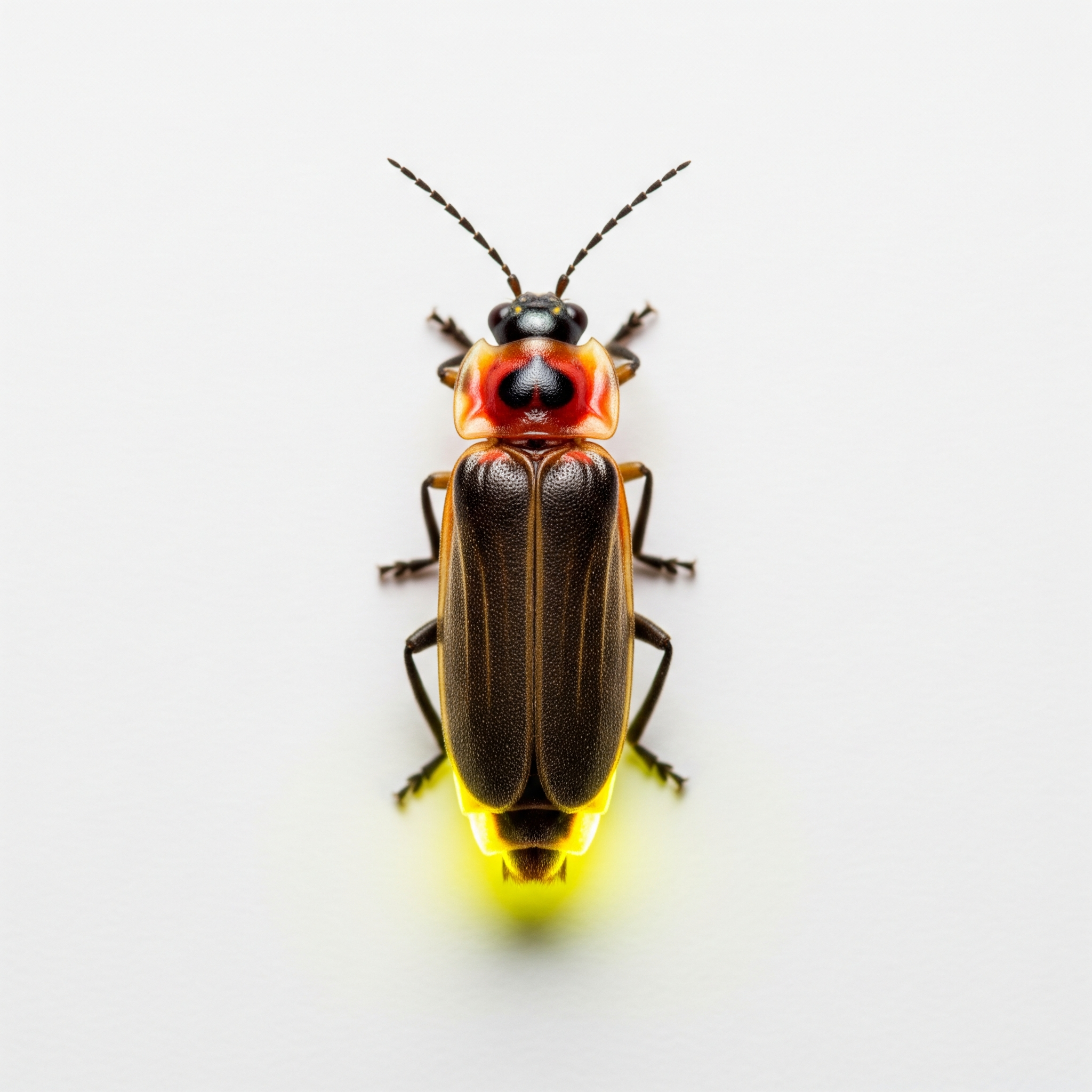
Archival print, museum-grade paper
Buy Poster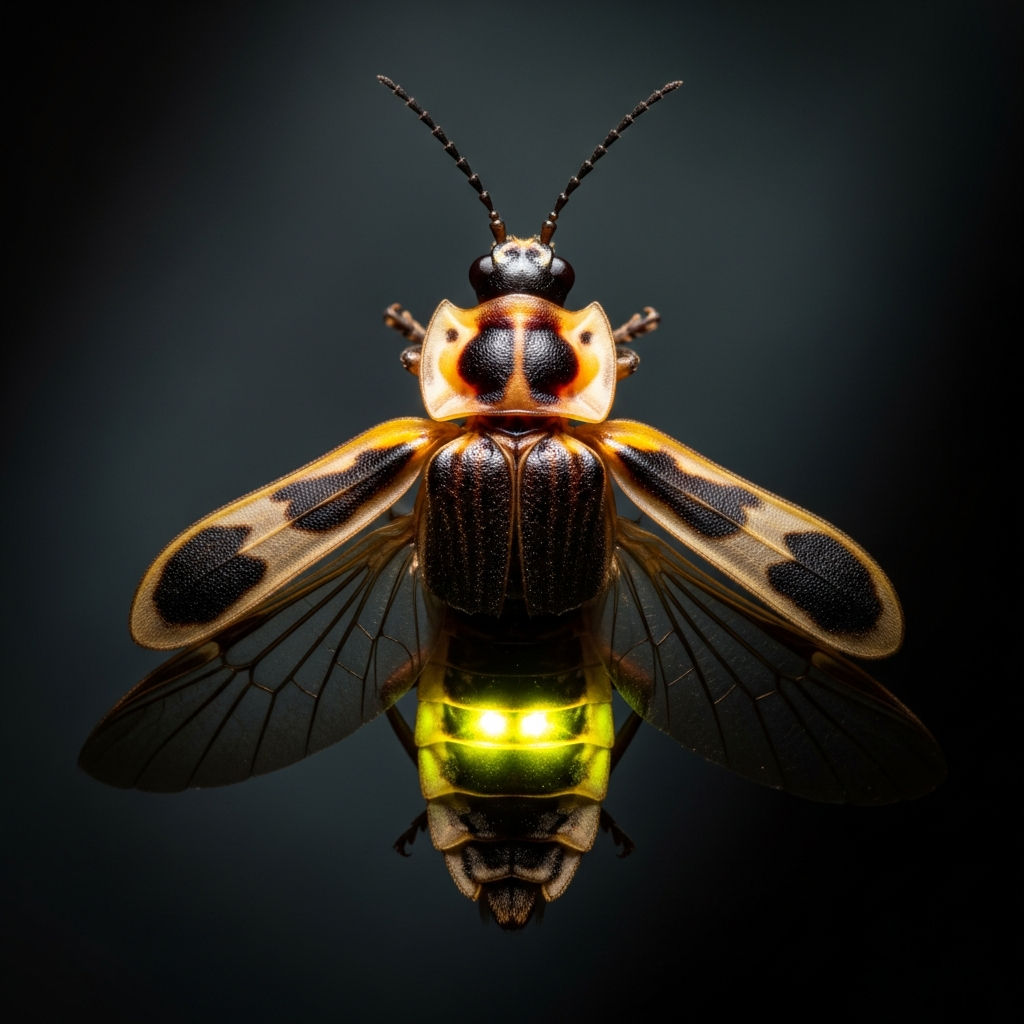
Stoneware mug, dishwasher safe
Buy Mug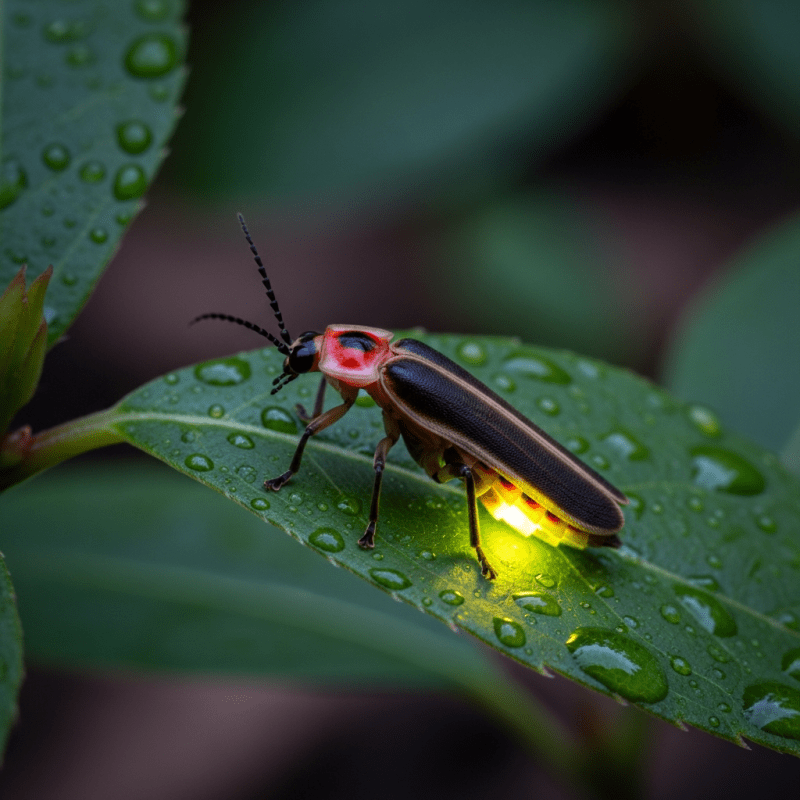
Soft cotton tee, unisex sizes
Buy ShirtFireflies hold a special place in culture, often symbolizing wonder and natural beauty. They are featured in festivals and educational programs, celebrated for their enchanting glowing displays. Their bioluminescence has inspired art, folklore, and scientific curiosity worldwide.
Photinus pyralis primarily inhabits eastern North America, favoring moist environments such as meadows, forests, and wetlands. They thrive in areas with abundant vegetation and are sensitive to habitat degradation and light pollution, which can interfere with their natural behaviors.

The firefly undergoes complete metamorphosis with four distinct stages: egg, larva, pupa, and adult. Eggs hatch into bioluminescent larvae that prey on soft-bodied invertebrates. After pupation, adults emerge to engage in mating displays using their characteristic flashing lights.
Fireflies contribute to ecosystems as both predators and indicators of environmental health. Larvae help control populations of snails and worms, while adults serve as prey for various animals. Their presence signals a balanced habitat free from excessive pollution.
Fireflies face threats from habitat loss, pesticide use, and increasing light pollution, which disrupts their mating signals. Conservation efforts focus on preserving natural habitats, reducing artificial lighting, and raising public awareness to protect these luminous insects.