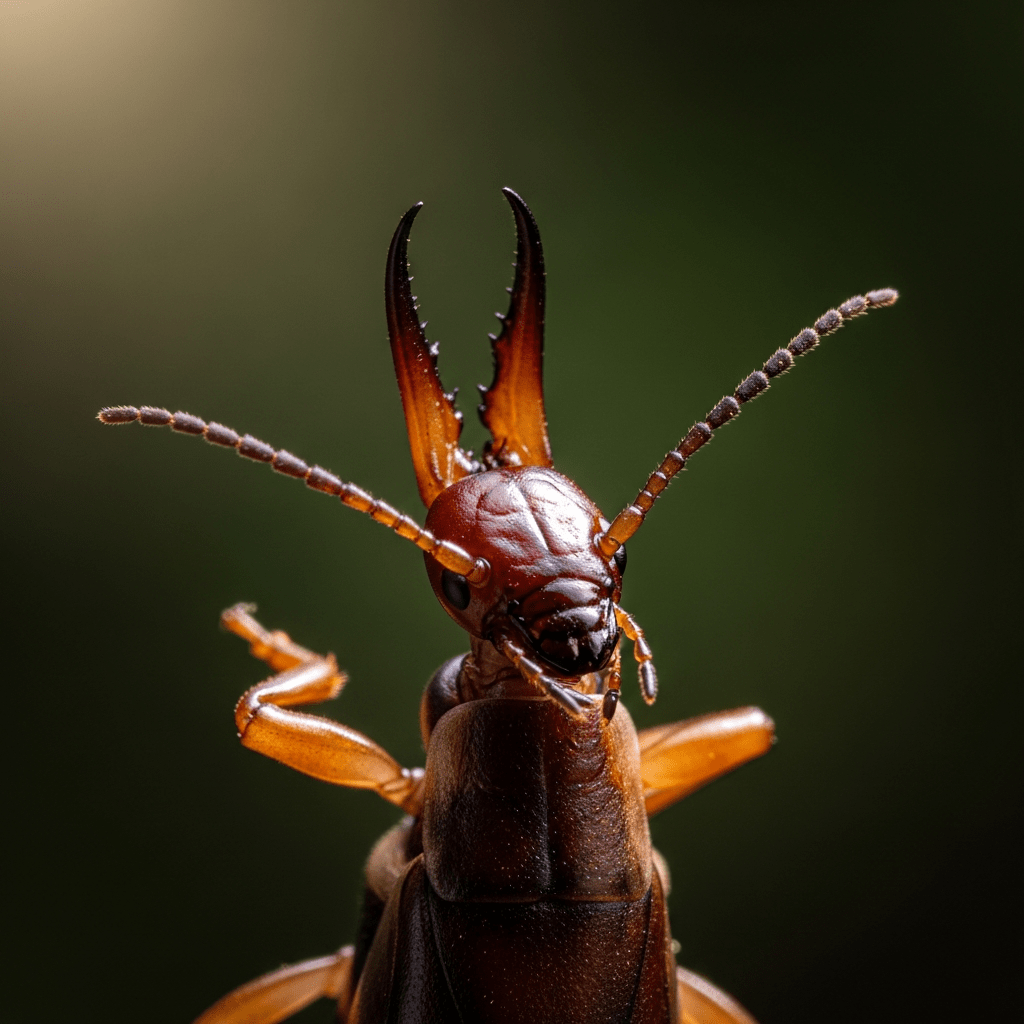
Forficula Auricularia
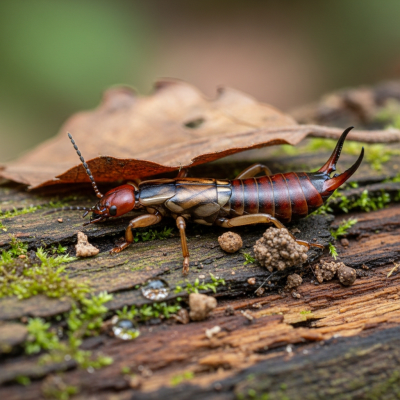
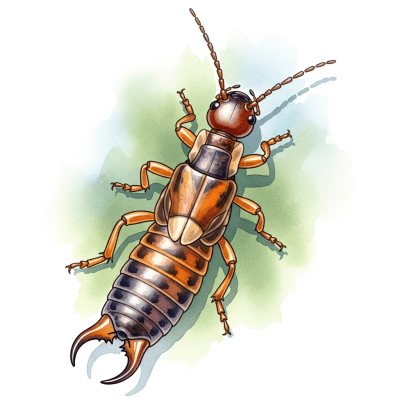
The European earwig (Forficula auricularia) is a small, nocturnal insect known for its elongated, reddish-brown body and distinctive forceps-like pincers at the rear.
The European earwig (Forficula auricularia) is a small, nocturnal insect known for its elongated, reddish-brown body and distinctive forceps-like pincers at the rear.
First described by Carl Linnaeus in 1758, the European earwig is native to Europe but has since spread to North America, Australia, and other temperate regions through natural dispersal and human activity.
Forficula auricularia belongs to the class Insecta, order Dermaptera, and family Forficulidae, placing it among the group of insects characterized by their forceps-like cerci and incomplete metamorphosis.
Adult earwigs measure between 12 and 15 millimeters long, featuring an elongated, flattened body with a reddish-brown coloration. Their most notable feature is a pair of curved, forceps-like cerci at the abdomen's end, which are typically more robust in males. They possess membranous wings folded beneath short, leathery forewings, though they rarely fly.
European earwigs are nocturnal and omnivorous, feeding on a mix of plant material, decaying organic matter, and small insects. Females demonstrate maternal care by guarding their eggs and young nymphs. While they can be garden pests by feeding on soft fruits and seedlings, they also provide natural pest control by preying on aphids and other small insects.
Bring this kind into your world illustrated posters, mugs, and shirts.
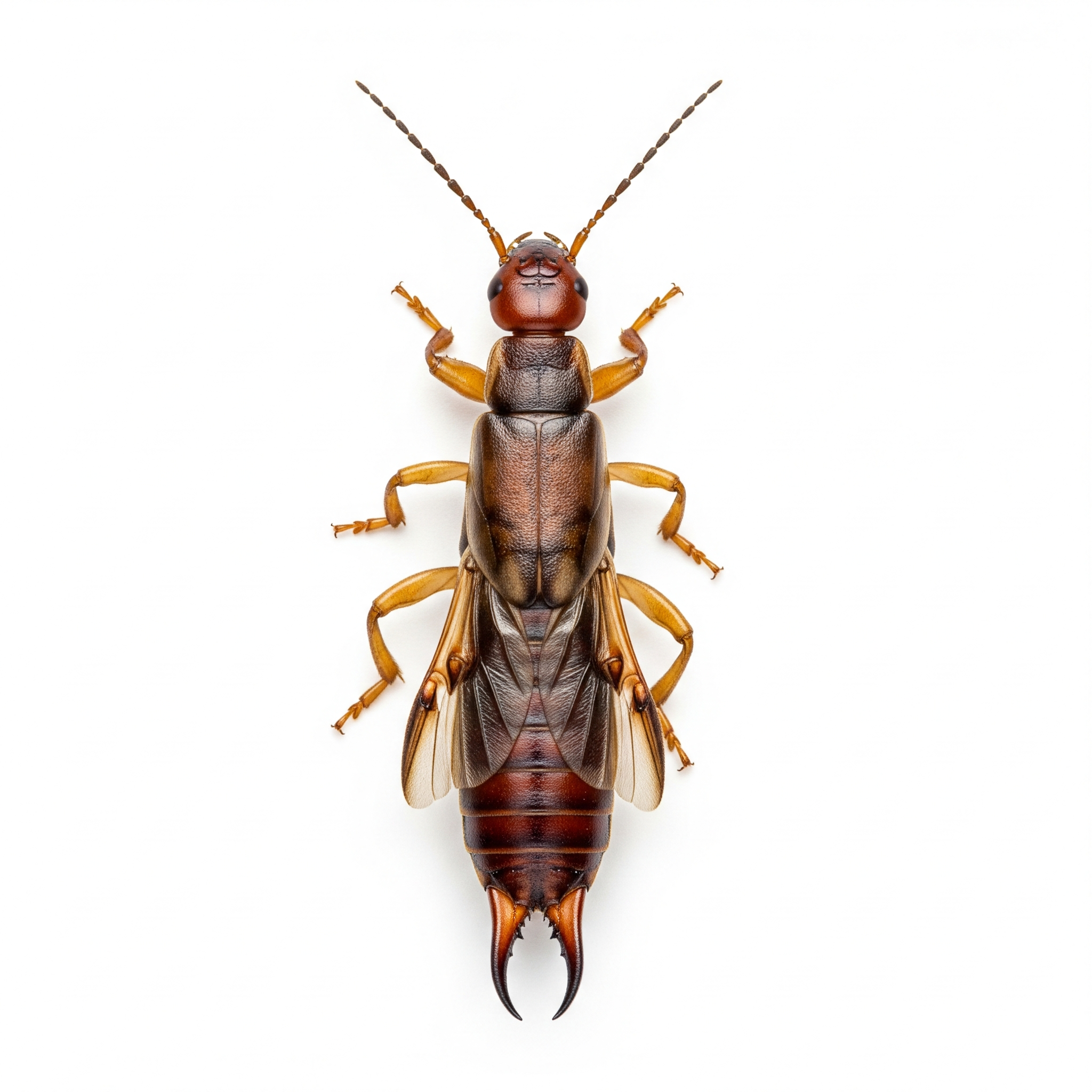
Archival print, museum-grade paper
Buy Poster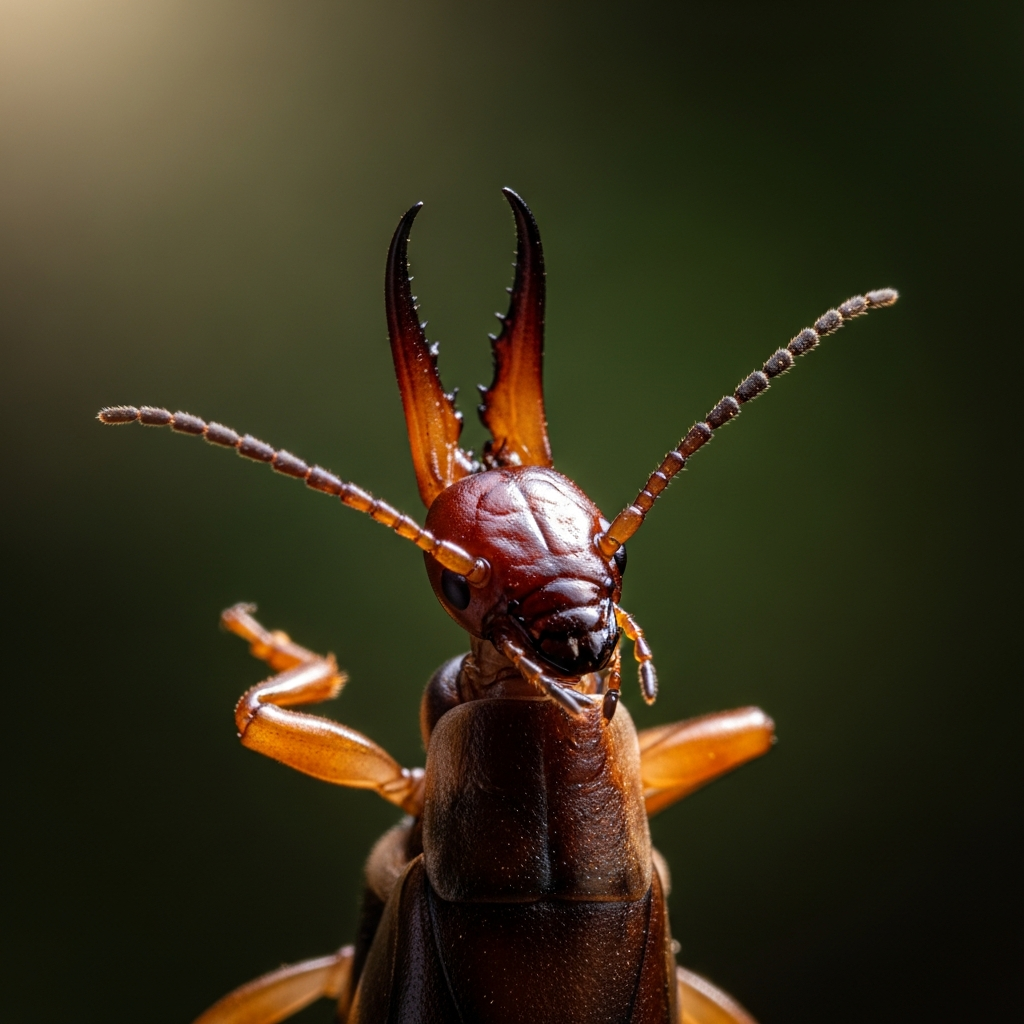
Stoneware mug, dishwasher safe
Buy Mug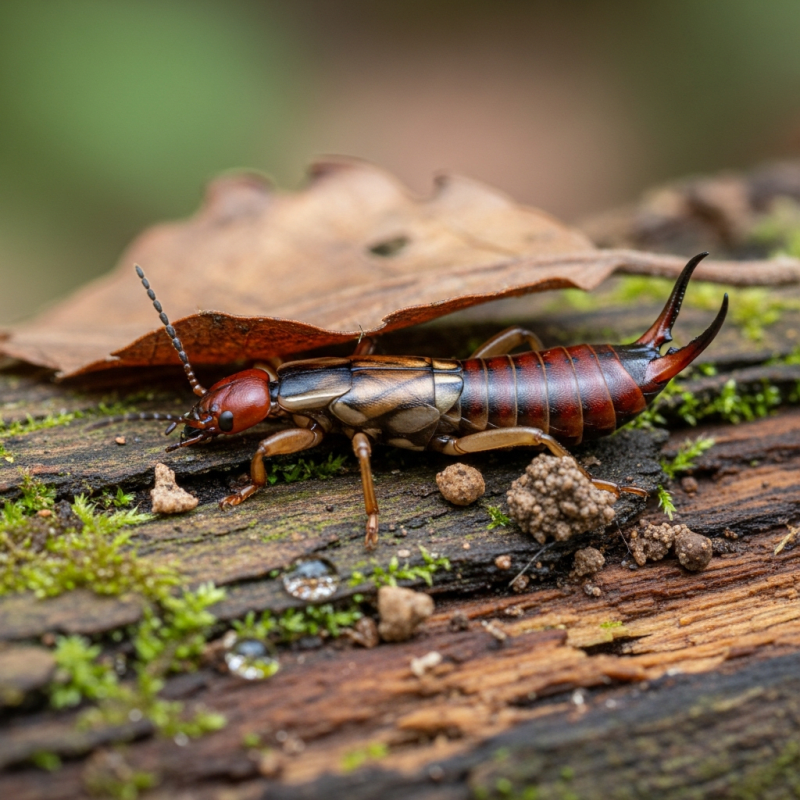
Soft cotton tee, unisex sizes
Buy ShirtThough the European earwig has limited cultural prominence, it occasionally appears in folklore and popular imagination due to myths about its pincers and behavior. However, it lacks significant symbolic or artistic roles in modern culture.
The European earwig thrives in moist, sheltered environments such as gardens, under stones, bark, and leaf litter. Originally native to Europe, it now inhabits temperate regions worldwide, including North America and Australia, favoring disturbed habitats where it can find ample food and shelter.


The earwig undergoes incomplete metamorphosis, developing through three main stages: egg, nymph, and adult. Females lay eggs in protected burrows and guard them until they hatch. Nymphs resemble miniature adults and molt several times before reaching maturity.
European earwigs serve as both predators and scavengers in their ecosystems. By feeding on aphids and other small insects, they help control pest populations, while their consumption of decaying plant matter aids nutrient recycling.
As a widespread and adaptable species, the European earwig faces few conservation threats. Its main vulnerabilities include desiccation in dry conditions and predation by birds and small mammals. No specific conservation measures are currently necessary.