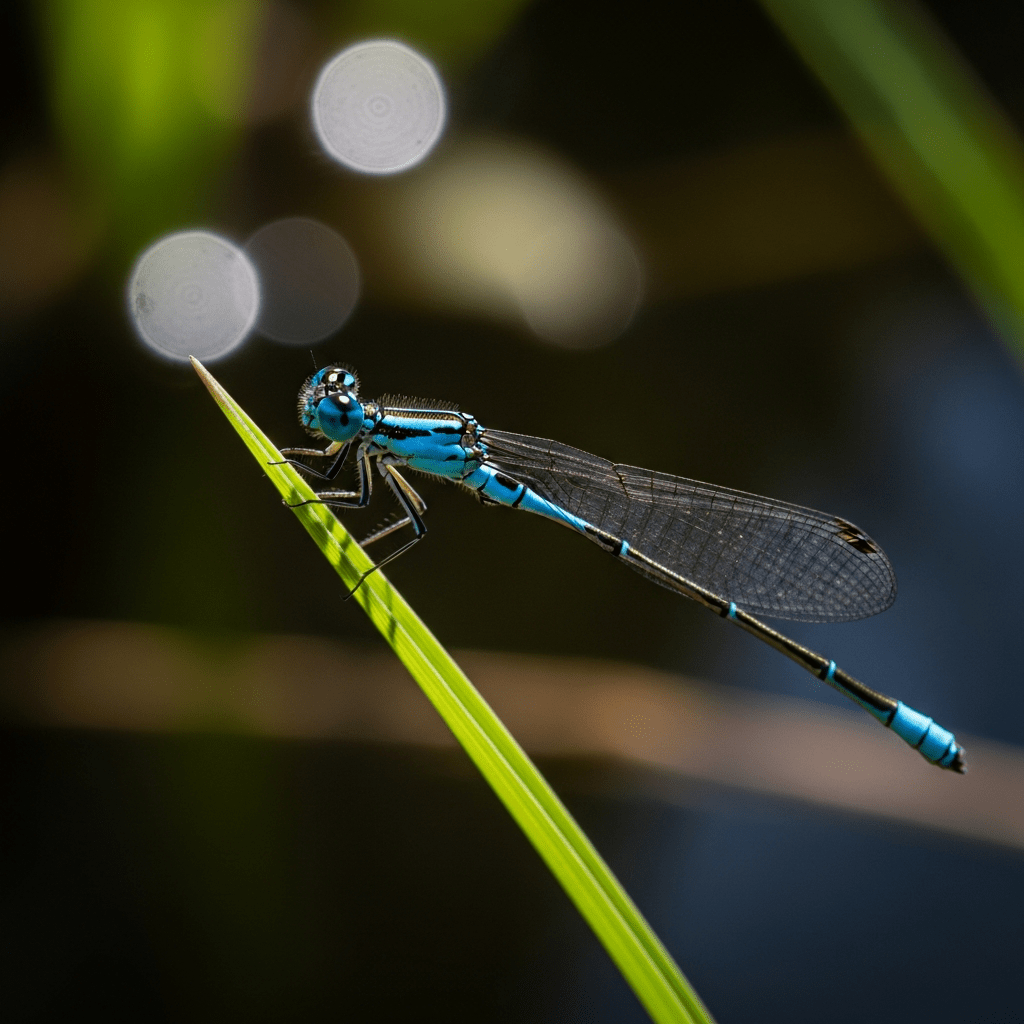
Ischnura Elegans
The damselfly Ischnura elegans is a slender, delicate insect closely related to dragonflies, recognized for its bright coloration and habit of holding its transparent wings together above its body when at rest.
The damselfly Ischnura elegans is a slender, delicate insect closely related to dragonflies, recognized for its bright coloration and habit of holding its transparent wings together above its body when at rest.
Ischnura elegans was first formally described by Vander Linden in 1820. This wild species has evolved naturally without domestication, firmly established within the family Coenagrionidae over centuries across Europe and Asia.
Belonging to the class Insecta, Ischnura elegans is classified within the family Coenagrionidae. It is part of the order Odonata, which encompasses both damselflies and dragonflies, distinguished by their aquatic larvae and predatory adult forms.
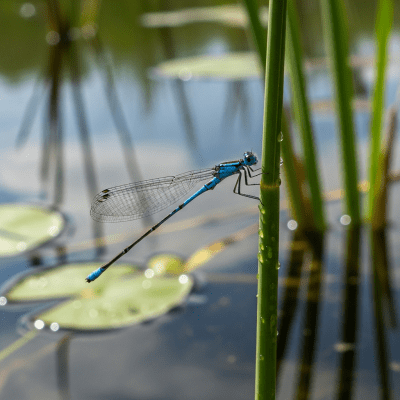
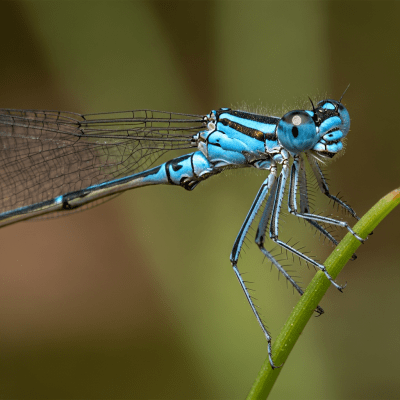
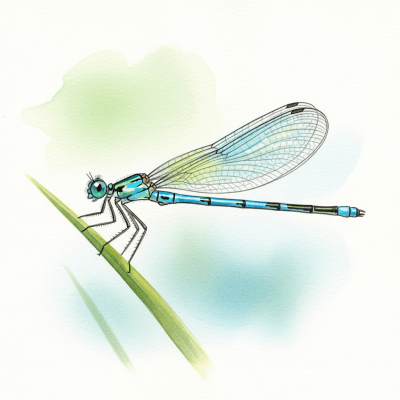
Ischnura elegans measures between 30 and 35 millimeters in length, featuring a slender, elongated abdomen and a narrow thorax. Males display striking blue and black coloration, while females show varied hues including green, brown, and blue. Their compound eyes are widely spaced, and their transparent wings are uniquely held together above the abdomen when at rest, setting them apart from dragonflies. The aquatic larvae possess three external gills at the tip of the abdomen.
Adults of Ischnura elegans are agile fliers and skilled predators of small insects, playing a vital role in controlling insect populations near freshwater habitats. They require clean, still, or slow-moving water to breed, where their aquatic larvae develop. While not used commercially or agriculturally, they are appreciated in ecological studies and nature observation.
Bring this kind into your world illustrated posters, mugs, and shirts.
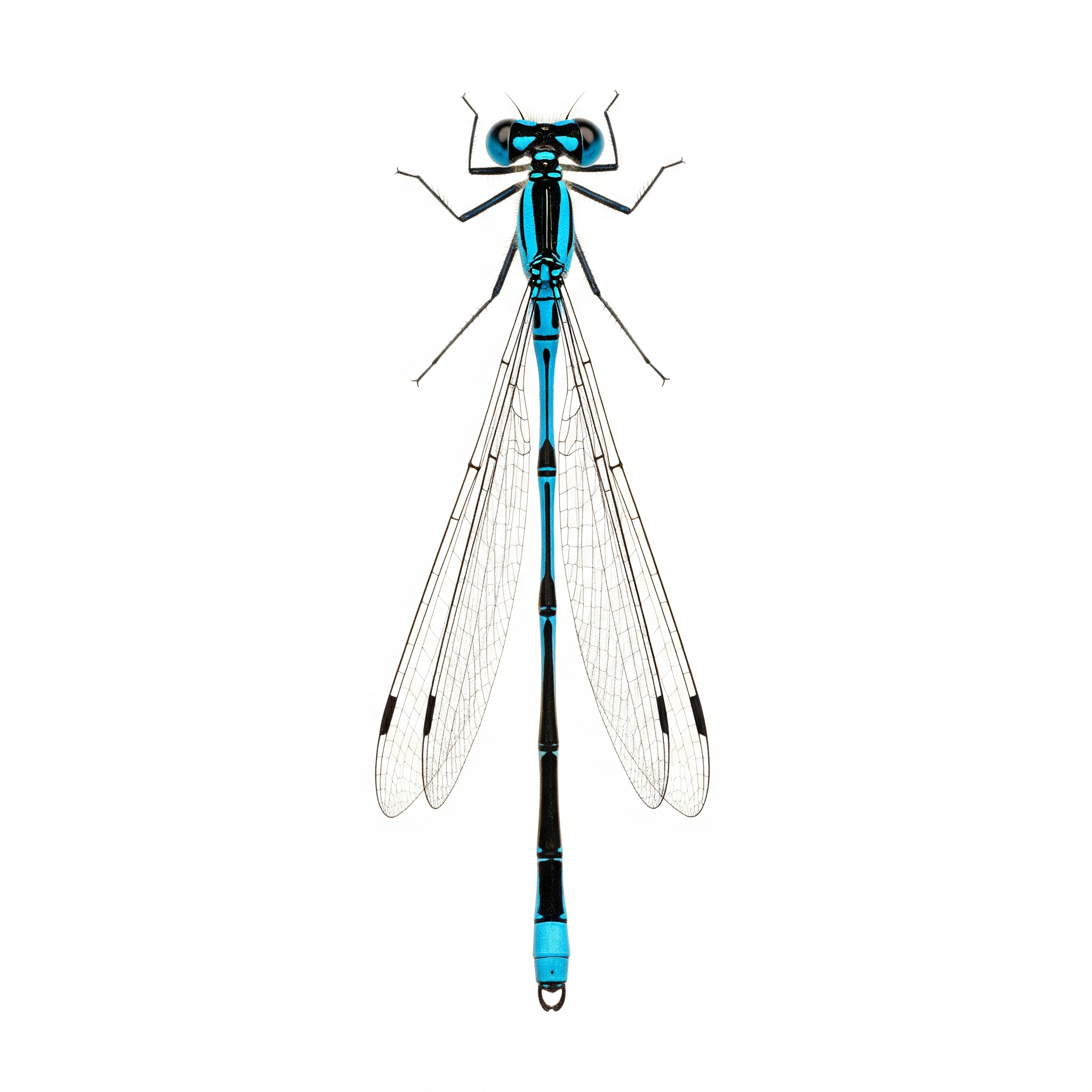
Archival print, museum-grade paper
Buy Poster
Stoneware mug, dishwasher safe
Buy Mug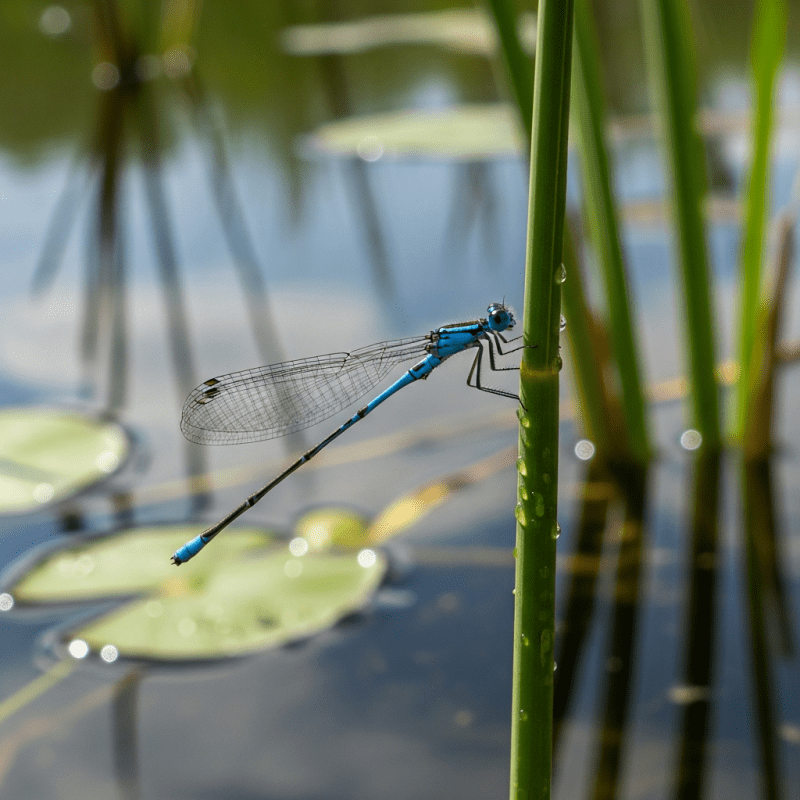
Soft cotton tee, unisex sizes
Buy ShirtThough Ischnura elegans holds no prominent place in culinary or commercial contexts, it is known by various common names such as "Blue-tailed Damselfly" in the UK and "Elegant Bluet" or "Common Bluetail" in Europe. The term "demoiselles" is also used colloquially to describe damselflies, reflecting their delicate and graceful appearance in cultural references.
Ischnura elegans thrives near freshwater environments across much of Europe and Asia. It favors clean, still, or slow-moving waters such as ponds, lakes, ditches, and slow streams, where its aquatic larvae develop. This widespread distribution reflects its adaptability to temperate freshwater habitats.
The lifecycle of Ischnura elegans follows incomplete metamorphosis, progressing from aquatic larva (nymph) to adult. Eggs are laid in or near water, hatching into larvae that live underwater, breathing through three external gills at the abdomen tip. After several molts, the larvae emerge from the water to transform into agile, winged adults, completing the cycle.
Ischnura elegans plays a crucial ecological role as both predator and prey. Adults control populations of small insects, including pests, while larvae contribute to aquatic food webs. Their presence indicates healthy freshwater ecosystems, making them important bioindicators.
While not currently considered threatened, Ischnura elegans depends on clean freshwater habitats vulnerable to pollution, habitat loss, and water management changes. Conservation efforts that protect and restore freshwater ecosystems indirectly support damselfly populations and their ecological functions.