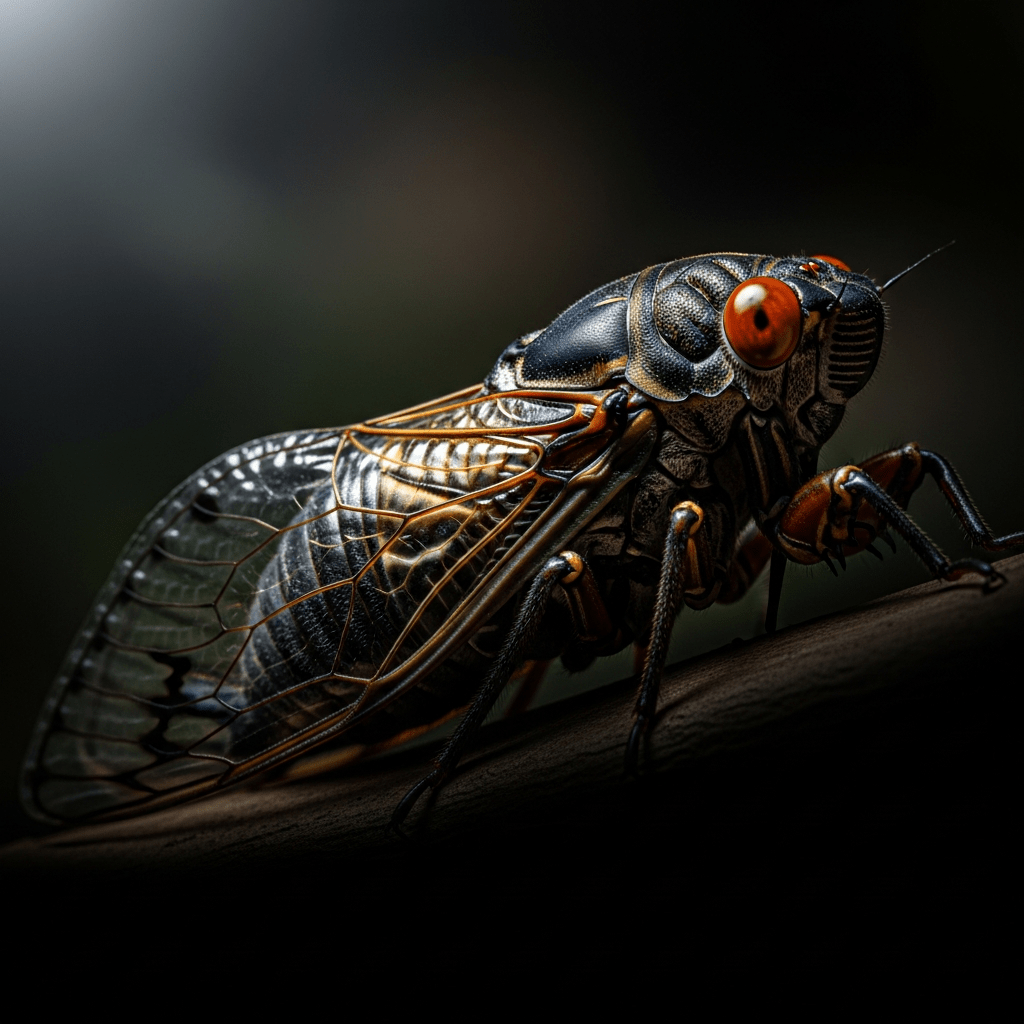
Magicicada Septendecim
Magicicada septendecim, commonly known as the periodical cicada, is a North American insect famed for its remarkable 17-year synchronized mass emergences and its distinctive, loud mating calls.
Magicicada septendecim, commonly known as the periodical cicada, is a North American insect famed for its remarkable 17-year synchronized mass emergences and its distinctive, loud mating calls.
First described by Charles Linnaeus in 1758, Magicicada septendecim is native to eastern North America. This species has evolved within the genus Magicicada of the family Cicadidae and exists entirely in the wild, with no known domestication or artificial breeding.
Magicicada septendecim belongs to the class Insecta and family Cicadidae. It is part of the genus Magicicada, a group distinguished by their periodical emergence patterns and unique life cycles among cicadas.
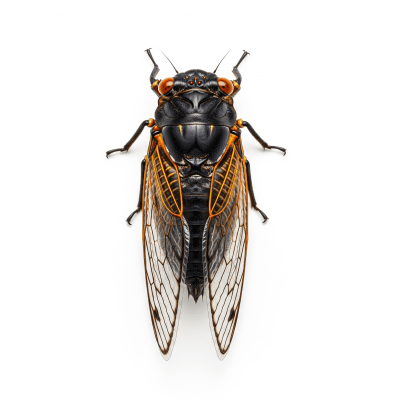
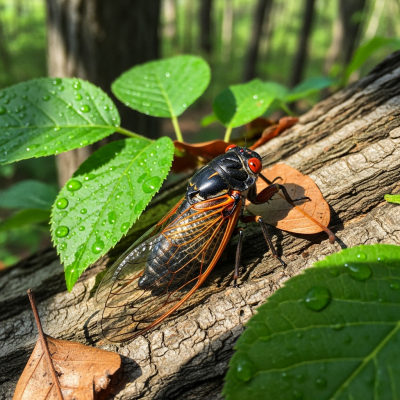
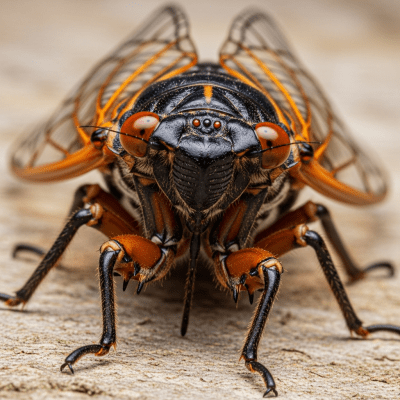
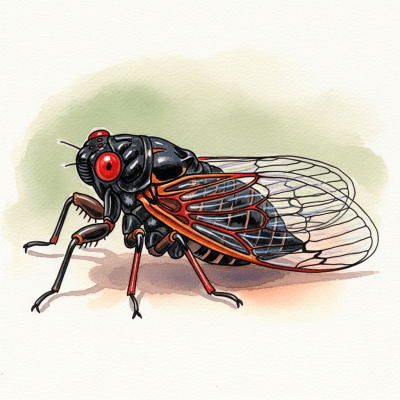
Adults measure between 24 and 30 millimeters in length, featuring black bodies contrasted by striking red compound eyes. Their wings are transparent with vivid orange veins, arranged in two pairs. This coloration and form make them visually distinctive during their brief above-ground adult stage.
Magicicada septendecim nymphs live underground for 17 years, feeding on the xylem fluids of plant roots. Upon emergence, adults live for several weeks, during which males produce loud, species-specific mating calls to attract females. While not cultivated or managed, their predictable mass emergences have ecological and educational significance.
Bring this kind into your world illustrated posters, mugs, and shirts.
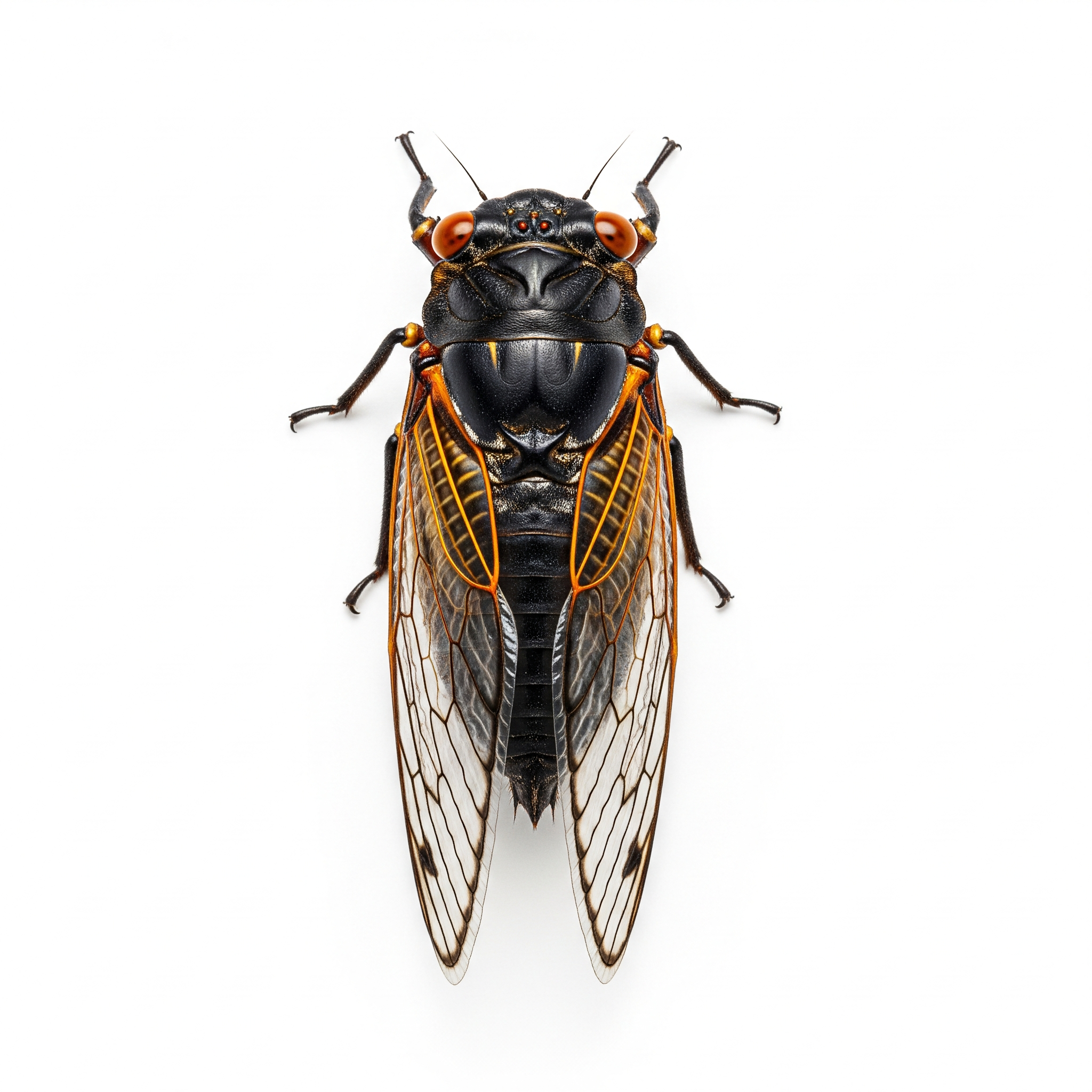
Archival print, museum-grade paper
Buy Poster
Stoneware mug, dishwasher safe
Buy Mug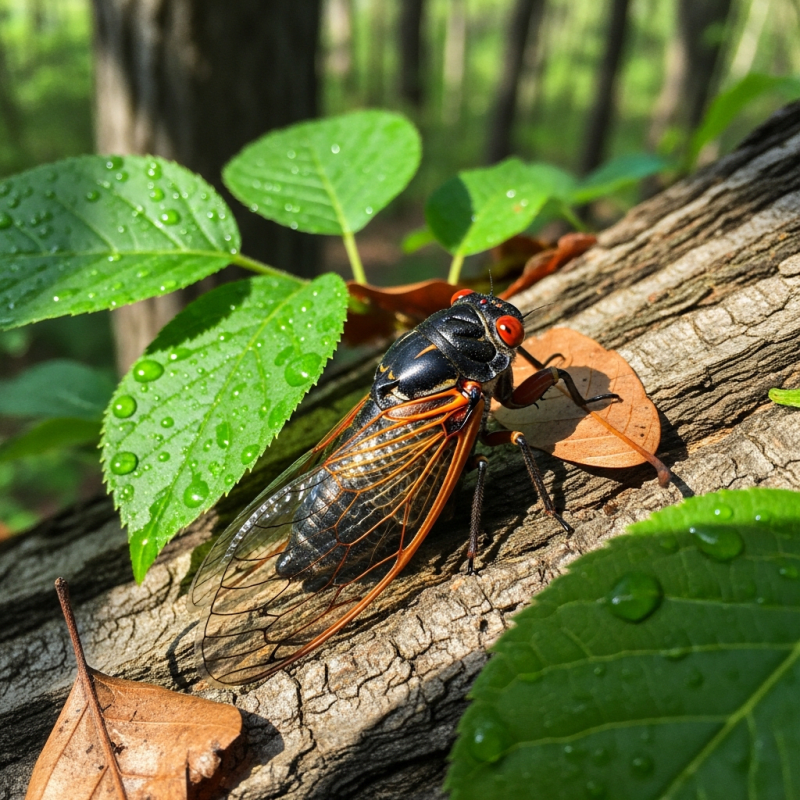
Soft cotton tee, unisex sizes
Buy ShirtThese cicadas capture public imagination due to their rare and synchronized appearances every 17 years. They have inspired folklore and are often featured in educational programs highlighting natural cycles, symbolizing endurance and the passage of time in some cultural contexts.
Magicicada septendecim inhabits eastern North America, where its nymphs develop underground in forested and wooded areas. Their habitat includes regions with ample tree roots to sustain their prolonged subterranean feeding phase.
The life cycle begins with eggs laid in tree branches. After hatching, nymphs drop to the ground and burrow underground, feeding on root xylem fluids for 17 years. They then emerge synchronously as adults, molt, mate, and lay eggs before dying within several weeks.
During mass emergences, periodical cicadas serve as a vital food source for numerous predators, temporarily boosting local food webs. Their underground feeding aerates soil and their decaying bodies enrich nutrient cycling, contributing to ecosystem health.
Although adapted to long subterranean life, Magicicada septendecim faces threats from habitat loss and environmental changes. Conservation efforts focus on preserving natural habitats and raising awareness of their ecological importance to ensure continued survival.