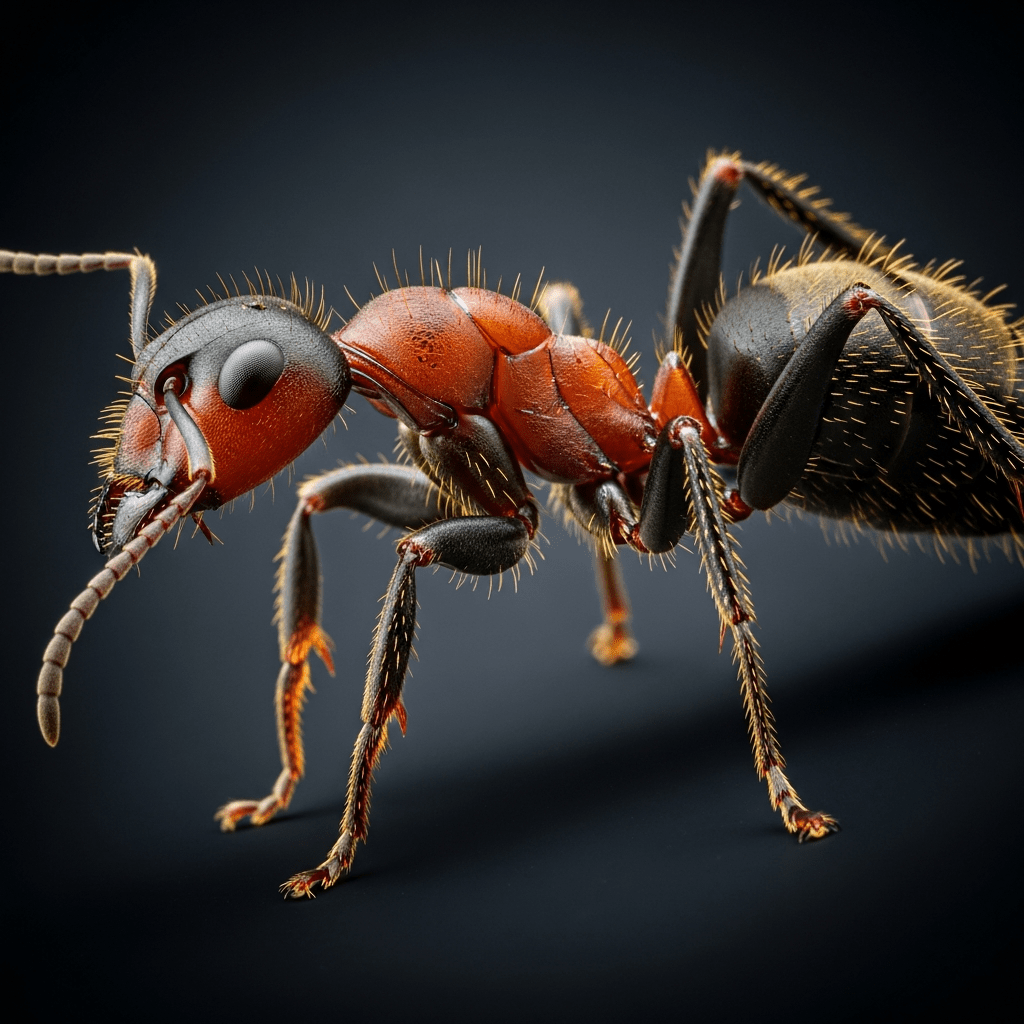
Camponotus Pennsylvanicus
The carpenter ant, Camponotus pennsylvanicus, is a large North American ant species known for nesting in wood by excavating galleries without consuming it.
The carpenter ant, Camponotus pennsylvanicus, is a large North American ant species known for nesting in wood by excavating galleries without consuming it.
Camponotus pennsylvanicus was first formally described by De Geer in 1773. It belongs to the genus Camponotus, one of the largest ant genera worldwide, within the subfamily Formicinae. This species is naturally occurring and has evolved to thrive in temperate North American forests.
The carpenter ant is classified within the kingdom Animalia, phylum Arthropoda, and class Insecta. It belongs to the order Hymenoptera, family Formicidae, genus Camponotus, and species pennsylvanicus. This placement reflects its identity as a social ant with wood-nesting habits.
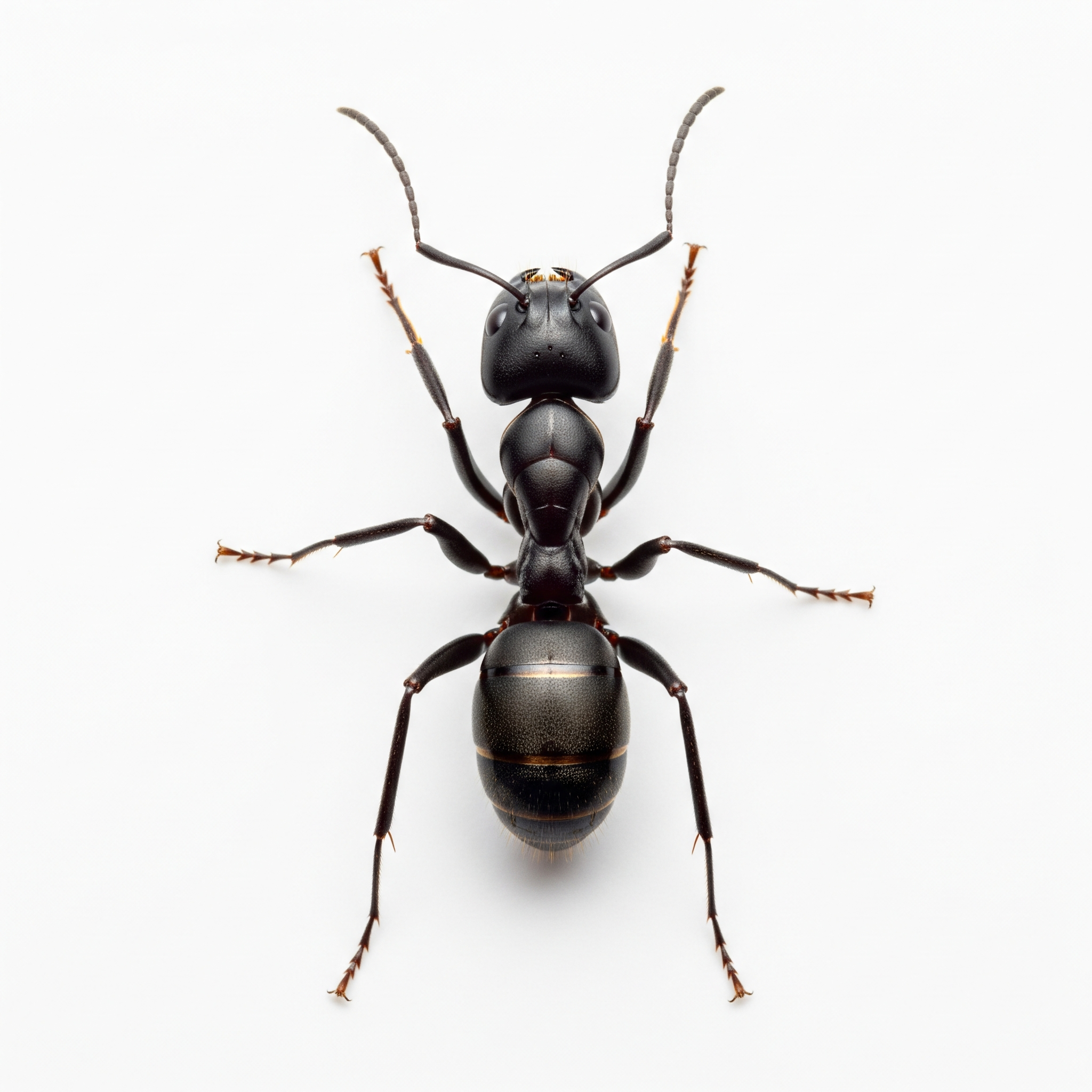
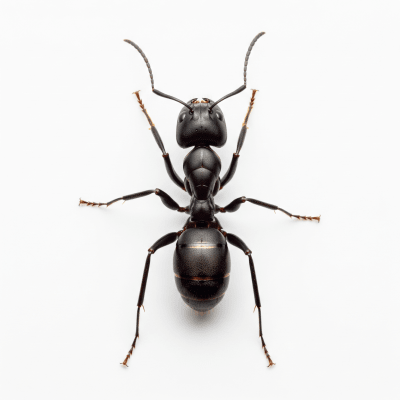
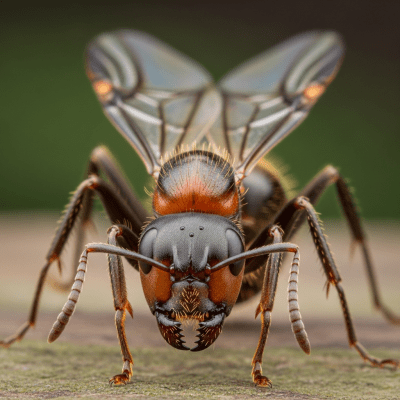
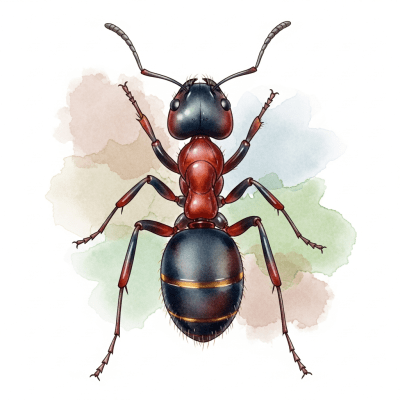
Workers of the carpenter ant range from 6 to 13 millimeters in length, while queens can reach up to 20 millimeters. They exhibit polymorphism, with noticeable size variation among workers. Their bodies are predominantly black, sometimes showing reddish hues on the legs. The thorax is smooth and rounded, and they possess a single petiole node characteristic of their genus. Queens have wings typical of ants, while workers are wingless.
Carpenter ants are nocturnal foragers that feed on honeydew, plant juices, and other insects. They excavate wood to create extensive galleries for nesting but do not consume the wood itself, distinguishing them from termites. Colonies can contain thousands of individuals, with a complex social structure including polymorphic workers and larger queens. They are resilient to cold climates but vulnerable to desiccation and predation by birds and other insects.
Bring this kind into your world illustrated posters, mugs, and shirts.
Archival print, museum-grade paper
Buy Poster
Stoneware mug, dishwasher safe
Buy Mug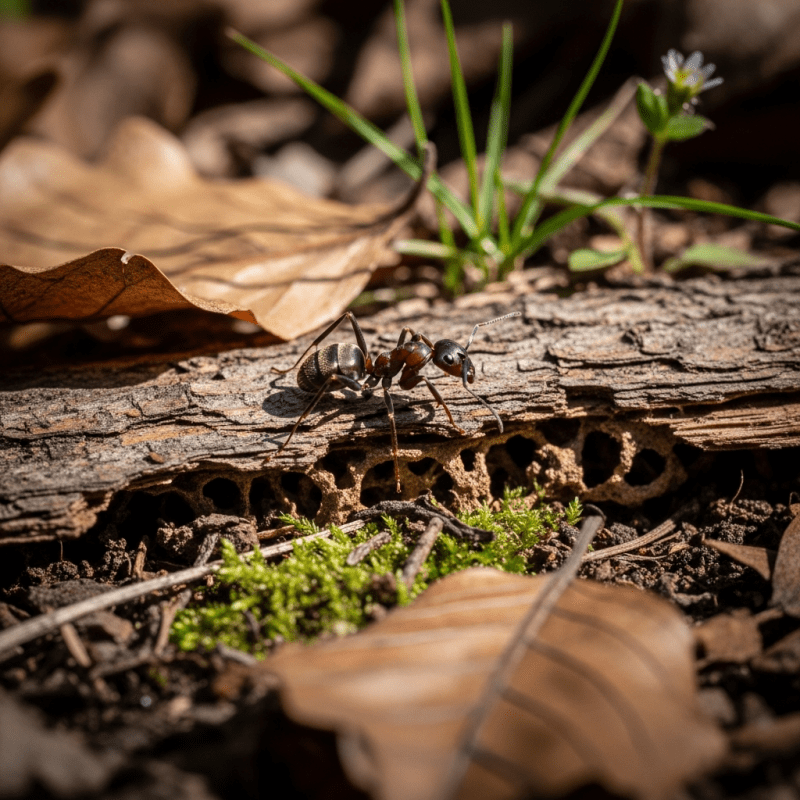
Soft cotton tee, unisex sizes
Buy ShirtWhile carpenter ants have no notable culinary or commercial uses, their role as structural pests has made them a common subject in pest management discussions. They appear in regional vernaculars, such as "fourmi charpentière" in French and "ameise" in German, reflecting their recognition in various cultures primarily as insects associated with wood damage.
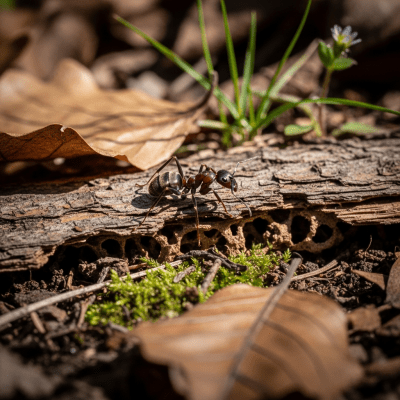
Carpenter ants typically nest in moist or decaying wood both outdoors and within human structures. They are native to temperate regions of North America, especially eastern forests, where they thrive in wooded environments that provide ample nesting sites.
The carpenter ant undergoes complete metamorphosis with four distinct stages: egg, larva, pupa, and adult. Colonies develop over time with queens laying eggs that hatch into larvae, which then pupate before emerging as adult ants. The social structure includes polymorphic workers and reproductive queens, supporting large colony sizes.
Carpenter ants play important roles in forest ecosystems by aiding in the decomposition process through their excavation of dead or decaying wood. As nocturnal predators and scavengers, they help control populations of other insects and contribute to nutrient cycling within their habitats.
While carpenter ants are not currently assessed by conservation organizations and are widespread, they face natural threats such as predation by birds and other insects, as well as environmental stresses like desiccation. Their status as pests often leads to control efforts that impact local populations, but no significant conservation concerns are documented.