Soursop
Soursop is a tropical fruit celebrated for its spiny green skin, creamy white pulp, and a distinctive sweet-sour flavor that blends notes of strawberry, pineapple, and citrus.
Soursop is a tropical fruit celebrated for its spiny green skin, creamy white pulp, and a distinctive sweet-sour flavor that blends notes of strawberry, pineapple, and citrus.
Soursop (Annona muricata) traces its roots to the lush tropical regions of the Americas, especially the Caribbean and northern South America, including present-day Venezuela, Colombia, and Brazil. Naturally occurring in these climates, soursop has been cultivated for centuries, with its scientific description dating back to Carl Linnaeus in 1753. Unlike many commercial fruits, soursop does not have a singular breeder or hybrid lineage, instead thriving as a wild species adapted to humid, frost-free environments.
Botanically, soursop belongs to the family Annonaceae, which includes other notable fruits such as cherimoya and sugar apple. Its scientific name is Annona muricata. Within the broader taxonomy of fruits, soursop is classified as a fleshy, seed-bearing structure developed from the ovary of a flower, fitting the canonical definition of edible fruits. It is distinct from other Annona species by its heart-shaped, spiny fruit and unique flavor profile.
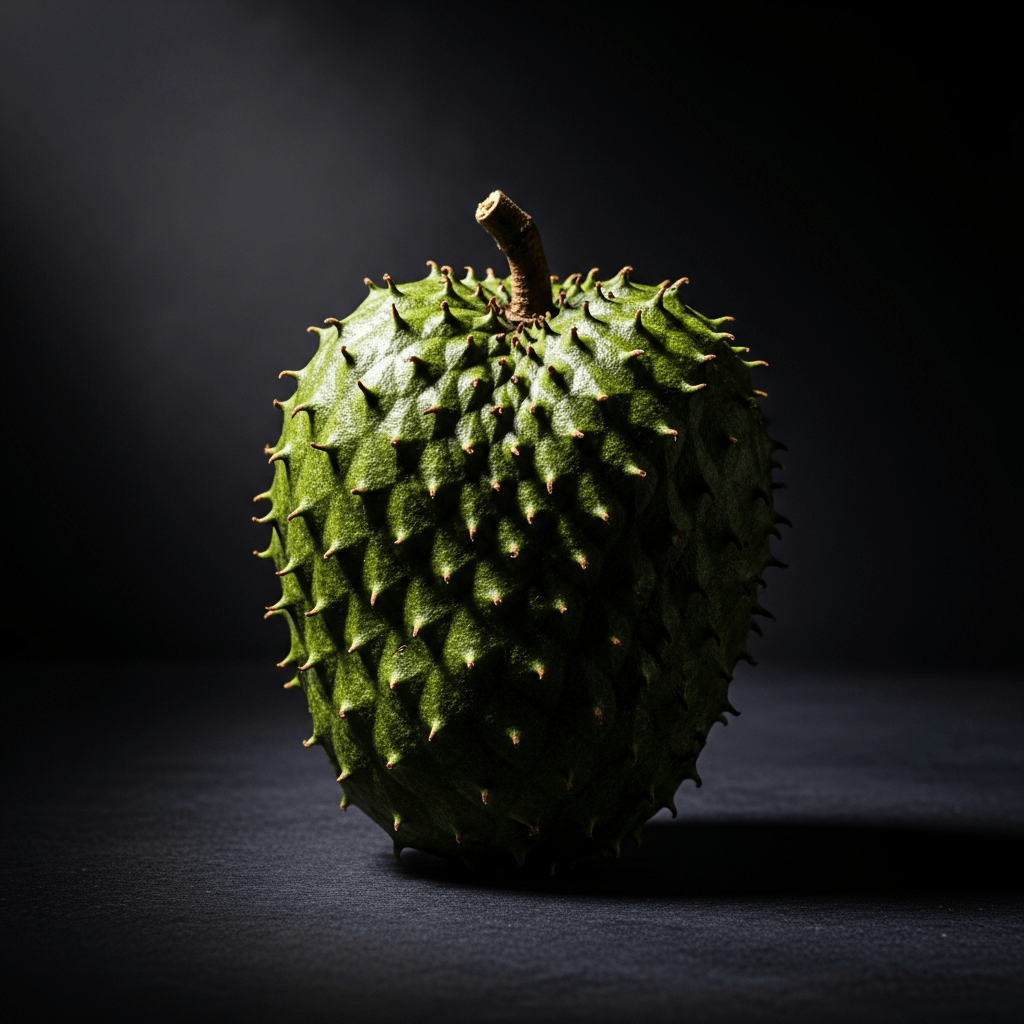
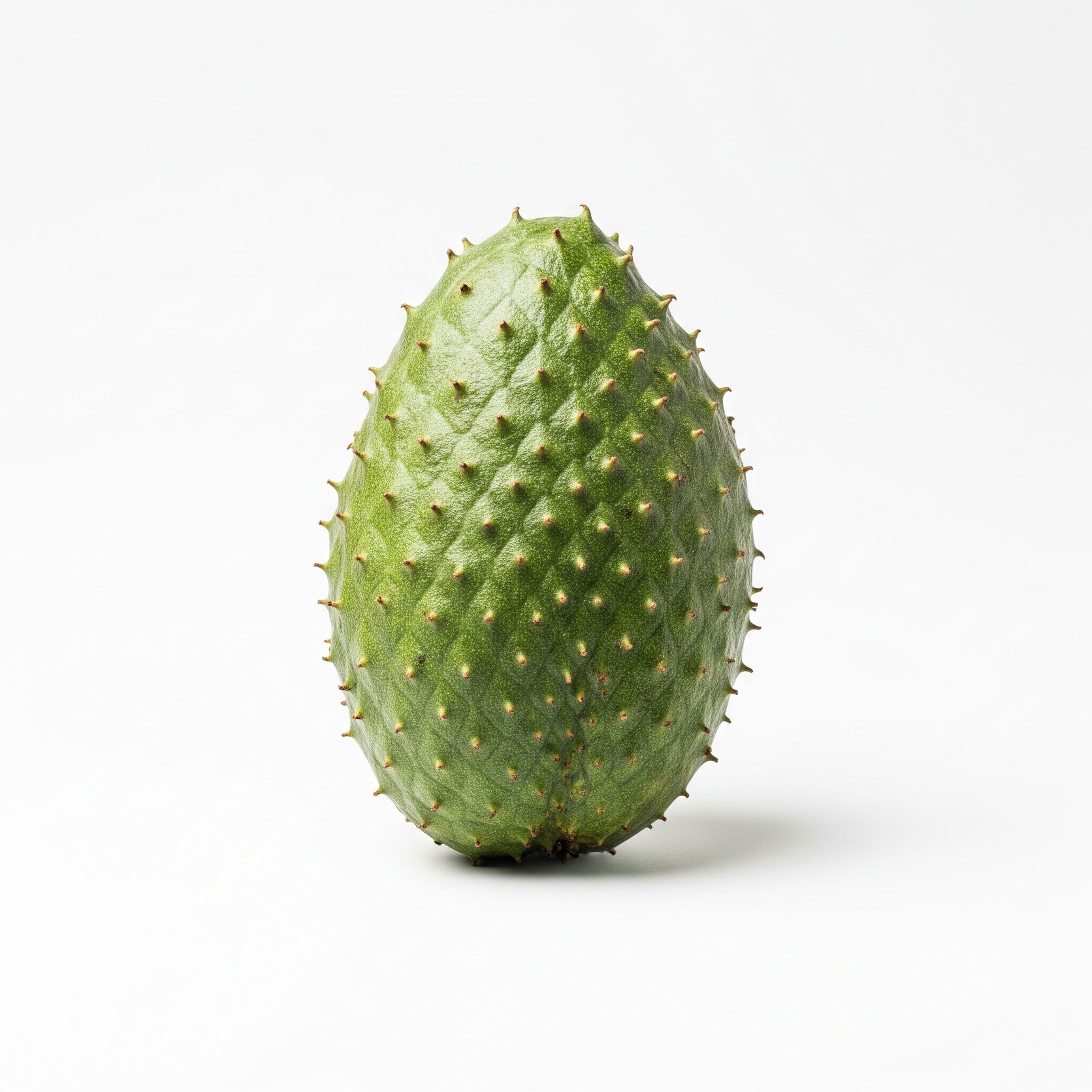
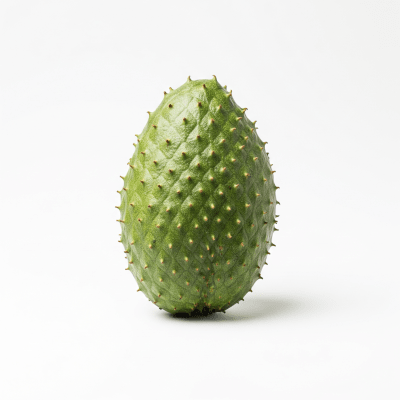
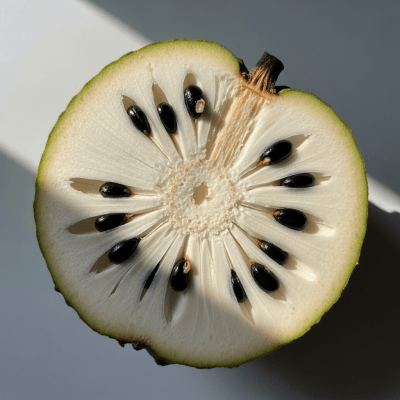
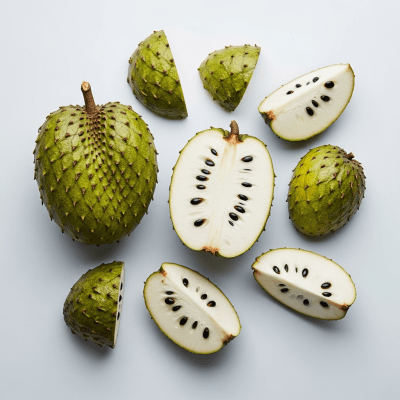
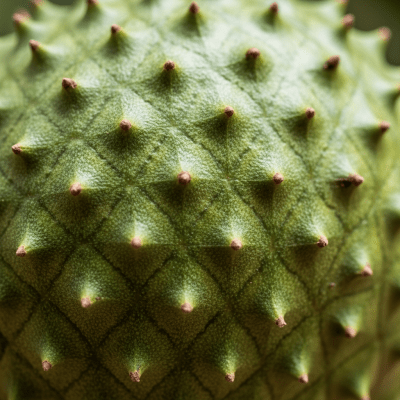
The soursop fruit is large, heart-shaped to oval, and typically measures 15–30 cm in length, weighing between 1–5 kg. Its vibrant green skin is covered with soft, curved spines, giving it a striking, almost prehistoric appearance. When opened, the fruit reveals a fibrous, juicy white pulp interspersed with numerous hard, black seeds. The texture is creamy and moist, while the aroma hints at a blend of tropical fruits.
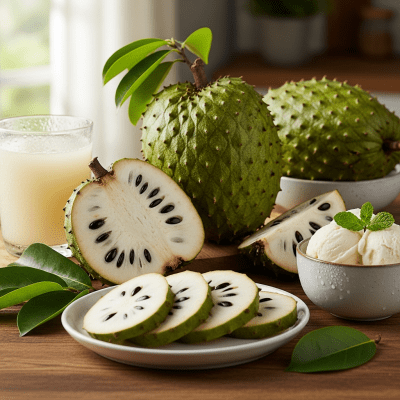
Soursop is enjoyed both fresh and processed. The pulp can be eaten directly or transformed into beverages, smoothies, ice creams, sorbets, candies, and desserts. In many cultures, soursop is valued for its traditional medicinal uses, particularly for its purported anti-inflammatory and sedative properties. Commercially, it is sold fresh in local markets and increasingly as frozen pulp, juice, or processed products for export. Notably, the seeds and skin are not edible and are considered toxic.
Bring this kind into your world illustrated posters, mugs, and shirts.
Archival print, museum-grade paper
Buy Poster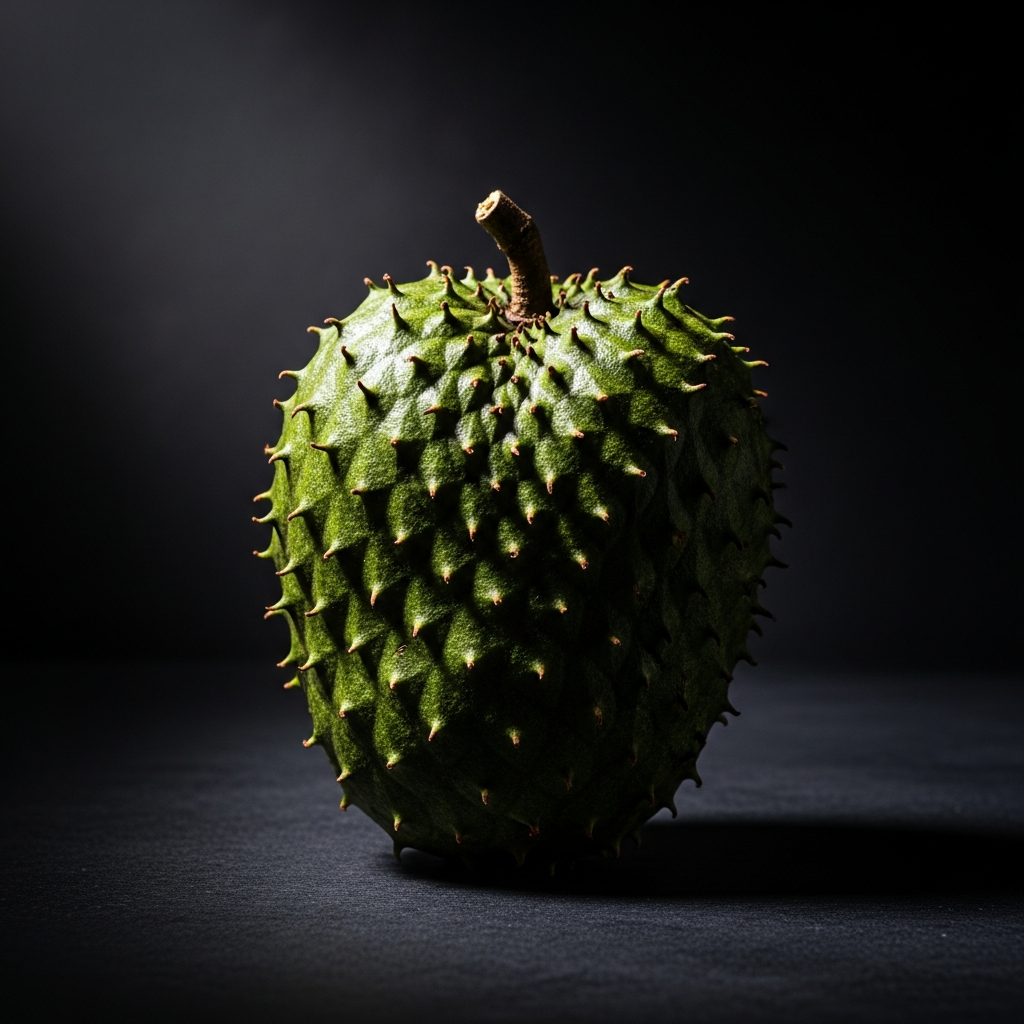
Stoneware mug, dishwasher safe
Buy Mug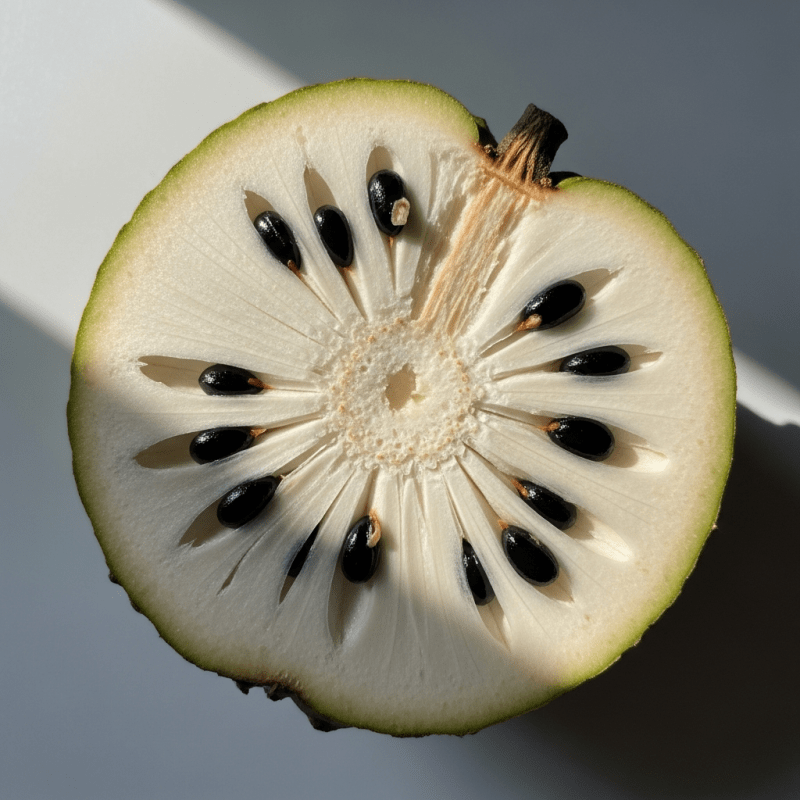
Soft cotton tee, unisex sizes
Buy ShirtSoursop holds a special place in the culinary and folk traditions of tropical regions. Known by names such as graviola, guanábana, corossol, and zuurzak, it features prominently in local beverages, desserts, and remedies. Its use in traditional medicine is widespread, often cited for calming and healing effects, though scientific validation remains limited. The fruit's unique look and flavor have inspired regional art and literature, and its popularity continues to grow as global interest in tropical superfruits rises.
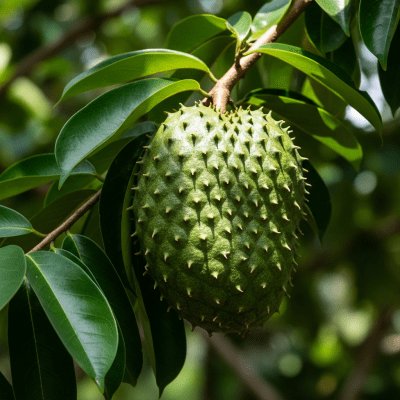
Soursop trees are small to medium-sized, typically reaching 4–8 meters in height. They feature broad, glossy, dark green leaves and produce large, heart-shaped to oval fruits covered in soft spines. The fruit’s interior is filled with fibrous, juicy white pulp and numerous hard, black seeds. Soursop thrives in warm, humid, frost-free climates and is generally propagated by seeds, though grafting is used for improved cultivars. The plant is sensitive to cold and susceptible to root rot in poorly drained soils, as well as pests like fruit flies and mealybugs.
Soursop is appreciated for its refreshing taste and is often included in traditional diets for its purported health benefits, especially anti-inflammatory and sedative properties. While specific nutritional data is limited, soursop pulp is known to be rich in vitamin C and dietary fiber, contributing to immune support and digestive health. Its use in folk medicine is widespread, though clinical evidence for medicinal effects remains limited.
The creamy, aromatic pulp of soursop lends itself to a variety of culinary uses. It is commonly eaten fresh, or used in beverages, smoothies, ice creams, sorbets, candies, and desserts. In many cultures, soursop is blended into juices or sweet treats, often paired with sugar or milk to enhance its flavor. Its versatility makes it a favorite ingredient in tropical kitchens, while the seeds and skin are discarded due to toxicity.
Soursop is cultivated in warm, humid, frost-free regions, thriving in well-drained soils. Trees are typically grown from seed, though grafting is employed for improved varieties. The fruit matures several months after flowering and is harvested when fully grown and slightly soft to the touch. Yields vary depending on climate, soil, and management practices. Soursop is moderately productive but sensitive to root rot and pests, requiring attentive care. Due to its high perishability, the fruit must be handled and transported quickly after harvest.
While soursop does not have widely recognized commercial cultivars, local landraces exist in different regions, selected for fruit size, pulp quality, and flavor. These regional types may vary in sweetness, acidity, and texture, but all are classified under Annona muricata. The fruit is distinct from related Annona species such as cherimoya and sugar apple, which are sometimes confused due to overlapping common names.
Soursop is sold fresh in local markets throughout tropical regions, and its popularity is expanding globally. Increasingly, soursop is exported as frozen pulp, juice, or processed products, overcoming challenges posed by its short shelf life. Major producers include countries in the Caribbean and northern South America, with Brazil, Colombia, and Venezuela leading production. Its high perishability limits long-distance trade in fresh fruit, making processed forms more common in international markets.
Soursop is known by many names worldwide, including graviola (Brazil, Portugal), guanábana (Spanish-speaking countries), corossol (French-speaking regions), and zuurzak (Dutch Caribbean). Regional varieties may differ in fruit size, sweetness, and acidity, reflecting local preferences and growing conditions. In some areas, soursop is used primarily for fresh consumption, while in others it is favored for juices and desserts. The fruit is distinct from related Annona species, though confusion sometimes arises due to overlapping common names.