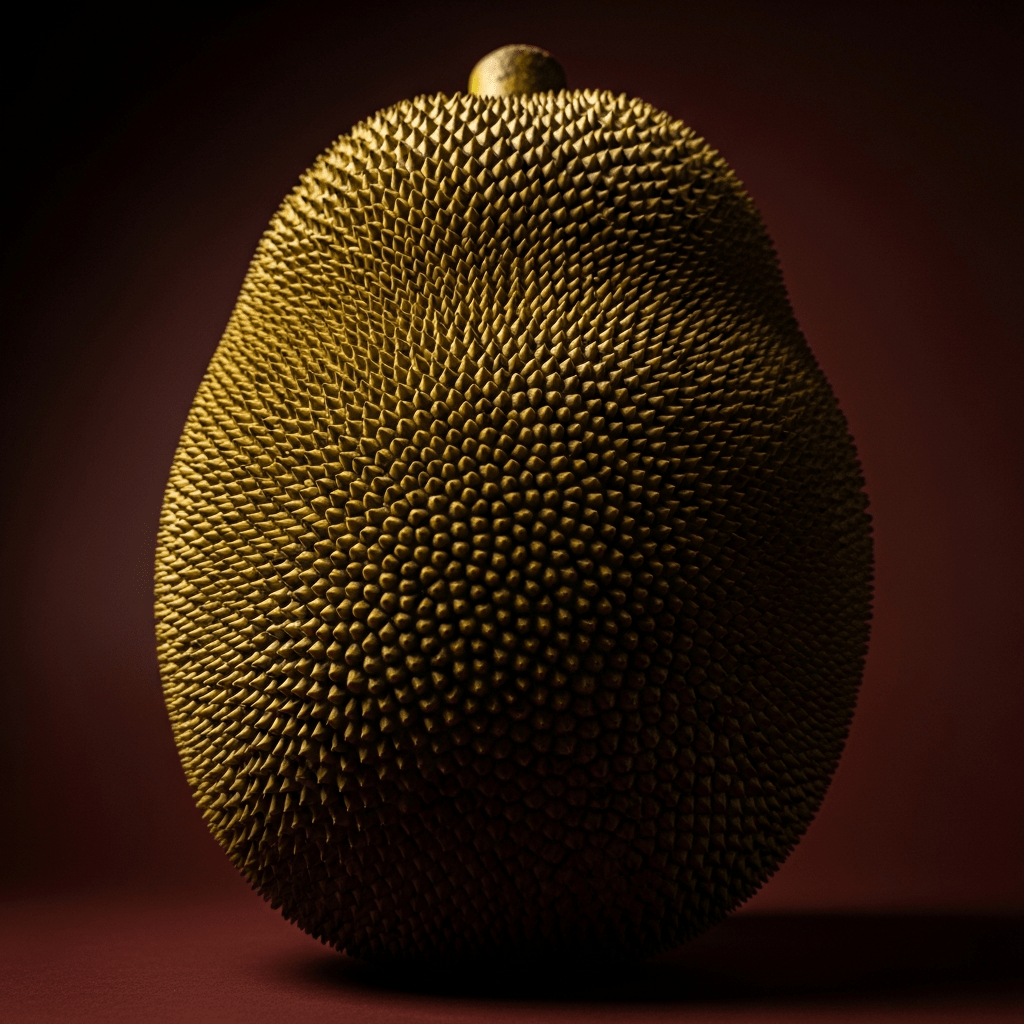
Jackfruit
Jackfruit is the world’s largest tree-borne fruit, celebrated for its immense size, spiky exterior, and sweet, aromatic flesh that is enjoyed fresh, cooked, or processed across tropical regions.
Jackfruit is the world’s largest tree-borne fruit, celebrated for its immense size, spiky exterior, and sweet, aromatic flesh that is enjoyed fresh, cooked, or processed across tropical regions.
Jackfruit traces its roots to the lush Western Ghats of southern India, where it has been cultivated for over three millennia. Ancient populations domesticated wild Artocarpus heterophyllus, selecting for fruit size and sweetness through traditional methods. Its spread throughout South and Southeast Asia established jackfruit as a staple food, with no single breeder or institution linked to its domestication. The species was formally described in the late 18th century, but its legacy as an ancient crop endures in local traditions and agricultural practices.
Botanically, jackfruit belongs to the Moraceae family, genus Artocarpus, species heterophyllus. It is classified as a multiple fruit (syncarp), meaning each fruit develops from the fusion of numerous flowers. Jackfruit’s relatives include breadfruit and cempedak, though these are distinct species. Its place within the broader taxonomy of fruits highlights its evolutionary adaptation to tropical environments and its importance among edible, seed-bearing plant structures.
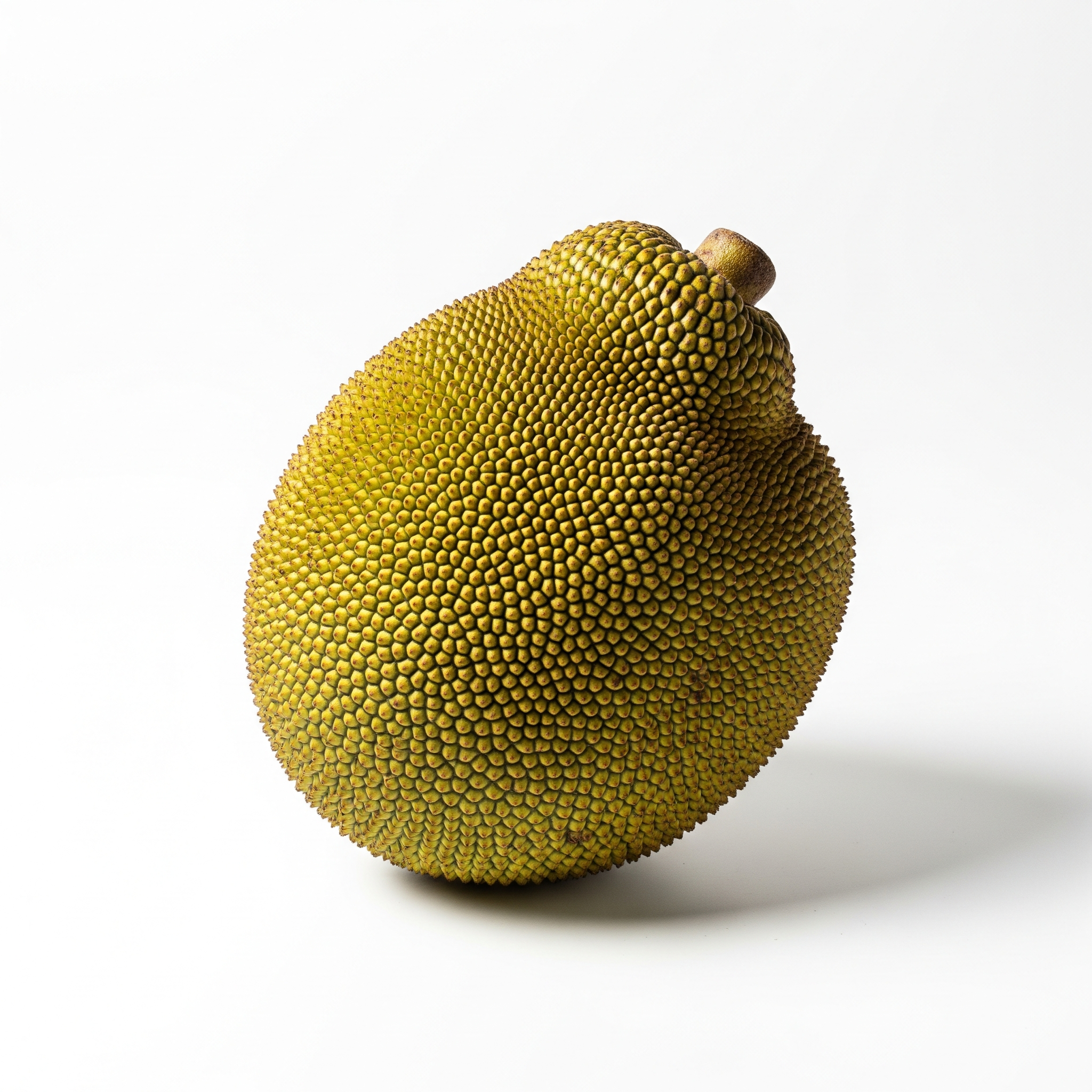
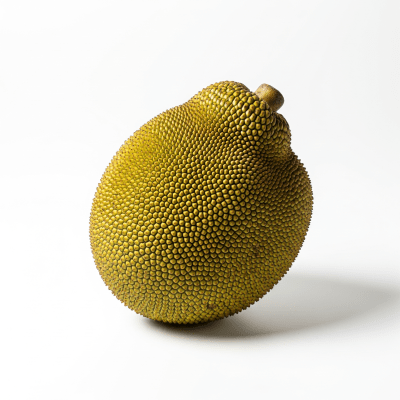
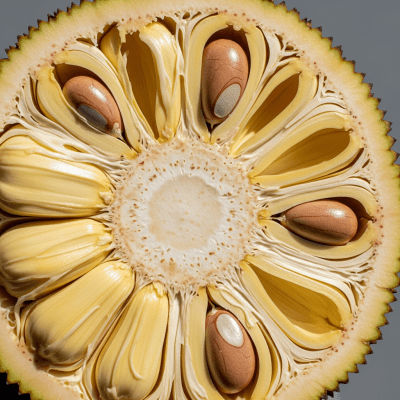
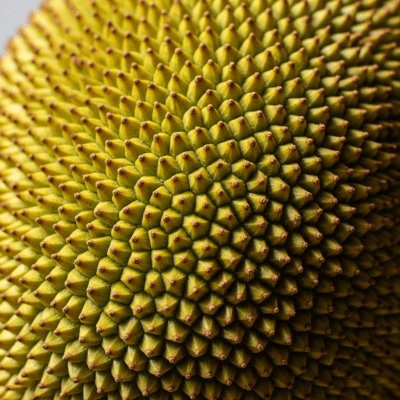
Jackfruit is instantly recognizable for its colossal size—typically weighing 10–25 kg, with some specimens reaching up to 50 kg. The fruit’s exterior is green to yellow when ripe, covered in prominent conical spikes that protect the hundreds of golden-yellow, aromatic bulbs (carpels) nestled inside. Each bulb surrounds a large seed, and the flesh is sweet, fragrant, and slightly fibrous. The tree itself is evergreen, with a spreading canopy and glossy, broad leaves.
Jackfruit’s versatility sets it apart: unripe fruit is cooked as a vegetable in savory dishes, while ripe bulbs are enjoyed fresh or processed into jams, candies, and ice cream. Its seeds are edible when boiled or roasted. In recent years, jackfruit’s fibrous texture has made it a popular plant-based meat substitute, especially in vegan and vegetarian cuisine. Beyond food, its durable wood is valued for furniture and musical instruments, and the tree contributes to food security in tropical regions.
Bring this kind into your world illustrated posters, mugs, and shirts.
Archival print, museum-grade paper
Buy Poster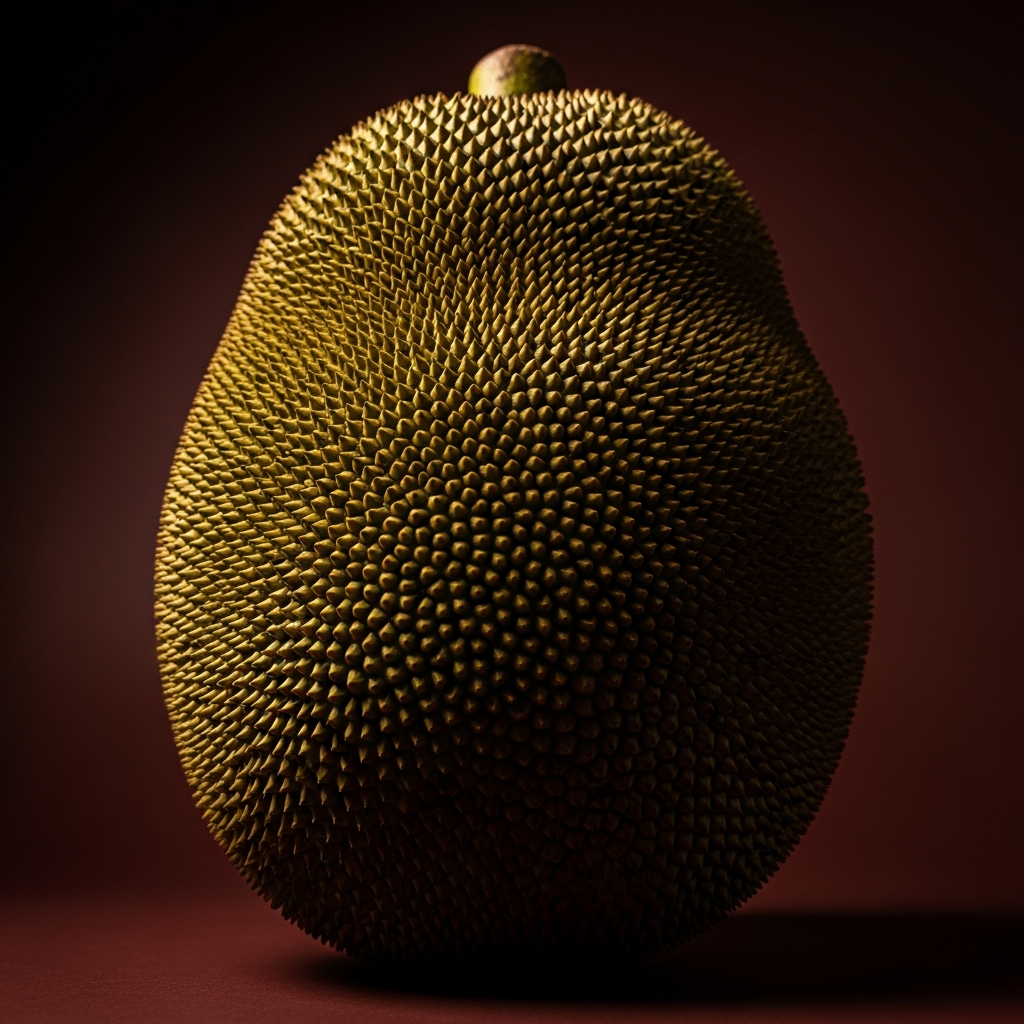
Stoneware mug, dishwasher safe
Buy Mug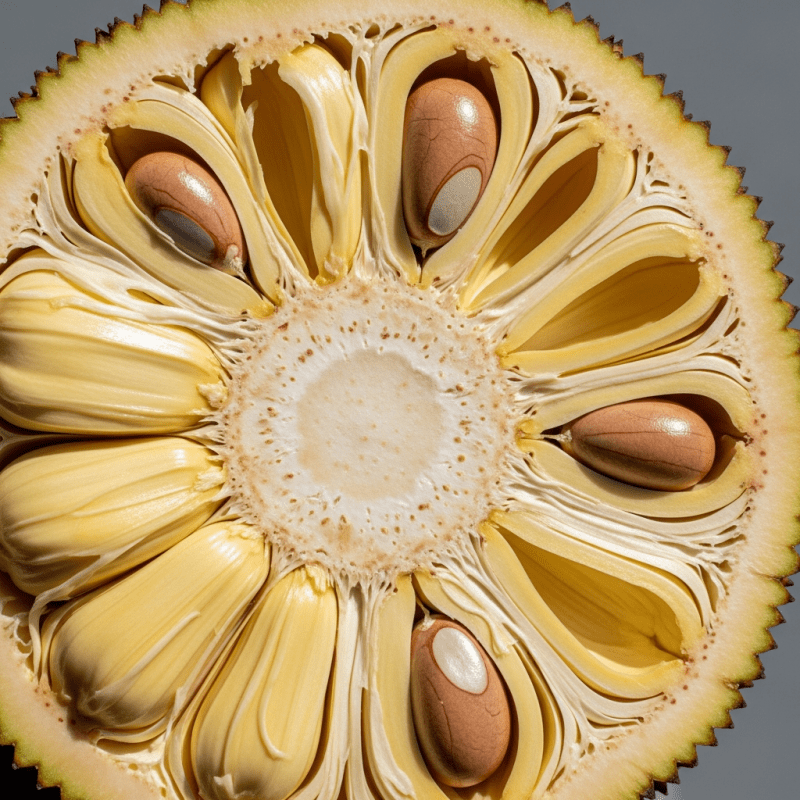
Soft cotton tee, unisex sizes
Buy ShirtJackfruit holds deep cultural resonance in South and Southeast Asia, where it features in folklore, religious rituals, and traditional feasts. In India, it is celebrated in harvest festivals and regarded as a symbol of abundance. Regional cuisines—from Kerala’s chakka dishes to Indonesia’s nangka sweets—showcase its culinary versatility. Its growing popularity as a meat alternative has also brought jackfruit into the spotlight in Western food culture, reimagining its role in global diets.
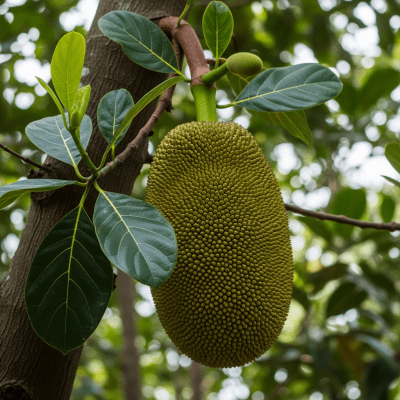
Jackfruit trees are robust evergreens, reaching heights of 10–20 meters with broad, glossy leaves and a spreading canopy. The fruit is a syncarp, formed from the fusion of many flowers, and contains hundreds of edible bulbs. Jackfruit is monoecious, bearing both male and female inflorescences on the same tree. It thrives in tropical and subtropical climates, preferring deep, well-drained soils and high annual rainfall. The species is moderately resistant to drought and pests, though susceptible to fungal diseases in humid conditions.

Jackfruit provides a substantial source of energy and nutrients, especially in regions where it serves as a staple food. The edible bulbs are rich in carbohydrates, dietary fiber, and contain moderate amounts of vitamins A and C. Seeds offer additional protein and micronutrients when cooked. Its low fat content and versatility make jackfruit a valuable component of plant-based diets, supporting food security and nutritional diversity.
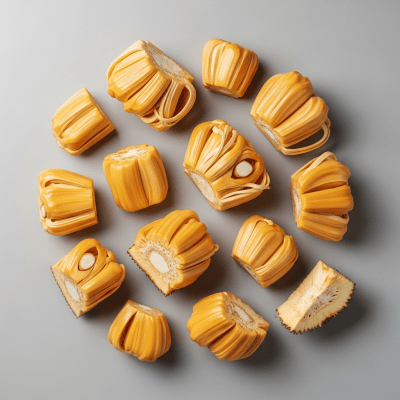
Jackfruit is enjoyed at every stage of ripeness. Unripe fruit is cooked in curries, stir-fries, and savory stews, while ripe bulbs are eaten fresh, dried, or used in desserts like ice cream and jams. Seeds are boiled or roasted as snacks. Its neutral flavor and fibrous texture have made jackfruit a sought-after meat substitute, featured in vegan pulled "pork" sandwiches and tacos. Commercially, jackfruit is processed into canned bulbs, chips, flour, and frozen packs for global markets.
Jackfruit thrives in warm, humid climates with deep, well-drained soils and annual rainfall exceeding 1,500 mm. Trees are typically grown from seeds or grafted saplings, reaching maturity within 3–8 years. Yields vary by cultivar and management, with each tree producing 20–100 fruits annually. Harvesting requires care due to the fruit’s size and weight, and post-harvest handling is crucial as jackfruit is highly perishable. Shelf life is short at ambient temperatures but can be extended with refrigeration or processing.
Many regional cultivars are named after localities or specific traits, reflecting centuries of traditional selection.
Jackfruit is a staple and specialty crop in South and Southeast Asia, with India, Bangladesh, Thailand, Indonesia, and Sri Lanka as major producers. Its commercial importance is rising globally, driven by demand for plant-based foods. International trade includes fresh fruit, canned bulbs, chips, flour, and frozen packs. Jackfruit’s expanding popularity in Western markets is reshaping its role from a regional staple to a global specialty ingredient.
Jackfruit’s usage and significance vary widely across regions. In India and Bangladesh, it is a staple food and features in traditional curries and sweets. Southeast Asian countries like Indonesia and Thailand enjoy jackfruit in both savory and dessert dishes, often under local names such as nangka and khanun. Regional cultivars are selected for traits like sweetness, texture, and yield, and jackfruit is sometimes confused with breadfruit and cempedak, which are related but distinct species.