Date
The date is a sweet, fleshy fruit produced by the date palm, celebrated for its rich flavor, storability, and central role in diets and cultures across arid regions of the Middle East and North Africa.
The date is a sweet, fleshy fruit produced by the date palm, celebrated for its rich flavor, storability, and central role in diets and cultures across arid regions of the Middle East and North Africa.
Dates trace their origins to the ancient landscapes of present-day Iraq and the Persian Gulf, where the date palm was domesticated at least 6,000 years ago. Over millennia, farmers in the Middle East, North Africa, and South Asia have cultivated and selected countless traditional varieties, making the date one of humanity’s oldest cultivated fruits. Its enduring legacy is woven through the region’s history, agriculture, and daily life.
Botanically, the date belongs to the family Arecaceae and is classified as Phoenix dactylifera. It is an oblong, single-seeded berry produced by a tall, perennial monocot palm. Dates are grouped among edible fruits, specifically those adapted to arid climates, and are distinguished by their high sugar content and storability. In culinary and commercial contexts, dates are recognized both as fresh and dried fruits, with grading based on cultivar, size, and ripeness.
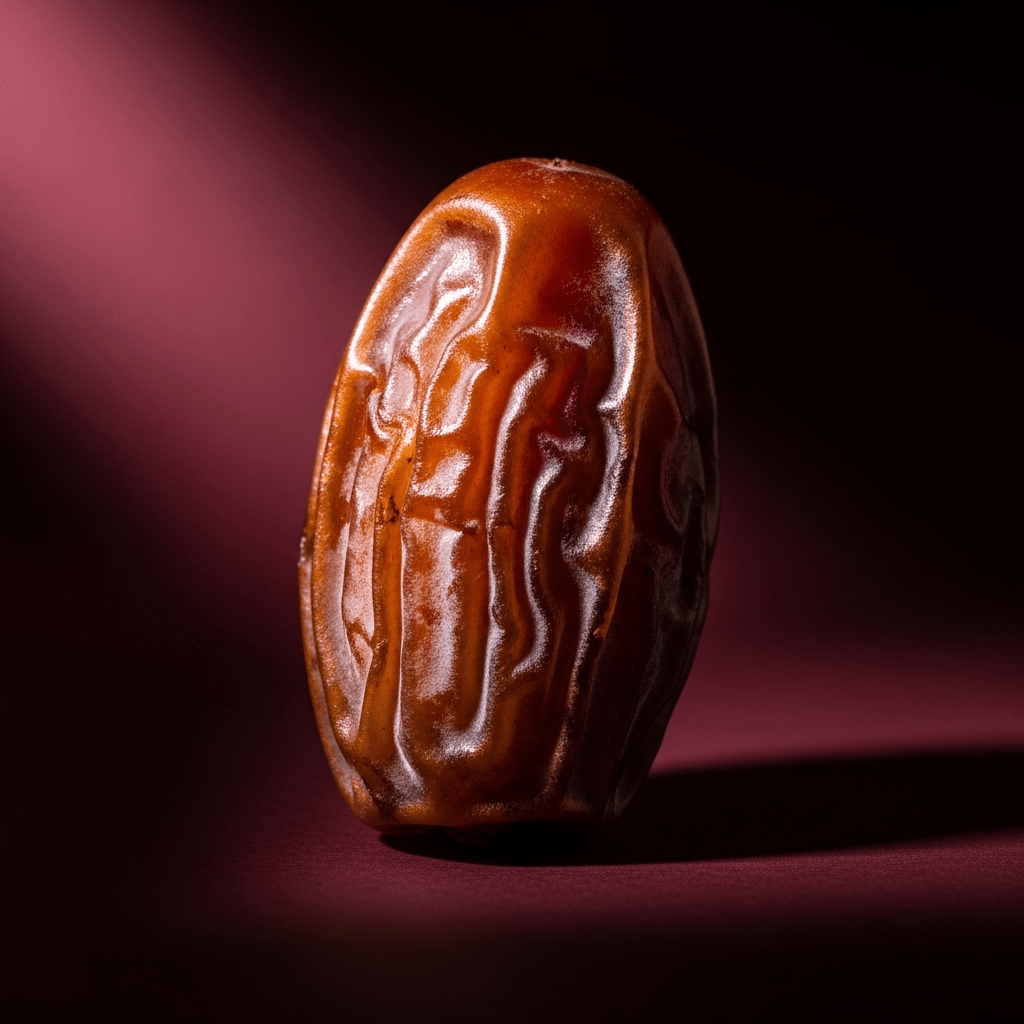
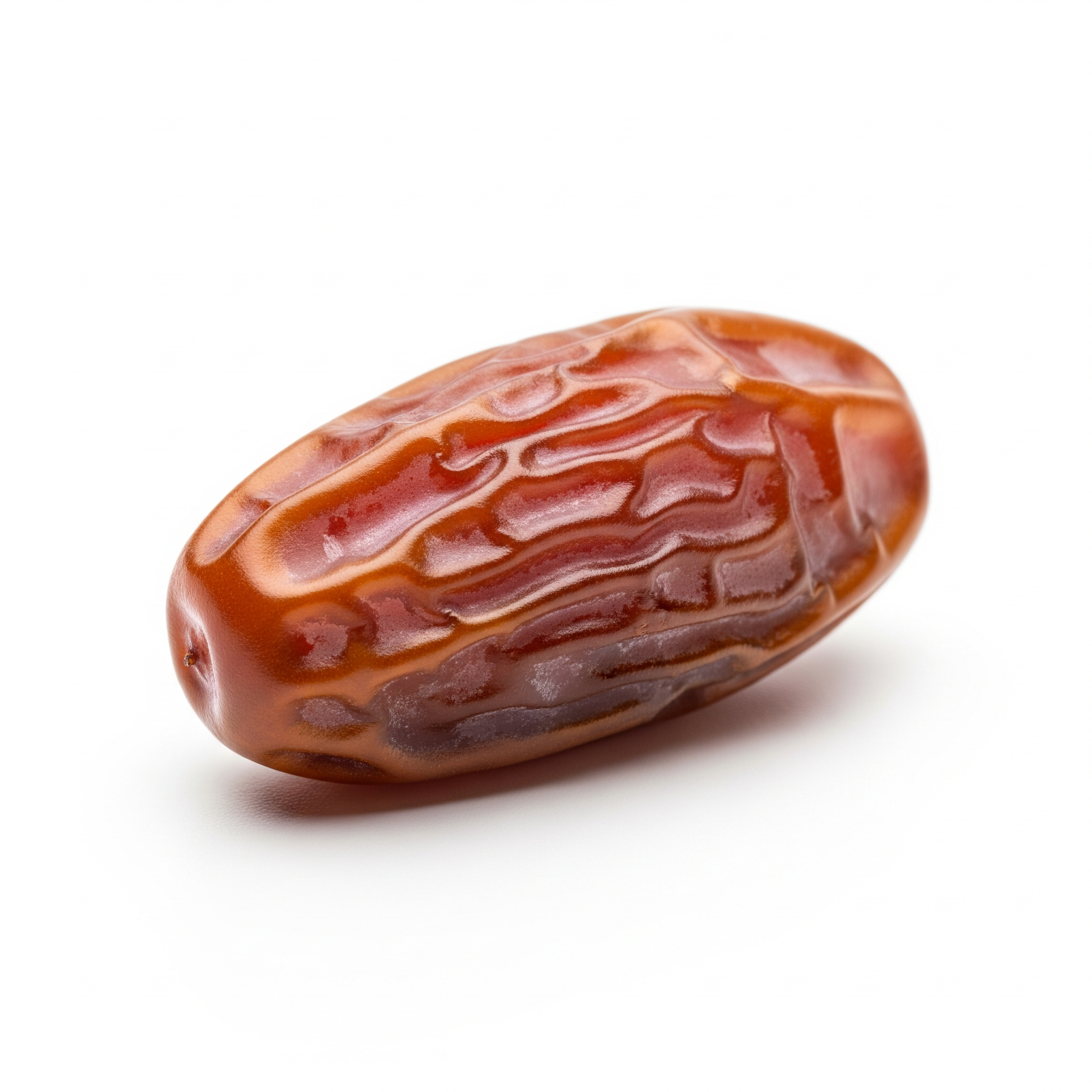
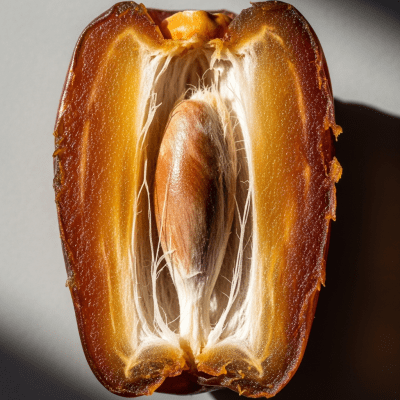
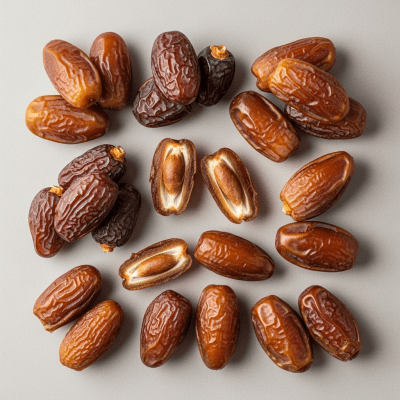
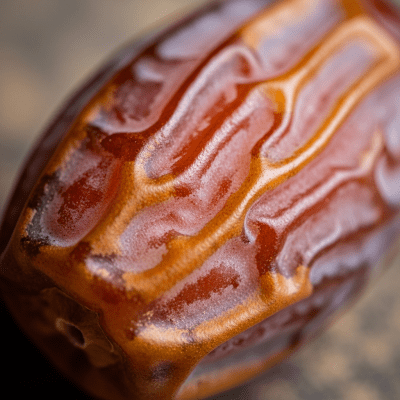
Dates are oblong berries, typically 3–7 cm long, with a glossy skin that ranges from bright yellow to deep brown depending on ripeness and variety. The flesh is dense and chewy, enveloping a single elongated seed. When fresh, dates are soft and succulent; when dried, their texture becomes firmer and their sweetness intensifies. The fruit’s visual appeal is matched by its inviting aroma and rich, caramel-like flavor.
Dates are prized for their versatility and nutritional value. They are consumed fresh, semi-dried, or fully dried, enjoyed as snacks, incorporated into desserts, or used as natural sweeteners in syrups and pastes. Beyond direct consumption, dates are processed into products such as date sugar, paste, and vinegar. Their exceptional shelf life makes them ideal for storage and trade, and their role in religious and cultural practices—especially during Ramadan—highlights their enduring significance.
Bring this kind into your world illustrated posters, mugs, and shirts.
Archival print, museum-grade paper
Buy Poster
Stoneware mug, dishwasher safe
Buy Mug
Soft cotton tee, unisex sizes
Buy ShirtDates hold profound cultural and spiritual importance, particularly in the Middle East and North Africa. They are deeply embedded in religious traditions, most notably as the customary food to break the fast during Ramadan. In art and literature, the date palm symbolizes abundance, hospitality, and resilience. Across centuries, dates have featured in folklore, poetry, and celebrations, serving as a symbol of sustenance and prosperity.
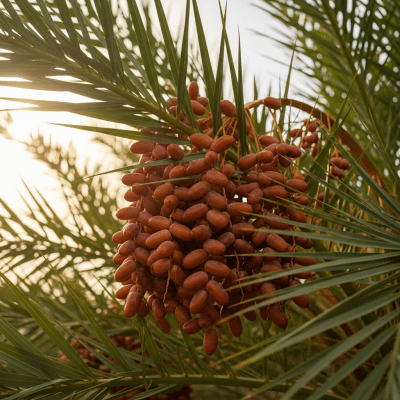
Date palms are tall, perennial monocots reaching 15–25 meters in height. The plant is dioecious, requiring separate male and female trees for fruit production, with manual pollination commonly practiced to ensure high yields. The fruit itself is an oblong berry, containing a single elongated seed, and varies in color from yellow to brown as it ripens. Date palms are highly adapted to hot, arid climates, displaying notable tolerance to drought, salinity, and heat, but are susceptible to pests such as the red palm weevil and certain fungal diseases.
Dates are celebrated for their high natural sugar content, providing quick energy and a satisfying sweetness. They also offer moderate dietary fiber, which supports digestive health, and contain essential minerals such as potassium and magnesium. The low moisture content of dried dates enhances their nutritional density, making them a valuable food source in regions where fresh produce may be scarce.
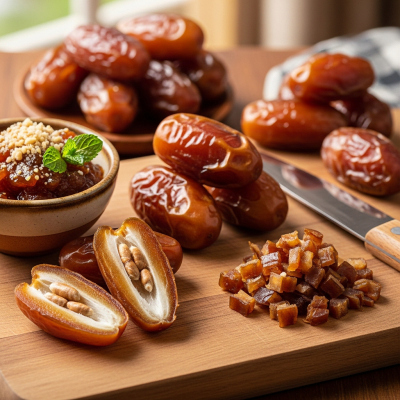
Dates are enjoyed in a variety of culinary forms: eaten fresh or dried as snacks, blended into smoothies, or used as a natural sweetener in baked goods, syrups, and energy bars. In Middle Eastern and North African cuisines, dates are featured in both savory and sweet dishes, from stuffed dates and tagines to desserts and confections. They are also processed into products such as date paste, sugar, and vinegar, expanding their versatility in modern kitchens.
Date palms thrive in hot, arid regions with access to groundwater. Cultivation involves planting both male and female trees, with manual pollination often employed to maximize fruit set. The palms bear fruit annually, with yields ranging from 40 to 100 kilograms per tree, depending on variety and management. Harvesting is typically done by hand, and careful handling is required to preserve fruit quality. Farmers must also manage pests and diseases, notably the red palm weevil and fungal infections, to maintain healthy crops.
Dates are a cornerstone of agricultural economies in the Middle East and North Africa, with Egypt, Iran, Saudi Arabia, and the United Arab Emirates leading global production and export. The fruit is primarily traded in dried form, graded by cultivar, size, and ripeness. International demand for premium varieties such as ‘Medjool’ and ‘Deglet Noor’ continues to grow, making dates a significant commodity in global fruit markets.
Hundreds of date cultivars are grown across the Middle East, North Africa, and South Asia, each with unique flavors, textures, and local names. While ‘Medjool’ and ‘Deglet Noor’ dominate international markets, many regions favor indigenous varieties tailored to local tastes and climates. Dates are also classified by ripeness stage—‘rutab’ refers to soft, ripe dates, while ‘tamr’ denotes fully dried fruit—reflecting diverse culinary traditions and preferences.