Yellowfin Tuna
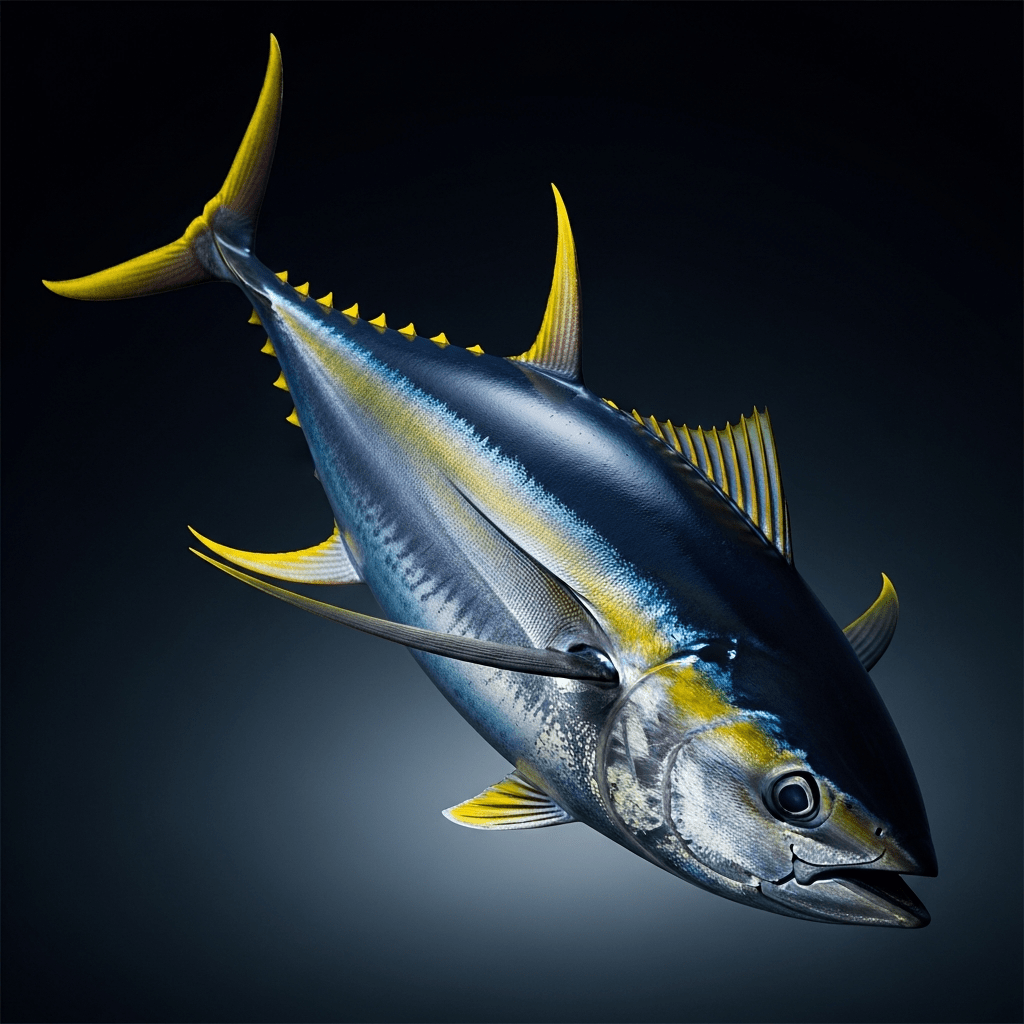
The yellowfin tuna (Thunnus albacares) is a large, fast-swimming pelagic fish known for its striking yellow dorsal and anal fins and its vital role in global commercial fisheries.
The yellowfin tuna (Thunnus albacares) is a large, fast-swimming pelagic fish known for its striking yellow dorsal and anal fins and its vital role in global commercial fisheries.
First described by Bonnaterre in 1788, the yellowfin tuna is native to tropical and subtropical oceans worldwide, inhabiting the Atlantic, Indian, and Pacific basins. It is a wild species with no domestication history, tracing its lineage naturally within the genus Thunnus.
Belonging to the family Scombridae and genus Thunnus, the yellowfin tuna is part of the order Scombriformes, which groups it with other tunas and mackerels known for their streamlined bodies and powerful swimming capabilities.
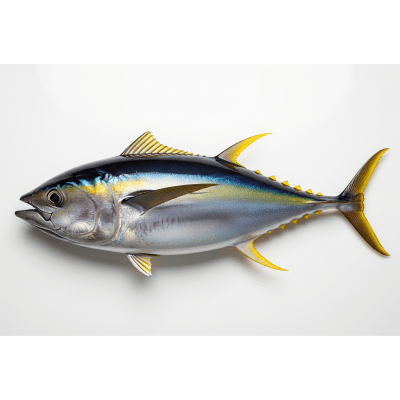
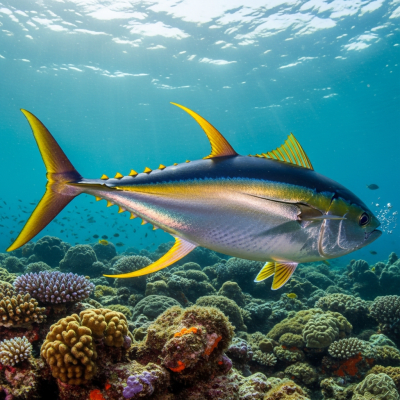
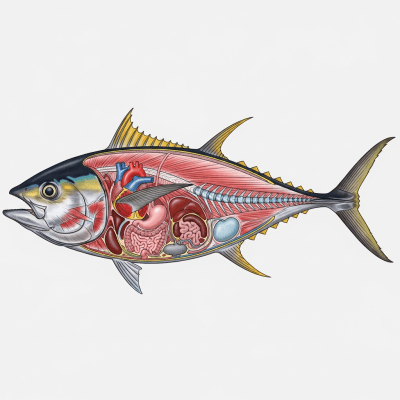
The yellowfin tuna has a robust, fusiform body designed for speed, with metallic dark blue coloring on its back and silver on its belly. Its most distinctive features are the bright yellow dorsal and anal fins, accompanied by long second dorsal and anal finlets, which give it a striking appearance in the water. Adults typically range from 40 to 170 cm in length and weigh between 20 and 70 kg, though they can grow up to 239 cm and 200 kg.
Highly migratory and capable of swift, long-distance movements, yellowfin tuna occupy pelagic zones from the surface down to 250 meters. They are apex predators, feeding primarily on fish, squid, and crustaceans. Their rapid growth and firm, red flesh make them prized targets for both commercial and artisanal fisheries, as well as popular species in sport fishing.
Bring this kind into your world illustrated posters, mugs, and shirts.
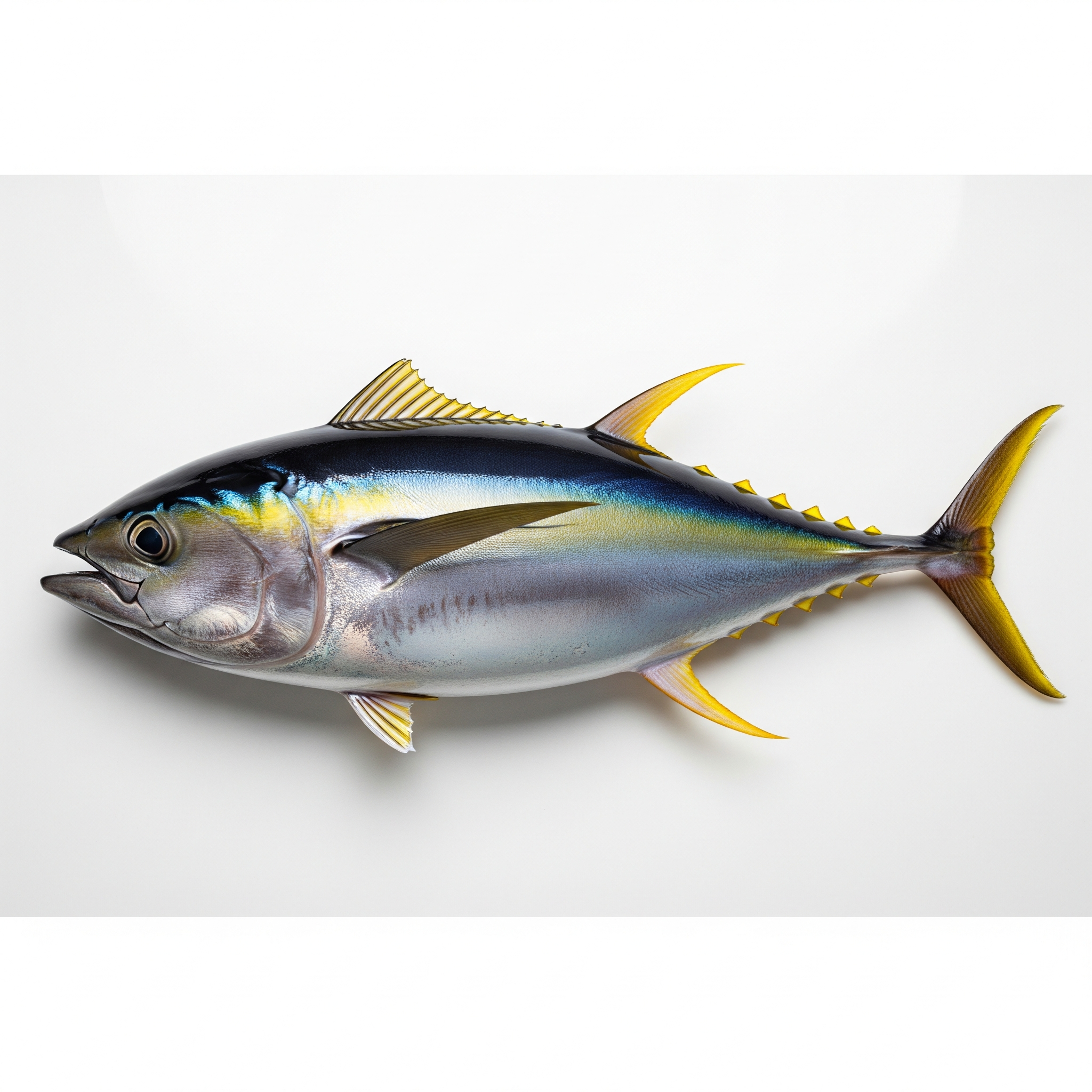
Archival print, museum-grade paper
Buy Poster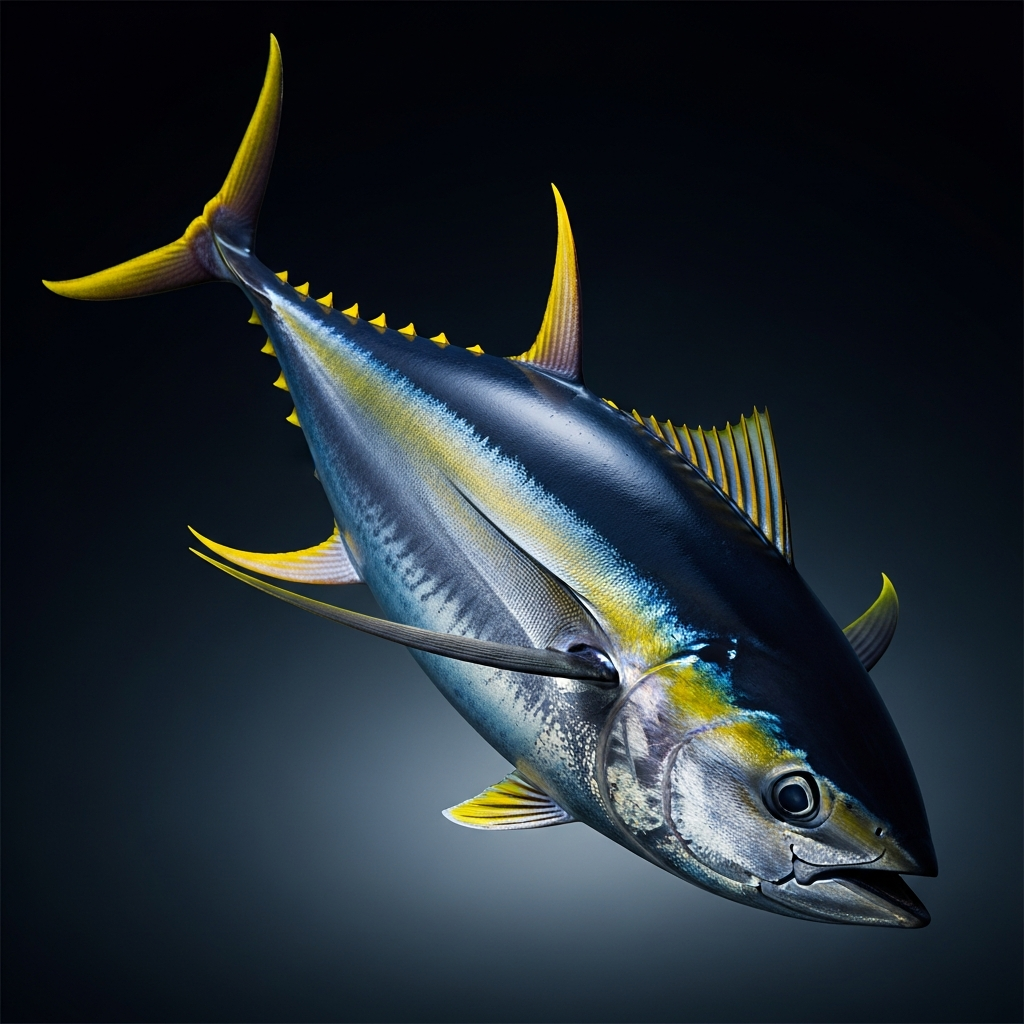
Stoneware mug, dishwasher safe
Buy Mug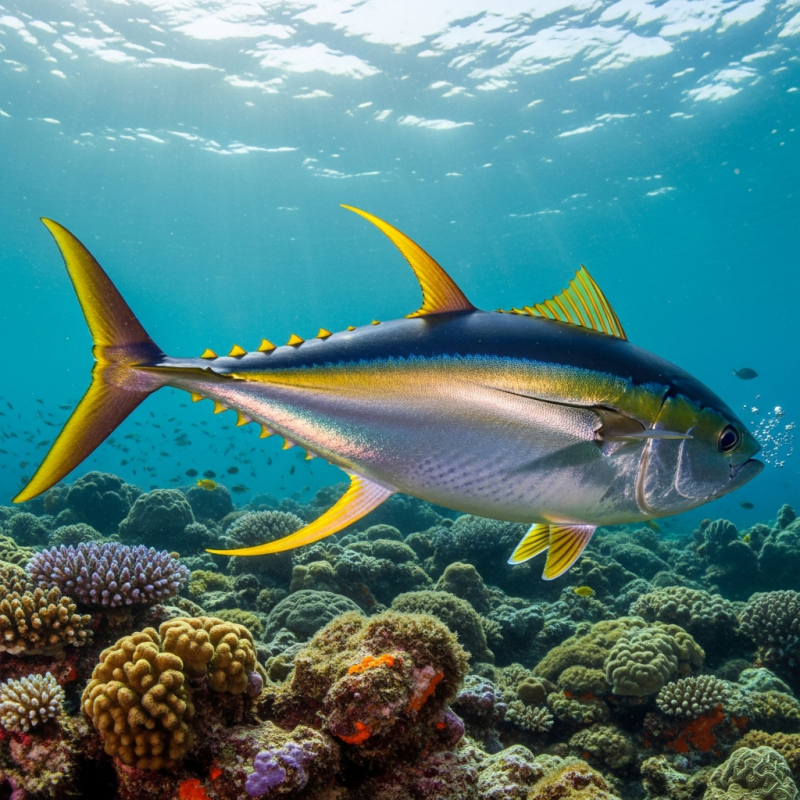
Soft cotton tee, unisex sizes
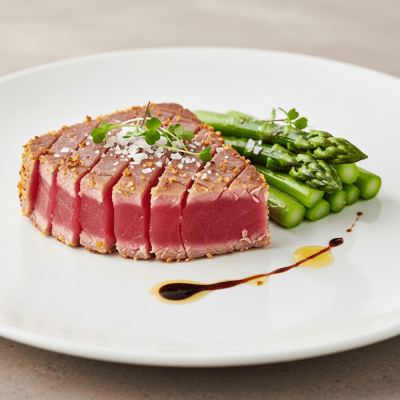
Buy ShirtYellowfin tuna hold cultural importance in regions such as Japan, the Pacific Islands, and the Caribbean. Known locally by names like “Ahi” and “Maguro,” they feature prominently in culinary traditions, especially in sushi and sashimi, and are celebrated in sport fishing communities for their strength and speed.
Yellowfin tuna inhabit pelagic waters from the ocean surface down to depths of 250 meters, favoring tropical and subtropical regions. Their range spans the Atlantic, Indian, and Pacific Oceans, where they undertake extensive migratory journeys across ocean basins.
As apex predators, yellowfin tuna feed primarily on smaller fish, squid, and crustaceans. Their hunting strategy involves swift swimming and active pursuit in open waters, enabling them to capture agile prey in their pelagic environment.
Yellowfin tuna reach sexual maturity between 2 and 3 years of age. While specific spawning habitats are not well documented, they reproduce in open ocean environments, with a typical lifespan of 7 to 8 years, allowing for multiple breeding cycles during their life.
Yellowfin tuna are primarily harvested through commercial and artisanal fisheries rather than aquaculture, as no established breeding or farming methods exist for this species. Their rapid growth rate supports high yields in wild capture fisheries, which supply global markets with fresh, canned, and processed tuna products.
Despite their wide distribution and commercial abundance, yellowfin tuna populations face pressures from overfishing and environmental changes. They are susceptible to depletion due to intense fishing efforts, necessitating careful management and conservation measures to ensure sustainable stocks.