Walleye
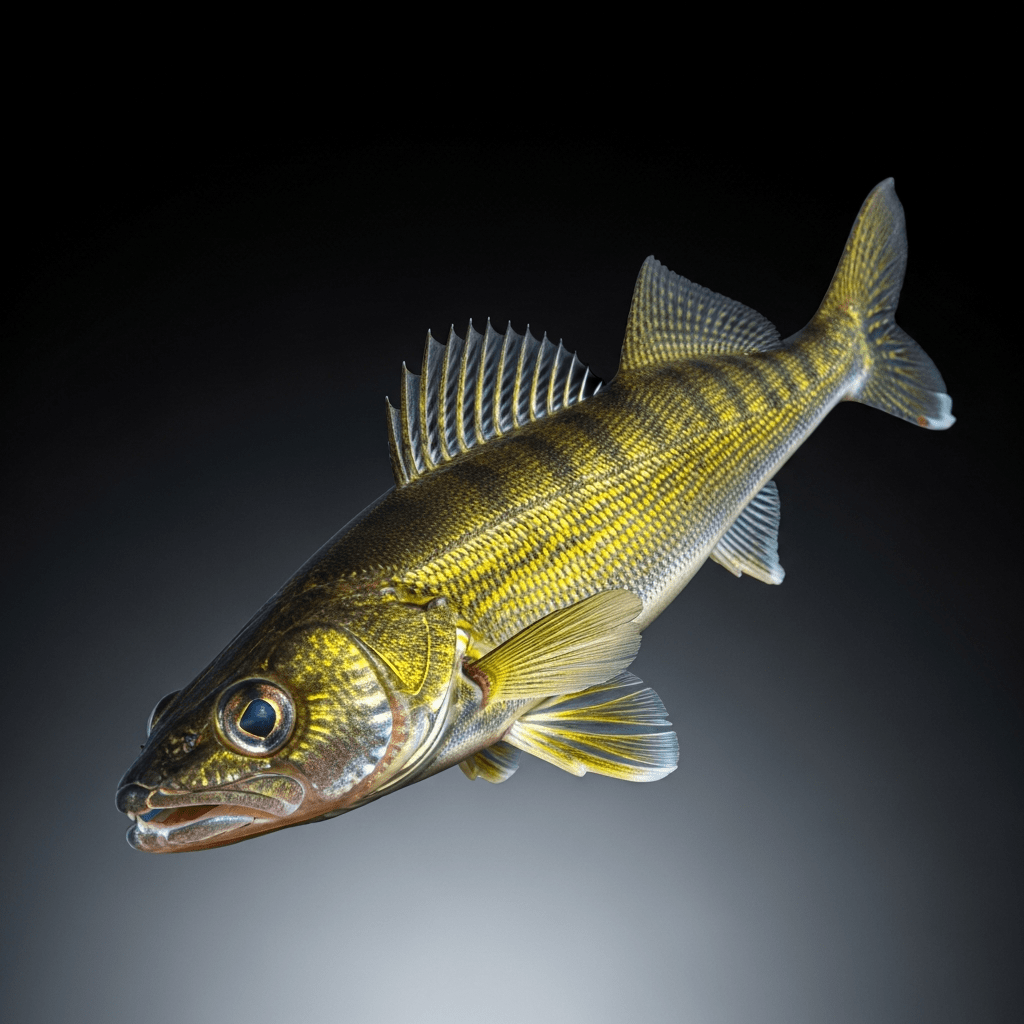
The walleye (Sander vitreus) is a medium to large predatory freshwater fish native to North America, prized for its distinctive glassy eyes and valued as both a sport and commercial species.
The walleye (Sander vitreus) is a medium to large predatory freshwater fish native to North America, prized for its distinctive glassy eyes and valued as both a sport and commercial species.
First formally described by Samuel Latham Mitchill in 1818, the walleye originates from the freshwater lakes and rivers of North America, especially the Great Lakes, St. Lawrence River, and Mississippi River basin. It is a wild species with no known domestication or breeding institutions associated.
Belonging to the family Percidae within the order Perciformes, the walleye is part of a group commonly known as perches. Its genus is Sander, and the species is vitreus, placing it firmly among North America's native freshwater predatory fish.
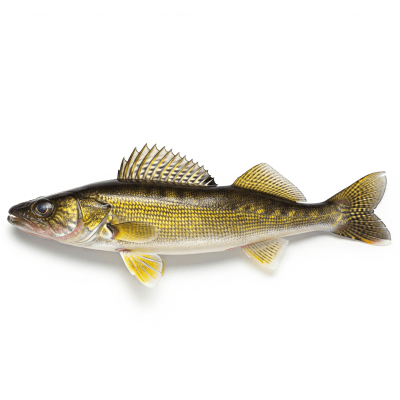
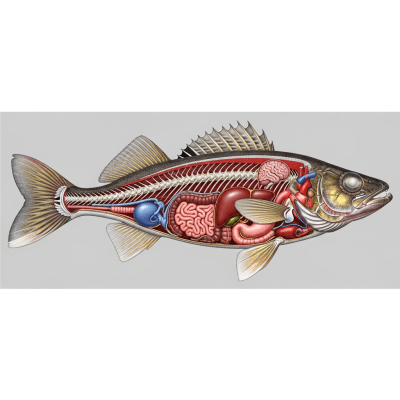
The walleye has an elongated, torpedo-shaped body colored olive to golden brown on its dorsal side with a white underside. It typically measures 30–50 cm in length, with some reaching up to 76 cm and weighing as much as 11 kg. Its most striking feature is its large, glassy eyes adapted for low-light vision, complemented by two dorsal fins—one spiny and one soft-rayed—and sharp canine teeth.
Primarily nocturnal, the walleye feeds on smaller fish, insects, and crustaceans under low light conditions. It plays a significant role in recreational fisheries and commercial harvests, valued for both sport fishing and as a culinary delicacy. Management and stocking efforts support sustainable populations across its native range.
Bring this kind into your world illustrated posters, mugs, and shirts.
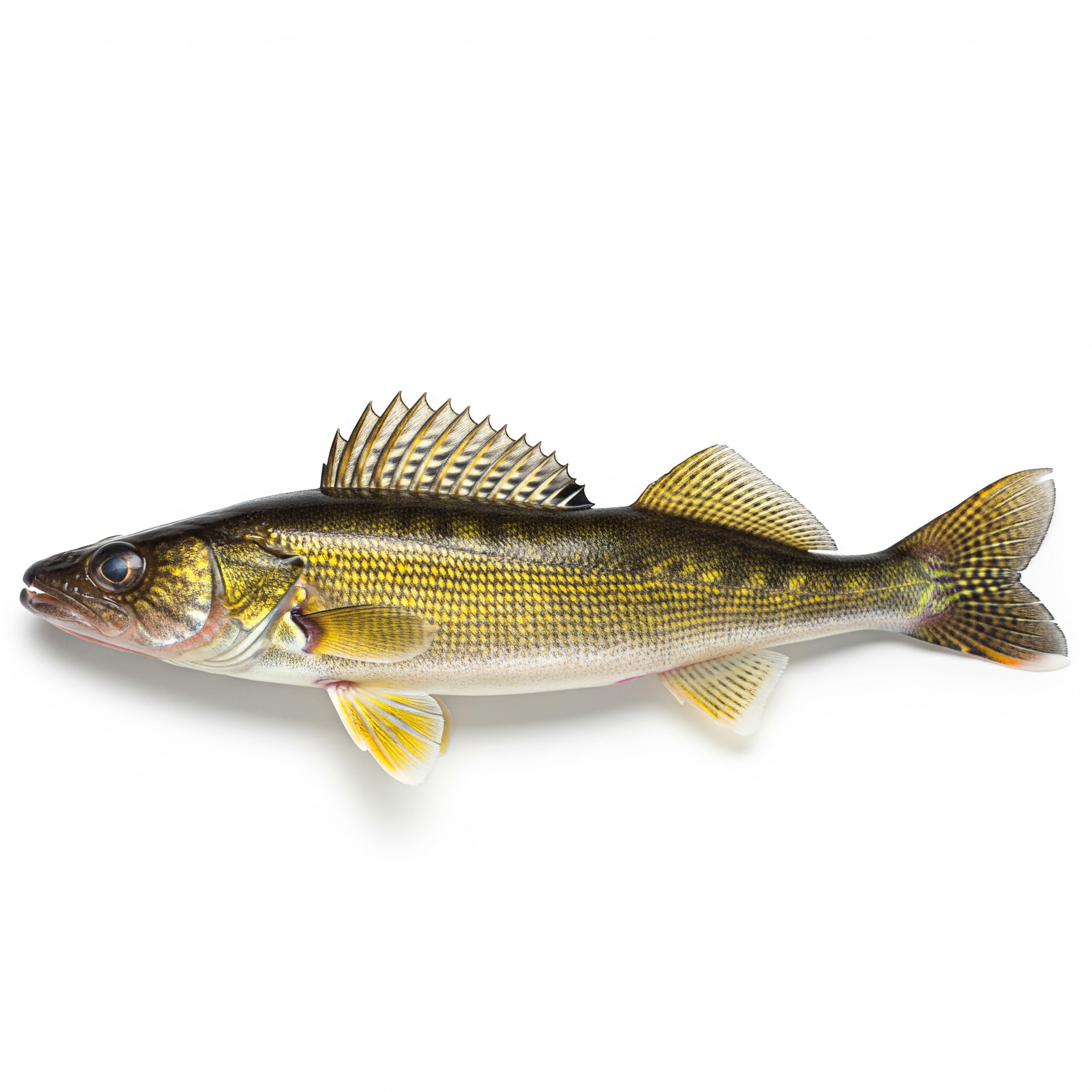
Archival print, museum-grade paper
Buy Poster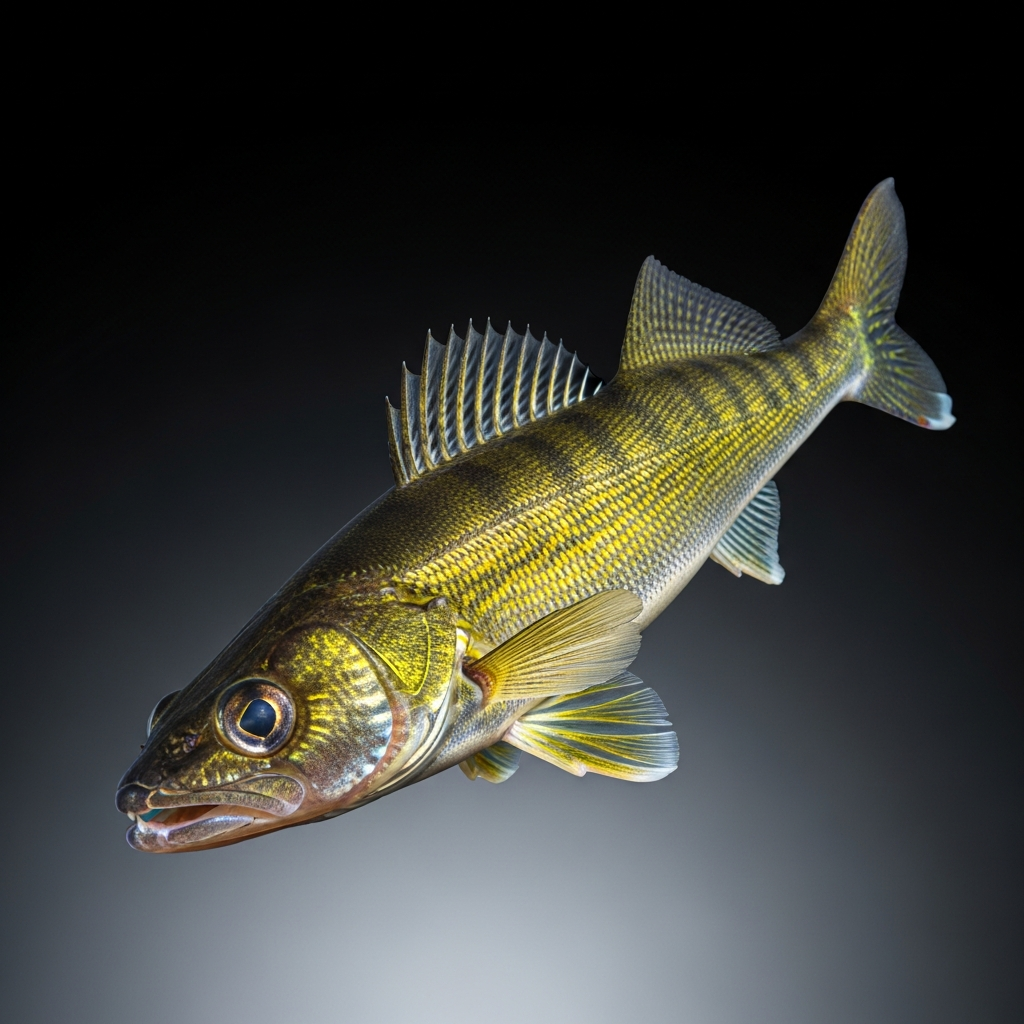
Stoneware mug, dishwasher safe
Buy Mug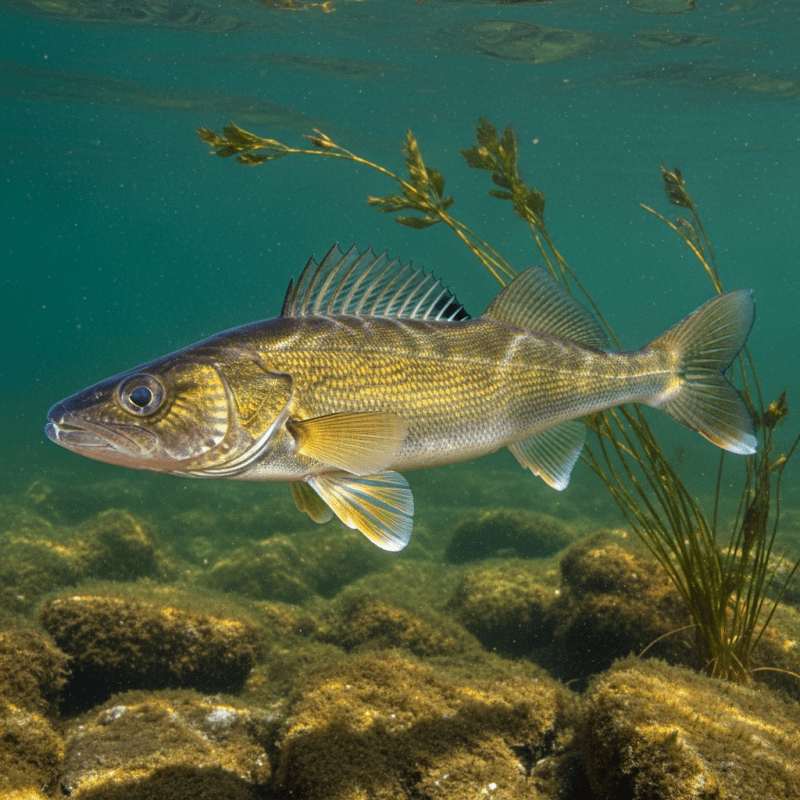
Soft cotton tee, unisex sizes
Buy ShirtWalleye holds an important place in the cultural and economic life of the Midwest United States and Canada. It is a popular target in sport fishing communities and features prominently in regional cuisine, often celebrated in local fish fries and culinary traditions.
The walleye inhabits freshwater lakes and rivers throughout North America, with a native range centered on the Great Lakes region, the St. Lawrence River, and the Mississippi River basin. It thrives in a variety of freshwater environments, favoring clear waters with gravel or rocky bottoms suitable for spawning.
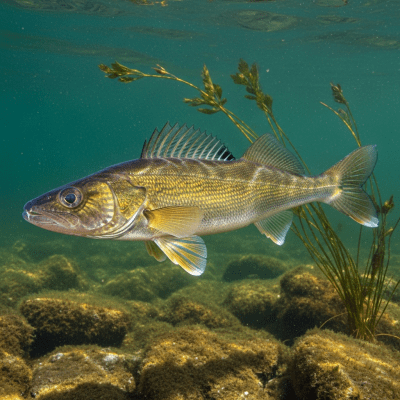

As a nocturnal predator, the walleye primarily feeds on smaller fish, insects, and crustaceans. Its large, reflective eyes enable it to hunt effectively in low-light conditions, giving it an advantage during dawn, dusk, and nighttime hours.
Walleye reach sexual maturity between 2 and 5 years of age. Spawning takes place in spring, typically over gravel or rocky substrates in shallow freshwater areas. The species lays eggs that develop in these protected habitats, supporting the continuation of populations across its range.
While primarily harvested from wild populations, walleye is subject to stocking and management programs to sustain fisheries. Growth rates vary by region and water temperature. Commercial and recreational fishing both contribute to its economic importance, with fillets commonly sold fresh, frozen, or smoked.
The walleye is sensitive to water quality and habitat disruption but remains resilient to moderate environmental changes. Conservation efforts focus on habitat protection and regulated harvest limits to maintain healthy populations. It is not currently considered threatened but benefits from ongoing management to support its ecological and economic roles.