Origin Story

First formally described by Walbaum in 1792, sockeye salmon evolved across the North Pacific Rim, inhabiting river systems and lakes of eastern Russia, Alaska, British Columbia, and the northwestern United States. This wild species has a long evolutionary history, with hatchery programs supporting populations but wild stocks remaining the primary lineage.

Classification

Sockeye salmon belongs to the family Salmonidae, genus Oncorhynchus, and species nerka. It is one of the five Pacific salmon species, distinguished within the broader group of bony fishes by its anadromous migration and unique ecological adaptations.

Appearance or Form

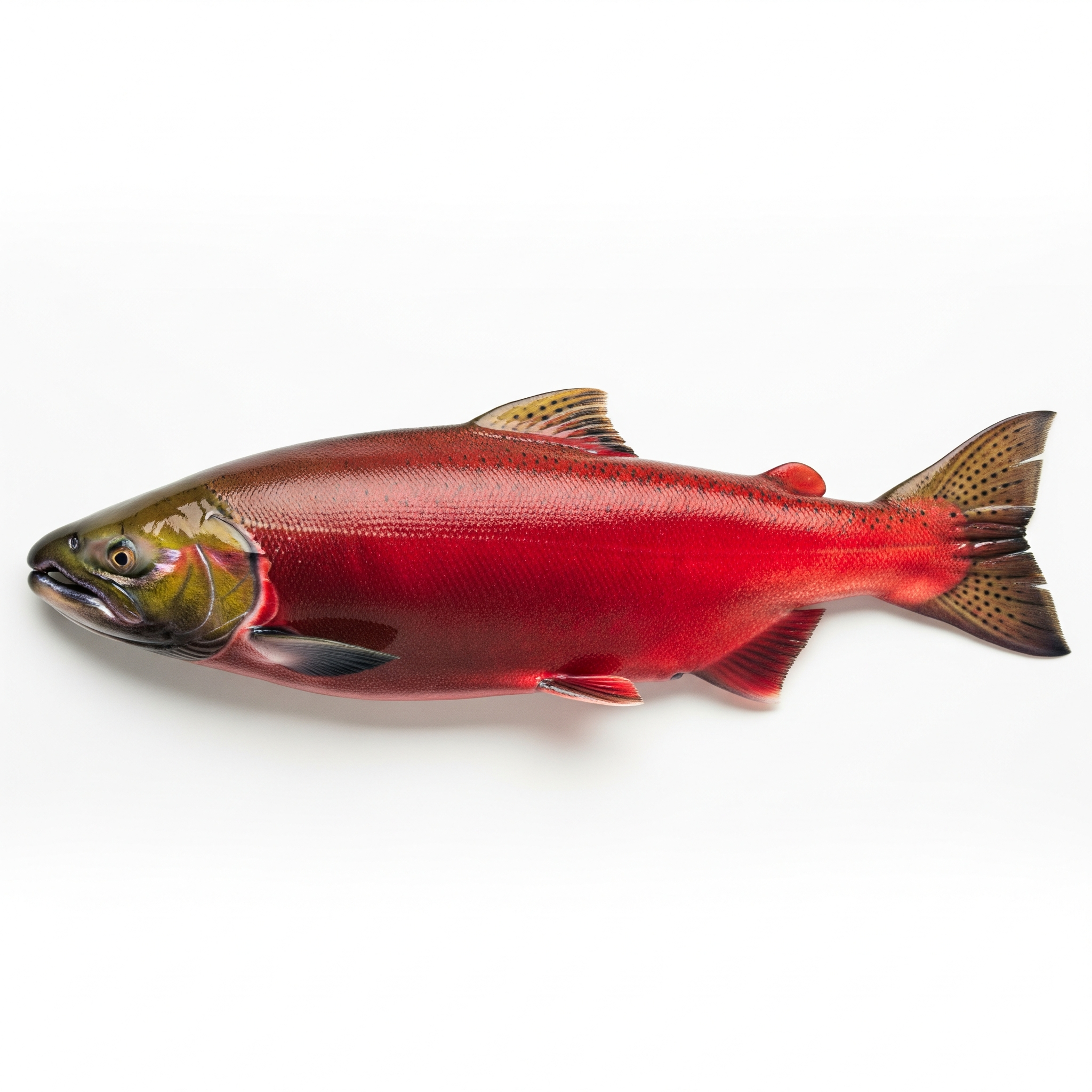
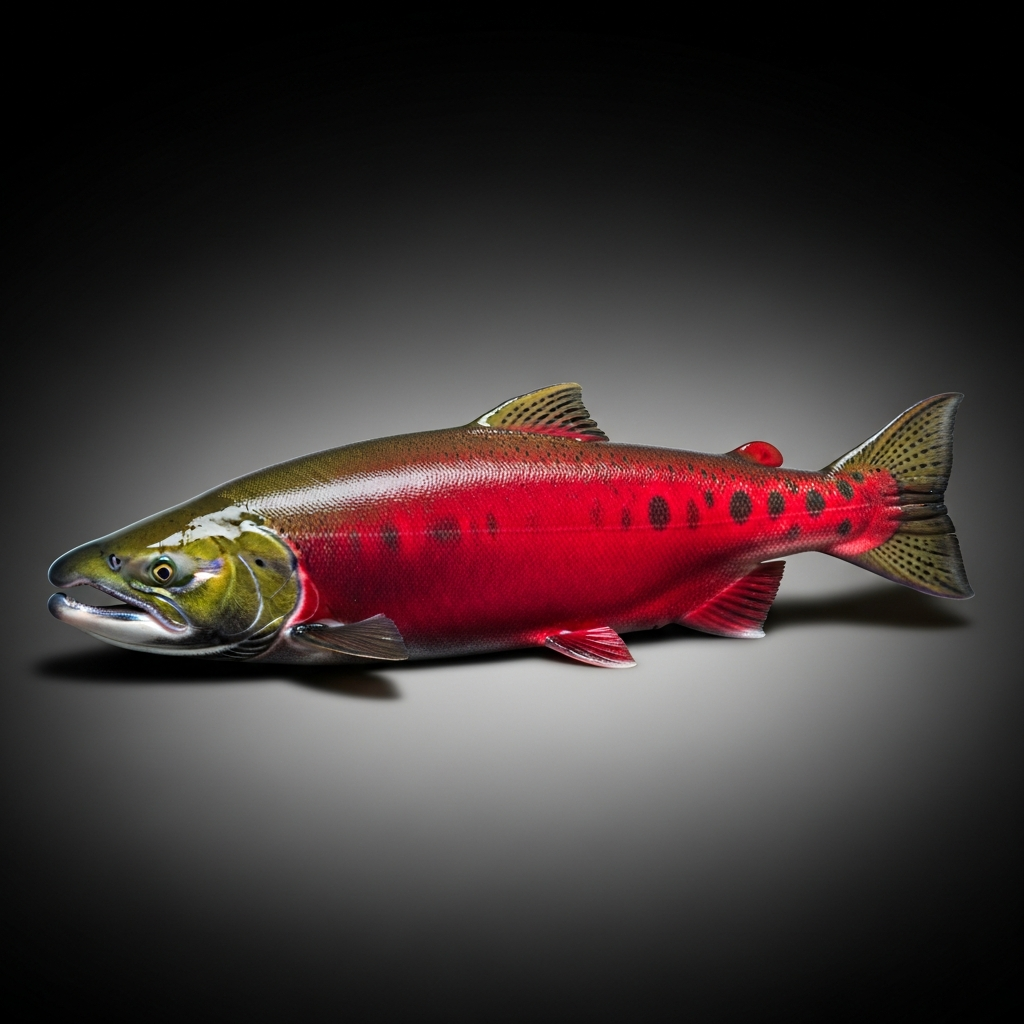
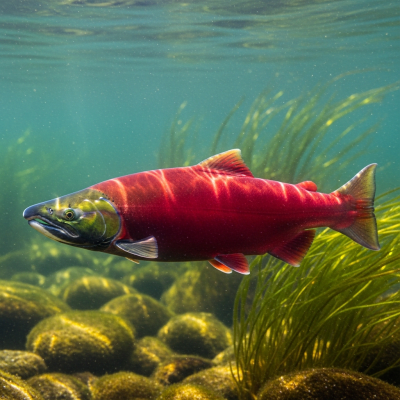
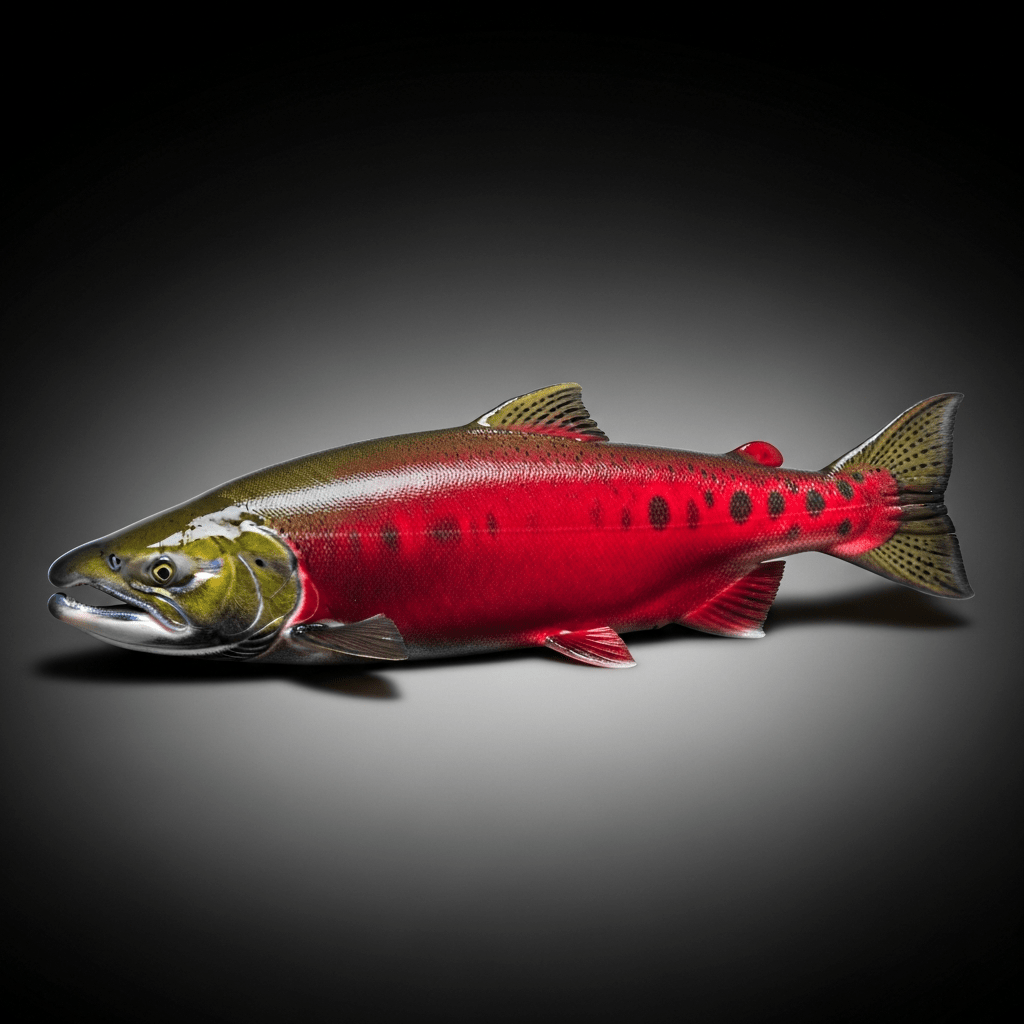
Sockeye salmon have a streamlined body, typically measuring 45 to 60 centimeters in length and weighing between 2 and 4 kilograms. Their coloration shifts dramatically with life stage: silver during their ocean phase, juveniles display distinctive parr marks, and adults develop a striking bright red body with a green head during spawning.

Behavior or Usage

Known for their remarkable migratory behavior, sockeye salmon hatch in freshwater lakes and rivers, migrate to the ocean to mature, and return to their natal freshwater habitats to spawn. They are semelparous, meaning they spawn once before dying. Their life cycle supports both ecological balance and human use, including commercial and recreational fishing.

Merchandise & Prints

Bring this kind into your world � illustrated posters, mugs, and shirts.

Sockeye Salmon Sockeye Salmon Poster

Sockeye Salmon Poster

Archival print, museum-grade paper

Sockeye Salmon Sockeye Salmon Mug

Sockeye Salmon Mug

Stoneware mug, dishwasher safe

Sockeye Salmon Sockeye Salmon Shirt

Sockeye Salmon Shirt

Soft cotton tee, unisex sizes

Attributes & Insights

Taxon-Specific Insights

🌍Cultural Significance

Sockeye salmon hold profound importance for Indigenous cultures of the Pacific Northwest, featuring prominently in traditional diets, ceremonies, and economies. Their presence is woven into regional art and storytelling, symbolizing resilience and the cycles of nature.

📌Notable Facts

  • Sockeye salmon are unique among Pacific salmon for relying on lake habitats during juvenile development.
  • Their flesh is prized worldwide for its firm texture and rich, deep red color.
  • Non-migratory, landlocked populations known as kokanee exist in North America.
  • They undertake long migrations, often traveling hundreds of kilometers inland to spawn.
  • After spawning, sockeye salmon die, completing a semelparous life cycle.

🌍Habitat And Distribution

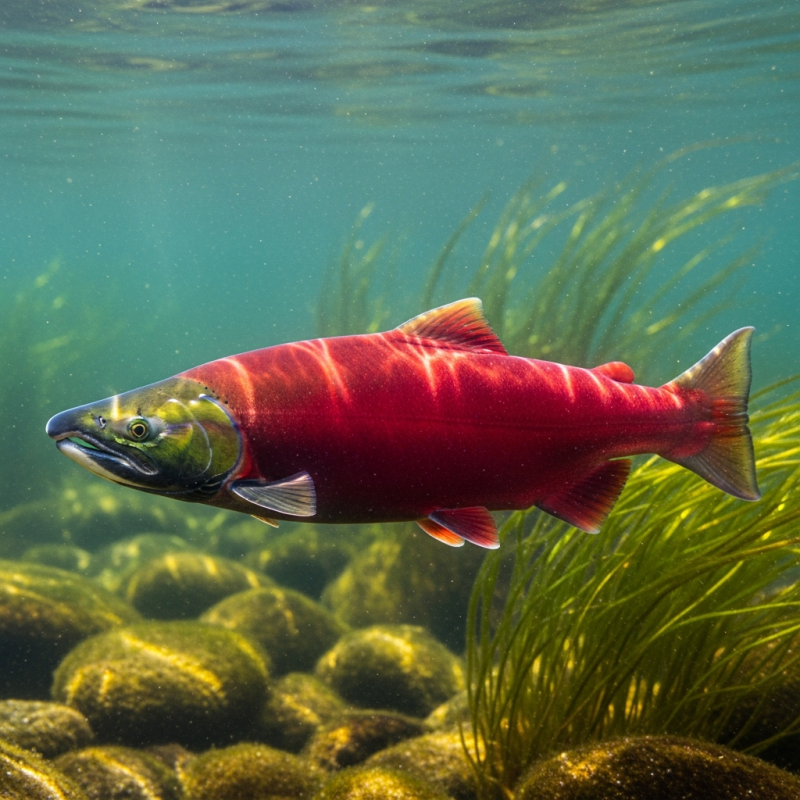
Sockeye salmon inhabit both freshwater and marine environments across the North Pacific Rim. Their native range includes eastern Russia, Alaska, British Columbia, and the northwestern United States. They depend on cold, oxygen-rich waters in lakes and rivers for spawning and juvenile development, while maturing in the open ocean.

Visual Variations

High-resolution studio photograph of a single Sockeye Salmon, belonging to the taxonomy fish
Underwater scene featuring a single Sockeye Salmon
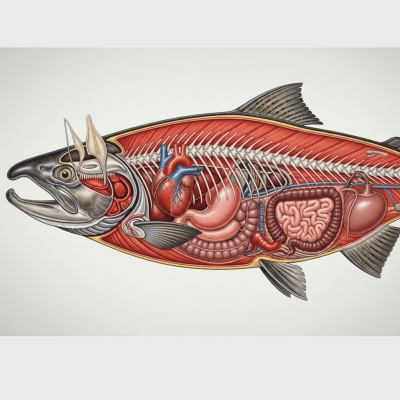
Detailed anatomical illustration of a Sockeye Salmon, part of the taxonomy fish
A culinary presentation featuring a prepared dish made with Sockeye Salmon, of the taxonomy fish

Composition & Context

Taxon-Specific Insights

🍽️Diet And Feeding

The diet of sockeye salmon primarily consists of zooplankton in both freshwater and marine habitats. Juveniles feed on small aquatic organisms in lakes, while adults consume a variety of planktonic prey during their ocean phase, supporting their growth and energy needs for migration and spawning.

🍼Reproduction And Life Cycle

Sockeye salmon exhibit an anadromous and semelparous reproductive strategy. They hatch in freshwater lakes and rivers, spend 1 to 3 years as juveniles before migrating to the ocean, and return to their natal freshwater habitats to spawn once before dying. Spawning occurs in cold, oxygen-rich freshwater environments, often requiring long upstream migrations.

🎣Aquaculture And Fishing

Sockeye salmon support significant wild fisheries and aquaculture operations, particularly in Alaska, Russia, and Canada. While wild stocks remain predominant, hatchery programs assist in population support. The species is harvested fresh, frozen, canned, smoked, and used in sushi, commanding premium prices in global markets.

⚠️Conservation Status

Despite their ecological and commercial importance, sockeye salmon face threats from habitat fragmentation, overfishing, and climate change, which affects water temperature and flow. Conservation efforts focus on protecting spawning habitats and managing fisheries to sustain wild populations amid environmental challenges.

Faq

  • What is the typical size of a sockeye salmon? They usually measure 45–60 cm in length and weigh 2–4 kg.
  • Where do sockeye salmon spawn? They return to freshwater rivers and lakes, often their birthplace, to spawn.
  • What does 'kokanee' mean? Kokanee refers to landlocked, non-migratory sockeye salmon populations found in North America.