Origin Story

First scientifically described by Charles Tate Regan in 1910, the Siamese Fighting Fish originates from the rice paddies, floodplains, and slow-moving waters of Thailand, Cambodia, Laos, and Vietnam. Its domesticated forms, bred since the mid-19th century for enhanced coloration and fin shapes, trace back to wild populations in central Thailand. Modern strains have been developed worldwide, with significant contributions from Thai breeders who established many foundational color and fin varieties.

Classification

Betta splendens belongs to the family Osphronemidae within the genus Betta. This places it among labyrinth fishes, a group distinguished by their ability to breathe air using a labyrinth organ, setting them apart from many other freshwater species.

Appearance or Form

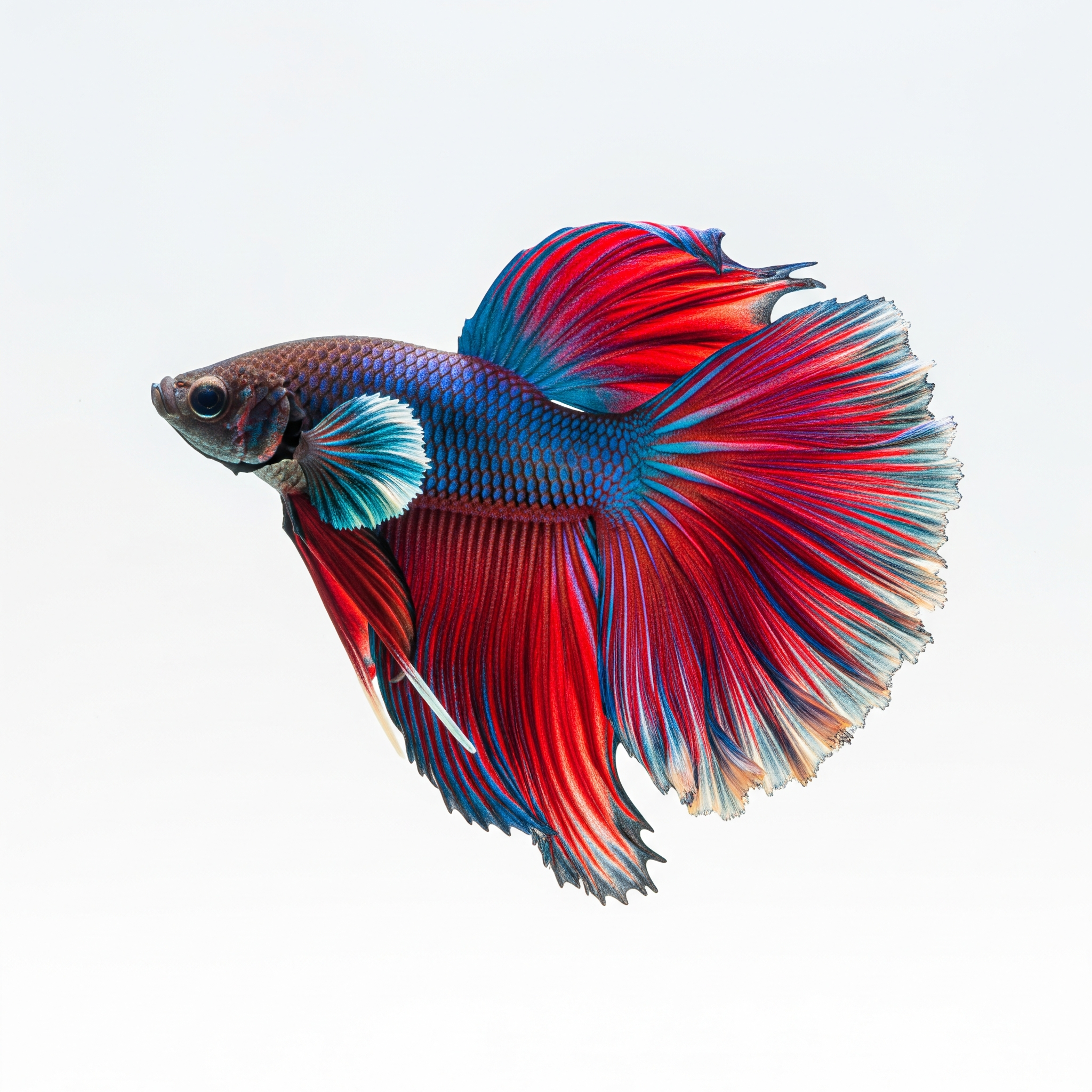
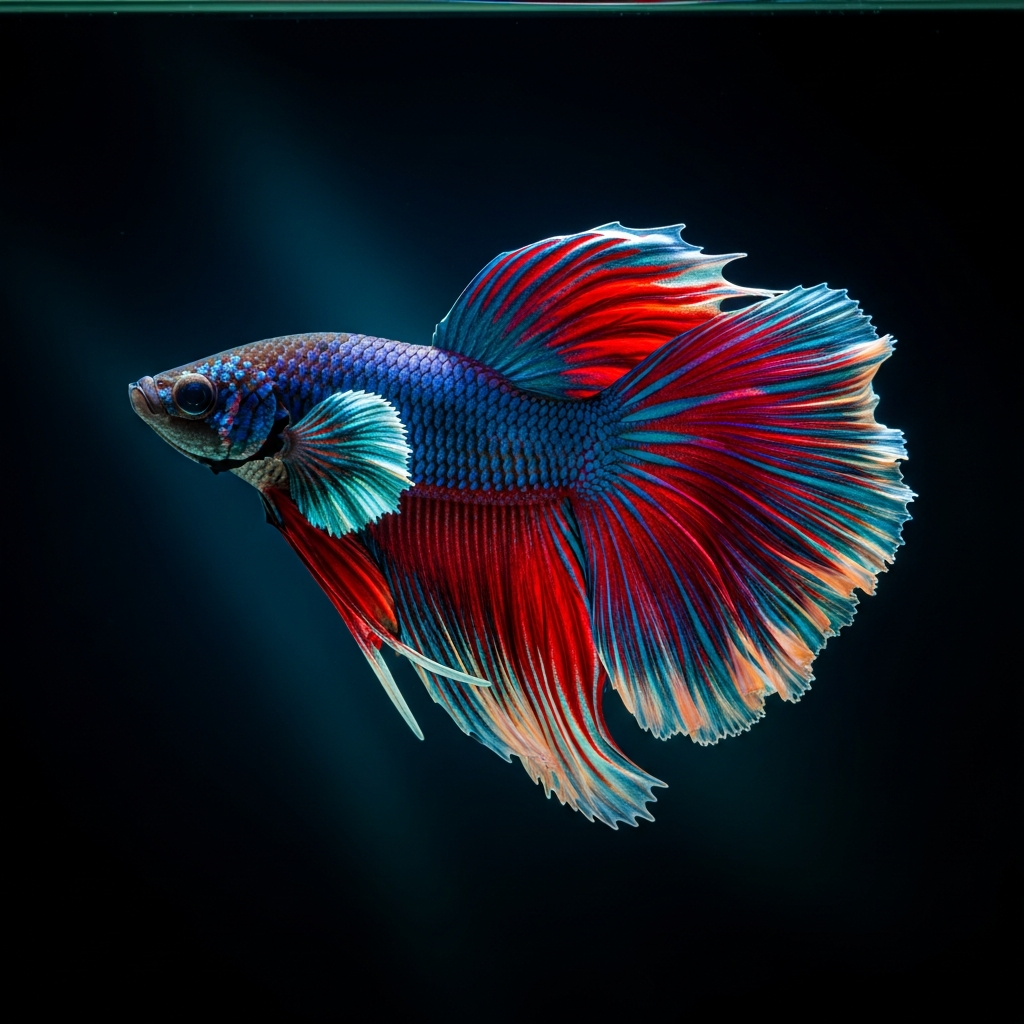
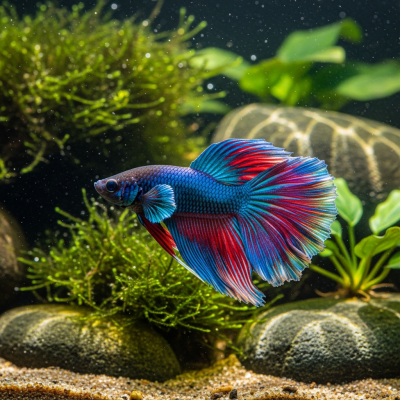
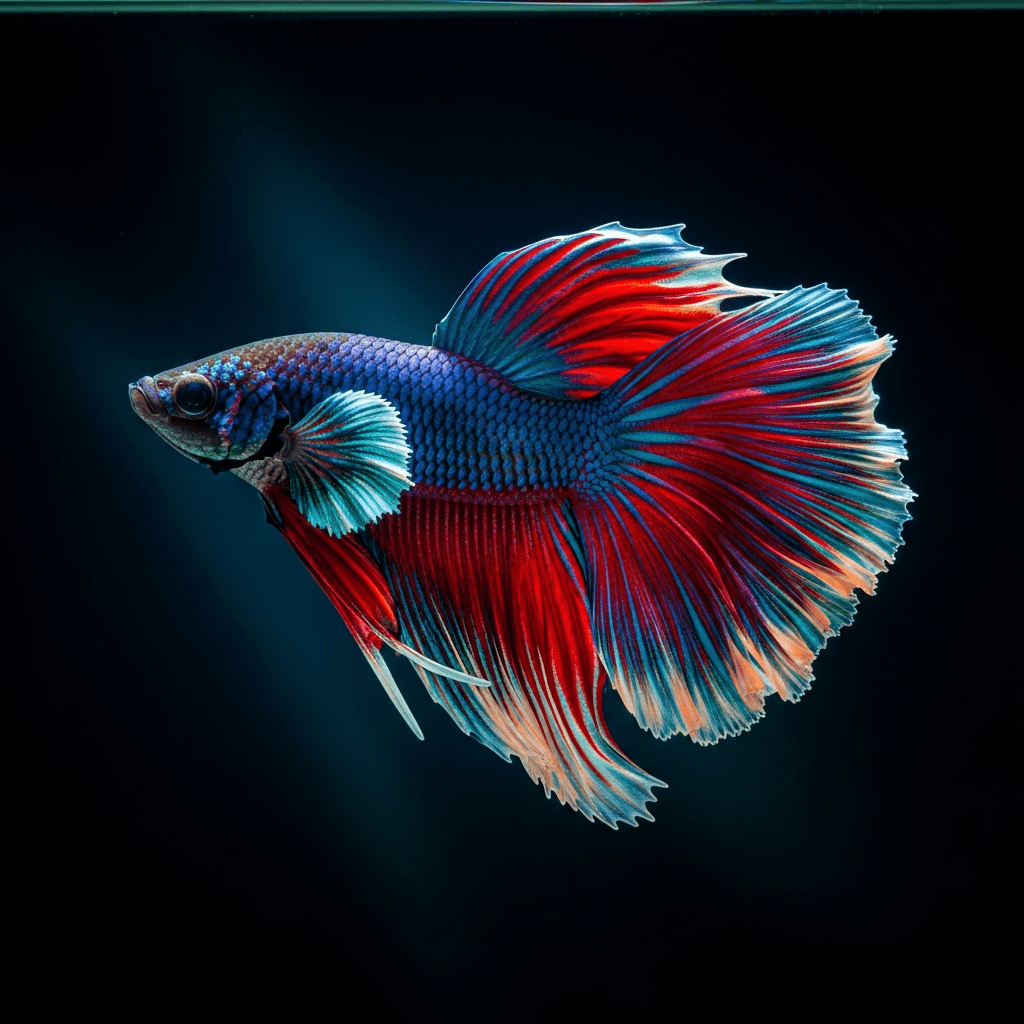
The Siamese Fighting Fish typically measures 6–7 cm in length. Wild individuals display dull greenish or brown coloration, while domesticated varieties showcase a dazzling palette including red, blue, turquoise, white, yellow, and multicolored patterns. Males are known for their longer, ornate fins, with popular morphological variants such as veiltail, crowntail, halfmoon, double tail, and plakat forms. Its distinctive labyrinth organ enables air breathing, a key adaptation for survival in low-oxygen waters.

Behavior or Usage

Males exhibit highly territorial and aggressive behavior, often engaging in combat to defend their space, while females tend to be less aggressive but may establish social hierarchies. The species is a bubble nest builder; males construct floating nests at the water surface to incubate eggs. Its facultative air-breathing ability allows it to thrive in oxygen-poor environments, making it resilient in varied freshwater habitats.

Merchandise & Prints

Bring this kind into your world � illustrated posters, mugs, and shirts.

Siamese Fighting Fish Siamese Fighting Fish Poster

Siamese Fighting Fish Poster

Archival print, museum-grade paper

Siamese Fighting Fish Siamese Fighting Fish Mug

Siamese Fighting Fish Mug

Stoneware mug, dishwasher safe

Siamese Fighting Fish Siamese Fighting Fish Shirt

Siamese Fighting Fish Shirt

Soft cotton tee, unisex sizes

Attributes & Insights

Taxon-Specific Insights

🌍Cultural Significance

Historically, Siamese Fighting Fish were central to male fighting matches in Thailand, serving as a form of gambling and entertainment. Though such practices are now regulated or discouraged, the fish remains a cultural icon. Today, it holds a prominent place in the ornamental aquarium trade worldwide and is valued for educational and scientific research due to its unique physiology and behavior.

📌Notable Facts

  • The labyrinth organ allows the fish to breathe atmospheric air, enabling survival in low-oxygen waters.
  • Males build bubble nests to protect their eggs during reproduction.
  • Domesticated varieties display an extraordinary range of colors and fin shapes, bred selectively over generations.
  • The species reaches sexual maturity rapidly, typically within 4–6 months.
  • Despite its aggressive nature, it is a popular and relatively easy fish to keep in home aquariums worldwide.

🌍Habitat And Distribution

The Siamese Fighting Fish inhabits freshwater environments such as rice paddies, floodplains, and slow-moving waters across Thailand, Cambodia, Laos, and Vietnam. It thrives in warm waters ranging from 24 to 30°C and is adapted to soft to moderately hard water conditions. Its air-breathing capability allows it to tolerate low oxygen levels common in its natural habitats.

Visual Variations

High-resolution studio photograph of a single Siamese Fighting Fish, belonging to the taxonomy fish
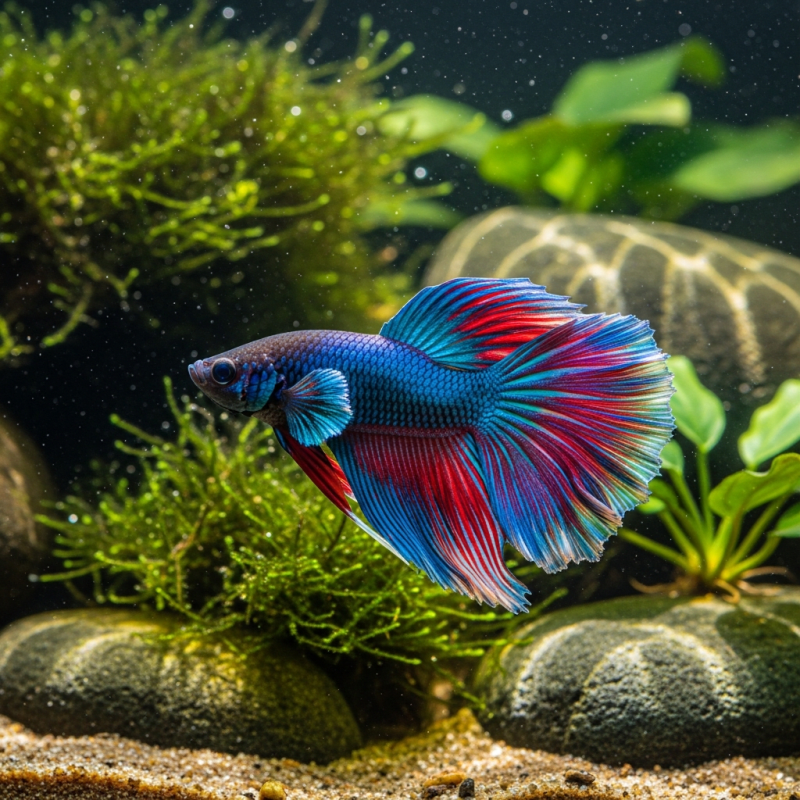
Underwater scene featuring a single Siamese Fighting Fish
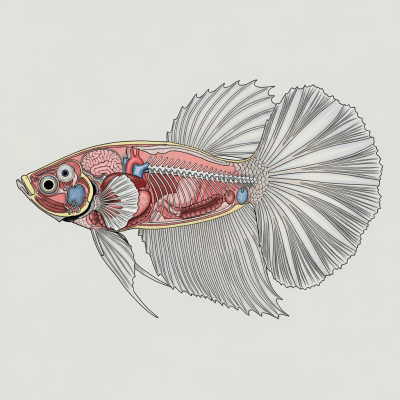
Detailed anatomical illustration of a Siamese Fighting Fish, part of the taxonomy fish
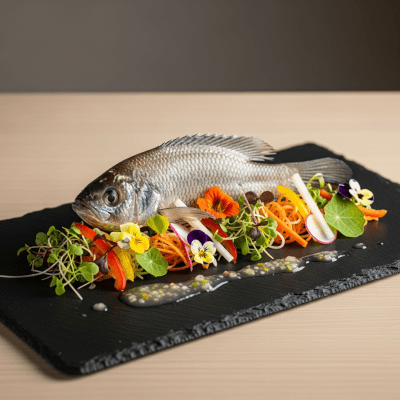
A culinary presentation featuring a prepared dish made with Siamese Fighting Fish, of the taxonomy fish

Composition & Context

Taxon-Specific Insights

🍽️Diet And Feeding

In the wild, Siamese Fighting Fish feed on small aquatic insects and larvae, capturing prey near the water surface. Their facultative air-breathing supports activity in oxygen-poor waters where food may be scarce. In captivity, they accept a variety of prepared foods, including pellets, flakes, and live or frozen insects.

🍼Reproduction And Life Cycle

Siamese Fighting Fish reproduce through bubble nest building, where males create floating nests at the water surface to house fertilized eggs. Sexual maturity is reached between 4 and 6 months. After spawning, males guard and tend the nest until the fry hatch and become free-swimming. Lifespan in captivity typically ranges from 2 to 4 years.

🎣Aquaculture And Fishing

This species is primarily bred for the ornamental aquarium trade rather than commercial fishing. Selective breeding focuses on enhancing coloration and fin morphology, producing strains such as veiltail, crowntail, halfmoon, double tail, plakat, dragon, and koi bettas. Breeding relies on bubble nest techniques, with moderate growth rates under controlled conditions.

⚠️Conservation Status

The Siamese Fighting Fish faces no major threats in the wild and is not considered endangered. Its populations remain stable due to widespread distribution and adaptability. However, habitat degradation and water pollution could pose localized risks. The species benefits from extensive captive breeding, reducing pressure on wild stocks.

Faq

Q: How big do Siamese Fighting Fish get?
The typical adult length ranges from 6 to 7 centimeters.

Q: Why do male bettas fight?
Males are territorial and aggressive toward other males, often fighting to defend their space.

Q: Can Siamese Fighting Fish breathe air?
Yes, they possess a labyrinth organ that allows them to breathe atmospheric air, helping them survive in low-oxygen environments.