Rainbow Trout
The Rainbow Trout (Oncorhynchus mykiss) is a vibrant freshwater fish native to North America, renowned for its striking coloration, adaptability, and significance in both wild fisheries and aquaculture worldwide.
The Rainbow Trout (Oncorhynchus mykiss) is a vibrant freshwater fish native to North America, renowned for its striking coloration, adaptability, and significance in both wild fisheries and aquaculture worldwide.
First described scientifically by Walbaum in 1792, the Rainbow Trout originates from the Pacific drainages of North America, spanning from Alaska to northern Mexico. Over time, extensive selective breeding has produced numerous aquaculture strains with improved growth and disease resistance, developed by institutions such as the U.S. Fish and Wildlife Service and international research centers.
Belonging to the family Salmonidae and genus Oncorhynchus, the Rainbow Trout is part of a broader group of salmonid fishes known for their ecological and economic importance. It shares lineage with other trout and salmon species, including an anadromous form known as Steelhead.
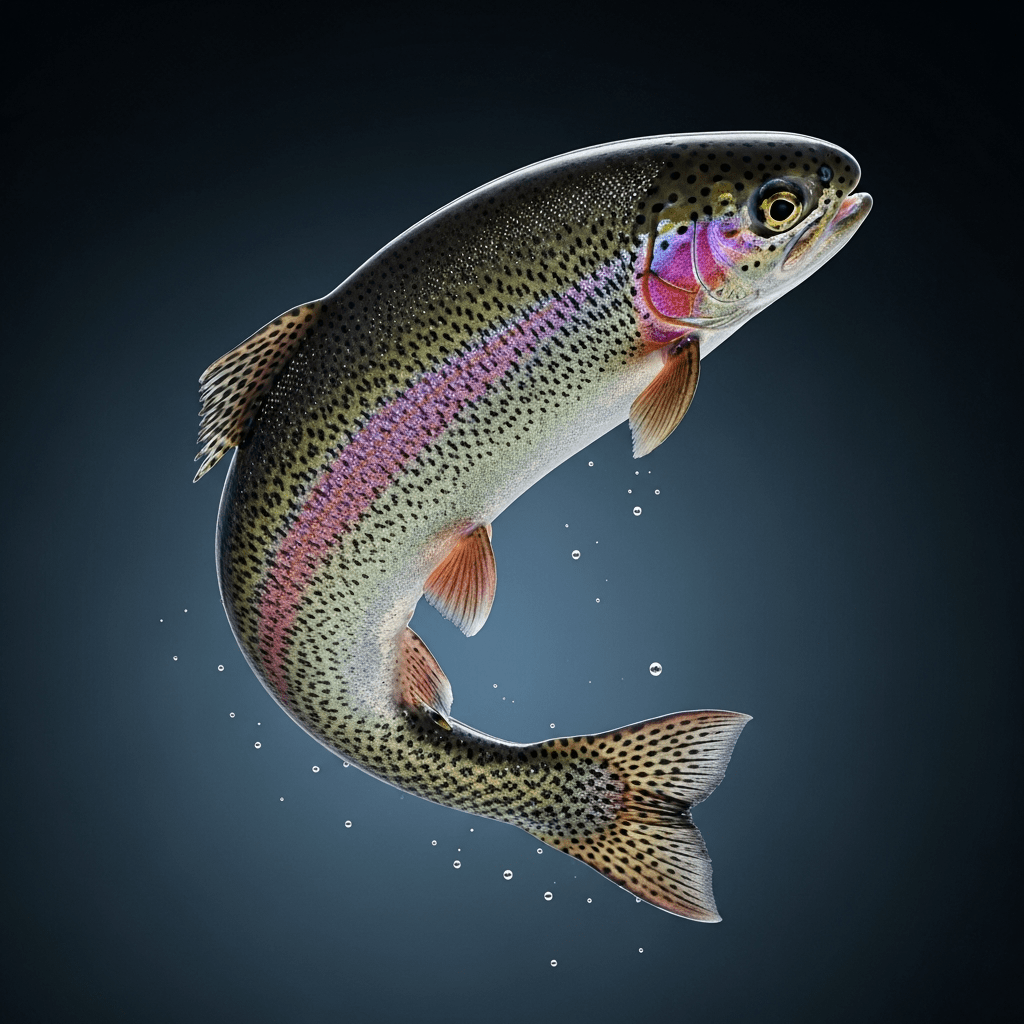
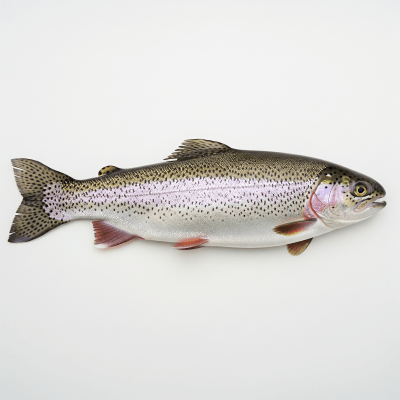
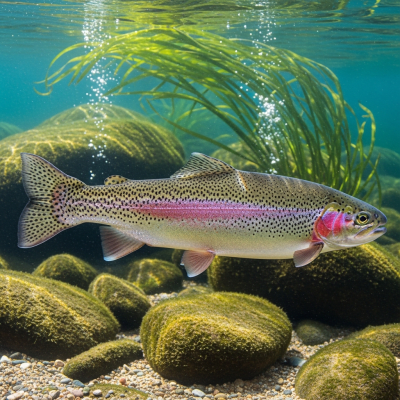
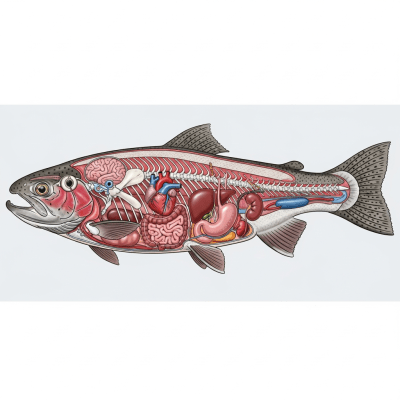
The Rainbow Trout has a streamlined, laterally compressed body typically measuring 20 to 80 centimeters in length and weighing between 1 and 8 kilograms. Its most distinctive feature is a prominent pink to red lateral stripe running along the sides, complemented by black spots scattered across the back, dorsal fin, and tail, set against a silvery belly that gleams in clear waters.
Adapted to cool, well-oxygenated freshwater habitats, Rainbow Trout exhibit rapid growth and are prized for their fighting spirit, making them a favorite among recreational anglers. Their anadromous Steelhead form migrates between freshwater and marine environments. Humans utilize them extensively in aquaculture and conservation stocking programs, benefiting from their resilience and palatable flesh.
Bring this kind into your world illustrated posters, mugs, and shirts.

Archival print, museum-grade paper
Buy Poster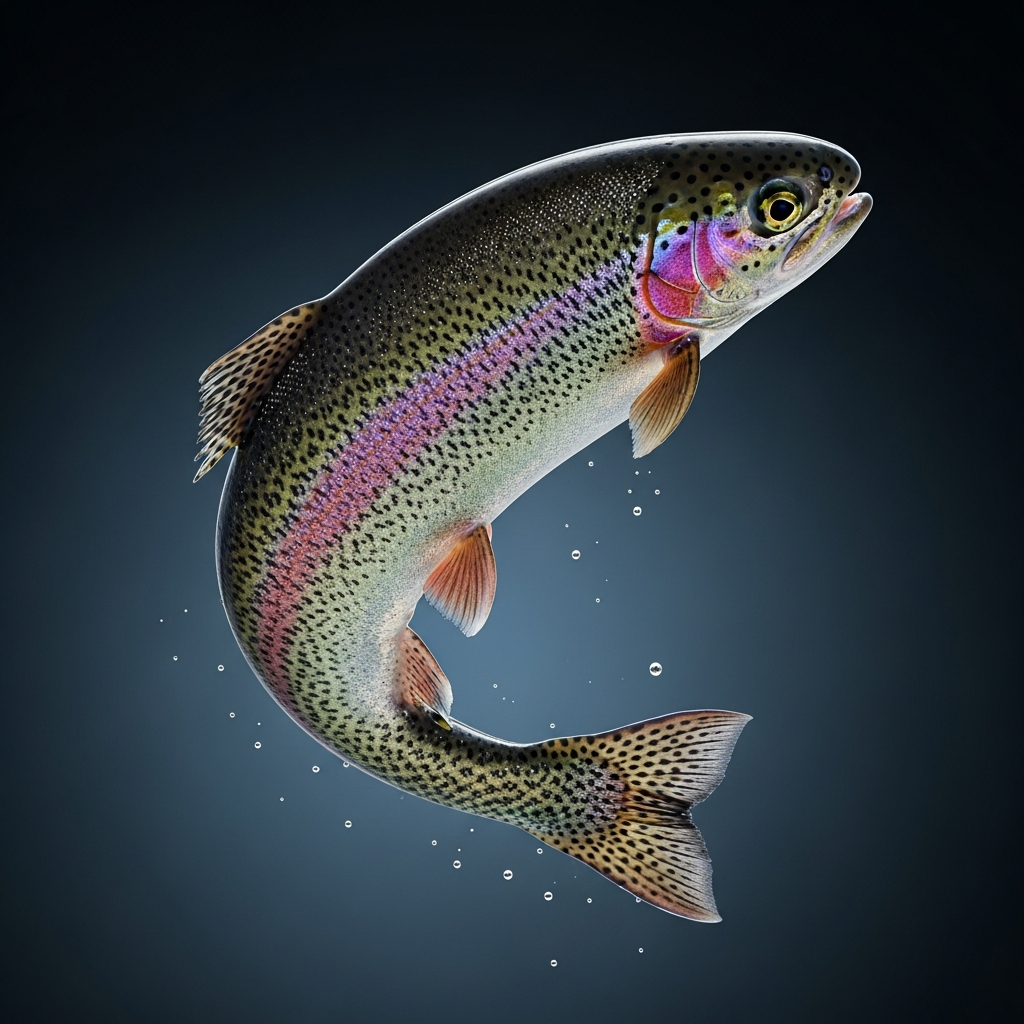
Stoneware mug, dishwasher safe
Buy Mug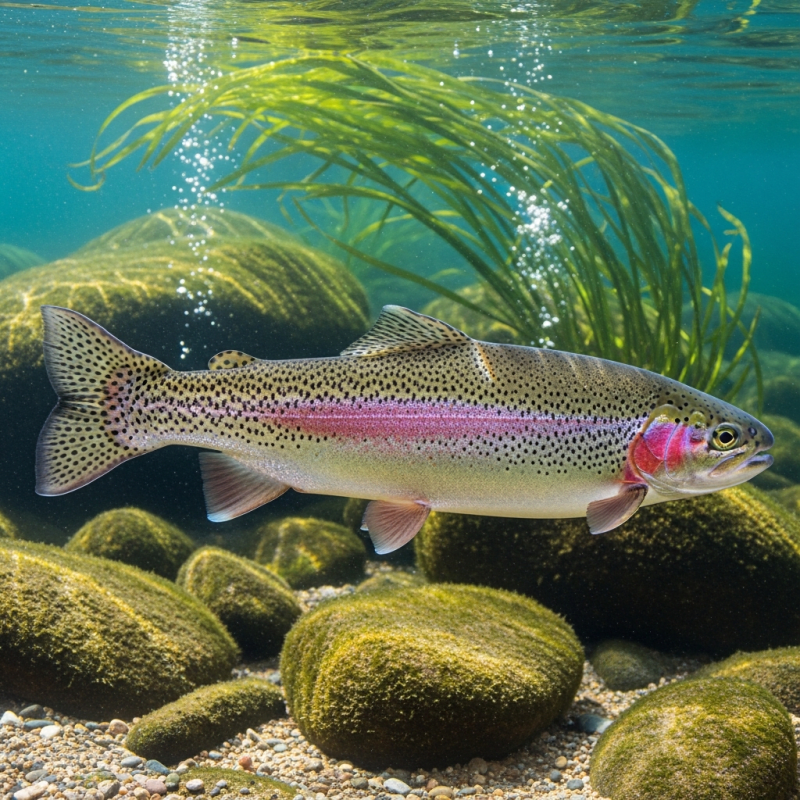
Soft cotton tee, unisex sizes
Buy ShirtRainbow Trout hold a prominent place in recreational fishing culture due to their spirited fight and accessibility. They also feature in conservation efforts and scientific research as a model species. Regionally, they are known by various names such as Steelhead, Forelle, and Niji-masu, reflecting their global cultural reach.
Rainbow Trout inhabit freshwater ecosystems, favoring cool, well-oxygenated rivers, streams, and lakes. Their native range covers the Pacific drainages of North America, from Alaska through Canada and the United States down to northern Mexico. Due to widespread introductions, they are now established in many regions worldwide, thriving in diverse freshwater habitats.

Rainbow Trout are opportunistic feeders, consuming a varied diet that includes aquatic insects, crustaceans, small fish, and other invertebrates. They rely on keen eyesight and swift movements to capture prey, often feeding near the water surface or along streambeds where food is abundant.
Rainbow Trout reproduce by spawning in freshwater rivers and streams, where females lay eggs in gravel nests called redds. The species reaches sexual maturity typically within 2 to 3 years. Some populations exhibit anadromous behavior, migrating to the ocean as Steelhead before returning to freshwater to spawn, while others remain resident in freshwater throughout their lives.
Rainbow Trout are among the most widely farmed freshwater fish globally, with intensive aquaculture systems producing yields of 50 to 100 tons per hectare annually. Selective breeding programs focus on enhancing growth rates, disease resistance, and coloration. Commercial fishing targets both wild and farmed stocks, with the species prized for its mild flavor and firm, pink flesh. Recreational fishing also plays a significant role in its economic and cultural value.
While Rainbow Trout populations are generally stable due to widespread distribution and aquaculture support, they face threats from habitat degradation, water pollution, and diseases such as Infectious Hematopoietic Necrosis. Conservation efforts include habitat restoration and regulated stocking programs to maintain genetic diversity and population health.