Northern Pike
The Northern Pike (Esox lucius) is a large, predatory freshwater fish known for its elongated body, sharp teeth, and role as a top ambush predator across the Northern Hemisphere.
The Northern Pike (Esox lucius) is a large, predatory freshwater fish known for its elongated body, sharp teeth, and role as a top ambush predator across the Northern Hemisphere.
First described by Carl Linnaeus in 1758, the Northern Pike is a naturally occurring species native to lakes, rivers, and marshes throughout North America and Eurasia. It has a long evolutionary history without domestication or artificial breeding.
The Northern Pike belongs to the family Esocidae within the genus Esox. It is a member of the bony fishes, distinguished by its predatory adaptations and placement among freshwater species.
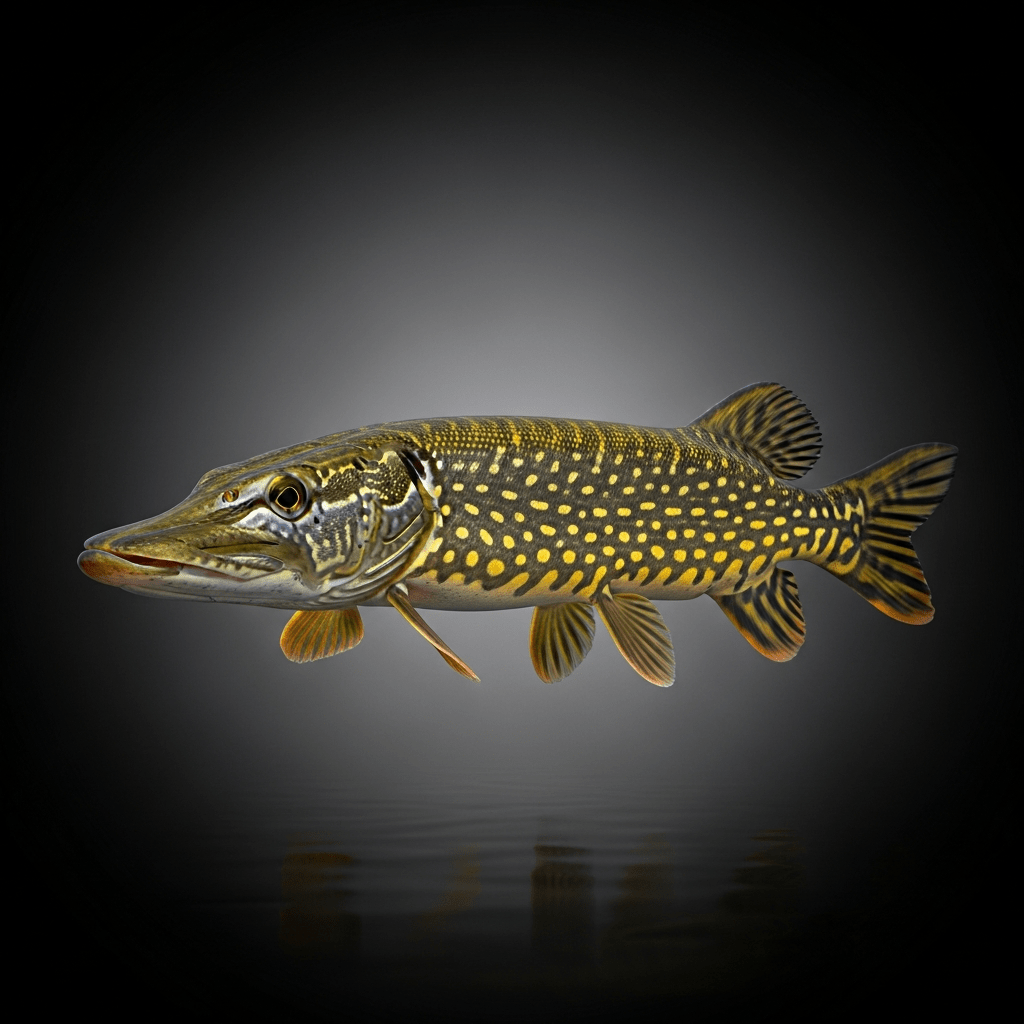
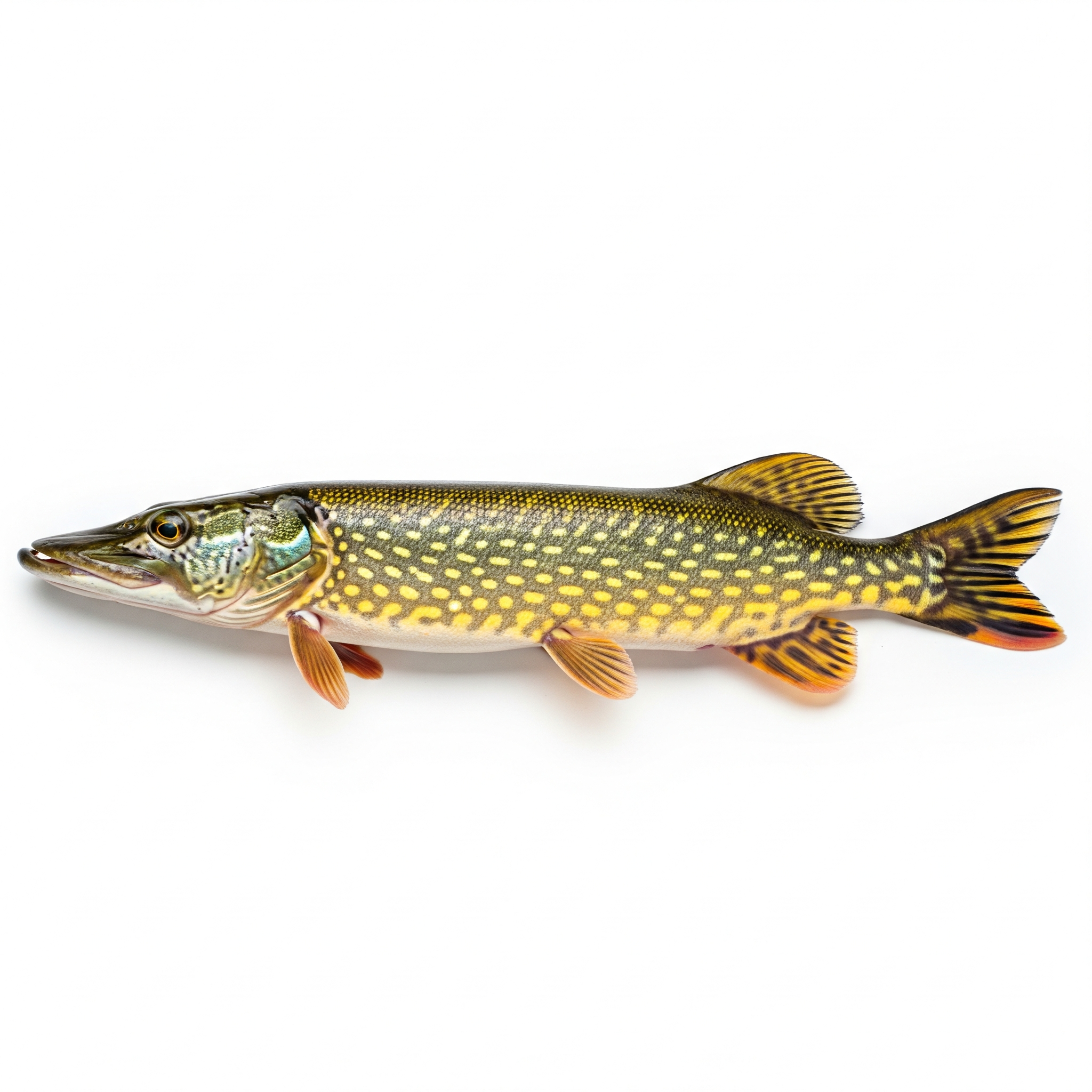
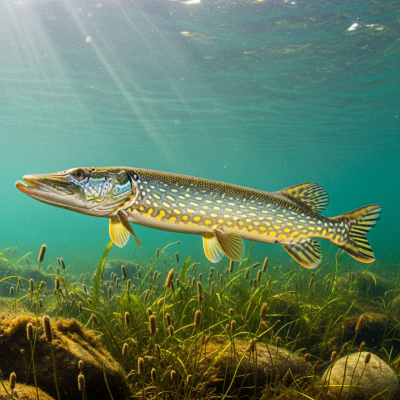
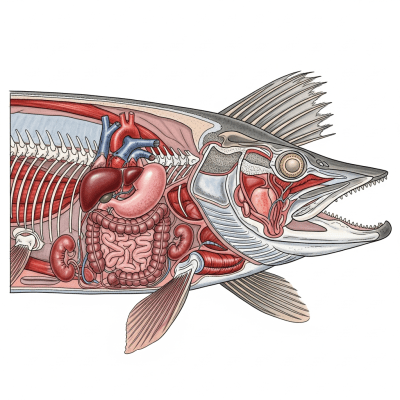
The Northern Pike features an elongated, torpedo-shaped body colored olive green with lighter, irregular spots along its flanks and a pale belly. Its long, flattened head ends in a distinctive duckbill-shaped snout lined with numerous sharp, backward-pointing teeth. The dorsal and anal fins sit far back on the body, enhancing its ability to accelerate rapidly during ambush hunting.
As a solitary and territorial predator, the Northern Pike relies on stealth and sudden bursts of speed to capture fish, amphibians, and occasionally small mammals or birds. It is highly valued in recreational fishing for its size and fighting spirit, contributing to angling tourism and local economies.
Bring this kind into your world illustrated posters, mugs, and shirts.
Archival print, museum-grade paper
Buy Poster
Stoneware mug, dishwasher safe
Buy Mug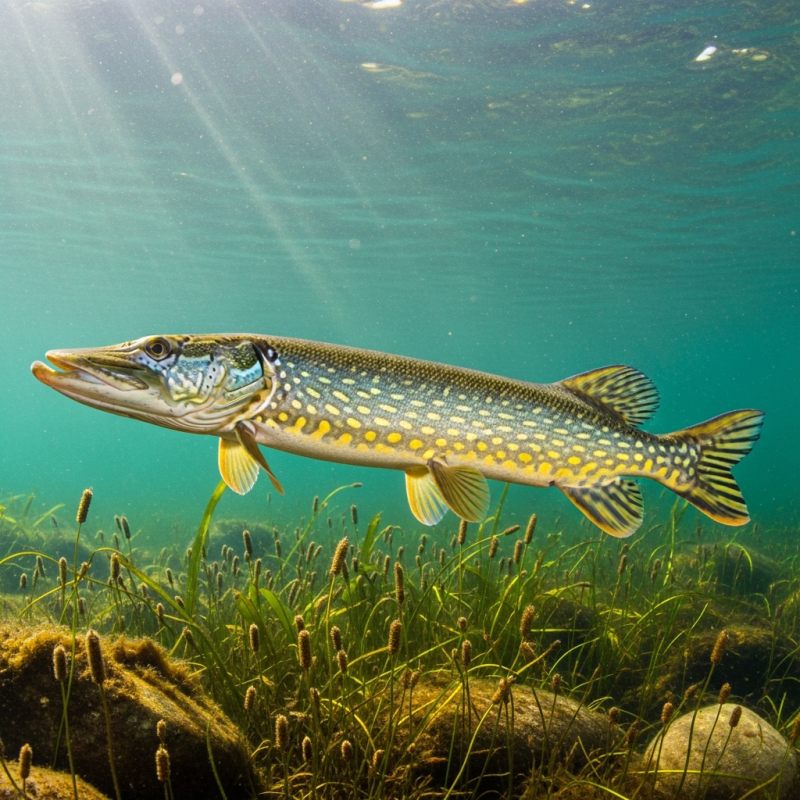
Soft cotton tee, unisex sizes
Buy ShirtThe Northern Pike holds a prominent place in sport fishing culture across Europe, Russia, and North America. Its reputation as a fierce fighter makes it a prized catch among anglers, while its presence in regional folklore and cuisine underscores its cultural importance.
The Northern Pike thrives in freshwater habitats such as lakes, rivers, and marshes throughout the Northern Hemisphere. Its range spans much of North America and Eurasia, favoring cool waters with abundant vegetation that provides cover for ambush hunting.

As a voracious piscivore, the Northern Pike feeds mainly on fish and amphibians, using stealth and rapid acceleration to ambush prey. Occasionally, it will consume small mammals or birds that venture near the water’s edge.
Spawning takes place in spring within shallow, vegetated freshwater environments. The eggs adhere to submerged plants, and upon hatching, larvae are independent and begin feeding immediately. Growth is rapid during juvenile stages, influenced by environmental conditions.
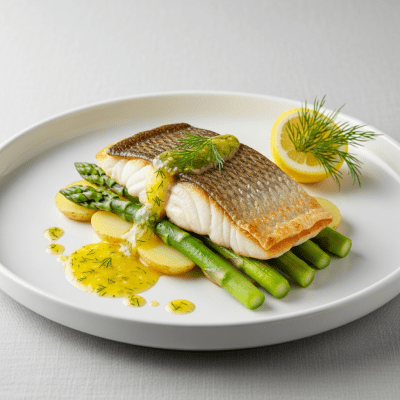
While the Northern Pike is a popular target for sport and commercial fisheries, large-scale aquaculture is uncommon and experimental. Growth rates are rapid in juveniles under favorable conditions, but the species’ moderately bony flesh limits extensive commercial processing. It is commonly consumed fresh, smoked, pickled, or prepared in traditional dishes like fish cakes and quenelles.
The Northern Pike is generally resilient but faces threats from habitat degradation and overfishing. It is sensitive to environmental changes that reduce water quality or vegetation cover. Current population trends remain stable in many regions, supported by conservation measures and regulated fishing practices.