Mandarinfish
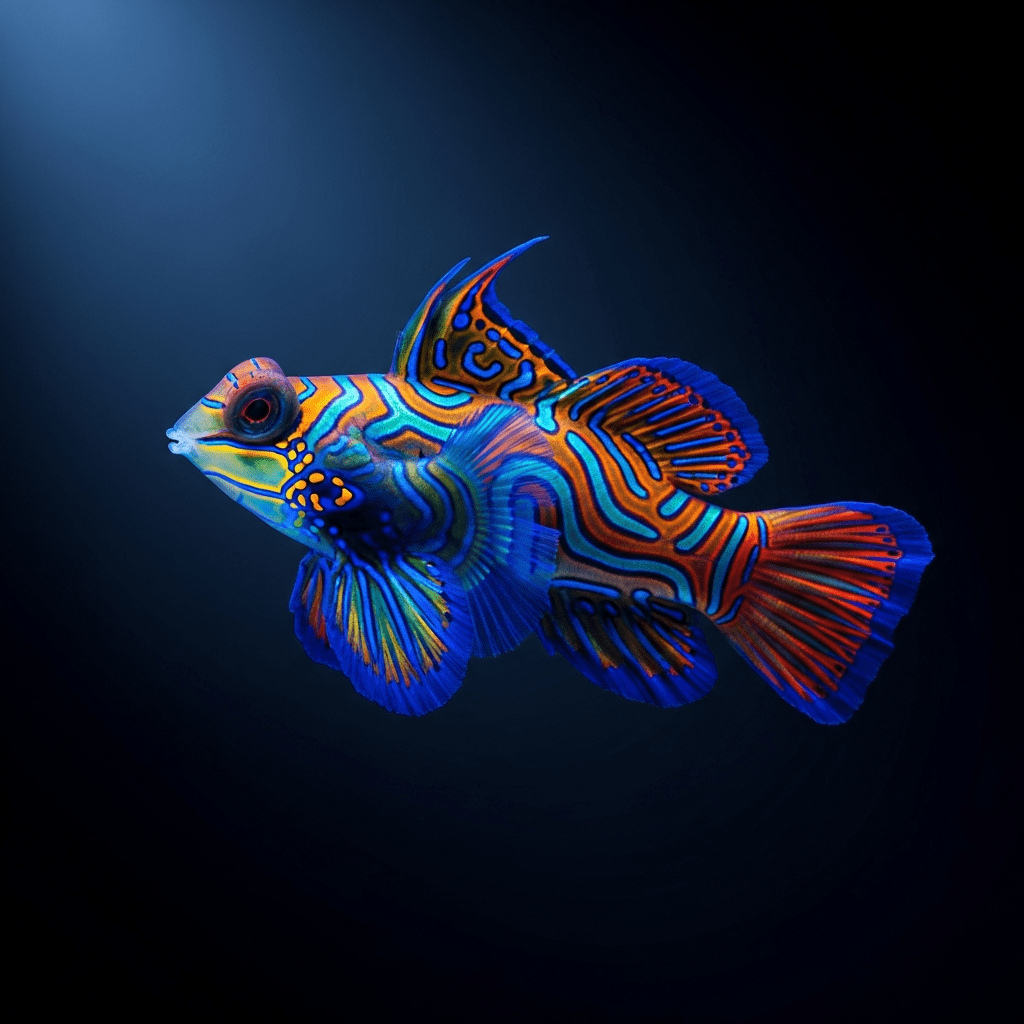
The mandarinfish (Synchiropus splendidus) is a small, vibrantly colored marine fish known for its psychedelic blue, orange, and green patterns and unique scaleless skin covered in a protective mucus.
The mandarinfish (Synchiropus splendidus) is a small, vibrantly colored marine fish known for its psychedelic blue, orange, and green patterns and unique scaleless skin covered in a protective mucus.
First scientifically described in 1927 by Albert William Herre, the mandarinfish originates from the western Pacific, particularly the Indo-Pacific region. It has no documented history of domestication or hybridization, with all known individuals tracing back to wild populations in coral reef habitats.
The mandarinfish belongs to the family Callionymidae, commonly known as dragonets. Within this family, it is classified under the genus Synchiropus and species splendidus, placing it among small, benthic marine fishes prized for their striking appearance.
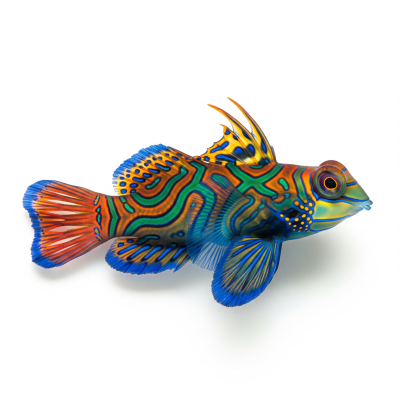
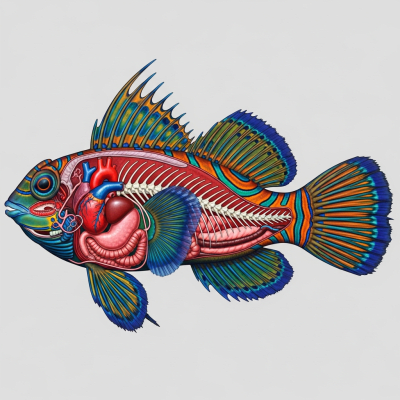
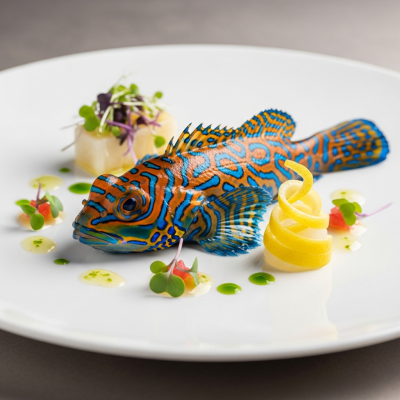
The mandarinfish has an elongated, laterally compressed body reaching up to 6 cm in length. Its scaleless skin is coated with a thick mucus layer that protects against parasites and predators. Its coloration is a vivid tapestry of irregular blue stripes and spots set against a background of orange and green. Distinctive features include two dorsal fins—with males bearing an extended first dorsal spine—and a fan-shaped caudal fin, all contributing to its delicate and ornate form.
Mandarinfish lead a secretive, benthic lifestyle, often hiding among coral rubble and lagoon substrates. They feed on small crustaceans and invertebrates, using a specialized mouth to pick prey from crevices. Their slow growth and specialized diet make them challenging to breed in captivity. While not used for food, they are highly valued in the ornamental aquarium trade for their peaceful nature and dazzling colors.
Bring this kind into your world illustrated posters, mugs, and shirts.

Archival print, museum-grade paper
Buy Poster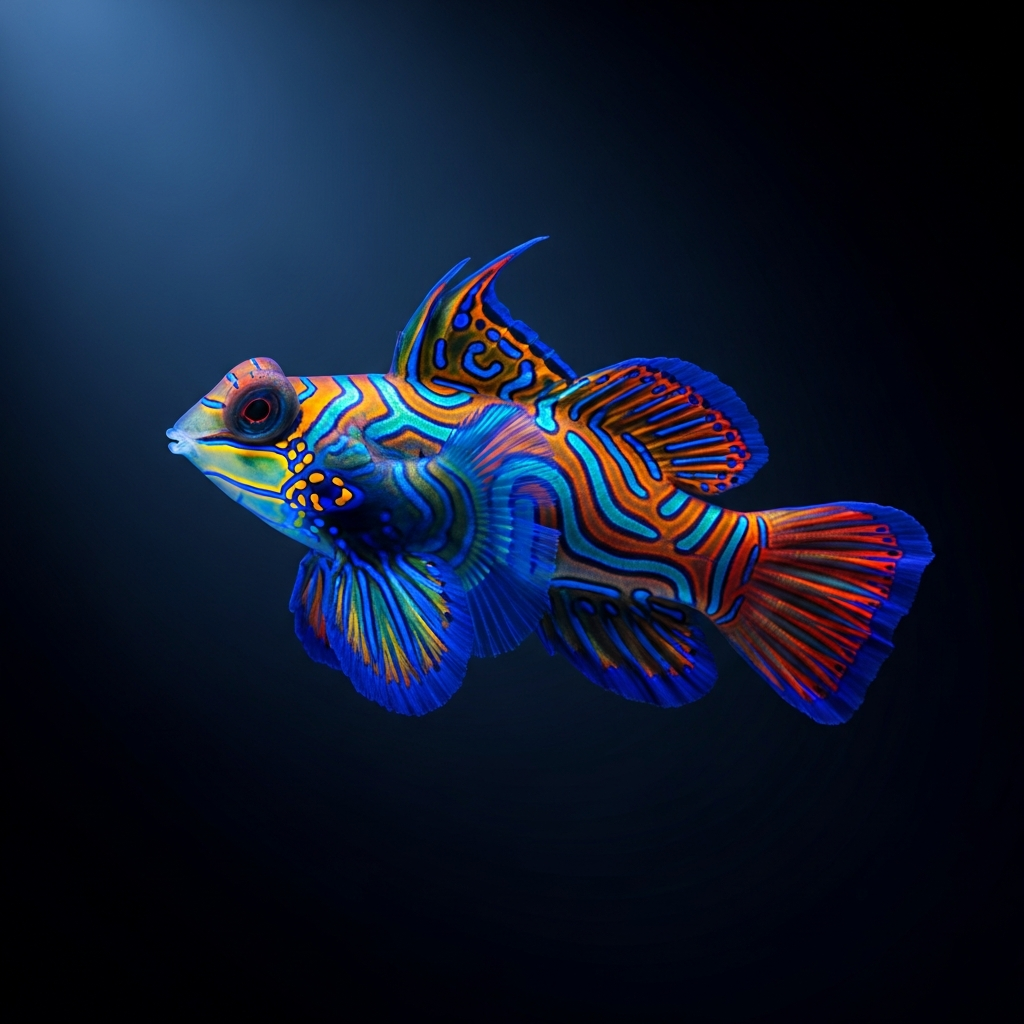
Stoneware mug, dishwasher safe
Buy Mug
Soft cotton tee, unisex sizes
Buy ShirtCelebrated primarily within the aquarium hobby, the mandarinfish is prized for its stunning coloration and peaceful demeanor. Its psychedelic patterns have inspired admiration and fascination, making it a popular subject in marine-themed art and aquarium displays. However, it holds no notable role in culinary traditions or broader cultural mythology.
The mandarinfish inhabits marine environments of the western Pacific, particularly coral reefs and lagoon substrates in the Indo-Pacific region. It is a benthic species, often found hiding among coral rubble where it can forage and avoid predators.
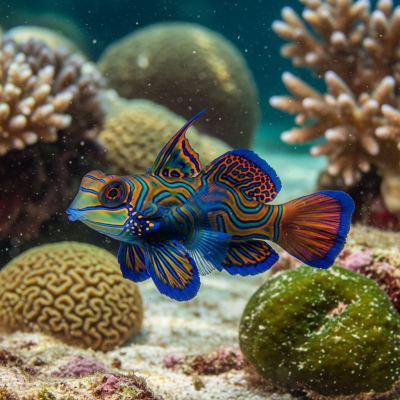
Mandarinfish feed primarily on small crustaceans and other invertebrates. They use a specialized mouth to pick prey from tight crevices within coral rubble, relying on their secretive behavior to forage effectively in their benthic habitat.
While detailed life cycle information is limited, mandarinfish exhibit sexual dimorphism, with males larger and possessing an extended dorsal spine. They have a slow growth rate and spawn in the wild, but captive breeding remains difficult due to their dietary and environmental needs. Lifespan in captivity typically ranges from 2 to 4 years.
Mandarinfish are not commercially fished or widely farmed due to their small size and specialized diet. Although some limited captive breeding programs exist, aquaculture remains challenging and uncommon. Their primary economic value lies in the ornamental aquarium trade, where wild-caught specimens are most common.
The mandarinfish currently faces no major conservation threats and is not targeted by commercial fisheries. Its reliance on coral reef habitats makes it indirectly vulnerable to reef degradation and water quality decline. Protective measures focus on habitat conservation and responsible aquarium trade practices.