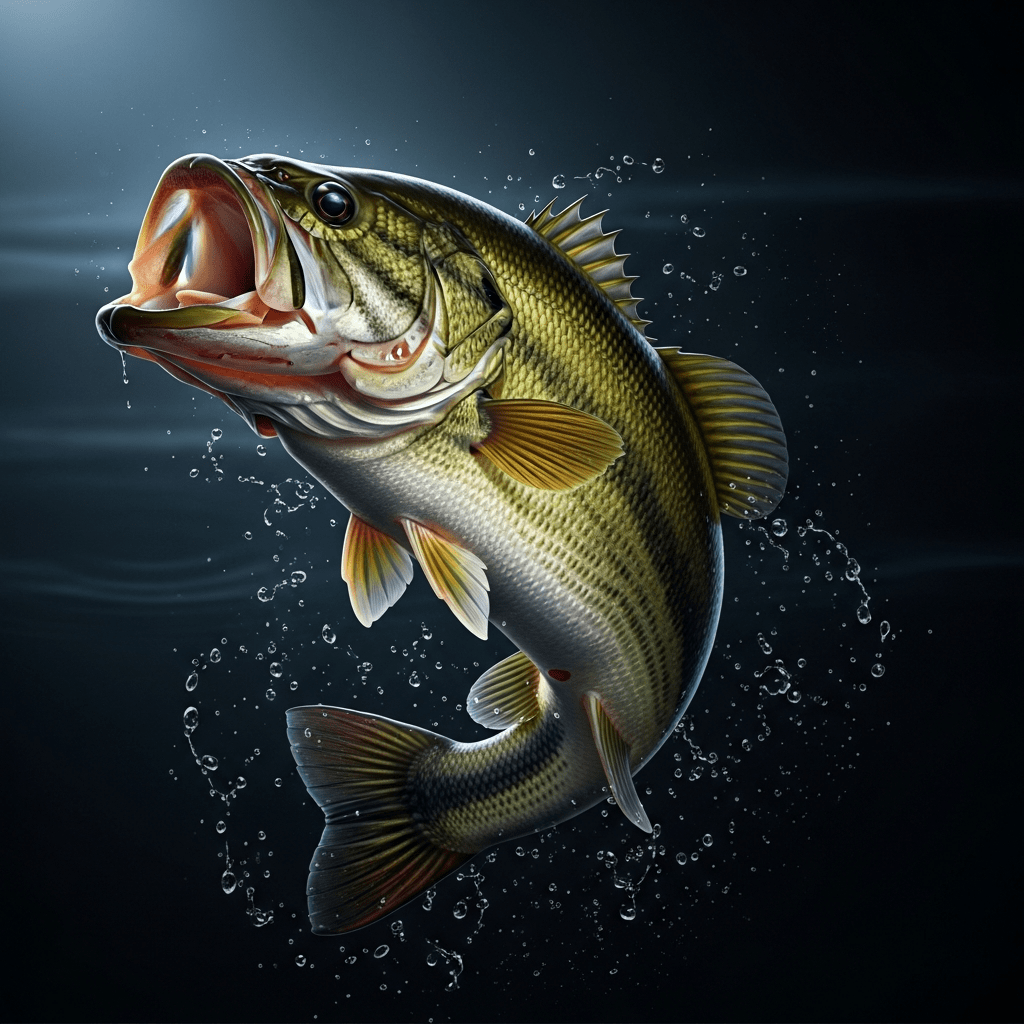
Largemouth Bass
The largemouth bass (Micropterus salmoides) is a robust freshwater fish known for its expansive mouth extending beyond the eye, celebrated as a premier sport fish across North America and beyond.
The largemouth bass (Micropterus salmoides) is a robust freshwater fish known for its expansive mouth extending beyond the eye, celebrated as a premier sport fish across North America and beyond.
First described in 1802 by French naturalist Bernard Germain de Lacépède, the largemouth bass is native to the eastern and central United States, northern Mexico, and southern Canada. Originally a wild species, it has since been introduced worldwide for sport fishing and aquaculture, with regional strains like the Florida and northern bass emerging through selective breeding and natural variation.
Belonging to the family Centrarchidae and genus Micropterus, the largemouth bass is a member of the sunfish family, a group of freshwater bony fish renowned for their ecological and recreational importance.
The largemouth bass features a robust, elongated body with a distinctive large mouth whose upper jaw extends beyond the rear edge of the eye. Its coloration ranges from greenish to olive on the back, fading to lighter sides marked by a dark lateral stripe, and a white belly. A deep notch separates its spiny and soft dorsal fins. Adults typically measure 30–60 cm in length, with some reaching nearly a meter and weighing up to 10 kg.
As an opportunistic predator, the largemouth bass feeds on fish, amphibians, crustaceans, and insects. It thrives in a variety of freshwater habitats including lakes, rivers, reservoirs, and ponds. Known for rapid growth in warm, productive waters, it plays a vital role in recreational fishing due to its aggressive strikes and spirited fight, making it a favorite among anglers.
Bring this kind into your world illustrated posters, mugs, and shirts.
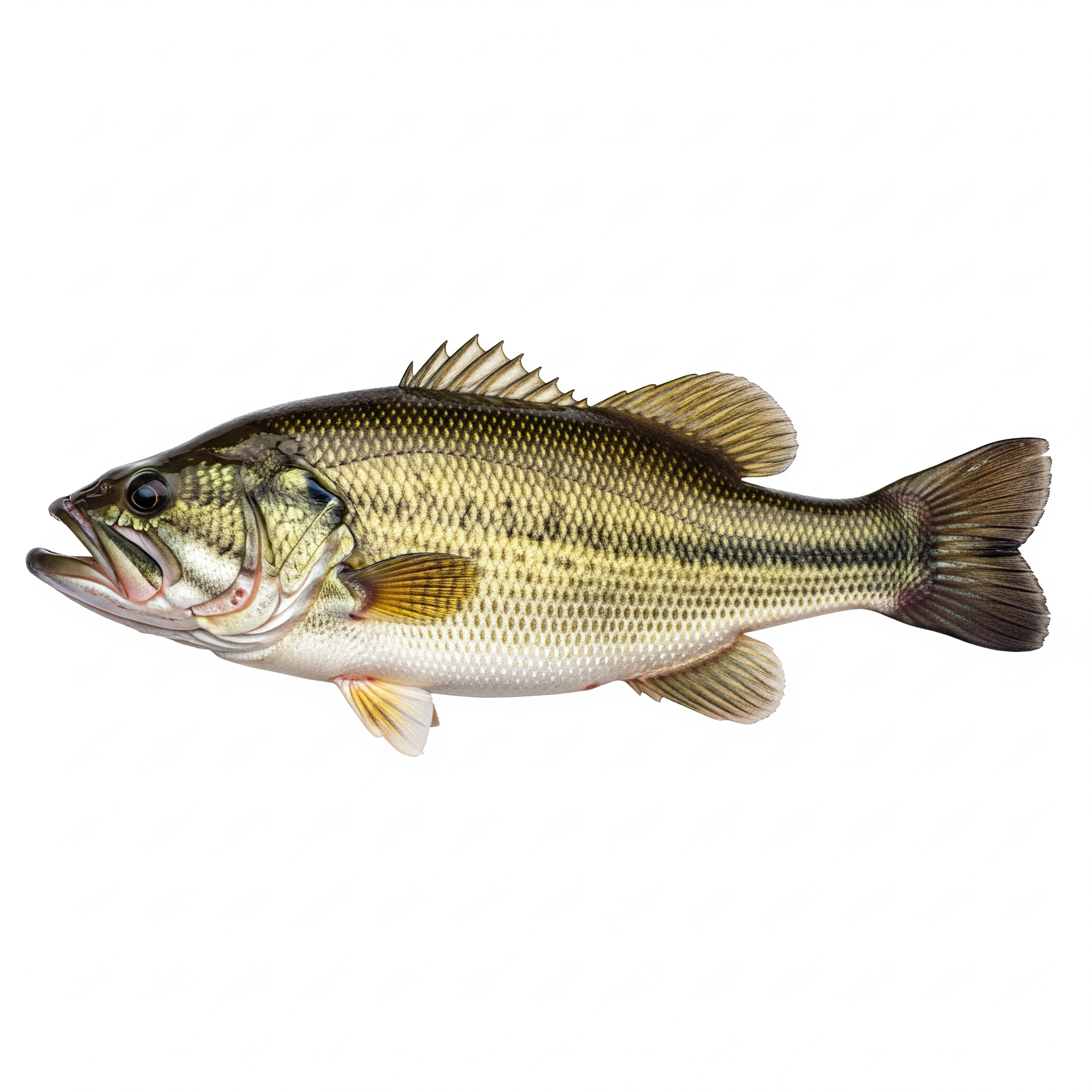
Archival print, museum-grade paper
Buy Poster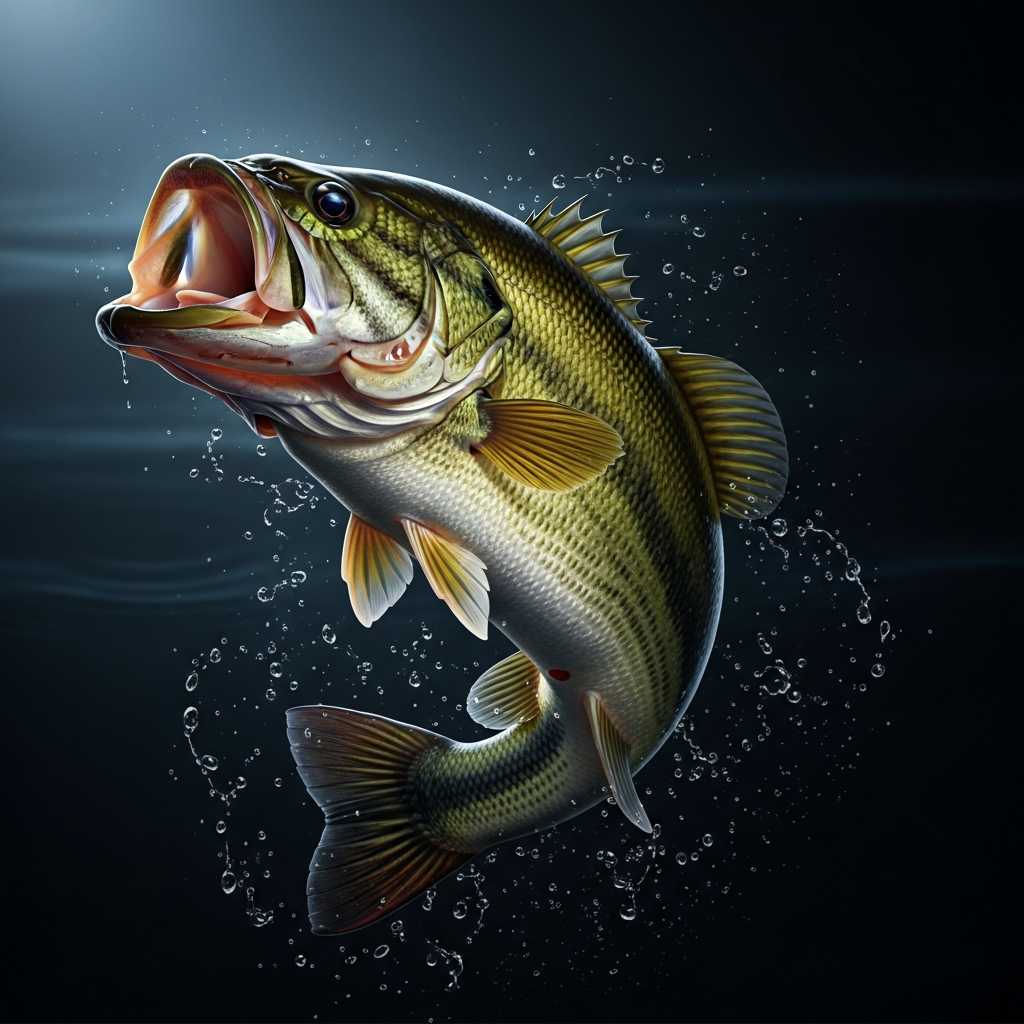
Stoneware mug, dishwasher safe
Buy Mug
Soft cotton tee, unisex sizes
Buy ShirtHighly emblematic of freshwater sport fishing in the United States, the largemouth bass holds a prominent place in angling culture, supporting tournaments and local economies. Its image is often associated with outdoor recreation and conservation efforts, symbolizing the vitality of freshwater ecosystems.
The largemouth bass inhabits freshwater environments such as lakes, reservoirs, rivers, and ponds across its native range in eastern and central North America, including parts of northern Mexico and southern Canada. Due to extensive stocking, it now occurs worldwide in similar freshwater habitats.

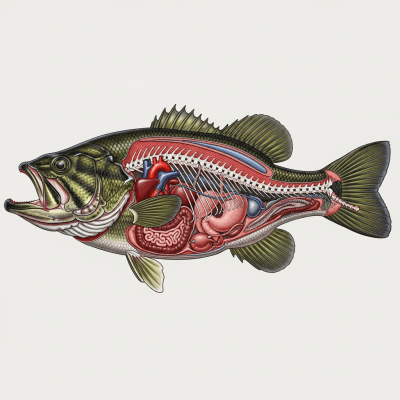

This species is an opportunistic predator, feeding primarily on smaller fish, amphibians, crustaceans, and insects. It uses its large mouth to ambush prey, adapting its diet based on availability within its freshwater habitat.
Spawning occurs in spring when water temperatures reach 15–20°C. Males build and guard nests in shallow freshwater areas such as lakes and rivers. The species exhibits parental care, with males protecting eggs and fry until they are capable of independent survival.
Largemouth bass is a cornerstone of recreational fishing, prized for its fighting ability and aggressive behavior. It is farmed in some regions for food and stocking purposes, with selective breeding producing strains like the Florida and northern bass. Commercial harvest is limited by regulations and consumer preferences, with common market forms including live and fresh fish.
While largemouth bass populations are generally stable and widespread due to stocking and adaptability, they face threats from habitat loss, water quality degradation, and diseases such as largemouth bass virus (LMBV). Conservation efforts focus on habitat protection and sustainable fishing practices to maintain healthy populations.