Guppy
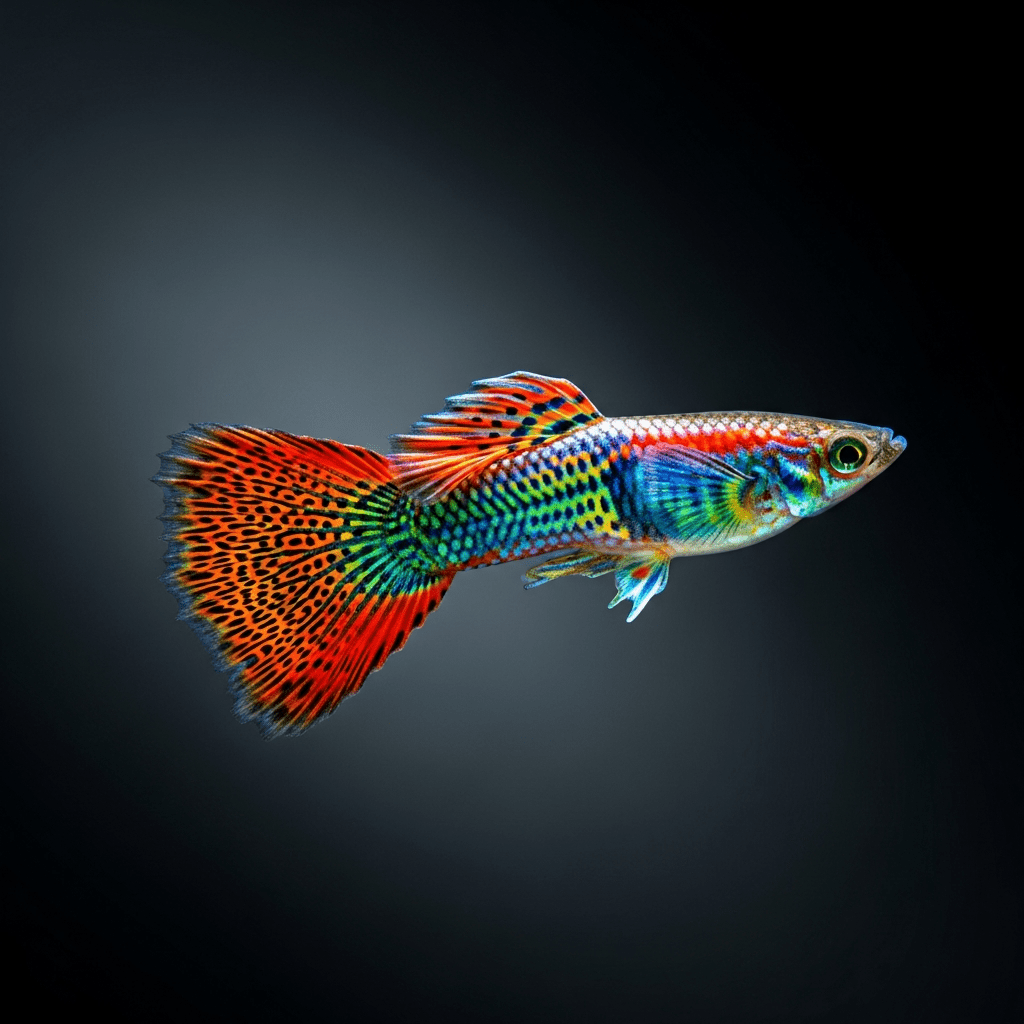
The guppy (Poecilia reticulata) is a small, adaptable freshwater fish celebrated for its vibrant colors, sexual dimorphism, and prolific live-bearing reproduction, making it a favorite in aquariums worldwide.
The guppy (Poecilia reticulata) is a small, adaptable freshwater fish celebrated for its vibrant colors, sexual dimorphism, and prolific live-bearing reproduction, making it a favorite in aquariums worldwide.
First scientifically described in 1859 by Wilhelm Peters, the guppy originates from northeastern South America, including Venezuela, Guyana, Suriname, and Trinidad and Tobago. Named after Robert John Lechmere Guppy, who collected specimens in Trinidad in 1866, this species has since been selectively bred globally, producing numerous domesticated strains prized for their color and fin variations.
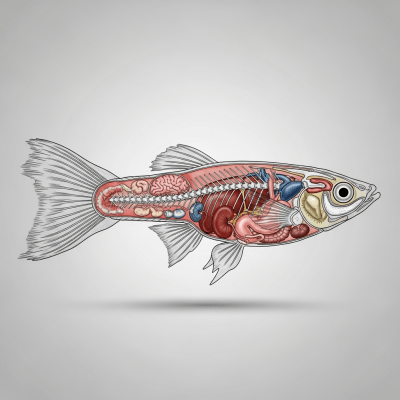
Belonging to the family Poeciliidae and genus Poecilia, the guppy is classified as Poecilia reticulata. It is part of the diverse group of live-bearing freshwater fish known for their reproductive strategy and ornamental appeal within the broader bony fish class.
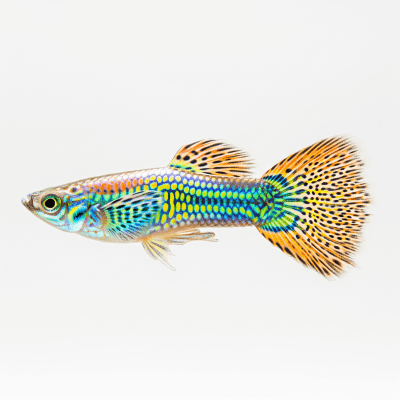
Guppies exhibit striking sexual dimorphism: males are small (1.5–3.5 cm) and display vivid colors with elaborate tail and dorsal fins, while females are larger (3–6 cm) and more plainly colored. Their form is defined by these ornamental traits, which make them visually captivating and easily distinguishable between sexes.
Guppies are prolific breeders with an ovoviviparous reproductive strategy, where females can store sperm and produce multiple broods from a single mating. Their adaptability allows them to thrive in various freshwater habitats, and they are widely used in aquariums, scientific research on genetics and evolution, and in some regions for mosquito control due to their predation on larvae.
Bring this kind into your world illustrated posters, mugs, and shirts.
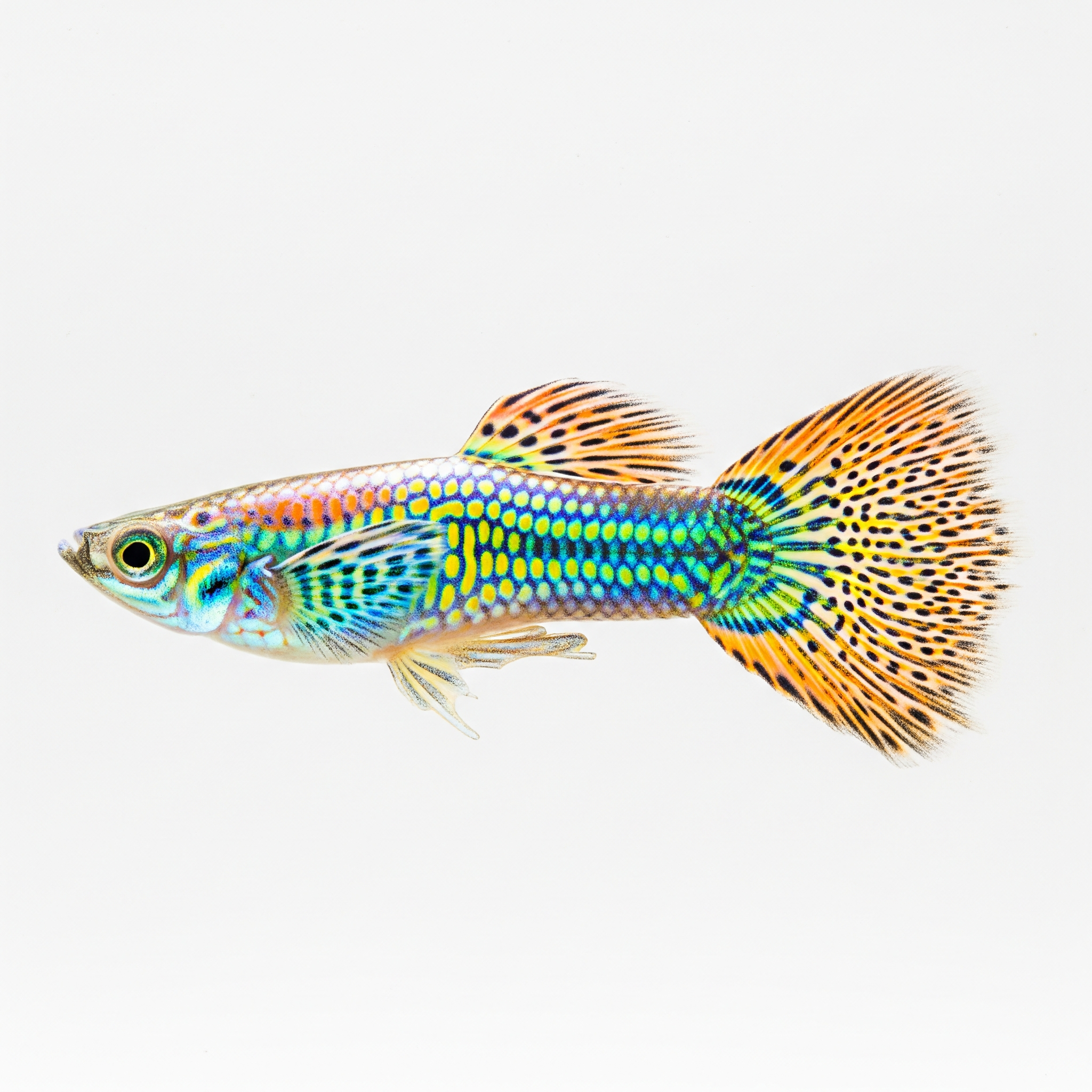
Archival print, museum-grade paper
Buy Poster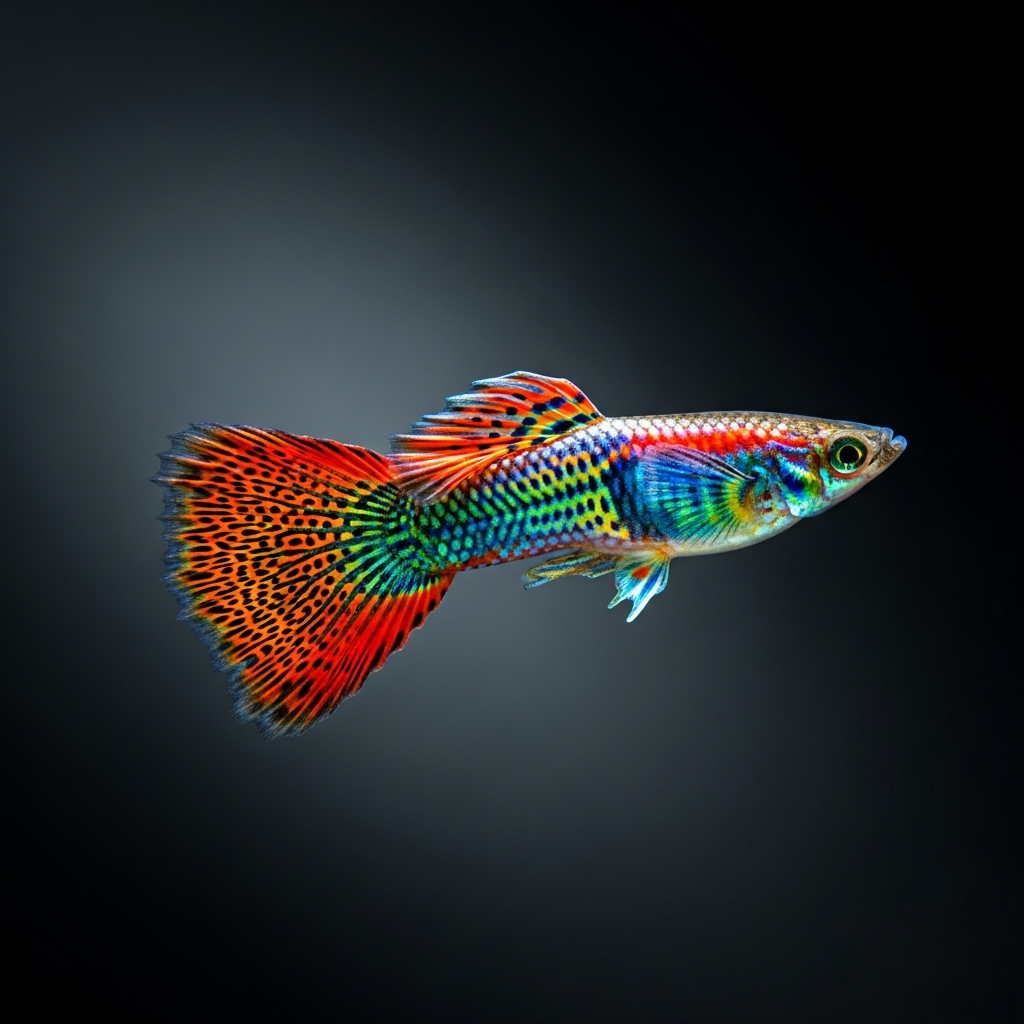
Stoneware mug, dishwasher safe
Buy Mug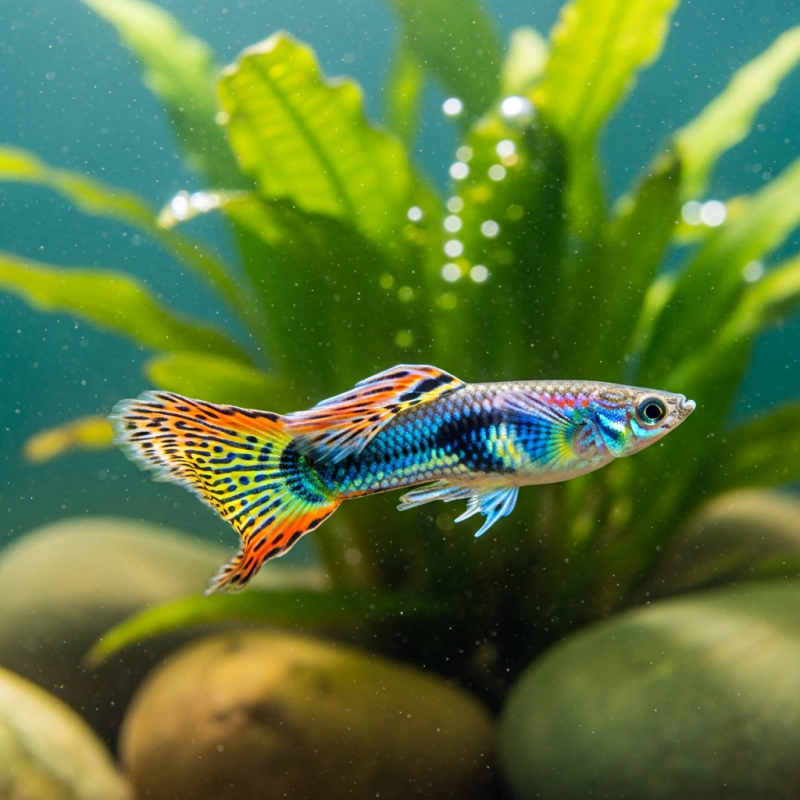
Soft cotton tee, unisex sizes
Buy ShirtAs one of the most popular ornamental fish globally, guppies hold a special place in aquarium culture and scientific study. Their vibrant colors and ease of breeding have inspired hobbyists and researchers alike. Additionally, their role in mosquito control has linked them to public health efforts, though ecological concerns have arisen from their introduction outside native ranges.
Native to northeastern South America, guppies inhabit freshwater streams and rivers in Venezuela, Guyana, Suriname, and Trinidad and Tobago. They tolerate a temperature range of 22–28°C and moderate salinity, enabling them to thrive in diverse freshwater environments and some brackish waters.

Guppies are omnivorous, feeding on a varied diet that includes algae, detritus, small invertebrates, and prepared aquarium foods. Their flexible feeding habits contribute to their adaptability and success in both wild and captive environments.
Guppies reproduce via ovoviviparity, where females give birth to live young after a gestation of 21 to 30 days. Females can store sperm and produce multiple broods from a single mating. Fry are born fully formed and mature quickly, reaching sexual maturity as early as 2 to 3 months.
Primarily bred for the ornamental fish trade, guppies have numerous selectively bred strains such as Cobra, Tuxedo, Moscow, and Endler’s guppy. Their rapid growth and early maturity make them ideal for aquaculture focused on aquarium supply. Breeding methods emphasize color, fin shape, and pattern enhancements.
Guppies are widespread and abundant in their native range, facing no major threats. Their adaptability and popularity in aquaculture have ensured stable populations. However, introduced populations for mosquito control have raised ecological concerns in some regions, though the species itself is not considered at risk.