
Great White
The Great White Shark (Carcharodon carcharias) is a large, powerful cartilaginous fish known as the ocean's apex predator, recognized worldwide for its size, strength, and ecological importance.
The Great White Shark (Carcharodon carcharias) is a large, powerful cartilaginous fish known as the ocean's apex predator, recognized worldwide for its size, strength, and ecological importance.
First formally described by Carl Linnaeus in 1758 based on specimens from European waters, the Great White Shark has since been identified across global marine habitats. This species has no history of domestication or artificial breeding, existing solely as a wild marine predator.
The Great White Shark belongs to the family Lamnidae within the genus Carcharodon. It is a cartilaginous fish, part of the class Chondrichthyes, which distinguishes it from bony fish by its skeleton made of cartilage rather than bone.
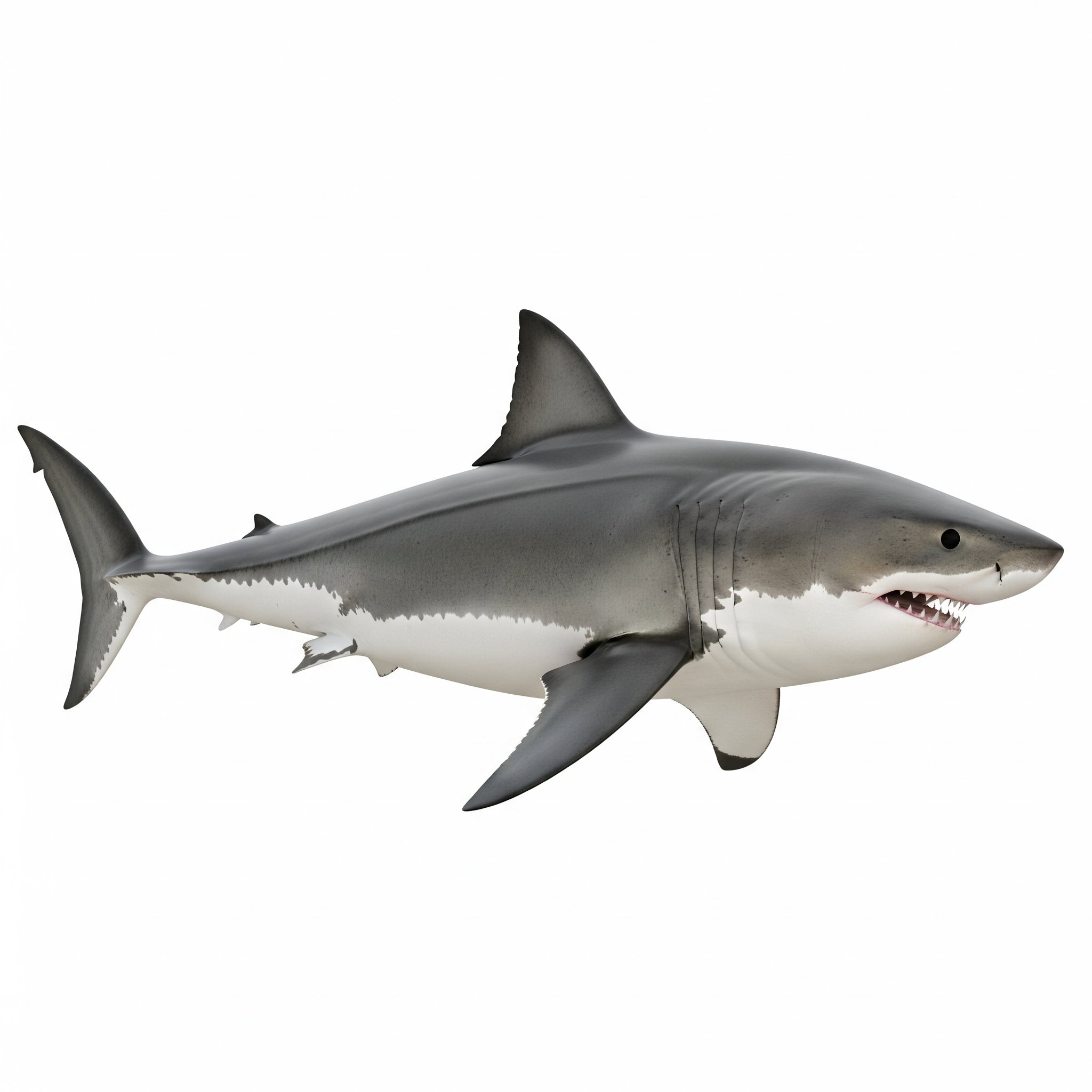
Sporting a fusiform, torpedo-shaped body, the Great White Shark features a pointed conical snout and large, triangular serrated teeth suited for gripping prey. Its coloration exhibits striking countershading, with a white underside and grey to blue-grey dorsal surface, aiding camouflage in the marine environment. Adults typically range from 4 to 6 meters in length, with some reaching up to 6.4 meters and weighing over 1,100 kilograms. A crescent-shaped caudal fin completes its streamlined form, optimized for powerful swimming.
As an apex predator, the Great White Shark plays a crucial role in maintaining marine ecosystem balance by preying on marine mammals, fish, and carrion. It exhibits remarkable endurance and partial endothermy, allowing it to regulate body temperature and sustain high activity levels. While not targeted commercially due to conservation concerns, it is central to ecotourism activities such as cage diving in regions like South Africa, Australia, and Mexico.
Bring this kind into your world illustrated posters, mugs, and shirts.
Archival print, museum-grade paper
Buy Poster
Stoneware mug, dishwasher safe
Buy Mug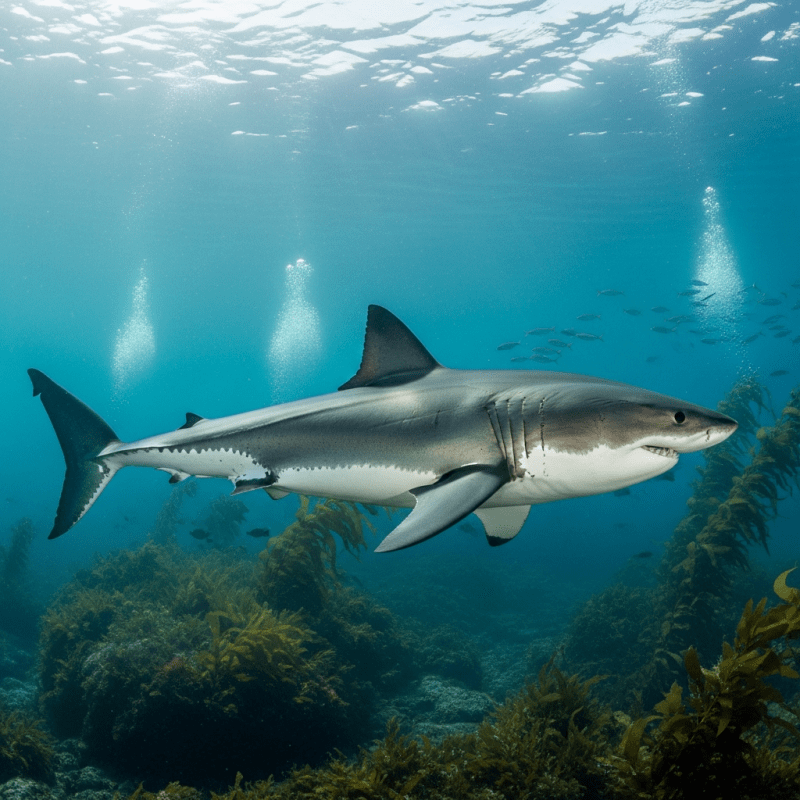
Soft cotton tee, unisex sizes
Buy ShirtThe Great White Shark holds a prominent place in human culture, symbolizing both fear and fascination. Its formidable reputation has inspired countless works of art, literature, and film, notably shaping the popular image of sharks worldwide. Historically, its jaws, teeth, and fins have been prized as trophies and used in traditional medicine, while today it contributes significant economic value through ecotourism ventures.
The Great White Shark inhabits marine environments worldwide, favoring coastal and offshore waters with temperatures between 12 and 24°C. Its distribution spans temperate and subtropical seas globally, with notable populations near South Africa, Australia, and parts of the Americas.
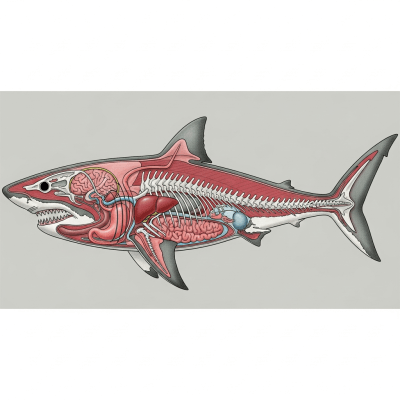

As an apex predator, the Great White Shark feeds on a variety of marine life including seals, sea lions, fish, and carrion. Its large serrated teeth and powerful jaws enable it to capture and consume sizeable prey, often employing ambush tactics aided by stealth and speed.
The Great White Shark reproduces through ovoviviparity, where embryos develop inside eggs that hatch within the mother’s body, resulting in live birth. Females typically give birth to litters of 2 to 14 pups after an approximately 11-month gestation. Sexual maturity is reached relatively late, between 14 and 18 years, contributing to its slow population growth.
The Great White Shark is not subject to aquaculture or farming due to its size, slow growth, and ecological requirements. Commercial fishing targeting this species is limited and often illegal, with some historical exploitation for jaws, teeth, and fins. Current regulations restrict international trade to protect wild populations.
The Great White Shark faces threats from overfishing, bycatch, and habitat degradation. It is protected under international agreements such as CITES Appendix II, which regulates trade to prevent exploitation. Although population trends vary regionally, conservation efforts focus on habitat protection, fishing restrictions, and promoting sustainable ecotourism to ensure its survival.