Origin Story

First formally described by Carl Linnaeus in 1758, the European eel originates from a single, panmictic population that spawns in the remote Sargasso Sea. Its larvae drift across the Atlantic Ocean to continental waters, where they mature before returning to their marine birthplace to reproduce. No domesticated strains exist, and aquaculture depends entirely on wild-caught juveniles known as glass eels.

Classification

Belonging to the family Anguillidae, the European eel is the sole species within the genus Anguilla in its region, classified scientifically as Anguilla anguilla. It is part of the broader group of bony fishes distinguished by their elongated, serpentine form and catadromous reproductive strategy.

Appearance or Form

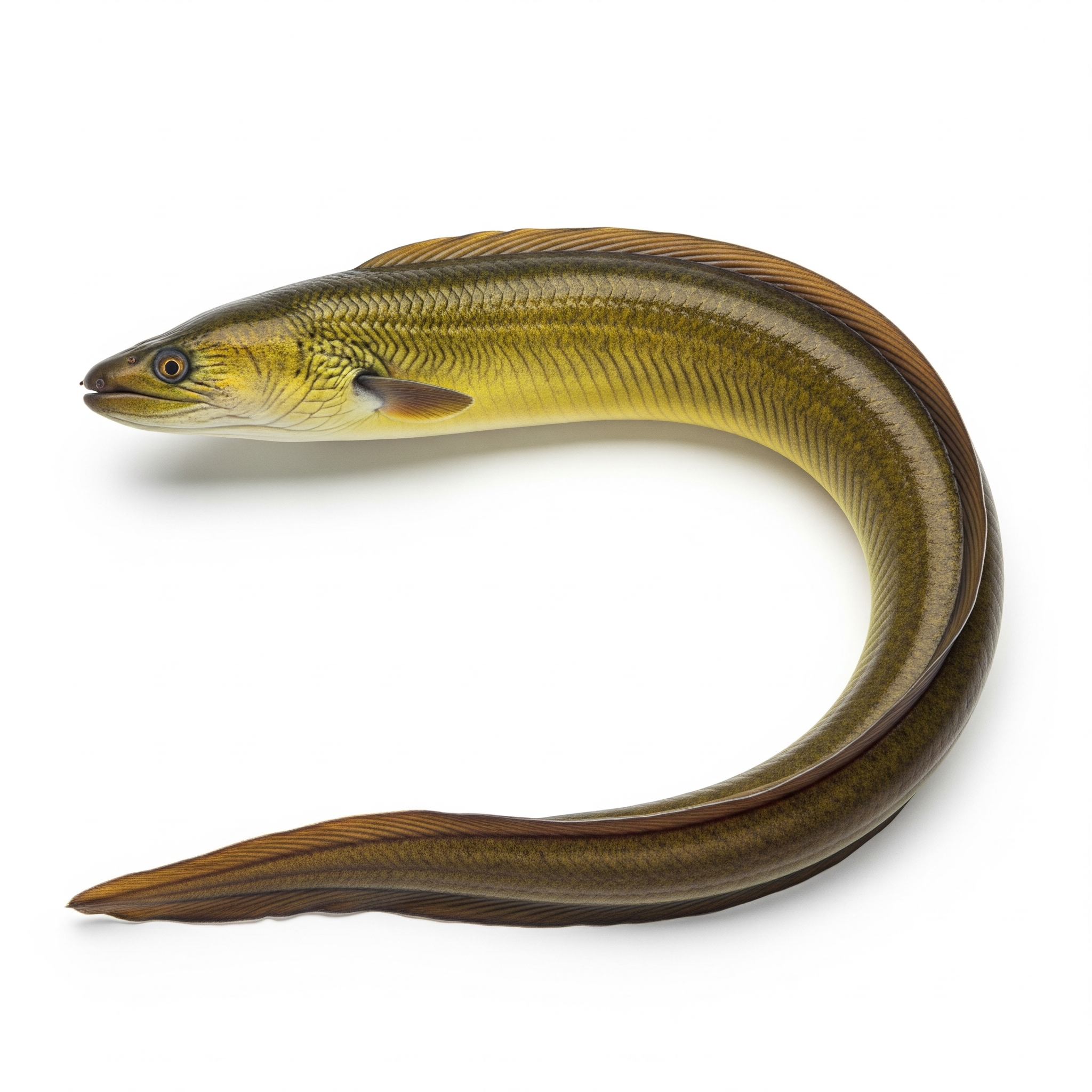
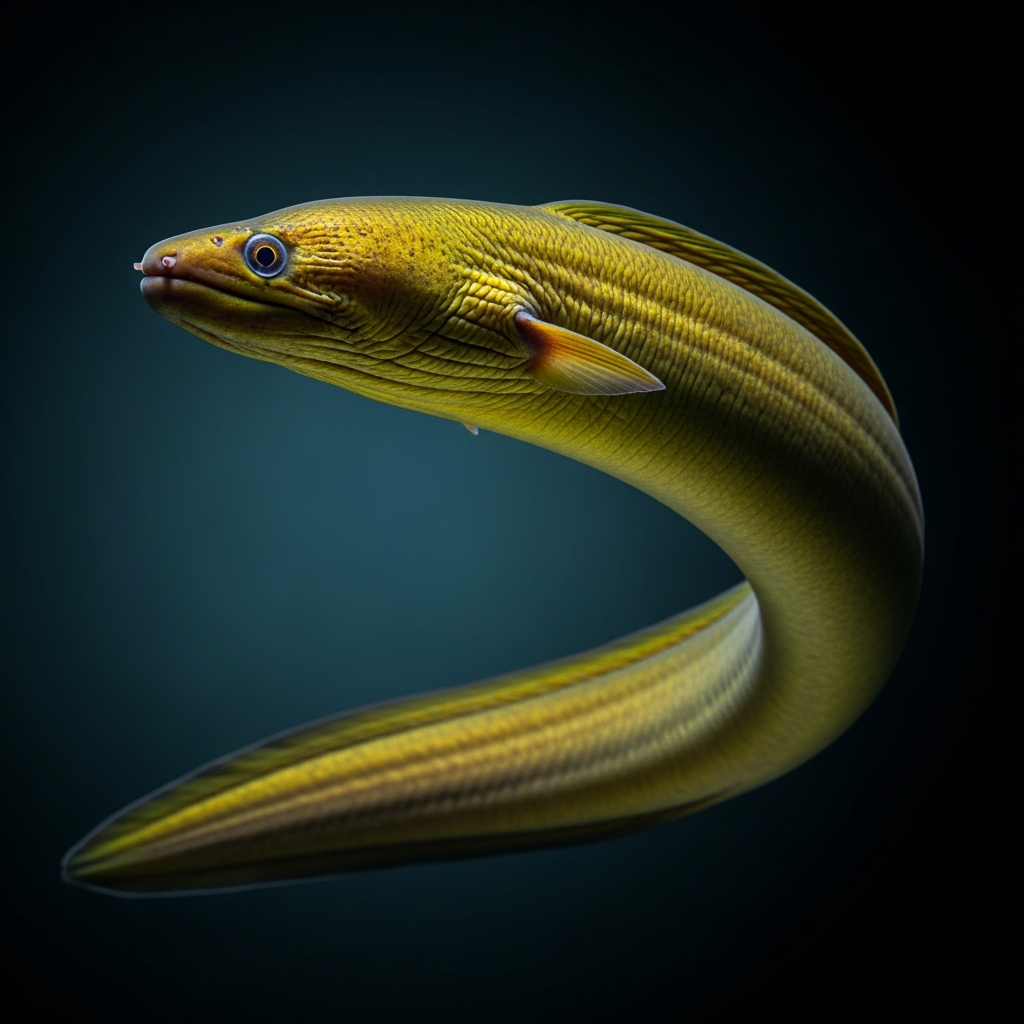
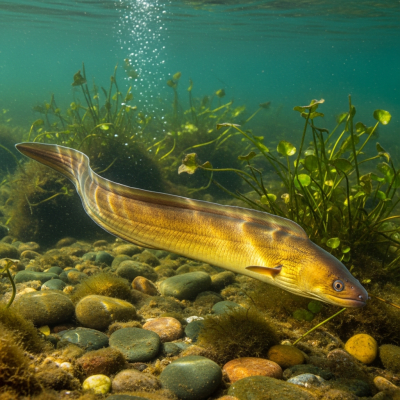
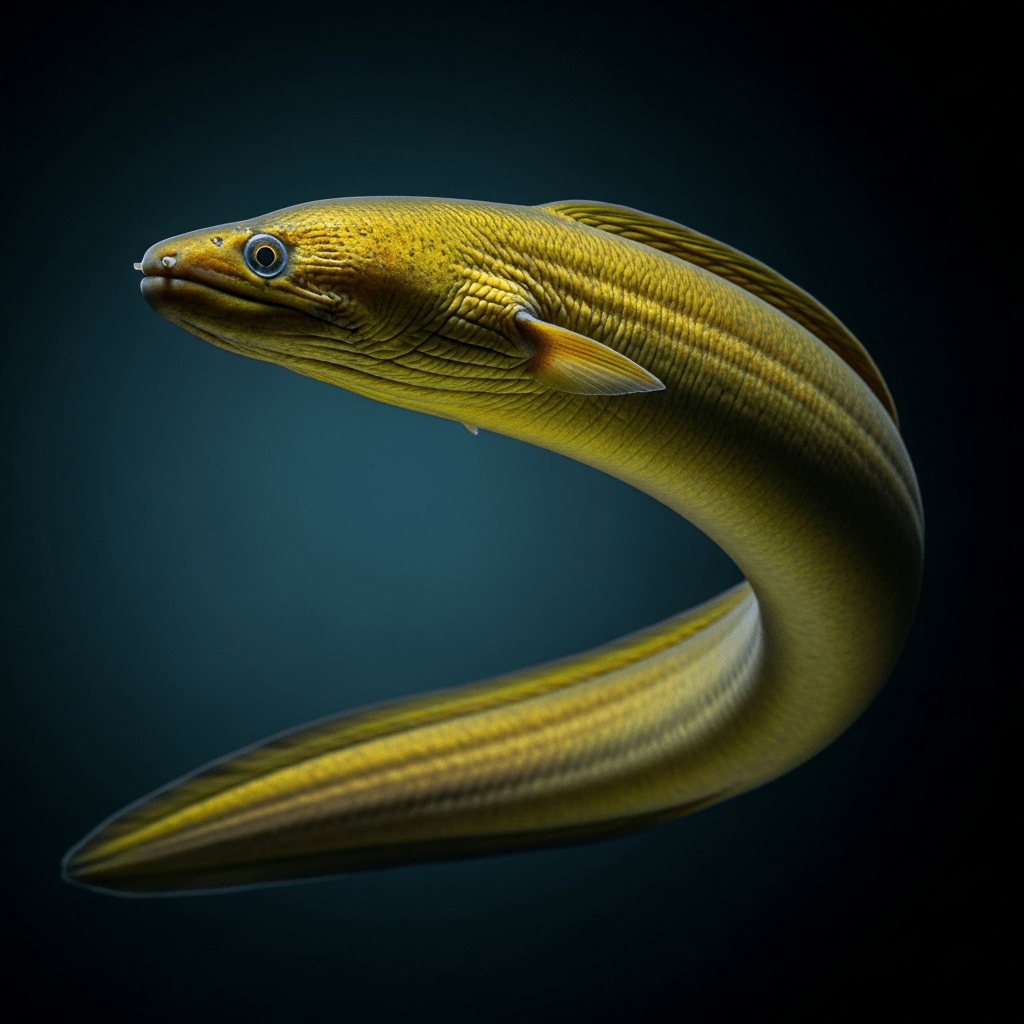
The European eel displays a slender, serpentine body reaching typically 60–80 cm in length, though some individuals grow up to 1.5 meters. Its coloration evolves through life stages: transparent as larvae, yellow-brown in immature adults, and silver upon maturity. Notably, it lacks pelvic fins, has small embedded scales, and features a continuous fin that merges dorsal, caudal, and anal fins into a seamless ribbon.

Behavior or Usage

As a catadromous species, the European eel spends most of its life in freshwater or estuarine habitats before migrating thousands of kilometers to the Sargasso Sea to spawn. Its adaptability to varying salinities and oxygen-poor environments allows it to thrive in diverse aquatic settings. Humans have long harvested it for food, relying on wild juvenile captures since captive breeding remains impossible.

Merchandise & Prints

Bring this kind into your world � illustrated posters, mugs, and shirts.

European Eel European Eel Poster

European Eel Poster

Archival print, museum-grade paper

European Eel European Eel Mug

European Eel Mug

Stoneware mug, dishwasher safe

European Eel European Eel Shirt

European Eel Shirt

Soft cotton tee, unisex sizes

Attributes & Insights

Taxon-Specific Insights

🌍Cultural Significance

The European eel holds a cherished place in European culinary traditions, featuring in iconic dishes such as London's jellied eels and the Netherlands' smoked eel. Its mysterious life cycle and migration have inspired folklore and continue to captivate both scientists and the public. Historically, it supported significant artisanal fisheries and remains a symbol of aquatic heritage despite modern conservation challenges.

📌Notable Facts

  • The European eel undertakes one of the longest known fish migrations, traveling thousands of kilometers to spawn in the Sargasso Sea.
  • Its life stages have distinct common names: glass eel (juvenile), yellow eel (immature adult), and silver eel (mature migratory adult).
  • Despite extensive aquaculture efforts, it cannot be bred in captivity; all farmed eels come from wild-caught juveniles.
  • It can survive out of water for short periods if kept moist and cool, aiding transport and storage.
  • Populations have declined dramatically, leading to its classification as Critically Endangered.

🌍Habitat And Distribution

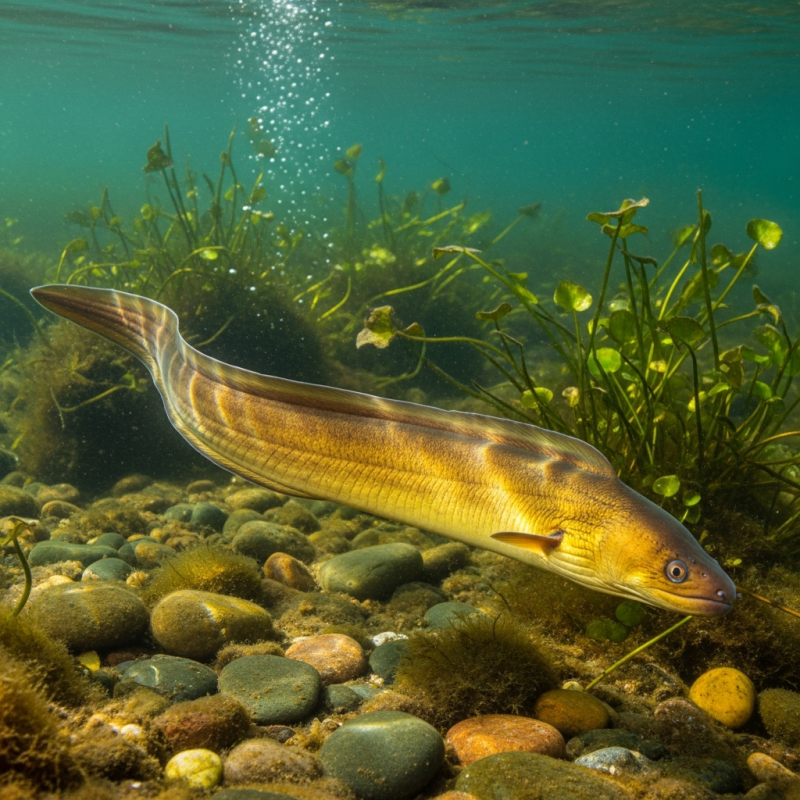
The European eel inhabits a wide range of freshwater, estuarine, and coastal environments across Europe and North Africa. It tolerates diverse salinity levels, moving between rivers, lakes, and coastal waters throughout its life. Its native range extends broadly across these regions, with juveniles dispersing from the Sargasso Sea to continental habitats via ocean currents.

Visual Variations

High-resolution studio photograph of a single European Eel, belonging to the taxonomy fish
Underwater scene featuring a single European Eel
Detailed anatomical illustration of a European Eel, part of the taxonomy fish
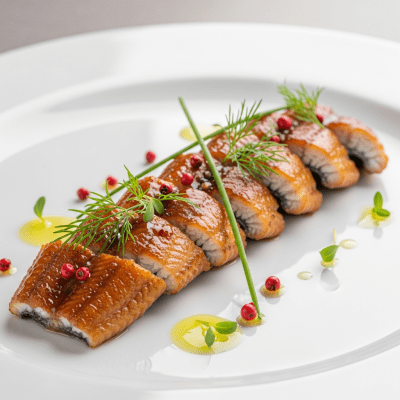
A culinary presentation featuring a prepared dish made with European Eel, of the taxonomy fish

Composition & Context

Taxon-Specific Insights

🍽️Diet And Feeding

European eels are opportunistic feeders, consuming a variety of prey including small fish, invertebrates, and aquatic insects. They hunt primarily at night, using their keen sense of smell and touch to locate food in murky waters. Their slender, flexible bodies allow them to navigate complex habitats while foraging.

🍼Reproduction And Life Cycle

The European eel's life cycle is remarkable for its catadromous nature: adults migrate from freshwater habitats to the Sargasso Sea to spawn. After spawning, adults die, and their larvae—transparent leptocephali—drift with ocean currents back to European and North African waters. Juveniles mature through distinct stages over 6 to 20 years before repeating the cycle.

🎣Aquaculture And Fishing

European eel aquaculture depends entirely on capturing wild glass eels, as captive breeding is not yet possible. Farming focuses on growing these juveniles to market size, often under controlled conditions. Historically, the species supported important commercial and artisanal fisheries, but strict regulations and trade bans now limit legal harvests to protect dwindling populations.

⚠️Conservation Status

The European eel is classified as Critically Endangered due to severe population declines caused by overfishing, habitat fragmentation, pollution, and parasitic infections. Conservation efforts include strict fishing regulations, habitat restoration, and international trade restrictions. Despite these measures, illegal poaching and trade remain significant threats to its survival.

Faq

Q: Where do European eels spawn?
The European eel spawns in the Sargasso Sea, a region of the North Atlantic Ocean.

Q: Can European eels be bred in captivity?
No, captive breeding has not been achieved; aquaculture relies on capturing wild juvenile glass eels.

Q: Why are European eel populations declining?
Declines are due to overfishing, habitat loss, pollution, and parasitic infections.