
Bigeye Tuna
The bigeye tuna (Thunnus obesus) is a large, migratory pelagic fish known for its robust body and notably large eyes, adapted to deep, low-light oceanic habitats.
The bigeye tuna (Thunnus obesus) is a large, migratory pelagic fish known for its robust body and notably large eyes, adapted to deep, low-light oceanic habitats.
First formally described in 1903 by ichthyologist Charles Tate Regan, the bigeye tuna is native to tropical and subtropical oceans worldwide. It is a naturally occurring species with no history of domestication or artificial breeding.
Belonging to the family Scombridae, the bigeye tuna is classified within the genus Thunnus and species obesus. This family includes mackerels and tunas, all known for their streamlined bodies and fast swimming capabilities.
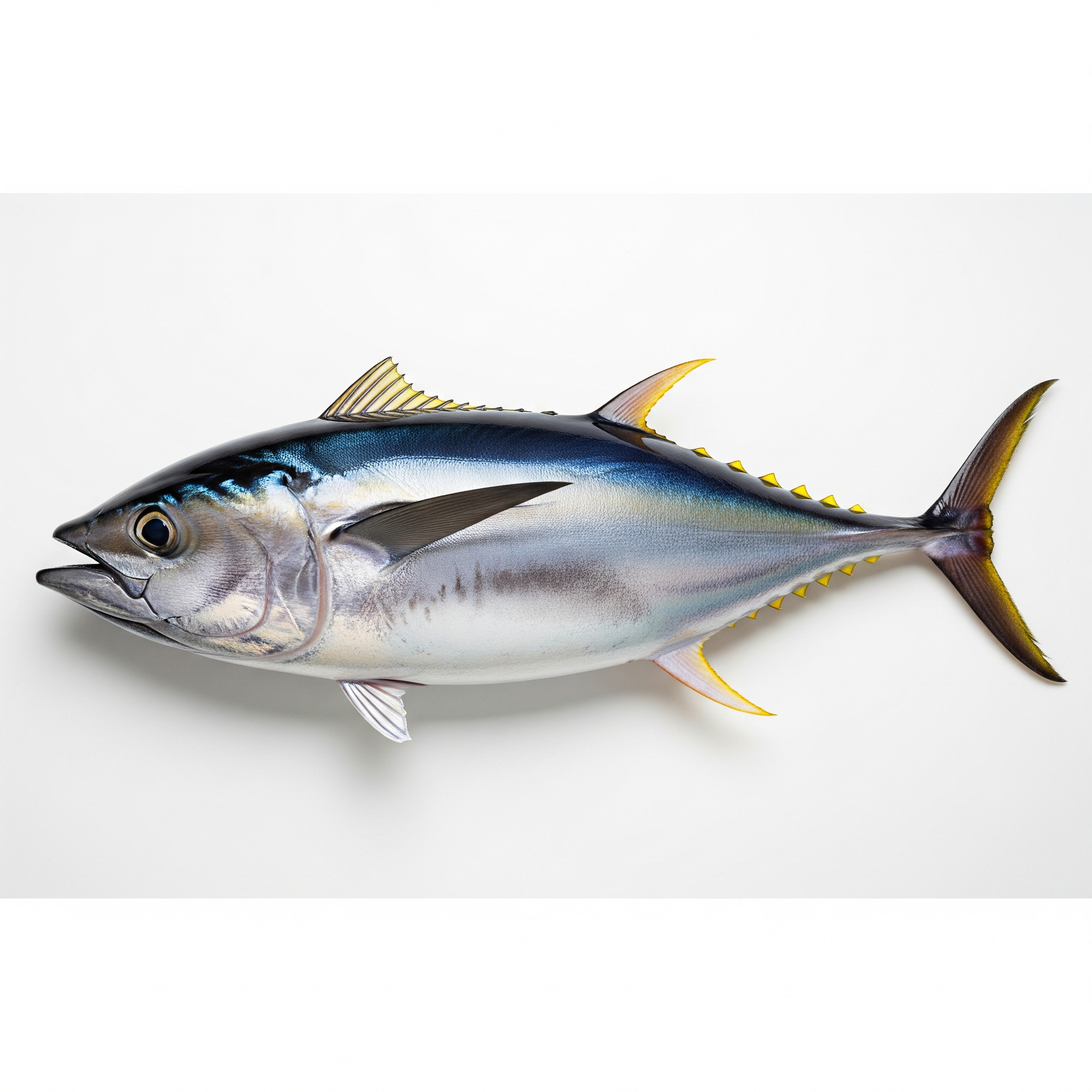
The bigeye tuna has a robust, fusiform body with metallic dark blue coloration on its dorsal side and a silver ventral surface. Its most distinctive feature is its large eyes, which enable it to see in the dim, deep waters it inhabits. Adults typically measure between 180 and 250 centimeters in length and can weigh up to 200 kilograms. The fish has two dorsal fins, finlets between the second dorsal and caudal fins, and a streamlined shape built for sustained high-speed swimming.
Bigeye tuna exhibit diel vertical migrations, diving to depths of 300 to 500 meters during the day and ascending at night. This behavior aids in thermoregulation and accessing prey. They are important to commercial fisheries worldwide, prized especially for their high-fat belly meat favored in sashimi and sushi. Their flesh requires immediate chilling post-catch to maintain quality, reflecting their susceptibility to rapid degradation.
Bring this kind into your world illustrated posters, mugs, and shirts.
Archival print, museum-grade paper
Buy Poster
Stoneware mug, dishwasher safe
Buy Mug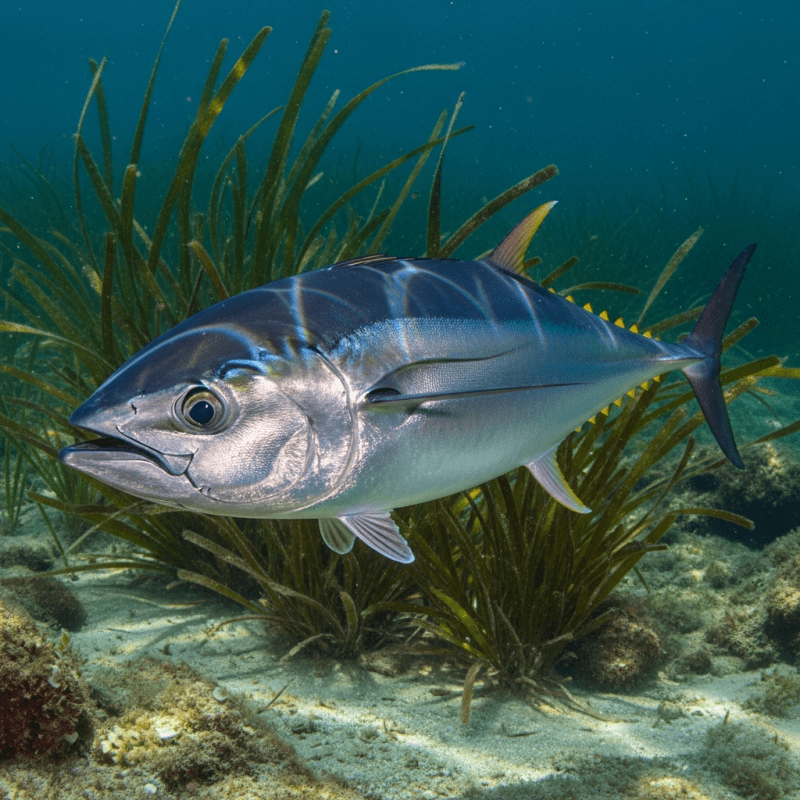
Soft cotton tee, unisex sizes
Buy ShirtHighly valued in international seafood markets, particularly in East Asia, bigeye tuna is a staple in sashimi and sushi cuisine. It is sometimes used as a substitute for the more expensive bluefin tuna due to similarities in taste and appearance. The species plays a significant role in the economies of countries involved in its fisheries and is a symbol of premium seafood quality.
The bigeye tuna inhabits pelagic, deep oceanic waters across tropical and subtropical regions worldwide. During the day, it typically resides at depths of 300 to 500 meters, ascending closer to the surface at night. Its range spans the Pacific, Atlantic, and Indian Oceans, making it a truly global species.


Feeding primarily on fish, cephalopods, and crustaceans, the bigeye tuna is an active predator. Its diel vertical migrations allow it to exploit prey found at varying depths, using speed and agility to capture food in the open ocean.
Bigeye tuna reach sexual maturity between 2 and 4 years of age. While specific spawning habitats are not well documented, the species is known to have a lifespan of up to 15 years. Its reproductive strategy supports moderate growth rates compared to other tunas.
Bigeye tuna is primarily harvested through commercial fisheries employing longline, purse seine, and pole-and-line methods across its oceanic range. There are no established aquaculture strains or widespread farming practices for this species. Its moderate growth rate and deep-water habits pose challenges for cultivation.
Due to high market demand and slow population recovery, bigeye tuna faces significant pressure from overfishing. It is subject to international management by regional fisheries organizations to prevent stock depletion. The species’ physiological adaptations help it survive in low-oxygen environments, but sustainable fishing practices are critical to its long-term conservation.