Origin Story

Originating exclusively on Tsushima Island, the Tsushima Leopard Cat’s lineage diverged from the broader Asian leopard cat complex due to historical biogeographical isolation. First formally described in the 19th century, notably by Temminck in 1844, its recognition as a distinct subspecies is rooted in both morphological and genetic studies by Japanese and international zoologists. Its insular evolution has resulted in a population genetically and ecologically distinct from mainland relatives.

Classification

Belonging to the family Felidae and subfamily Felinae, the Tsushima Leopard Cat is classified within the genus Prionailurus, species bengalensis, subspecies euptilura. It is part of the Asian leopard cat complex, which encompasses several regional populations across Asia. Scientific synonyms include Felis euptilura and Prionailurus bengalensis euptilura, reflecting historical shifts in taxonomic understanding.

Appearance or Form

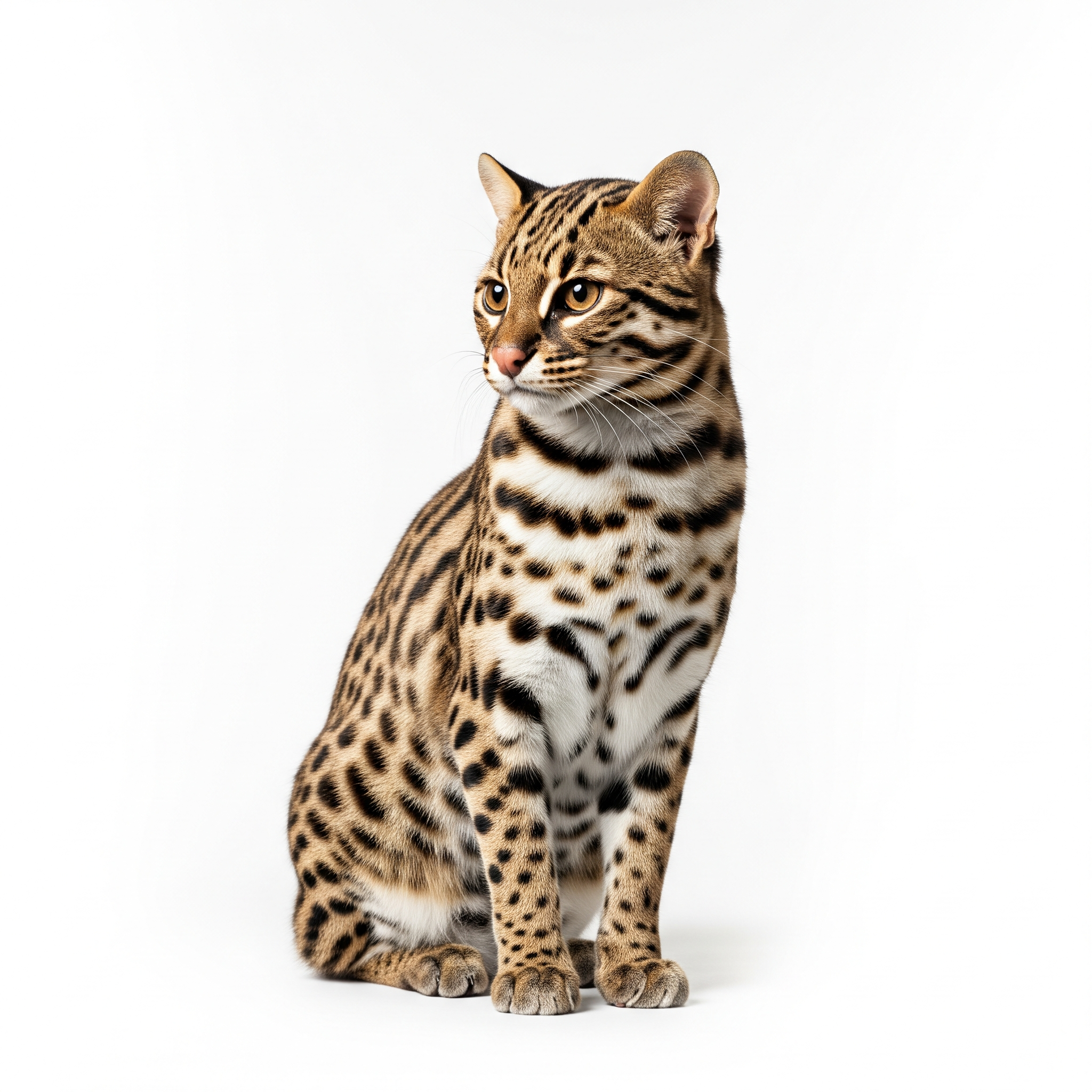
This small, slender wild cat typically weighs 3–5 kg and measures 50–60 cm in length, with a tail spanning 20–25 cm. Its fur is a yellowish- to grayish-brown, adorned with dark spots and stripes, including two bold black lines running from the eyes to the nape. The underbelly is pale, and the tail is ringed with dark bands, giving it a distinctive, camouflaged look suited to its forested habitat.

Behavior or Usage

The Tsushima Leopard Cat is a solitary, nocturnal hunter, relying on acute hearing and stealth to pursue small mammals, birds, reptiles, and insects. Territorial by nature, it avoids human settlements and is rarely seen during daylight hours. Its climbing skills and cryptic coloration enable it to navigate dense forests and mountainous terrain with ease, playing a vital role as a top small predator in its ecosystem.

Merchandise & Prints

Bring this kind into your world � illustrated posters, mugs, and shirts.

Prionailurus bengalensis euptilura Prionailurus bengalensis euptilura Poster

Prionailurus bengalensis euptilura Poster

Archival print, museum-grade paper

Prionailurus bengalensis euptilura Prionailurus bengalensis euptilura Mug

Prionailurus bengalensis euptilura Mug

Stoneware mug, dishwasher safe

Prionailurus bengalensis euptilura Prionailurus bengalensis euptilura Shirt

Prionailurus bengalensis euptilura Shirt

Soft cotton tee, unisex sizes

Attributes & Insights

Taxon-Specific Insights

🌍Cultural Significance

Known locally as the Tsushima Yamaneko (対馬山猫), this feline holds symbolic importance in Japanese conservation culture, representing the fragility of island biodiversity. It features in regional folklore, environmental campaigns, and is a flagship species for wildlife protection efforts on Tsushima Island, inspiring educational programs and public awareness initiatives.

📌Notable Facts

  • The Tsushima Leopard Cat is one of the world’s most genetically isolated wild cats, with no recognized subspecies within its population.
  • Fewer than 100 individuals remain, making it one of Japan’s rarest mammals.
  • Its unique coat pattern and insular evolution set it apart from mainland Amur Leopard Cats.
  • Conservation efforts include habitat restoration, captive breeding, and wildlife crossings to reduce road mortality.

Geographic Range

Historically and presently, the Tsushima Leopard Cat is restricted to Tsushima Island, situated between Kyushu and the Korean Peninsula. Unlike other felines with broad distributions, this subspecies has never been found outside this island, making its range exceptionally limited and vulnerable to environmental changes.

Visual Variations

High quality studio photograph of a single Tsushima Leopard Cat
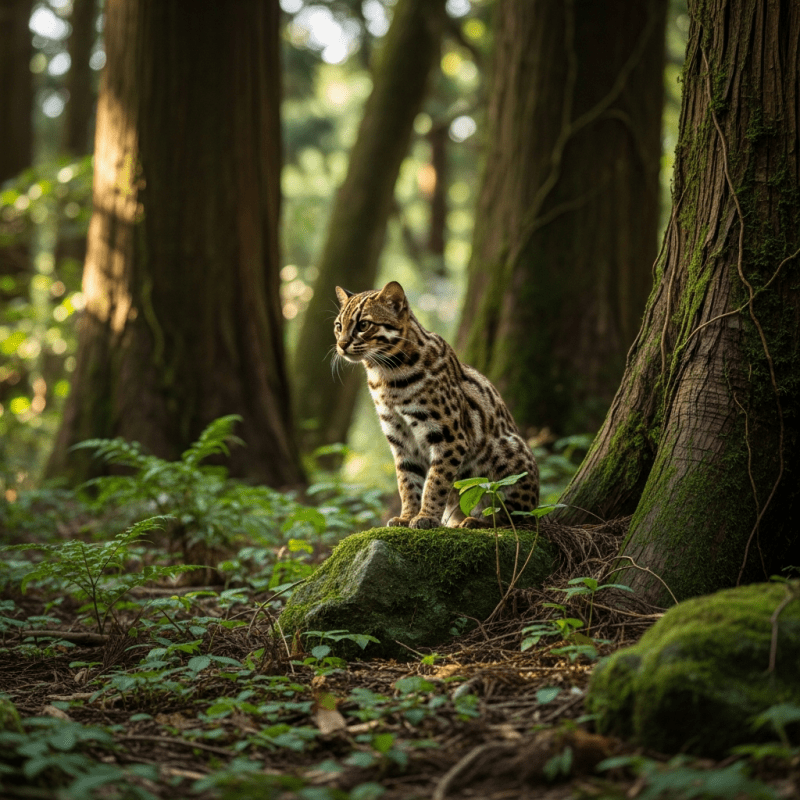
Photorealistic image of a Tsushima Leopard Cat (felines) in its natural habitat
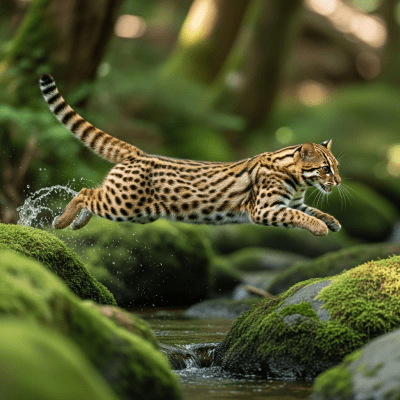
Action shot of a Tsushima Leopard Cat
Close-up macro photograph focusing on the facial features and fur texture of a Tsushima Leopard Cat

Composition & Context

Taxon-Specific Insights

Habitat And Ecology

Preferring broadleaf and mixed forests, the Tsushima Leopard Cat also inhabits secondary growth and, occasionally, agricultural margins. It is an apex small predator, controlling populations of rodents and other prey, and its ecological role is crucial for maintaining the island’s natural balance. Its solitary, nocturnal habits minimize competition and human interaction, but also make population monitoring challenging.

🛡️Conservation Status

The Tsushima Leopard Cat is classified as Critically Endangered by both the IUCN and the Japanese government. This status reflects its extremely low population, ongoing decline, and high risk of extinction without continued intervention. Legal protections, captive breeding, and habitat management are central to its survival strategy.

Threats And Challenges

Major threats include habitat loss due to development, road mortality, infectious diseases such as feline leukemia virus, competition and potential hybridization with domestic cats, and genetic isolation resulting from the tiny population size. These challenges are compounded by the cat’s limited range and sensitivity to environmental disturbance.

🦾Adaptations

Adapted for life in dense forests and rugged terrain, the Tsushima Leopard Cat boasts acute hearing, exceptional climbing ability, and cryptic coloration that provides camouflage from both predators and prey. Its solitary, nocturnal lifestyle helps it avoid human contact and maximize hunting efficiency in its insular habitat.

Reproduction And Lifecycle

Breeding occurs in spring or early summer, with females experiencing a gestation period of 60–70 days. Litters typically consist of 2–4 kittens, which are born in secluded dens. Parental care is provided by the mother, who raises the young until they are independent. Estimated lifespan in the wild ranges from 8 to 13 years, although precise data are limited.

Breeds And Subspecies

No recognized breeds or subspecies exist within the Tsushima Leopard Cat population. It is considered a distinct and genetically unique subspecies of the Asian leopard cat complex, with no regional variants documented on Tsushima Island.

Genetic Insights

Genetic analyses reveal significant divergence between the Tsushima Leopard Cat and mainland Amur Leopard Cats, confirmed by mitochondrial DNA and microsatellite studies. Reduced genetic diversity is a concern due to the small, isolated population, but no evidence of hybridization with domestic cats has been found. Ongoing research and genetic monitoring are vital for guiding conservation and understanding its evolutionary history.

Faq

  • Where does the Tsushima Leopard Cat live?
    It is found only on Tsushima Island, Japan.
  • How many Tsushima Leopard Cats are left?
    Current estimates suggest 80–100 individuals remain.
  • Why is it endangered?
    Major threats include habitat loss, road accidents, disease, and genetic isolation.