
Felis Margarita
The Sand Cat (Felis margarita) is a small, elusive wild feline uniquely adapted to survive the extreme conditions of desert environments across North Africa, the Middle East, and Central Asia.
The Sand Cat (Felis margarita) is a small, elusive wild feline uniquely adapted to survive the extreme conditions of desert environments across North Africa, the Middle East, and Central Asia.
First described in 1858 by Victor Loche from specimens in the Algerian Sahara, the Sand Cat’s scientific name honors Jean Auguste Margueritte, leader of the expedition that collected its type specimen. Evolving as a distinct lineage within the genus Felis, the Sand Cat diverged from other small cats approximately 2–3 million years ago, specializing in desert habitats where few other felines can persist.
Belonging to the family Felidae and subfamily Felinae, the Sand Cat is classified as Felis margarita. It shares its genus with other small cats such as the domestic cat (Felis catus) and the wildcat (Felis silvestris), but stands apart due to its unique desert adaptations. Recognized subspecies include F. m. margarita (North Africa), F. m. harrisoni (Arabian Peninsula), F. m. thinobia (Central Asia), and F. m. scheffeli (Pakistan).
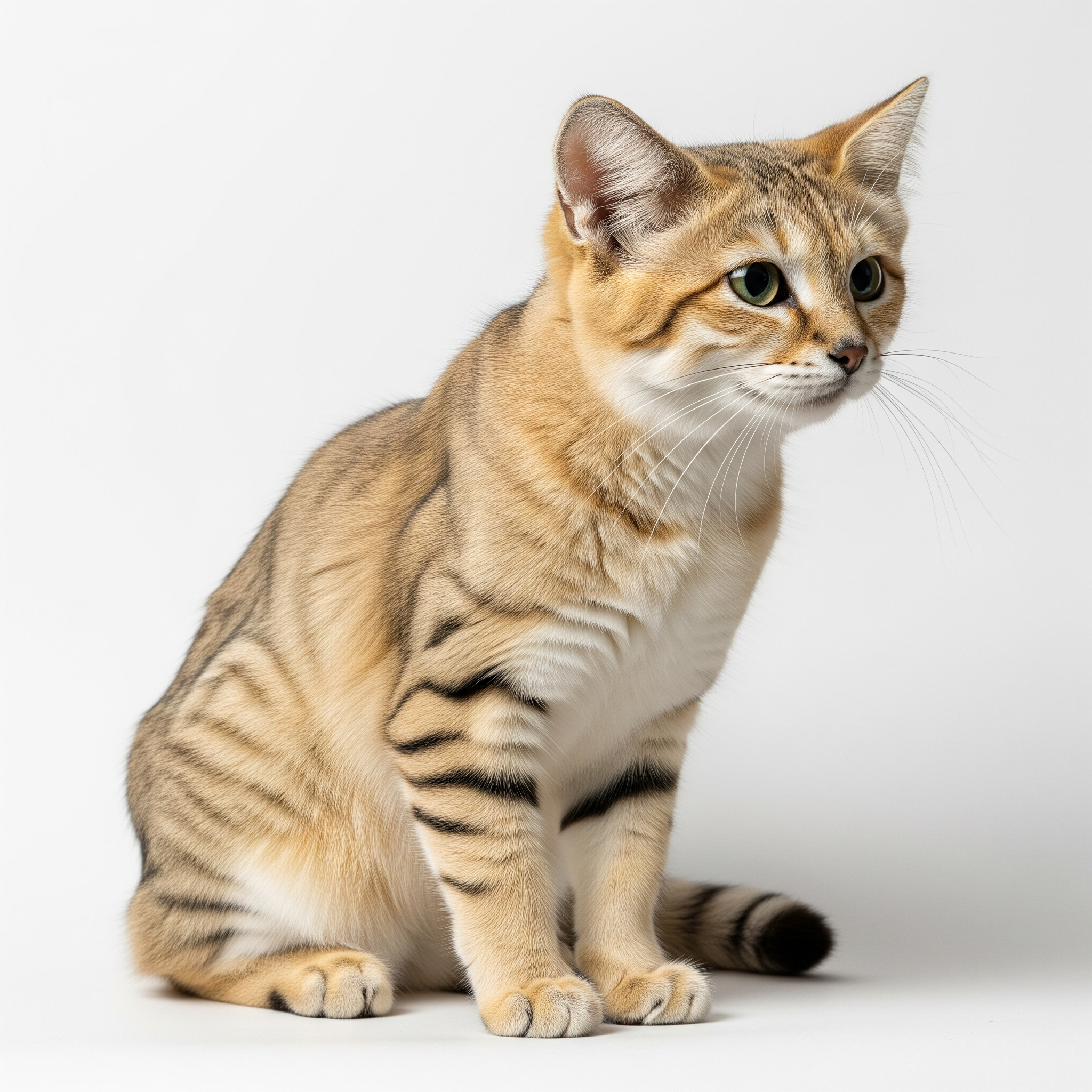
The Sand Cat is one of the smallest wild cats, typically weighing 1.5–3.4 kg and measuring 39–52 cm in body length, with a tail of 23–31 cm. Its thick, pale sandy to grayish fur camouflages it against desert landscapes and insulates against temperature extremes. Large, low-set ears enhance hearing, while dense fur on the feet protects against hot sand and enables silent movement. Its overall form is compact and agile, built for stealth and survival in arid terrain.
Sand Cats are solitary and nocturnal hunters, preying on small rodents, birds, reptiles, and insects. They are skilled diggers, excavating burrows both for shelter and to access prey. Unlike most felines, Sand Cats can survive without free-standing water, extracting moisture from their food and relying on highly efficient kidneys. Their secretive nature and silent movement make them difficult to observe in the wild.
Bring this kind into your world illustrated posters, mugs, and shirts.
Archival print, museum-grade paper
Buy Poster
Stoneware mug, dishwasher safe
Buy Mug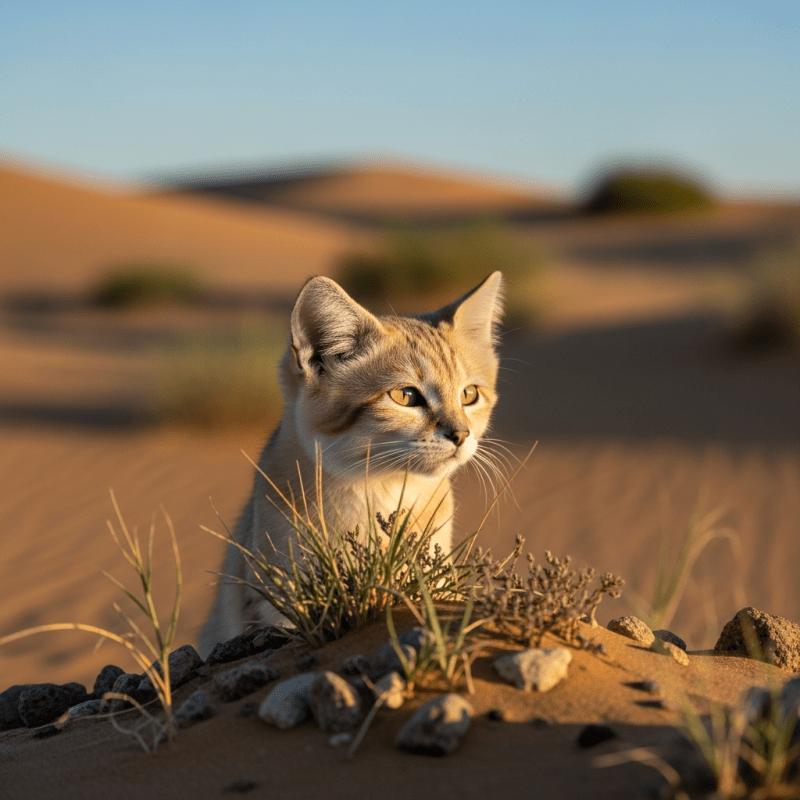
Soft cotton tee, unisex sizes
Buy ShirtThough rarely depicted in art or myth due to their remote habitats and elusive behavior, Sand Cats are locally known by names such as "Qitt al-rimal" in Arabic and "Kum kedi" in Turkish. Their remarkable desert survival has inspired fascination among naturalists and conservationists, symbolizing resilience and adaptation in harsh environments.
Sand Cats are found in arid desert regions of North Africa (Morocco, Algeria, Egypt), the Arabian Peninsula (Saudi Arabia, United Arab Emirates, Oman), and Central Asia (Turkmenistan, Iran, Pakistan). Their distribution is patchy and often fragmented, with local populations adapted to specific desert landscapes.
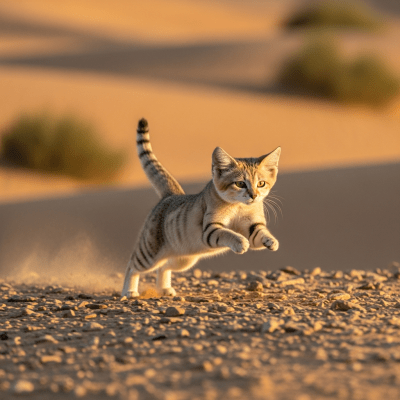

Preferring sandy and stony deserts with sparse vegetation, Sand Cats occupy environments with extreme temperature fluctuations and minimal water. They play a vital ecological role as predators of small mammals, birds, and reptiles, helping regulate prey populations in fragile desert ecosystems. Their burrowing behavior also contributes to soil aeration and habitat complexity.
According to the IUCN Red List, the Sand Cat is classified as Least Concern, indicating that it is not currently at immediate risk of extinction. However, populations are fragmented and declining in some areas, and ongoing habitat degradation poses future risks.
Major threats to Sand Cats include habitat degradation from livestock grazing, human encroachment, accidental poisoning, and depletion of prey species. Their secretive nature makes population monitoring difficult, and local declines are often underreported. Fragmentation of habitat further isolates populations, reducing genetic diversity and resilience.
Sand Cats exhibit remarkable adaptations for desert life: dense fur on their feet protects against hot sand and aids silent movement; large, low-set ears enhance hearing for hunting underground prey; and their kidneys efficiently conserve water, allowing survival without free-standing water. Their pale, thick fur provides both camouflage and insulation against temperature extremes.
Sand Cats typically breed in spring, with a gestation period of 59–63 days. Females give birth to litters of 2–5 kittens, which are raised in burrows for protection. Young Sand Cats are weaned at around two months and reach independence soon after, though survival rates can be low due to harsh environmental conditions and predation.
These subspecies reflect regional adaptations, though some authorities debate their validity due to genetic overlap and limited morphological differences.
Genetic studies confirm the Sand Cat’s placement within the genus Felis, with divergence from other small cats about 2–3 million years ago. DNA barcodes such as cytochrome b sequences are available, though whole genome data remain limited. Low genetic diversity within populations is attributed to habitat fragmentation, and no evidence of hybridization with other felids has been found.