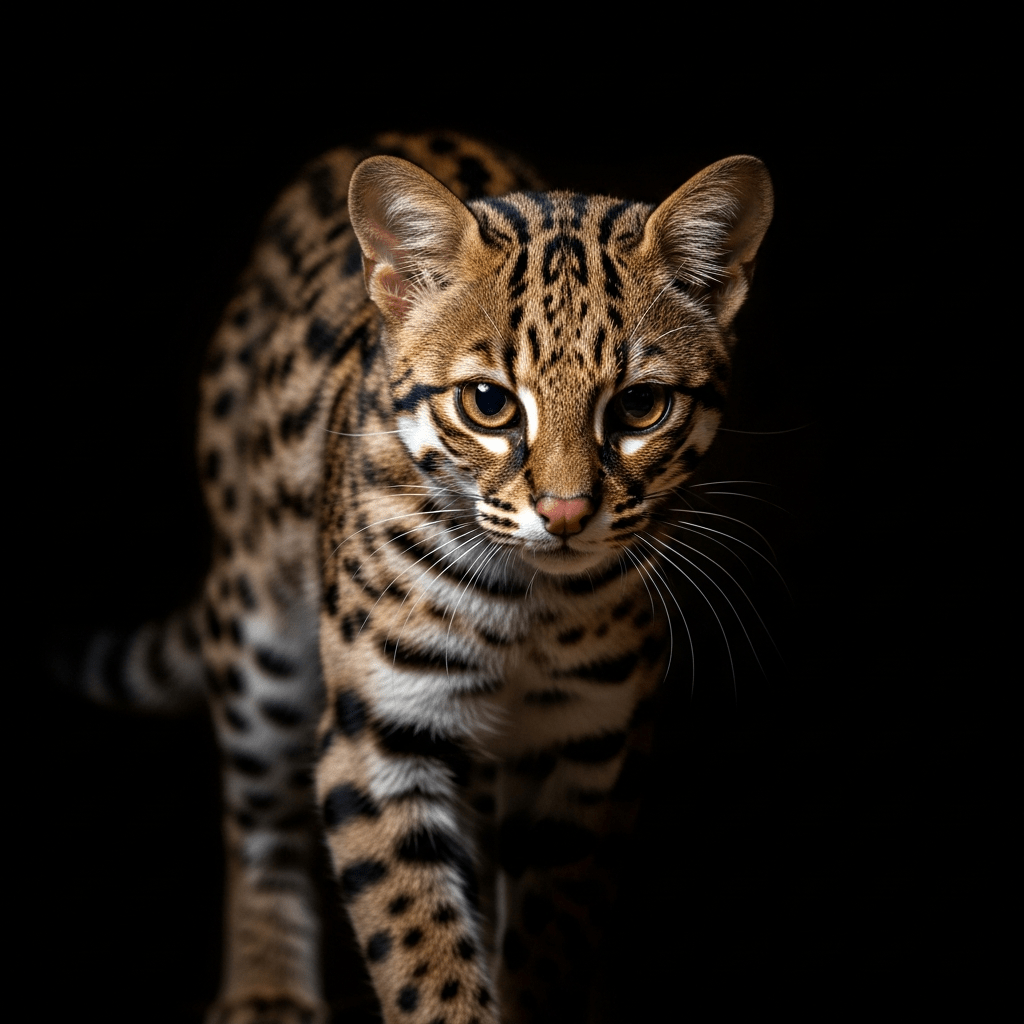
Prionailurus Rubiginosus
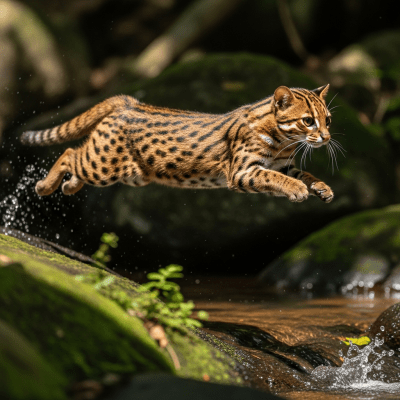
The Rusty-spotted Cat (Prionailurus rubiginosus) is one of the world’s smallest wild felines, instantly recognizable by its delicate build and distinctive rusty-red spots on a soft grey coat.
The Rusty-spotted Cat (Prionailurus rubiginosus) is one of the world’s smallest wild felines, instantly recognizable by its delicate build and distinctive rusty-red spots on a soft grey coat.
First described in 1855 by Edward Frederick Kelaart from specimens in Sri Lanka, the Rusty-spotted Cat traces its evolutionary roots to India and Sri Lanka. Closely related to other Asian spotted cats, its lineage diverged from relatives such as the Leopard Cat approximately 2–3 million years ago. The species’ initial identification relied on its unique morphology and regional occurrence, with later research refining its classification and expanding its known range.
Belonging to the family Felidae and subfamily Felinae, the Rusty-spotted Cat is classified within the genus Prionailurus, which encompasses several small Asian wild cats. Its scientific name is Prionailurus rubiginosus, with two recognized subspecies: P. r. rubiginosus (India) and P. r. phillipsi (Sri Lanka). This places it among the small, solitary felids, distinct from the larger Pantherinae cats such as lions and tigers.
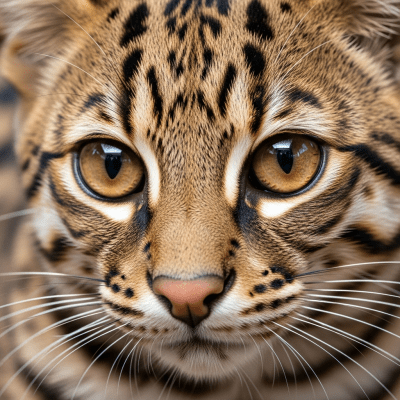
With a body length of just 35–48 cm and weighing between 0.9 and 1.6 kg, the Rusty-spotted Cat is remarkably petite. Its short, soft fur is predominantly grey, adorned with rusty-red spots and streaks along the head, back, and flanks. Large, expressive eyes and rounded ears give it a gentle appearance, while white underparts are marked with bold dark spots. The slender build and agile frame are perfectly suited for stealth and swift movement.
This feline leads a solitary and secretive life, primarily active at night. It is an agile climber and adept at navigating dense vegetation and rocky terrain, often remaining hidden from view. Territorial by nature, individuals mark their ranges with scent. The Rusty-spotted Cat’s diet is varied, including small mammals, birds, lizards, and insects. Occasionally, it ventures near human settlements, but remains elusive and rarely seen.
Bring this kind into your world illustrated posters, mugs, and shirts.
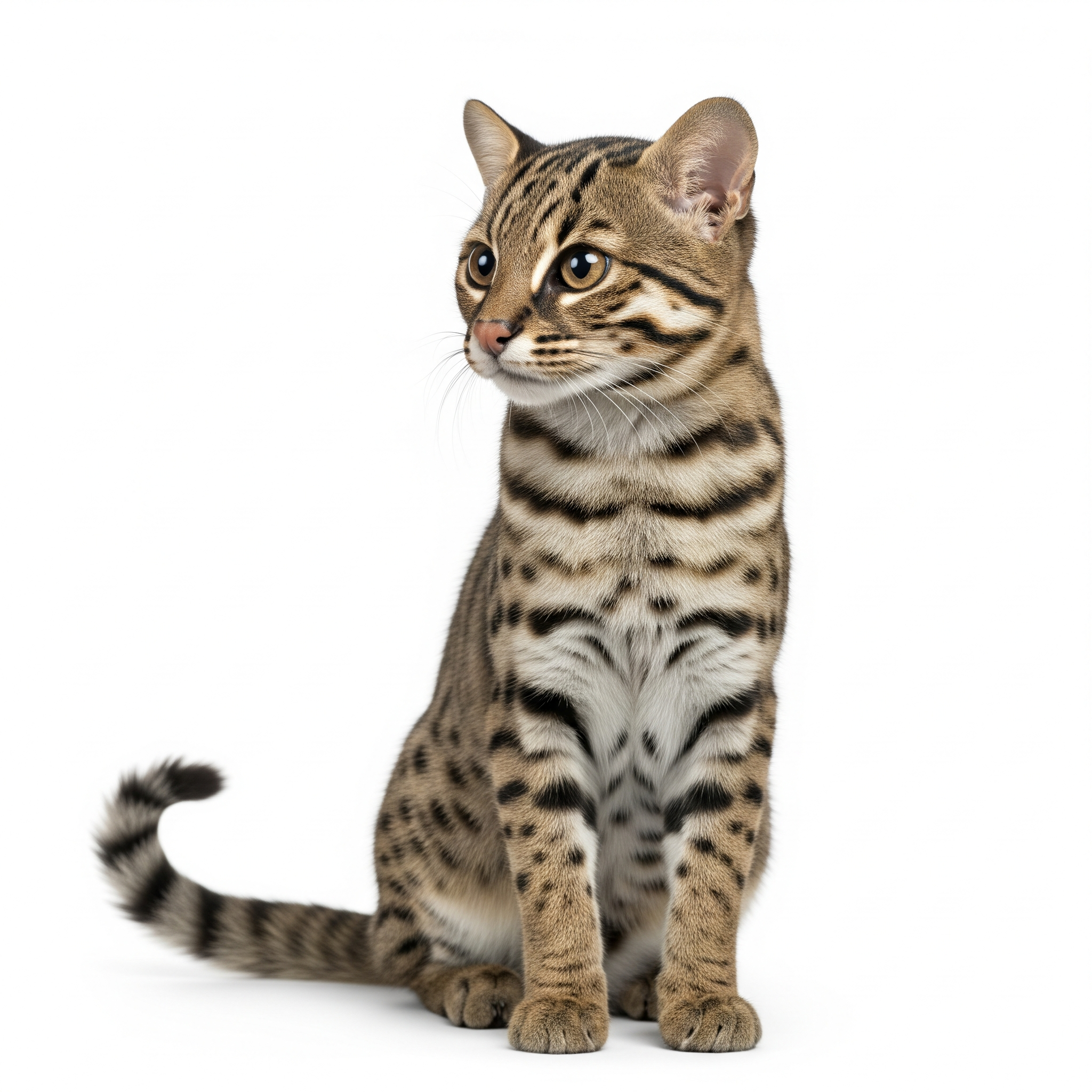
Archival print, museum-grade paper
Buy Poster
Stoneware mug, dishwasher safe
Buy Mug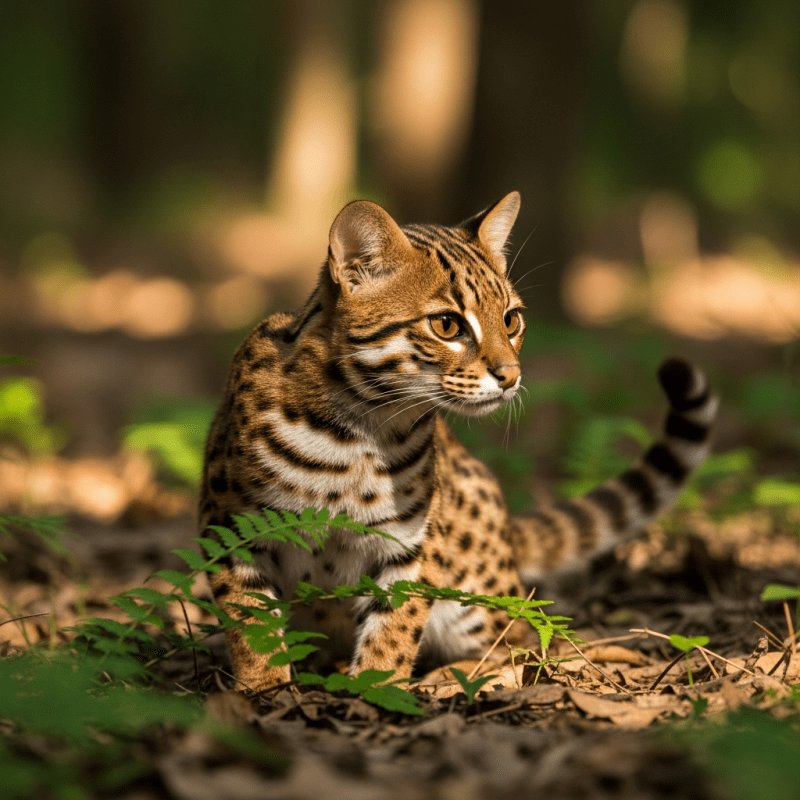
Soft cotton tee, unisex sizes
Buy ShirtWhile not as prominent in folklore or art as larger felines, the Rusty-spotted Cat holds regional significance in India and Sri Lanka, where it is known as Lal Chitti Billi and Kelaart’s Cat. Its rarity and diminutive size have made it a subject of fascination among naturalists and wildlife enthusiasts, symbolizing the diversity and subtlety of Asia’s wild cat fauna.
Historically and currently, the Rusty-spotted Cat is native to India and Sri Lanka, with confirmed populations in central, southern, and western India. Isolated records exist from Nepal, suggesting a slightly broader range. Within these regions, it occupies a variety of landscapes, from forests and scrublands to grasslands and agricultural zones.

This species thrives in dry deciduous forests, scrublands, grasslands, and moist forests, as well as rocky hills and agricultural fields. It is highly adaptable, sometimes living near human settlements. Ecologically, the Rusty-spotted Cat plays a role as a small predator, helping to regulate populations of rodents, birds, and insects within its habitat.
According to the IUCN Red List, the Rusty-spotted Cat is classified as Near Threatened. This status indicates that the species faces risks from habitat loss and fragmentation, with populations believed to be declining. It is listed on CITES Appendix I, granting it the highest level of international protection, and receives legal protection in its native countries.
The major threats to the Rusty-spotted Cat include deforestation, habitat fragmentation, and conversion of wild lands to agriculture. Persecution and retaliatory killing also pose risks, particularly near human settlements. Its secretive nature makes population monitoring difficult, complicating conservation efforts.
Specialized for nocturnal hunting, the Rusty-spotted Cat possesses acute hearing and vision, allowing it to detect prey in low light. Its cryptic coloration provides effective camouflage among leaf litter and rocks, while its slender, agile body enables expert climbing and swift movement through dense vegetation.
Breeding is seasonal, with females giving birth to litters of one or two kittens after a gestation period of 65–70 days. Kittens are weaned at around two months and reach sexual maturity at about one year. Parental care is provided by the mother, who shelters and nourishes the young until independence.
There is ongoing scientific debate regarding the validity of these subspecies, with genetic and morphological studies continuing to refine their classification.
Genetic analyses confirm the Rusty-spotted Cat’s placement within the genus Prionailurus, closely related to the Leopard Cat and Fishing Cat. Mitochondrial DNA barcodes and partial genome sequences are available, supporting its distinct species status. Phylogenetic studies suggest divergence from other Prionailurus cats occurred 2–3 million years ago. While no complete genome assembly exists yet, ongoing research aims to clarify population-level genetic diversity and evolutionary history.