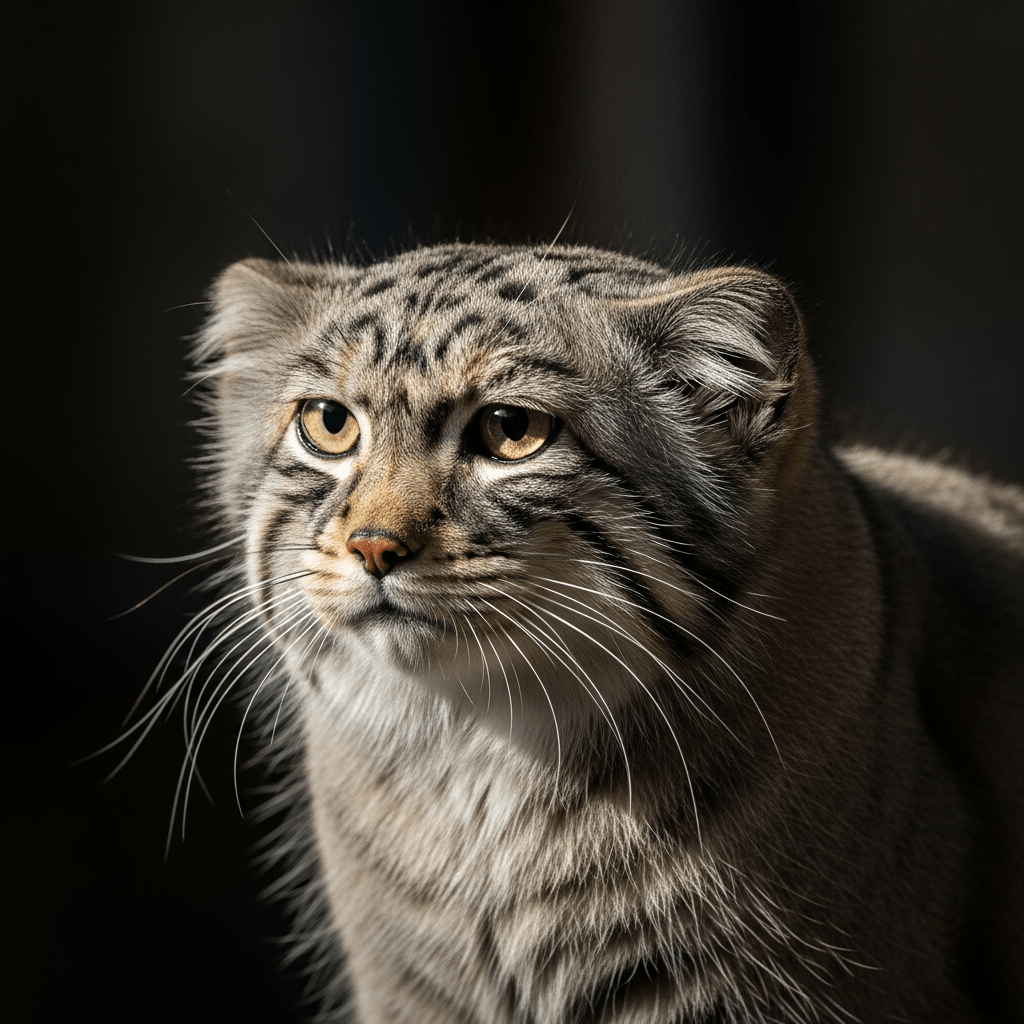
Otocolobus Manul
Pallas's Cat (Otocolobus manul) is a small, elusive wild feline renowned for its dense, plush fur and expressive features, expertly adapted to the cold grasslands and steppes of Central Asia.
Pallas's Cat (Otocolobus manul) is a small, elusive wild feline renowned for its dense, plush fur and expressive features, expertly adapted to the cold grasslands and steppes of Central Asia.
Pallas's Cat was first described in 1776 by German zoologist Peter Simon Pallas, based on specimens from the Russian and Mongolian steppes. Its evolutionary roots trace to an early branch within the Felinae subfamily, making it distinct from other small cats. The species' origin is firmly tied to the vast, windswept plains and rocky outcrops of Central Asia, where it continues to thrive in remote, high-altitude habitats.
Belonging to the family Felidae and subfamily Felinae, Pallas's Cat is the sole member of the genus Otocolobus. Its scientific name is Otocolobus manul, with historical synonyms such as Felis manul. Phylogenetic studies place it as an early diverging lineage among small wild cats, emphasizing its unique evolutionary position within the cat family.
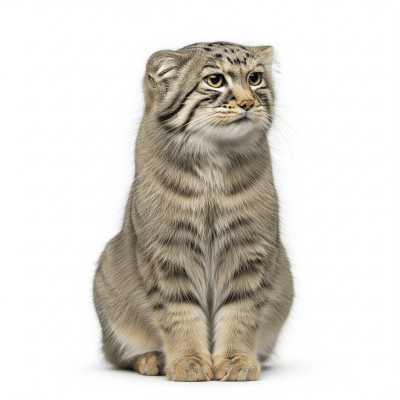
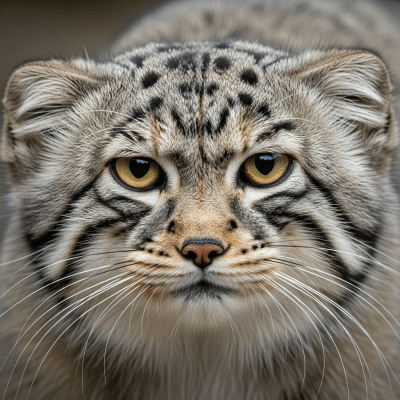
Pallas's Cat is instantly recognizable by its stocky build, short legs, and exceptionally thick, long fur that ranges from pale grey to yellowish, adorned with faint stripes and spots. Its broad, expressive face features prominent rounded ears set low on the sides, giving it a distinctive, almost comical look. Large yellow eyes, adapted for low-light hunting, and a plush, bushy tail complete its striking appearance, perfectly suited for insulation against harsh climates.
This feline is solitary and primarily active during twilight and nighttime hours, employing slow, deliberate movements to ambush prey. Pallas's Cat feeds mainly on small mammals such as pikas and voles, as well as birds and insects. Its low metabolic rate and cryptic coloration help it avoid detection by both predators and prey. Unlike domestic cats, it has little direct interaction with humans and remains a symbol of wildness and secrecy in its native range.
Bring this kind into your world illustrated posters, mugs, and shirts.
Archival print, museum-grade paper
Buy Poster
Stoneware mug, dishwasher safe
Buy Mug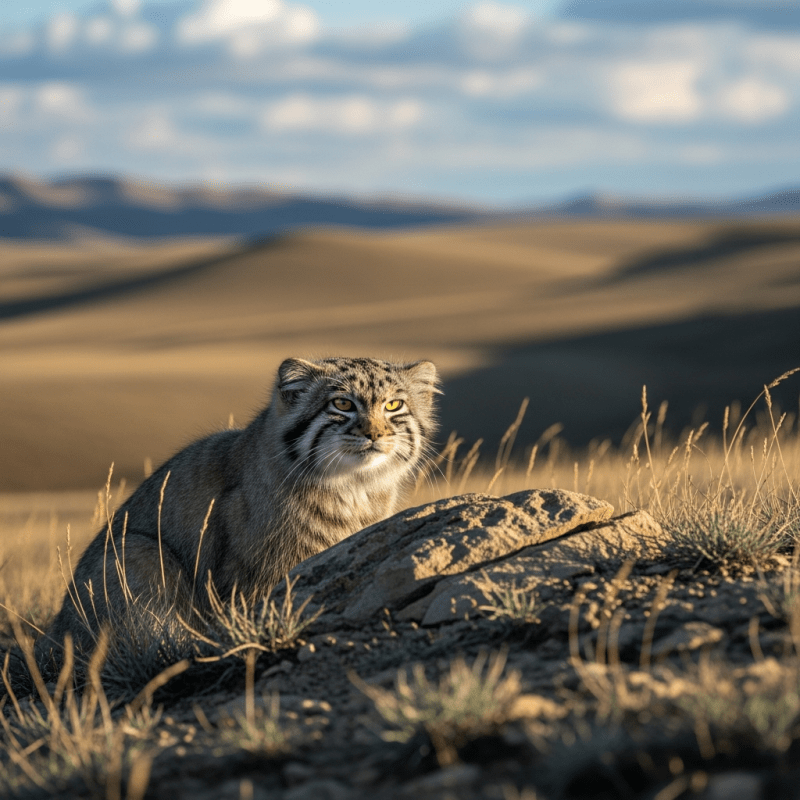
Soft cotton tee, unisex sizes
Buy ShirtPallas's Cat holds a quiet fascination in Central Asian folklore and is admired worldwide for its unique appearance and elusive nature. In Mongolia and Russia, local names like "manul" reflect its presence in regional culture, and its expressive face has made it a favorite in wildlife photography and internet memes. Though not a major figure in myth or art, its mystique continues to inspire conservationists and cat enthusiasts alike.
Pallas's Cat is native to a broad swath of Central Asia, with its range spanning Mongolia, China, Russia, Kazakhstan, Kyrgyzstan, Tajikistan, Uzbekistan, Turkmenistan, Iran, Afghanistan, Pakistan, and Nepal. Historically and presently, it favors open grasslands and montane steppes, avoiding dense forests and true deserts. Its distribution is closely tied to regions with abundant small mammal prey and minimal human disturbance.
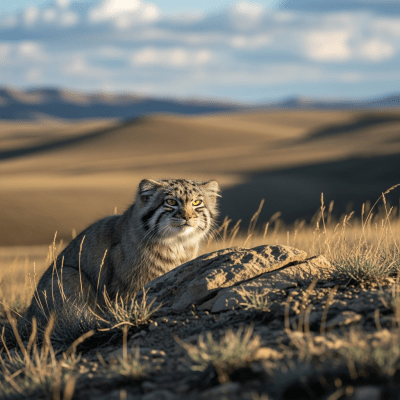
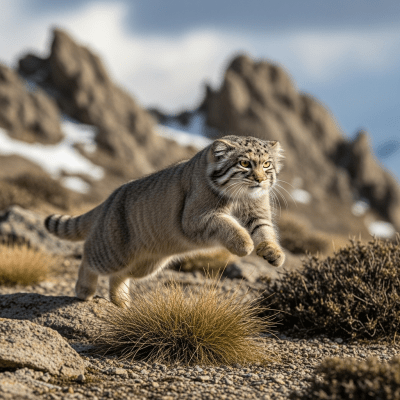
This species prefers open, windswept grasslands, montane steppes, and rocky outcrops at elevations from 500 to 5,000 meters. Pallas's Cat plays a vital ecological role as a predator of small mammals, helping regulate populations of pikas, voles, and ground squirrels. Its solitary lifestyle and cryptic coloration enable it to blend seamlessly into its environment, minimizing encounters with larger predators and humans.
According to the IUCN Red List, Pallas's Cat is currently classified as Least Concern. However, its populations are declining in several regions due to increasing threats. "Least Concern" indicates that, while not immediately at risk of extinction, the species requires ongoing monitoring and conservation efforts to prevent further decline.
Pallas's Cat faces multiple threats, including habitat loss from agricultural expansion, overgrazing by livestock, depletion of prey species, and direct persecution through hunting and poisoning. Rodent control programs and illegal fur trade further jeopardize its survival. These challenges are compounded by the species' secretive nature, making population monitoring and protection efforts more difficult.
Remarkable adaptations set Pallas's Cat apart: its dense, plush fur insulates against extreme cold, while cryptic coloration helps it remain hidden in open landscapes. The low metabolic rate conserves energy in harsh environments, and the species' unique vocalizations facilitate communication across its solitary range. Rounded, low-set ears minimize exposure and enhance stealth during hunting.
Pallas's Cat breeds once a year, with mating occurring in late winter (February–March) and births in spring (April–May). Gestation lasts about 66–75 days, resulting in litters of 2 to 6 kittens. Young are born in dens lined with fur and grass, and are weaned at around two months. Parental care is brief, as kittens must quickly adapt to the rigors of their environment.
While most authorities recognize Pallas's Cat as a monotypic species (Otocolobus manul), some propose regional subspecies such as O. m. nigripectus and O. m. ferrugineus. However, these are not widely accepted, and current consensus treats the species as having notable regional variation but no formally recognized subspecies.
Genetic studies confirm Pallas's Cat as a distinct lineage within the Felinae subfamily, diverging from other small cats approximately 5–6 million years ago. Mitochondrial DNA and partial nuclear genome sequences have been analyzed, revealing moderate genetic diversity and some regional structuring. DNA barcoding is available, but no complete genome sequence has been published as of June 2024, leaving opportunities for future research into its evolutionary history.