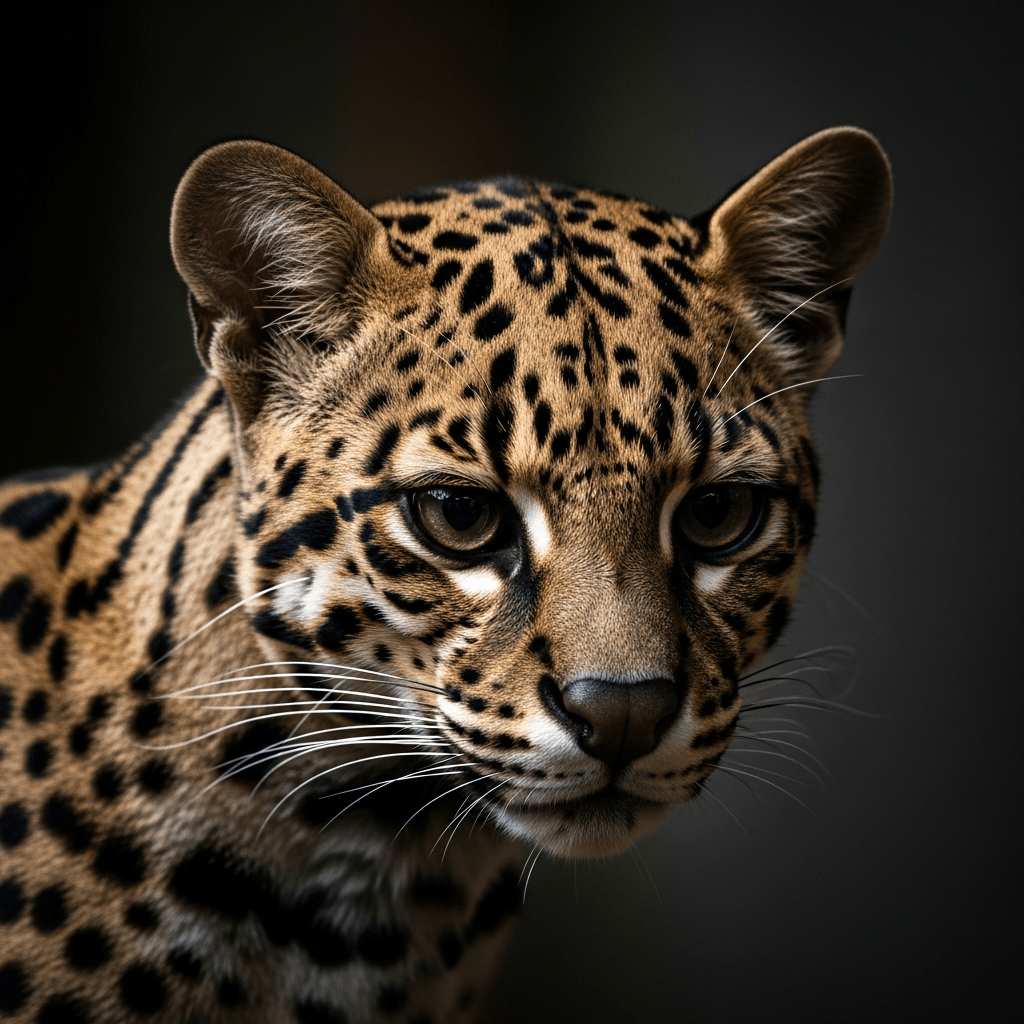
Leopardus Wiedii
The Margay (Leopardus wiedii) is a small, highly arboreal wild cat native to Central and South America, renowned for its extraordinary climbing skills and elusive forest lifestyle.
The Margay (Leopardus wiedii) is a small, highly arboreal wild cat native to Central and South America, renowned for its extraordinary climbing skills and elusive forest lifestyle.
First described in 1775 by Johann Christian Daniel von Schreber, the Margay’s scientific origins trace to South America, where its remarkable adaptations evolved in the dense tropical forests. Its lineage belongs to the genus Leopardus, a group of Neotropical small cats, with no documented hybridization or crossbreeding. Over time, the Margay’s range expanded from the original specimen’s locale to encompass much of Central and South America, always remaining closely tied to mature forest habitats.
The Margay is classified within the family Felidae, subfamily Felinae, and genus Leopardus. As a member of the Neotropical small cats, it shares close evolutionary ties with the Ocelot and other forest-dwelling felines. Its scientific name is Leopardus wiedii, and it is sometimes referenced by the synonym Felis wiedii. This places the Margay firmly within the broader feline taxonomy, characterized by specialized predatory adaptations and a lineage distinct from larger cats like lions and tigers.
The Margay is petite and graceful, weighing between 2.6 and 4 kilograms and measuring up to 79 centimeters in body length, with a notably long tail reaching 51 centimeters. Its soft fur is adorned with striking dark rosettes and spots on a yellowish to brown background, providing perfect camouflage in the dappled light of the forest canopy. Large, expressive eyes support its nocturnal lifestyle, while exceptionally flexible ankles allow its hind feet to rotate 180 degrees, a rare trait among cats that enables headfirst descents and acrobatic movement through trees.
The Margay is a solitary and territorial feline, primarily active at night or during twilight. It is an obligate carnivore, hunting small mammals, birds, reptiles, and insects—often in the trees, where it excels. Notably, Margays have been observed mimicking the calls of their prey, such as tamarin monkeys, to lure them closer. Their home ranges shift according to habitat quality and prey availability, and their elusive nature makes them rarely seen by humans. The Margay’s role in its ecosystem is that of a specialized arboreal predator, contributing to the balance of forest food webs.
Bring this kind into your world illustrated posters, mugs, and shirts.
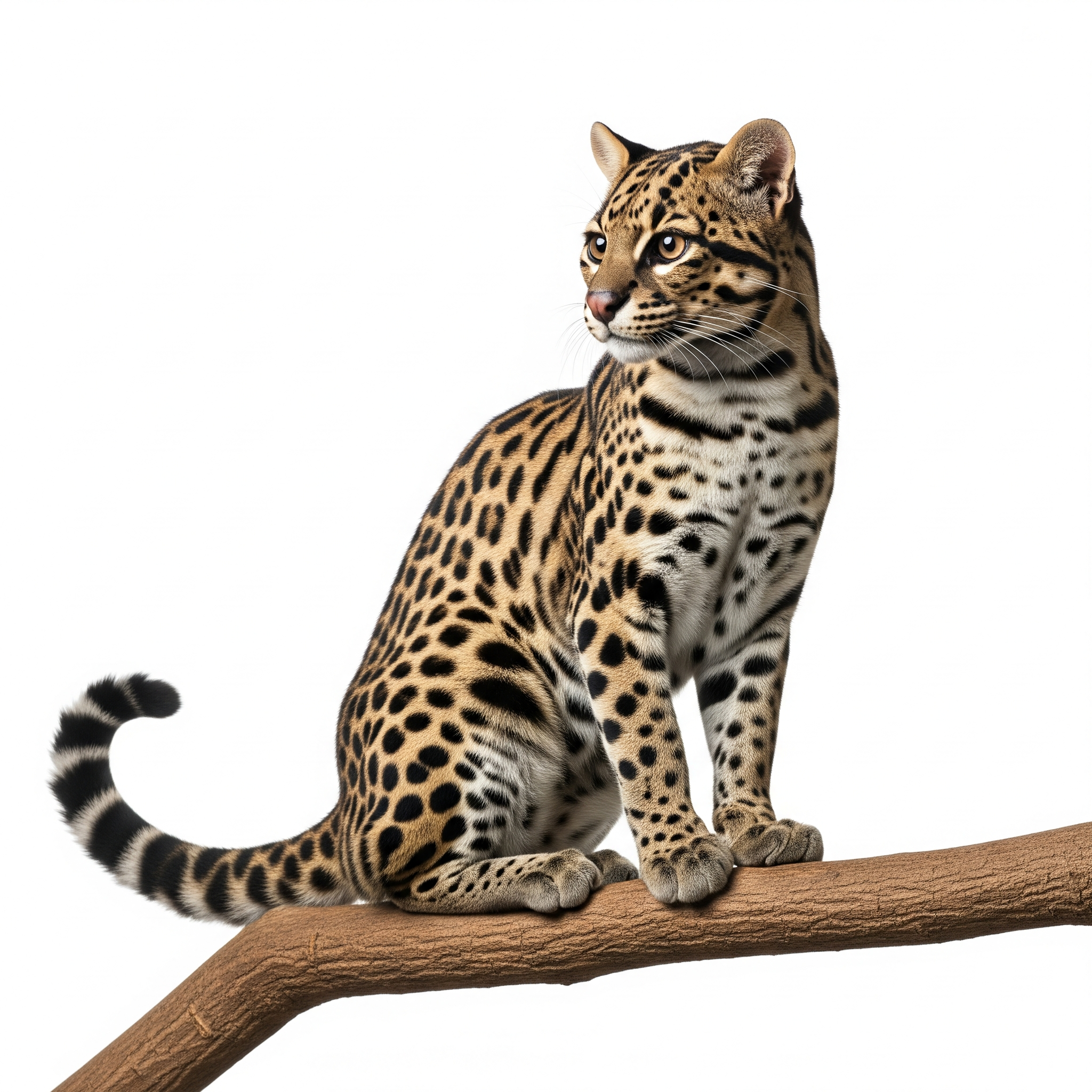
Archival print, museum-grade paper
Buy Poster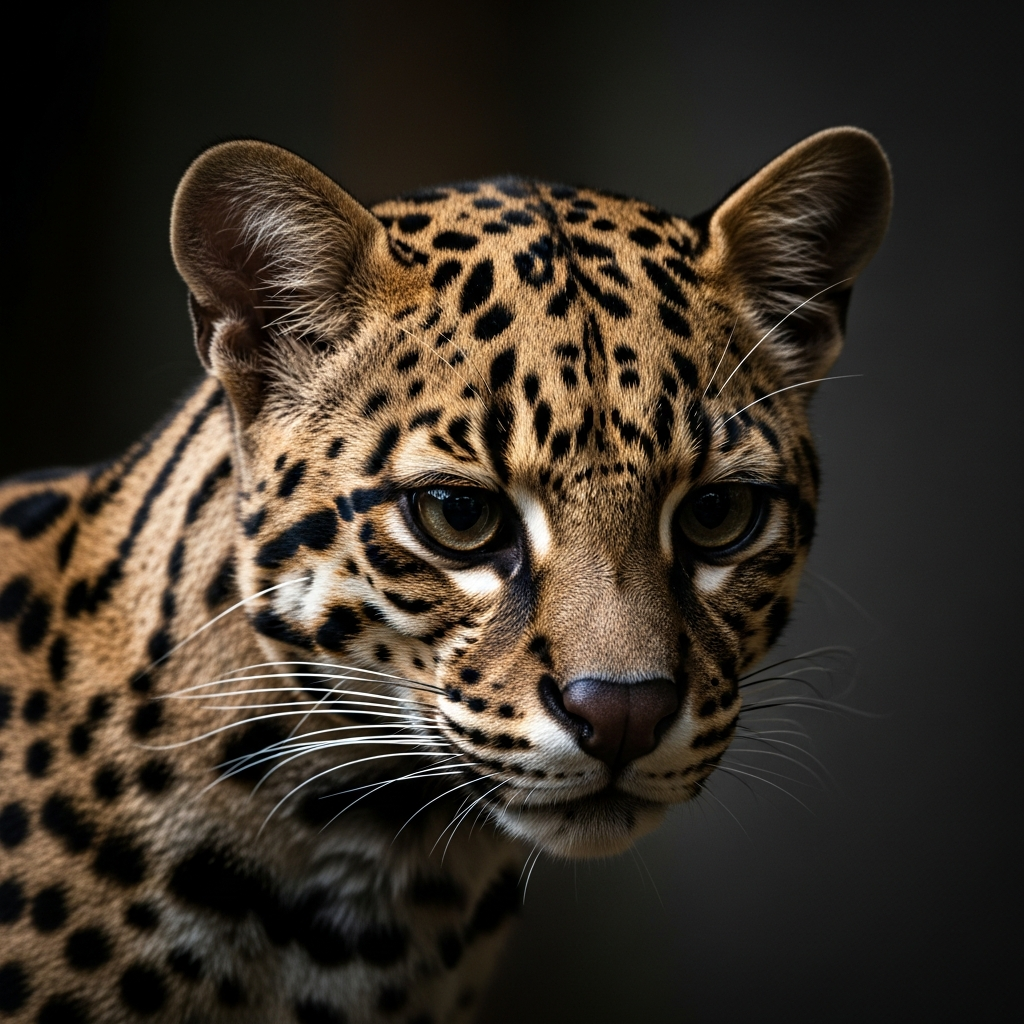
Stoneware mug, dishwasher safe
Buy Mug
Soft cotton tee, unisex sizes
Buy ShirtThroughout its range, the Margay is known by evocative names such as "Tiger Cat," "Gato-tigrillo," and "Gato-maracajá," reflecting its distinctive spotted coat and feline mystique. While less prominent in global art and mythology than larger cats, the Margay features in regional folklore and indigenous stories as a symbol of agility, stealth, and the mysterious life of the forest. Its beauty and rarity have also made it a target for the fur trade and exotic pet interest, impacting its cultural narrative.
The Margay’s range stretches from southern Mexico through Central America and deep into South America, reaching as far south as northern Argentina and Uruguay. Historically and currently, it is found wherever mature forests persist, though local extinctions have occurred in areas of extensive habitat loss.
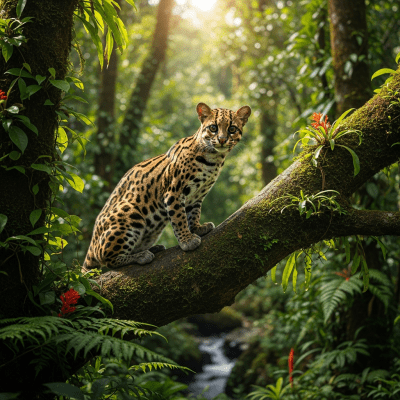
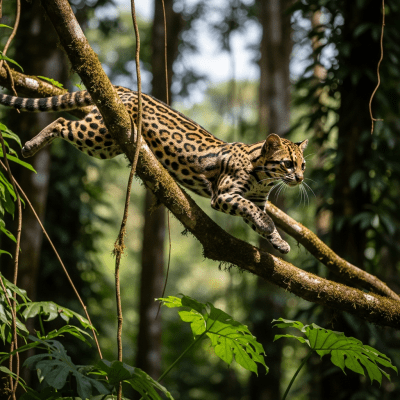
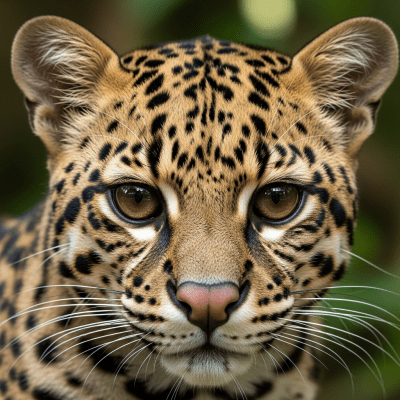
Margays are forest specialists, thriving in tropical evergreen, deciduous, and secondary forests. They prefer undisturbed, mature habitats with dense canopy cover, where their climbing abilities and camouflage offer safety and hunting opportunities. As an arboreal predator, the Margay plays a key role in controlling populations of small mammals, birds, and other prey, contributing to the ecological balance of its forest environment. It is rarely found outside forested areas and is highly vulnerable to habitat fragmentation.
The Margay is classified as Near Threatened by the IUCN Red List, reflecting ongoing declines in population due to habitat loss, fragmentation, and hunting. This status means the species faces a risk of becoming endangered in the near future if current threats are not mitigated. Legal protections exist in several countries, and the Margay is listed in CITES Appendix I, but conservation challenges remain significant.
Major threats to the Margay include widespread deforestation, conversion of forests to agricultural land, illegal trapping for the fur and pet trade, and habitat fragmentation. As a forest-dependent species, the Margay is particularly sensitive to the loss and degradation of its habitat, which leads to population declines and local extinctions. Conservation efforts focus on habitat preservation and enforcement of legal protections.
The Margay’s most remarkable adaptation is its flexible ankles, which allow it to rotate its hind feet and descend trees headfirst—a skill almost unique among felines. Its large eyes are optimized for nocturnal vision, and its lightweight, agile body is perfectly suited for life in the forest canopy. These adaptations enable the Margay to hunt, evade predators, and navigate complex arboreal environments with extraordinary skill.
Margay reproduction is seasonal in some regions, with females giving birth to one, occasionally two, kittens after a gestation period of 76–85 days. Kittens are born altricial—blind and helpless—and remain dependent on their mother for several months. Parental care is intensive, with the mother providing food and protection until the young are capable of independent survival. The Margay’s solitary lifestyle extends to its breeding habits, with little social interaction outside of mating and rearing young.
Historically, up to ten subspecies of Margay have been proposed based on regional morphological differences. However, recent genetic studies suggest limited differentiation, and most authorities now recognize Leopardus wiedii as a single species with minor regional variations. Scientific synonyms include Felis wiedii, and common names vary across its range, but no universally accepted subspecies are currently recognized.
Genetic research places the Margay firmly within the Leopardus lineage, closely related to the Ocelot and other Neotropical small cats. Mitochondrial DNA and partial genome data reveal moderate genetic diversity and some population structure linked to geographic barriers. No evidence of hybridization with other felids has been found, and a complete reference genome is not yet published. Ongoing studies continue to refine our understanding of Margay evolution and population genetics.