
Panthera Onca
The jaguar (Panthera onca) is the largest feline native to the Americas, renowned for its muscular build, striking rosette-patterned coat, and role as an apex predator in tropical and subtropical ecosystems.
The jaguar (Panthera onca) is the largest feline native to the Americas, renowned for its muscular build, striking rosette-patterned coat, and role as an apex predator in tropical and subtropical ecosystems.
First described by Carl Linnaeus in 1758, the jaguar's evolutionary journey began with ancestors migrating from Eurasia to the Americas via the Bering land bridge during the Pleistocene epoch. Its lineage is firmly rooted in the genus Panthera, alongside lions, tigers, leopards, and snow leopards. Today, the jaguar stands as the only extant member of Panthera in the Americas, with no recognized wild hybrids or cross lineages.
The jaguar belongs to the biological family Felidae, subfamily Pantherinae, and genus Panthera. As one of the five big cats in this genus, it shares close evolutionary ties with lions, tigers, leopards, and snow leopards. Scientific synonyms include Felis onca and Leopardus onca, but Panthera onca is the accepted name by modern authorities.
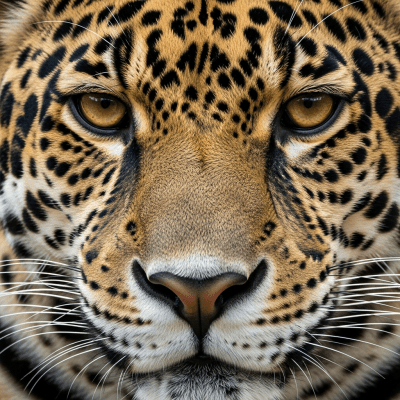
Jaguars are robust, muscular cats with a broad head, short limbs, and a compact body. Their coat is a vivid yellow to tan, adorned with bold black rosettes and spots that provide camouflage in dense forests. Melanistic (black) jaguars, often called "black panthers," are also found, especially in shadowy habitats. Adult males typically weigh between 56–96 kg (123–212 lbs), with females slightly smaller, and exceptional individuals can exceed 100 kg (220 lbs). Their powerful jaws and stocky build set them apart visually and physically from other felines.
Jaguars are solitary and fiercely territorial, each maintaining a home range that can span from 25 to over 150 km², depending on habitat and prey. They are primarily crepuscular but may hunt at any time, displaying remarkable adaptability. Exceptional swimmers and climbers, jaguars often hunt in or near water, preying on a wide variety of animals—from deer and capybaras to caimans and fish. Their powerful jaws enable them to pierce the skulls or shells of armored prey, a trait unique among big cats.
Bring this kind into your world illustrated posters, mugs, and shirts.
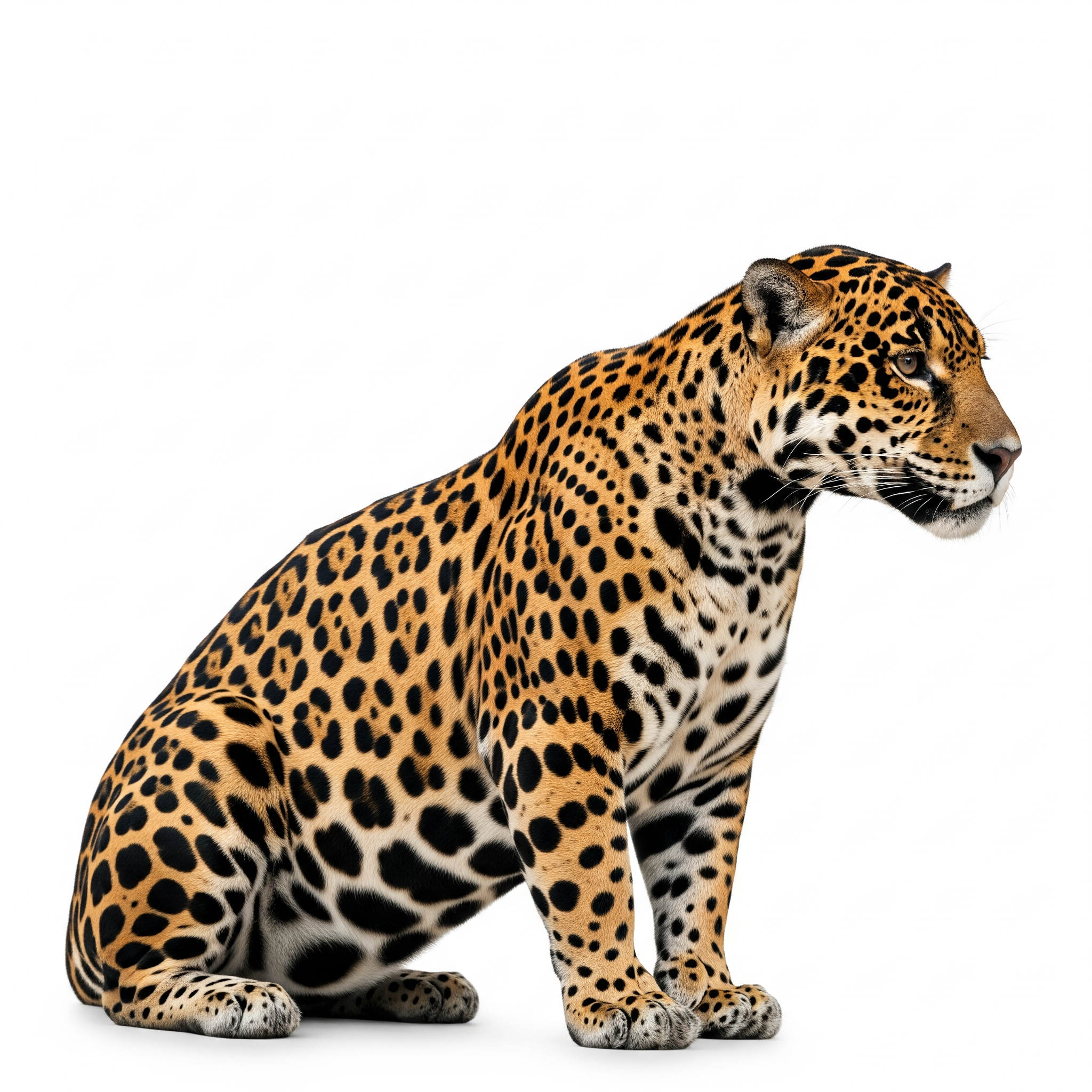
Archival print, museum-grade paper
Buy Poster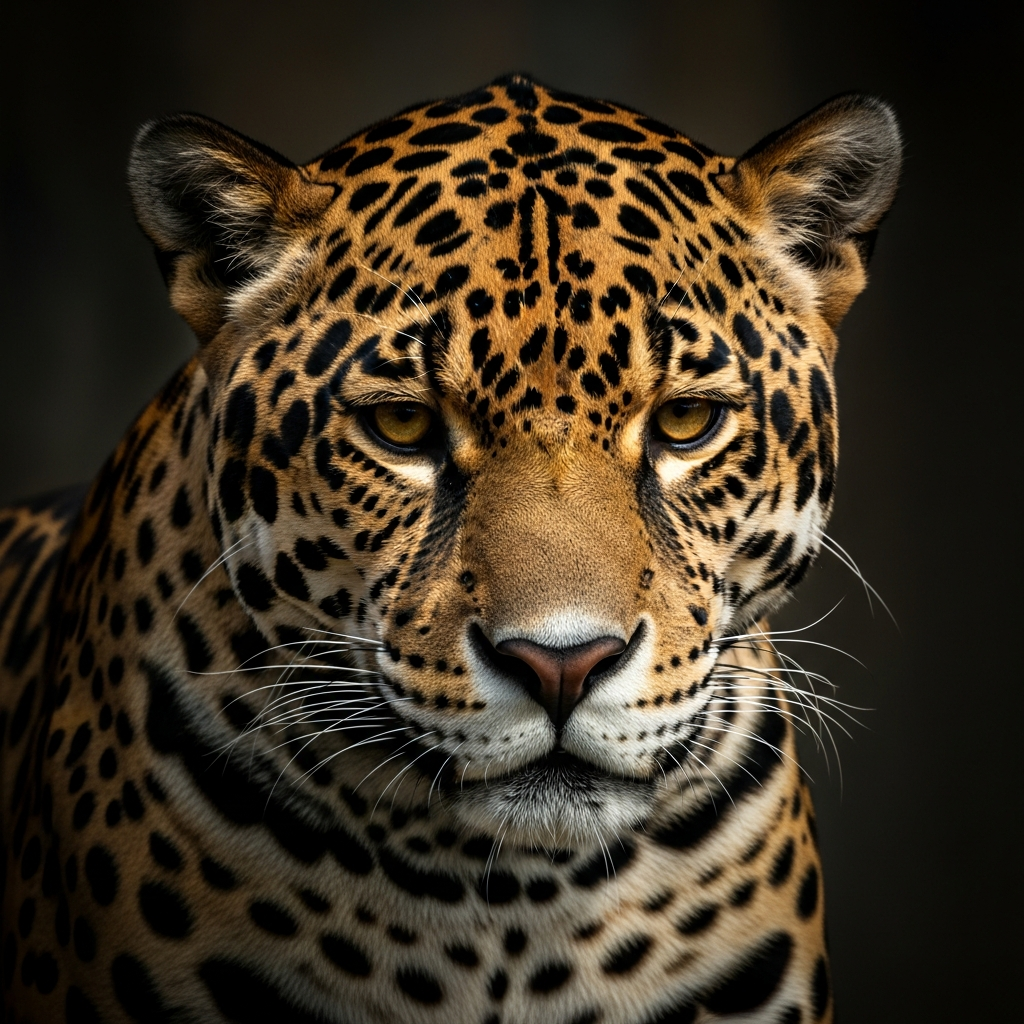
Stoneware mug, dishwasher safe
Buy Mug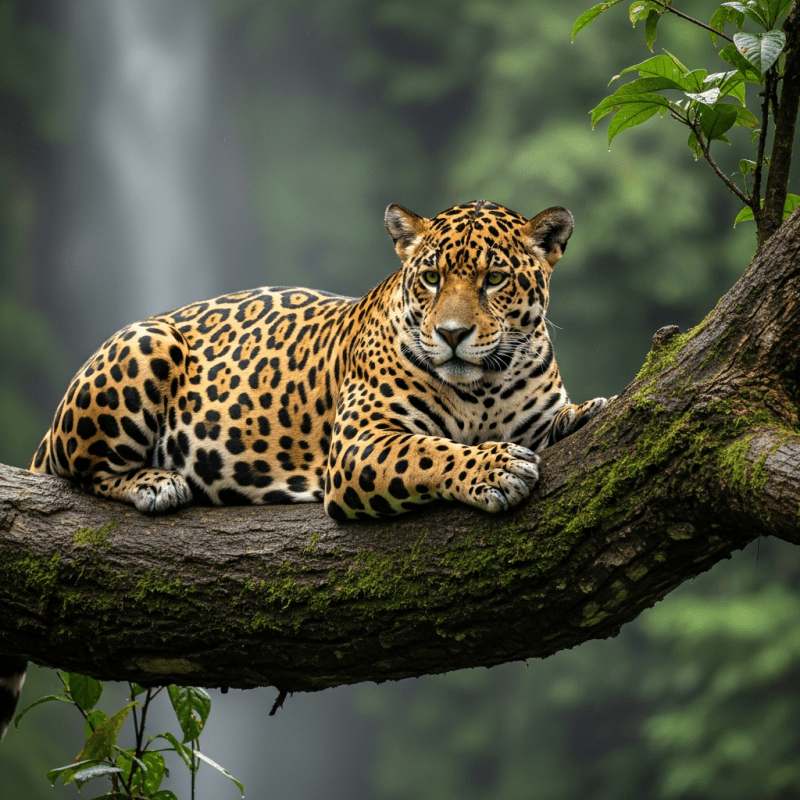
Soft cotton tee, unisex sizes
Buy ShirtThe jaguar holds deep cultural resonance throughout the Americas. Revered in ancient Mesoamerican civilizations, it symbolized power, fertility, and the night. In Maya and Aztec mythology, jaguars were associated with deities and rulers, often depicted in art and sculpture. Today, the jaguar remains an emblem of wilderness and strength, appearing in folklore, literature, and conservation campaigns across its range.
Historically, jaguars ranged from the southwestern United States through Mexico, Central America, and much of South America down to northern Argentina. Today, their distribution is fragmented, with strongholds in the Amazon Basin, Pantanal wetlands, and select regions of Central America. Peripheral populations in North America are now rare or extinct.
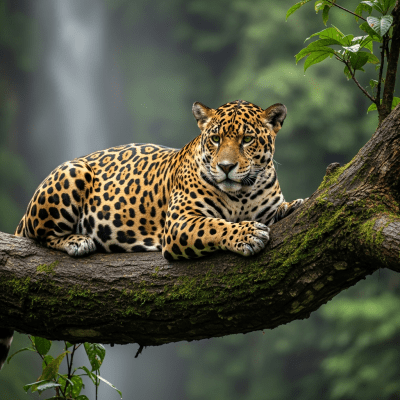
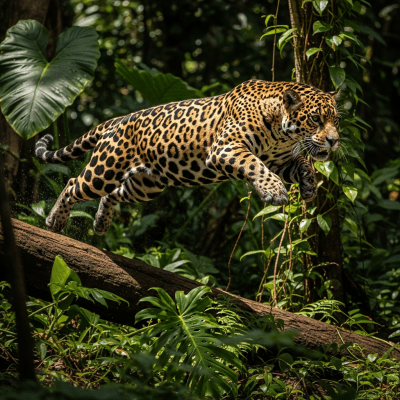
Jaguars thrive in a variety of habitats, including tropical rainforests, dry forests, scrublands, and wetlands, but they show a clear preference for dense, riverine forests rich in prey and cover. As apex predators, they regulate populations of large herbivores and other animals, maintaining ecological balance. Their presence is a key indicator of ecosystem health in the regions they inhabit.
The IUCN Red List currently classifies the jaguar as Near Threatened, with a decreasing population trend. This status signals that while jaguars are not yet endangered, ongoing habitat loss, fragmentation, and poaching pose significant risks to their survival.
Jaguars face major threats from habitat destruction and fragmentation due to deforestation and agricultural expansion. Poaching for pelts and body parts, retaliatory killings following livestock predation, and depletion of prey species further imperil their populations. Fragmented habitats also hinder genetic connectivity, increasing the risk of inbreeding and local extinctions.
Jaguars possess powerful jaws capable of piercing the skulls and shells of armored prey, a rare adaptation among big cats. Their robust build, short limbs, and broad head aid in ambush hunting and navigating dense forests. Exceptional swimming and climbing abilities allow them to exploit a wide range of habitats and prey, while their tolerance for varied environments supports survival across diverse landscapes.
Jaguars breed year-round, with females giving birth to 1–4 cubs after a gestation of 93–105 days. Cubs are weaned between 3 and 6 months and remain with their mother for up to two years, learning essential survival skills. In the wild, jaguars typically live 12–15 years, while those in captivity may reach 20 years. Maternal care is intensive, ensuring cubs are well-prepared for solitary adult life.
Several regional subspecies have been proposed, including Panthera onca centralis (Central America) and Panthera onca paraguensis (southern South America). However, current consensus recognizes Panthera onca as a single species with clinal variation across its range. Taxonomic ambiguities persist regarding subspecies boundaries, especially in peripheral populations.
Genetic research has revealed moderate diversity and distinct population structures among jaguars in the Amazon, Central America, and southern regions. Both mitochondrial and nuclear genomes have been sequenced, confirming the jaguar's placement within Panthera and a divergence from other big cats about 2–3 million years ago. DNA barcodes are published and widely used in conservation management, helping to maintain genetic connectivity and reduce inbreeding risks.