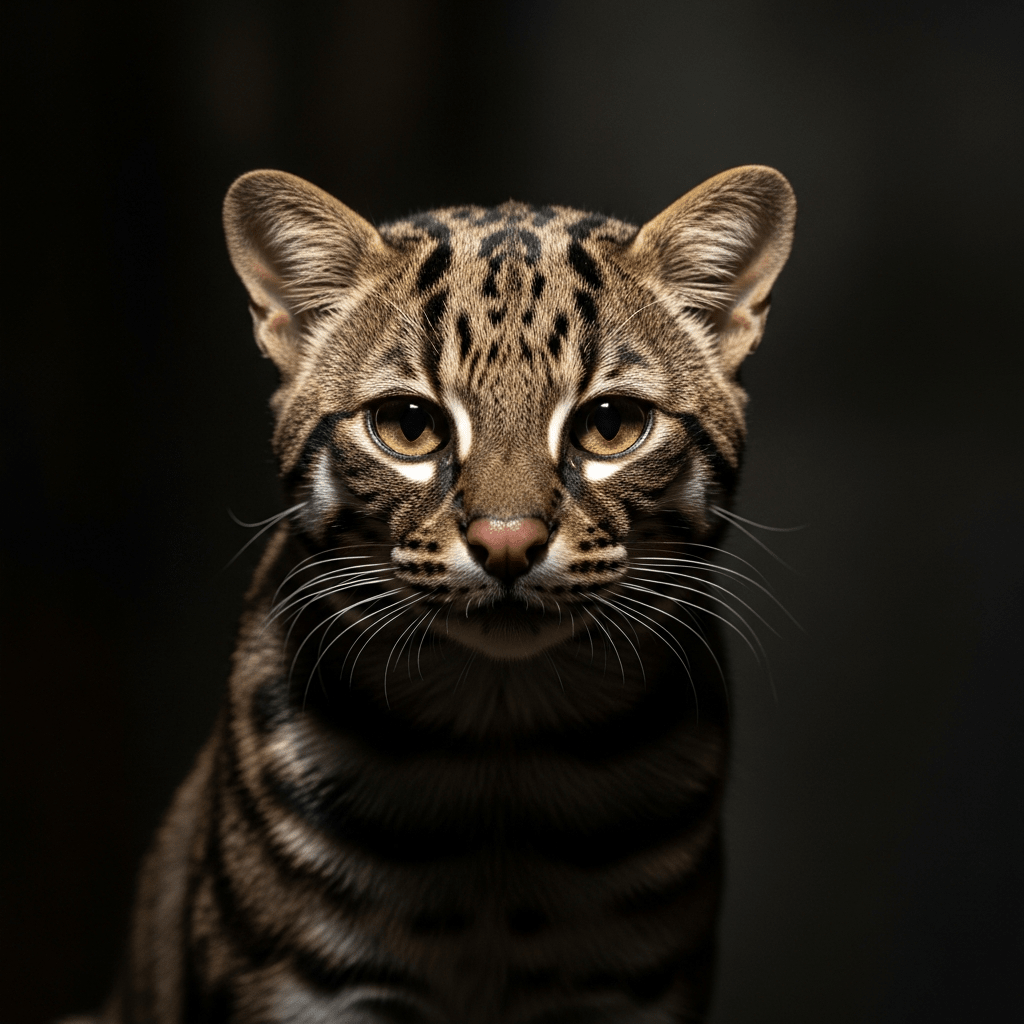
Prionailurus Iriomotensis
The Iriomote Cat (Prionailurus iriomotensis) is a critically endangered wild feline found only on Iriomote Island, Japan, renowned for its rarity and unique adaptations to island life.
The Iriomote Cat (Prionailurus iriomotensis) is a critically endangered wild feline found only on Iriomote Island, Japan, renowned for its rarity and unique adaptations to island life.
The Iriomote Cat was formally described in 1967 by Dr. Yukio Togawa after extensive fieldwork on Iriomote Island in Okinawa Prefecture, Japan. Its discovery marked a significant addition to the world’s catalog of wild felines, as it was previously unknown to science. The cat’s lineage is closely tied to the Leopard Cat (Prionailurus bengalensis), but its long-term isolation and distinct traits have led most authorities to recognize it as a separate species. The Iriomote Cat’s entire existence is confined to the subtropical forests and riverine landscapes of its island home, making its origin both geographically and evolutionarily unique.
Belonging to the family Felidae and subfamily Felinae, the Iriomote Cat is classified within the genus Prionailurus, which includes several small wild cats native to Asia. Its scientific name is Prionailurus iriomotensis. While some taxonomists have proposed it as a subspecies of the Leopard Cat (Prionailurus bengalensis iriomotensis), the prevailing consensus recognizes it as a distinct species due to its unique adaptations and genetic isolation. This places the Iriomote Cat firmly within the broader context of Asian small cats, yet sets it apart as one of the most specialized and rare members of its family.
The Iriomote Cat is a small, robust feline with a body length of 50–60 cm and a tail measuring 25–35 cm. Adults typically weigh between 3 and 5 kg. Its dense, short fur is dark brownish-gray, adorned with faint spots and stripes that blend seamlessly into the island’s forest shadows. Rounded ears, a short tail, and webbed feet distinguish it from other cats, while its muscular build is perfectly suited for navigating dense vegetation and swimming across streams. The overall impression is of a compact, agile predator, camouflaged for its subtropical habitat.
Primarily nocturnal and terrestrial, the Iriomote Cat leads a solitary life, coming together only during mating season or when rearing young. It is an opportunistic predator, feeding on a wide array of prey including small mammals, birds, reptiles, amphibians, crustaceans, and insects. Its webbed feet enable it to swim and hunt in riverine environments, while its keen senses and stealth make it an effective apex predator within its restricted ecosystem. The species plays a vital ecological role in regulating prey populations and maintaining the health of Iriomote Island’s natural communities.
Bring this kind into your world illustrated posters, mugs, and shirts.
Archival print, museum-grade paper
Buy Poster
Stoneware mug, dishwasher safe
Buy Mug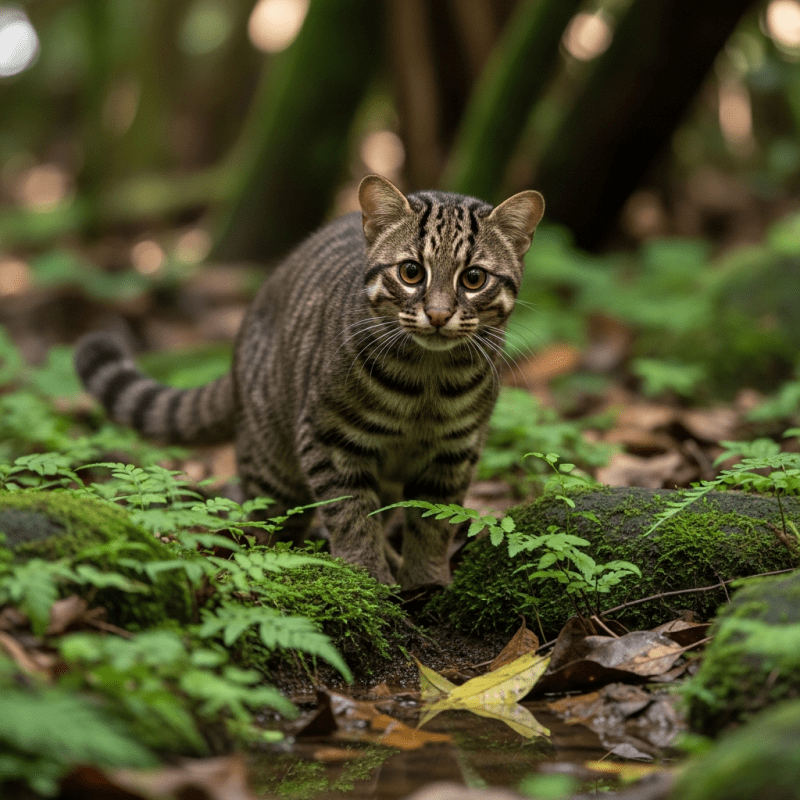
Soft cotton tee, unisex sizes
Buy ShirtThe Iriomote Cat holds a special place in Japanese culture, particularly within Okinawa Prefecture. Locally known as the Iriomote-yamaneko (イリオモテヤマネコ), it is celebrated as a symbol of the island’s unique biodiversity and is often featured in conservation campaigns, educational materials, and regional folklore. Its status as one of the world’s rarest wild cats has made it an emblem of wildlife protection in Japan, inspiring both scientific research and public efforts to preserve its habitat.
The Iriomote Cat is strictly endemic to Iriomote Island, which spans about 289 km² in the Yaeyama Islands, Okinawa Prefecture, Japan. There are no known populations outside this island, making its range one of the most limited of any wild feline. Historically and currently, its distribution is confined to this single subtropical island, emphasizing its vulnerability and uniqueness.
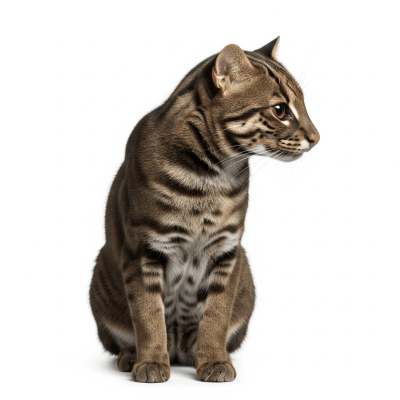
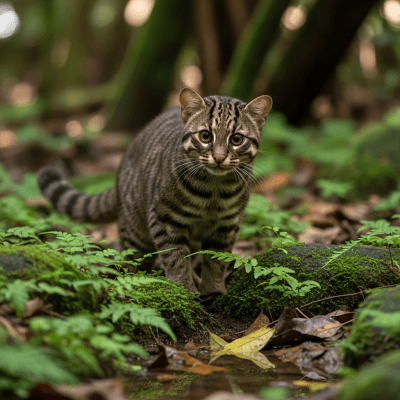
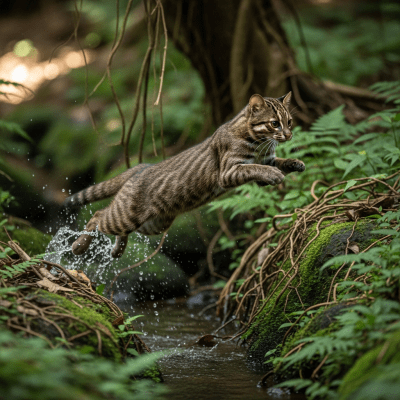
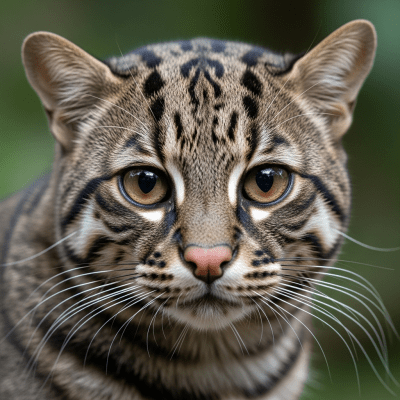
This elusive feline thrives in subtropical evergreen forests, mangroves, riverbanks, and coastal areas of Iriomote Island. Its ecological role is that of an apex predator, helping to balance populations of small mammals, birds, and other prey species. The Iriomote Cat’s adaptability allows it to exploit a variety of habitats, from dense forest interiors to watery margins, reflecting its versatile hunting techniques and resourcefulness in a complex island ecosystem.
The Iriomote Cat is listed as Critically Endangered (CR) by the IUCN Red List, with fewer than 100 mature individuals estimated to survive. This status signals an extremely high risk of extinction in the wild. The species is protected under Japanese law and CITES Appendix II, with ongoing conservation initiatives focused on habitat preservation, road safety measures, and public education.
Major threats to the Iriomote Cat include habitat loss due to development, road mortality from vehicle collisions, the introduction of non-native species, disease, and human disturbance. Its small population size and restricted range make it especially vulnerable to environmental changes and stochastic events, underscoring the urgent need for comprehensive conservation action.
Unique among felines, the Iriomote Cat has webbed feet that facilitate swimming and hunting in aquatic environments. Its robust body and dense fur are well-suited to the humid, forested landscapes of Iriomote Island. As a solitary nocturnal hunter, it relies on keen senses and stealth to capture diverse prey, demonstrating remarkable adaptability to its island ecosystem.
Reproduction in the Iriomote Cat is seasonal, with mating typically occurring in spring. After a gestation period of about 60 days, females give birth to litters of 1–3 kittens. Parental care is provided by the mother, who raises the young in secluded dens until they are old enough to fend for themselves. The species’ low reproductive rate and small litter sizes contribute to its vulnerability.
The Iriomote Cat is recognized as Prionailurus iriomotensis by most authorities. Some taxonomists have proposed it as a subspecies of the Leopard Cat, naming it Prionailurus bengalensis iriomotensis, but its unique adaptations and isolation support species-level distinction. No other breeds or regional populations are known.
Genetic studies reveal that the Iriomote Cat has low genetic diversity, a consequence of its long-term isolation and small population size. Mitochondrial DNA and nuclear marker analyses show unique haplotypes not found in other felines, supporting its status as a distinct species closely related to the Leopard Cat. Although full genome data are currently unavailable, ongoing research continues to illuminate its evolutionary history and conservation needs.