
Prionailurus Planiceps
The Flat-headed Cat (Prionailurus planiceps) is a small, highly specialized wild feline of Southeast Asia, renowned for its flattened skull and unique adaptations to wetland environments.
The Flat-headed Cat (Prionailurus planiceps) is a small, highly specialized wild feline of Southeast Asia, renowned for its flattened skull and unique adaptations to wetland environments.
First described by British zoologist John Edward Gray in 1846, the Flat-headed Cat was discovered in the Malay Peninsula. Its scientific recognition stems from specimens collected by early naturalists exploring Southeast Asia, with the type specimen preserved at the British Museum (Natural History). The species' evolutionary lineage places it within the genus Prionailurus, closely related to other small Asian cats, and most notably to the Fishing Cat.
Belonging to the family Felidae and subfamily Felinae, the Flat-headed Cat is classified under the genus Prionailurus as the species planiceps. Its taxonomic placement is widely accepted, with no recognized subspecies. The species' distinct morphology and aquatic habits set it apart from other felids, yet genetic studies confirm its close kinship to the Fishing Cat, both sharing adaptations for life in and around water.
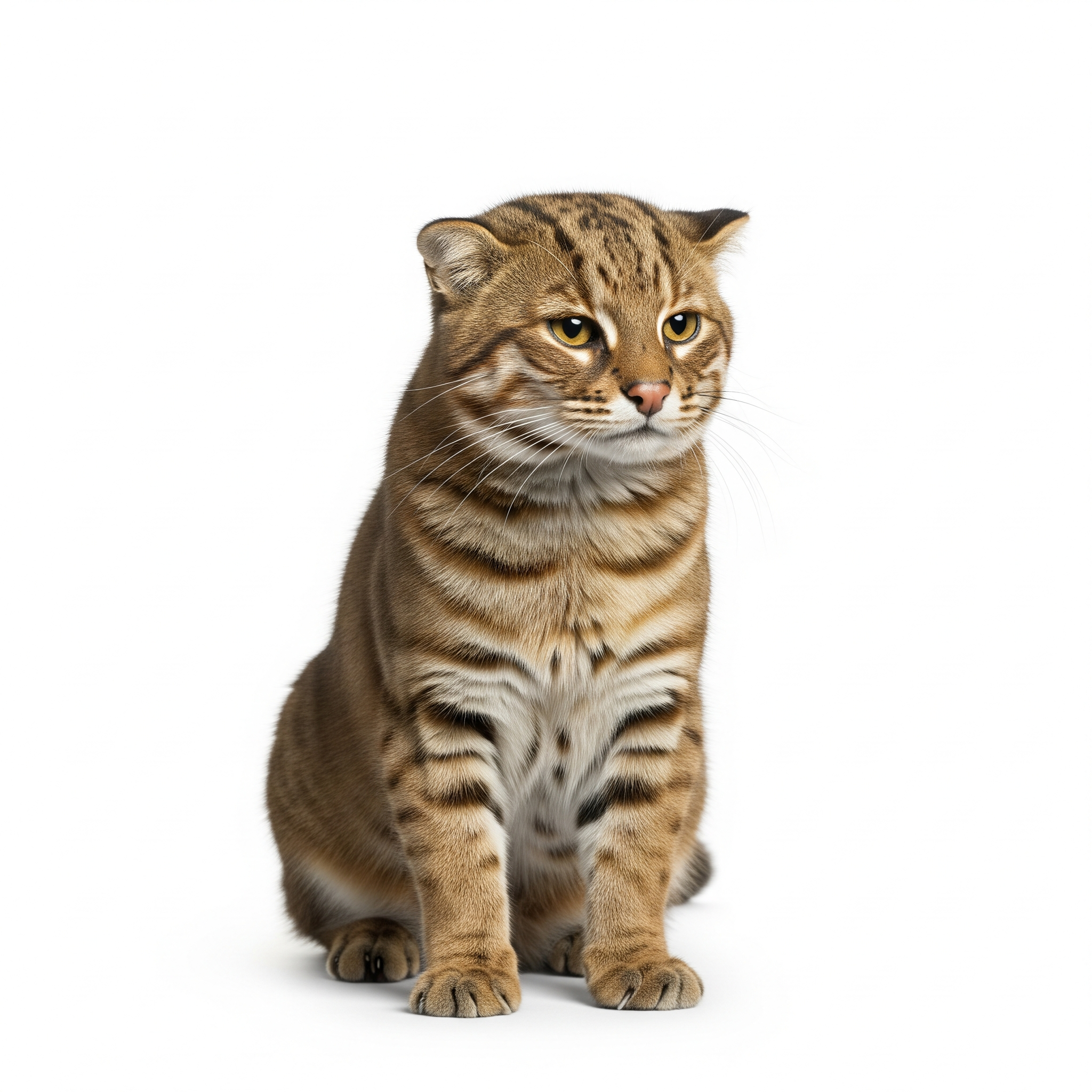
The Flat-headed Cat is instantly recognizable by its elongated, low-profile head and unusually flattened skull. Adults measure 41–50 cm in body length, with a short tail of 13–15 cm, and weigh between 1.5–2.5 kg. Its fur is short and reddish-brown, with white underparts and faint spots or streaks along the flanks. Small, rounded ears and partially webbed feet contribute to its aquatic prowess, while non-retractile claws and specialized jaws aid in catching slippery prey.
This elusive feline is primarily nocturnal and solitary, spending much of its life near water. It is an adept swimmer, hunting along riverbanks and within swamp forests. Its diet consists mainly of fish, frogs, and crustaceans, though it occasionally preys on small mammals and birds. The Flat-headed Cat relies on its webbed feet and strong jaws to seize aquatic prey, making it one of the most specialized wetland hunters among felids. Interaction with humans is rare due to its secretive nature and preference for undisturbed habitats.
Bring this kind into your world illustrated posters, mugs, and shirts.
Archival print, museum-grade paper
Buy Poster
Stoneware mug, dishwasher safe
Buy Mug
Soft cotton tee, unisex sizes
Buy ShirtWhile not prominent in global folklore or art, the Flat-headed Cat holds regional significance in Southeast Asia, known locally as "Kucing Kepala Datar" in Malay and Indonesian. Its distinctive appearance has inspired descriptive local names, but it remains largely unknown outside specialist circles. The species occasionally features in conservation campaigns focused on wetland preservation, highlighting its role as an indicator of ecosystem health.
The Flat-headed Cat is native to Peninsular Malaysia, southern Thailand, Sumatra, and Borneo. Historically and currently, its range is restricted to Southeast Asia's lowland wetlands and riverine forests, with populations fragmented and declining due to habitat loss.
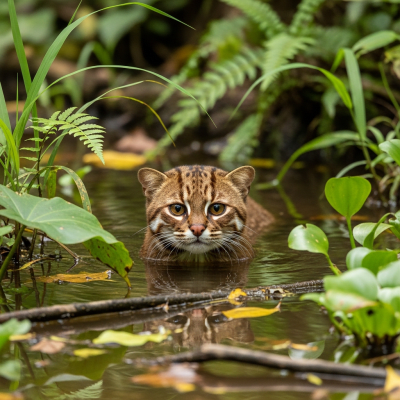
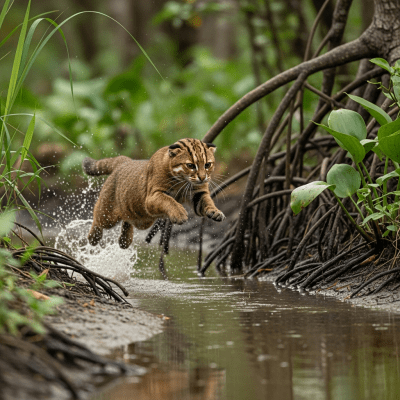

This species prefers peat swamp forests, mangroves, freshwater wetlands, and riverine environments. Its ecological role centers on wetland food webs, acting as a specialized predator of aquatic and semi-aquatic animals. The Flat-headed Cat's presence signals healthy, undisturbed wetland ecosystems, but it is highly sensitive to environmental changes and rarely persists outside intact habitats.
The Flat-headed Cat is classified as Endangered on the IUCN Red List (2022), with fewer than 2,500 mature individuals remaining and a declining population trend. This status reflects its high risk of extinction, driven by rapid habitat loss and fragmentation across its limited range.
Major threats include the drainage and conversion of wetlands for agriculture—especially oil palm plantations—pollution, and habitat fragmentation. The species is extremely sensitive to disturbance, with populations disappearing from degraded or altered landscapes. Conservation is challenged by its secretive habits and the ongoing loss of suitable wetland habitats.
The Flat-headed Cat exhibits remarkable adaptations for a semi-aquatic lifestyle: partially webbed feet for swimming, non-retractile claws for grasping prey, and specialized jaw and dentition for catching fish and other aquatic animals. Its elongated, flattened head enhances its ability to hunt in water, distinguishing it from other felids.
Reproductive data are limited, but gestation lasts about 56 days, with litters of 1–3 kittens reported in captivity. Parental care is presumed similar to other small cats, though wild breeding behaviors are poorly documented. Lifespan in captivity can reach up to 14 years, but wild longevity remains unknown.
There are no recognized breeds or subspecies of the Flat-headed Cat. All known individuals belong to a single, distinct species, though regional populations may be referred to by local names.
Genetic studies confirm the Flat-headed Cat as a distinct species within Prionailurus, with mitochondrial DNA analyses supporting its divergence from other members of the genus. It is most closely related to the Fishing Cat, sharing unique aquatic adaptations. DNA barcodes are available, but a complete genome has not yet been published as of June 2024.