
Prionailurus Viverrinus
The Fishing Cat (Prionailurus viverrinus) is a medium-sized wild feline renowned for its aquatic prowess and distinctive adaptations for hunting in wetlands across South and Southeast Asia.
The Fishing Cat (Prionailurus viverrinus) is a medium-sized wild feline renowned for its aquatic prowess and distinctive adaptations for hunting in wetlands across South and Southeast Asia.
First described by Edward Turner Bennett in 1833, the Fishing Cat was identified from specimens originating in India’s wetlands. Its evolutionary lineage diverged from the Leopard Cat approximately 3–4 million years ago, establishing its place among Asia’s specialized small felines. The species has always been closely tied to marshes, rivers, and mangrove habitats, thriving in environments where water and dense vegetation meet.
The Fishing Cat belongs to the family Felidae, subfamily Felinae, and is classified within the genus Prionailurus. It stands apart from its close relatives—such as the Leopard Cat and Rusty-spotted Cat—by its unique aquatic adaptations. No recognized subspecies exist, and genetic studies confirm its distinctiveness within the Asian small cat clade.
Robust and muscular, the Fishing Cat features a stocky body, short legs, and a relatively short tail. Its olive-grey fur is patterned with dark spots and stripes, providing camouflage in muddy wetlands and dense vegetation. Most striking are its partially webbed front feet, which enable efficient swimming and underwater hunting. Adults typically measure 57–78 cm in length, with tails of 20–30 cm, and weigh between 5–16 kg, with males larger than females.
Fishing Cats are solitary and primarily nocturnal, spending much of their time near water. They are expert swimmers, capable of diving and pursuing fish and other aquatic prey beneath the surface. Their diet is dominated by fish, but also includes crustaceans, amphibians, rodents, birds, and occasionally livestock. Territorial by nature, they communicate through vocalizations and scent marking. Interaction with humans is rare, though conflict can arise when cats prey on domestic animals near settlements.
Bring this kind into your world illustrated posters, mugs, and shirts.
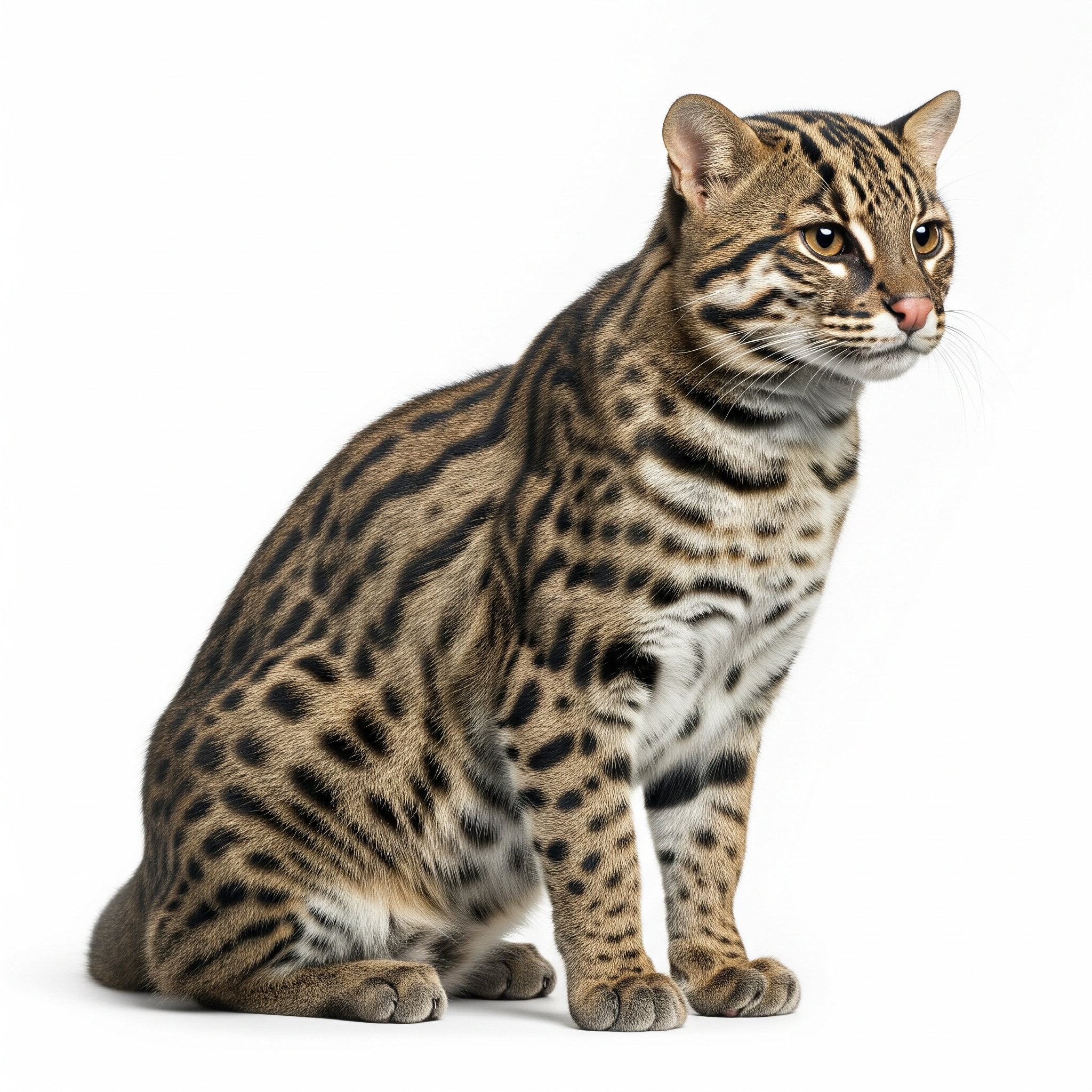
Archival print, museum-grade paper
Buy Poster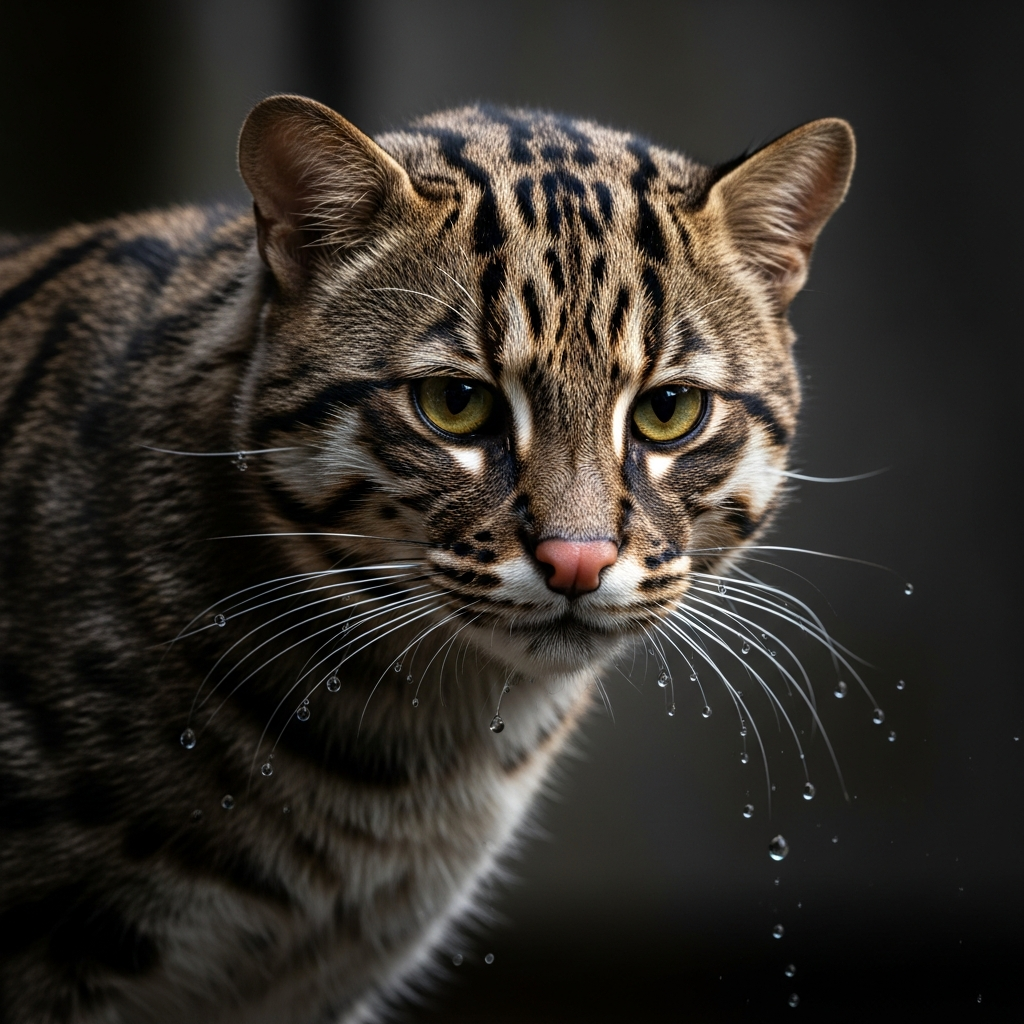
Stoneware mug, dishwasher safe
Buy Mug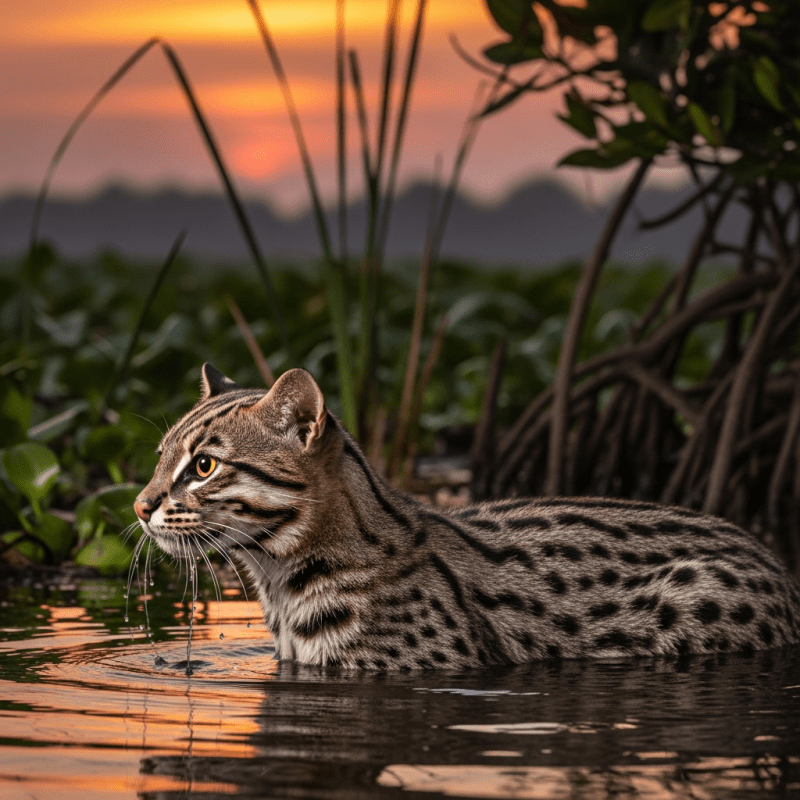
Soft cotton tee, unisex sizes
Buy ShirtWhile not as prominent in global folklore as larger felines, the Fishing Cat holds regional significance in South Asian cultures, where local names such as Machbagha and Jalbilai reflect its unique lifestyle. Its presence in wetland mythologies and local stories highlights the connection between people and the marshes. Conservation campaigns have brought the species into the spotlight, symbolizing the importance of protecting aquatic habitats.
Fishing Cats are distributed throughout South and Southeast Asia, with populations found in India, Nepal, Bangladesh, Sri Lanka, Myanmar, Thailand, Cambodia, Laos, Vietnam, and parts of Indonesia. Historically widespread in wetland regions, their current range is increasingly fragmented due to environmental changes and human encroachment.

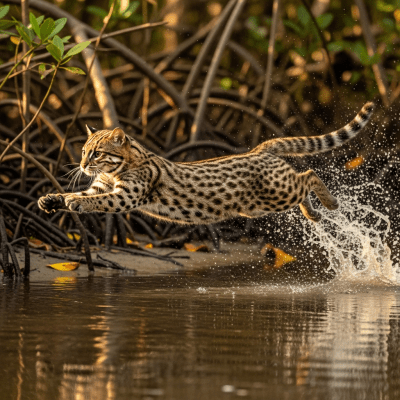
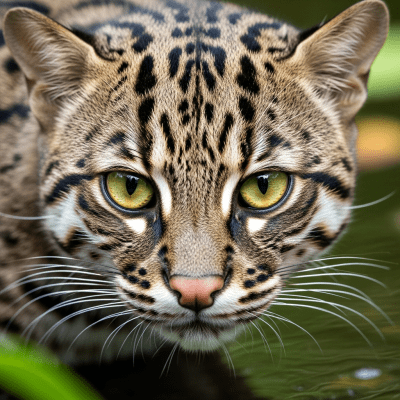
This species is intimately tied to aquatic environments, preferring wetlands, marshes, mangroves, rivers, lakes, and reed beds. Its ecological role centers on controlling fish and amphibian populations, contributing to the health of wetland ecosystems. The Fishing Cat’s ability to thrive in dense riparian vegetation and its reliance on water make it a key indicator of wetland integrity.
The Fishing Cat is classified as Vulnerable on the IUCN Red List (2022), signifying a high risk of extinction in the wild. This status reflects ongoing population declines, severe habitat fragmentation, and increasing threats across its range. Conservation efforts focus on habitat protection, research, and community engagement to halt further losses.
Major threats to the Fishing Cat include habitat loss from wetland drainage and conversion for agriculture or development, pollution, depletion of prey, poaching, and human-wildlife conflict. Retaliatory killings occur when cats prey on livestock, and fragmented populations are more vulnerable to extinction. Conservationists face the challenge of balancing human needs with wetland preservation.
Fishing Cats possess several remarkable adaptations: partially webbed front feet for swimming, a dense camouflage coat suited to muddy wetlands, and the ability to dive and chase prey underwater. These traits set them apart from other felines and enable a specialized aquatic hunting strategy rarely seen in the cat family.
Females give birth after a gestation period of 63–70 days, producing litters of 1–4 kittens. Cubs are weaned at around two months and become independent between eight and nine months of age. In the wild, Fishing Cats typically live 10–12 years, while those in captivity may reach up to 15 years. Parental care is provided primarily by the mother, who nurtures and protects her young until they are capable hunters.
No breeds or subspecies are currently recognized for the Fishing Cat. Although historical sources proposed regional forms based on minor morphological differences, contemporary taxonomy treats all populations as a single species. Ongoing genetic and morphological studies continue to examine population structure, but no formal subspecies have been accepted.
Genetic research confirms the Fishing Cat’s distinct lineage within the genus Prionailurus, with mitochondrial DNA and nuclear markers supporting its separation from other Asian small cats. DNA barcodes and partial genome sequencing have been completed, revealing no evidence of hybridization. Phylogenetic analyses suggest divergence from the Leopard Cat lineage 3–4 million years ago. Population genetics studies are ongoing, aiming to better understand genetic diversity and inform conservation strategies.