
Lynx Lynx
The Eurasian Lynx (Lynx lynx) is the largest lynx species and a widely distributed wild cat, renowned for its tufted ears, robust build, and vital role as a top predator across European and Asian forests.
The Eurasian Lynx (Lynx lynx) is the largest lynx species and a widely distributed wild cat, renowned for its tufted ears, robust build, and vital role as a top predator across European and Asian forests.
First described by Carl Linnaeus in 1758 from a specimen in Sweden, the Eurasian Lynx traces its evolutionary roots within the genus Lynx of the Felidae family. Its lineage is entirely wild, with no hybrid origins, and its presence has been documented across Eurasia for centuries. The species has been a subject of scientific study by global authorities, reflecting its long-standing ecological and cultural significance.
The Eurasian Lynx belongs to the family Felidae, subfamily Felinae, and genus Lynx. It is scientifically named Lynx lynx, with several recognized subspecies. As a member of the lynx group, it shares close evolutionary ties with the Canadian Lynx, Iberian Lynx, and Bobcat, all of which are solitary, medium-sized wild cats. Its classification is grounded in both morphological traits and genetic evidence, confirming its place within the broader feline family.
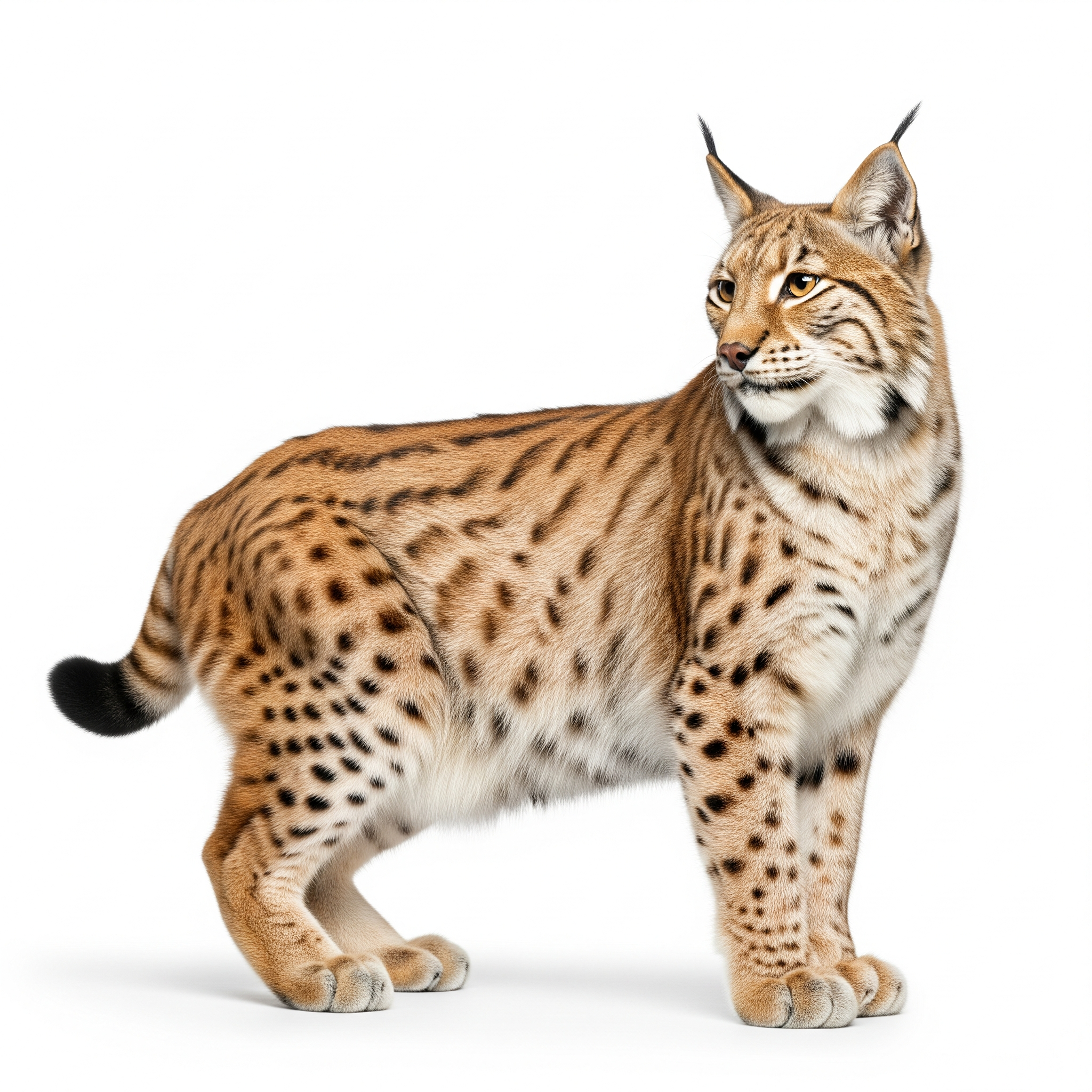
The Eurasian Lynx is distinguished by its large, muscular frame, short tail, and striking black ear tufts. Adults typically weigh between 18 and 36 kg and measure 80 to 130 cm in length. Its coat is dense and changes with the seasons—from reddish or greyish in summer to a paler, thicker, and more spotted appearance in winter. A ruff of fur frames its face, and its powerful limbs and large, padded paws are perfectly adapted for silent movement through snowy forests.
Solitary and primarily nocturnal, the Eurasian Lynx is an ambush predator, relying on stealth and strength to hunt. Its home range can span from 20 to over 450 km², depending on habitat and prey. The lynx feeds mainly on medium-sized ungulates such as roe deer and chamois, but also preys on hares, birds, and small mammals. It plays a crucial ecological role by regulating prey populations and maintaining forest health. Human interaction is limited, though the species is sometimes involved in conservation and reintroduction efforts.
Bring this kind into your world illustrated posters, mugs, and shirts.
Archival print, museum-grade paper
Buy Poster
Stoneware mug, dishwasher safe
Buy Mug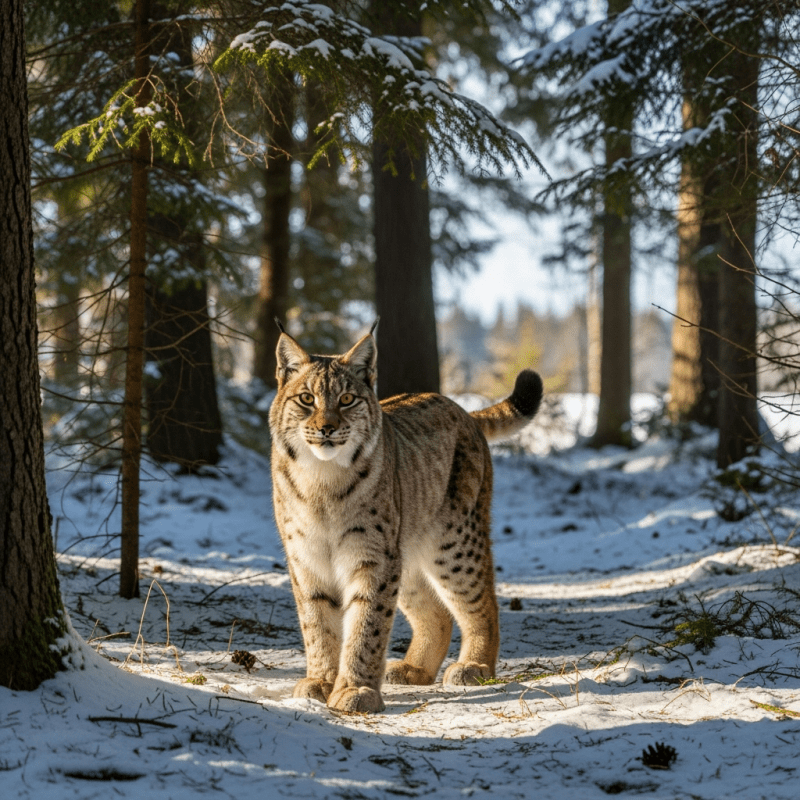
Soft cotton tee, unisex sizes
Buy ShirtThe Eurasian Lynx has long been a symbol of wilderness and mystery in European and Asian folklore. It appears in regional myths as a creature of sharp vision and stealth, often associated with forests and mountains. In modern times, the lynx is celebrated in conservation campaigns and serves as an emblem of successful wildlife restoration, particularly in areas where reintroduction programs have revived its presence.
The Eurasian Lynx inhabits a vast territory stretching from Scandinavia, the Alps, and the Carpathians in Western Europe, across Russia and Central Asia, through the Caucasus, and into China and Mongolia. Historically widespread, its range has contracted in some regions due to human pressures, but remains one of the broadest among wild felines.
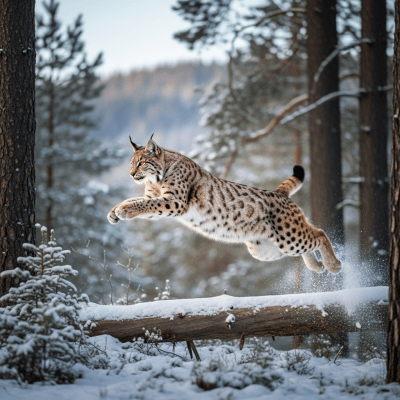

Preferring forested environments, the Eurasian Lynx thrives in boreal and temperate forests as well as mountainous regions. It is a solitary ambush predator, playing a key ecological role by controlling populations of deer and other prey, which helps maintain the balance of forest ecosystems. Its adaptability to various forest types and altitudes has enabled it to persist across diverse landscapes.
According to the IUCN Red List, the Eurasian Lynx is classified as Least Concern due to its wide distribution and relatively stable global population. However, regional populations may be declining or fragmented, particularly in Western Europe and Central Asia. The species is protected under CITES Appendix II and various national legislations, with ongoing monitoring and reintroduction efforts in areas where numbers have dropped.
Major threats to the Eurasian Lynx include illegal hunting and poaching, habitat fragmentation from human development, depletion of prey species, and conflict with humans. In some regions, population isolation has led to reduced genetic diversity, making local populations more vulnerable to environmental changes and disease.
The Eurasian Lynx is superbly adapted to cold climates, with thick, insulating fur and large, padded paws that distribute its weight and allow for silent movement over snow. Its powerful limbs enable it to stalk and ambush prey effectively, while keen senses of sight and hearing aid in nocturnal hunting. Seasonal changes in coat color and density provide both camouflage and protection from the elements.
Mating occurs in late winter, followed by a gestation period of 67–74 days. Females give birth to litters of 1–4 kittens in secluded dens. Kittens are weaned at 2–3 months and remain with their mother for up to a year, learning essential survival skills before dispersing. The Eurasian Lynx typically breeds once annually, with strong maternal care ensuring the survival and development of young lynxes.
Subspecies boundaries are debated, with genetic studies suggesting limited differentiation despite regional naming conventions.
Genetic research on the Eurasian Lynx includes sequencing of mitochondrial DNA, nuclear markers, and DNA barcoding for species identification. Phylogenetic analyses confirm its close relationship to other lynx species, such as the Canadian Lynx, Iberian Lynx, and Bobcat. While whole-genome sequencing projects have begun, complete reference genomes are not yet universally available. Genetic diversity varies by region, with some isolated populations showing reduced heterozygosity, highlighting the importance of maintaining connectivity and genetic health.